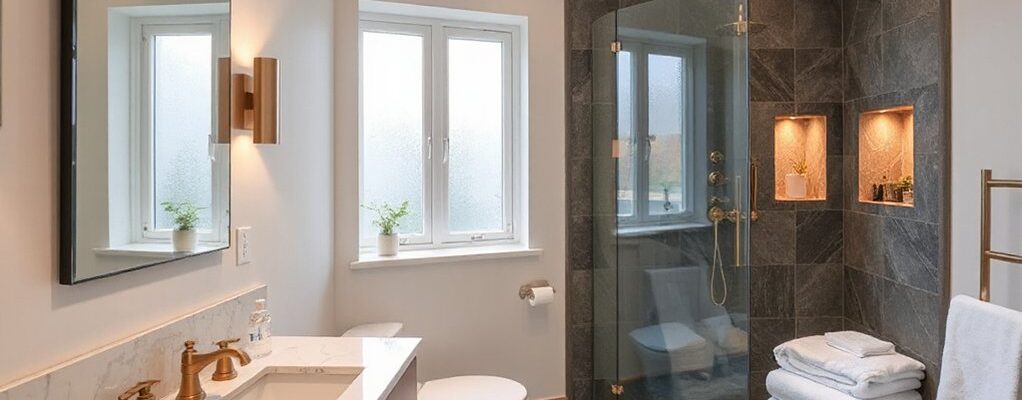
Did you know semi-detached baths lose up to 30% of perceived space to shared walls and doorways? You can counter that with wall-hung fixtures, recessed storage, and pocket doors that free floor area without sacrificing privacy. Think light, neutral palettes and layered lighting to expand the feel, plus soundproofing and eco-friendly fixtures to stretch the budget. If you’re aiming for calm, organized zones that still look luxe, there’s a smarter route you’ll want to explore.
Key Constraints in Semi-Detached Bathrooms
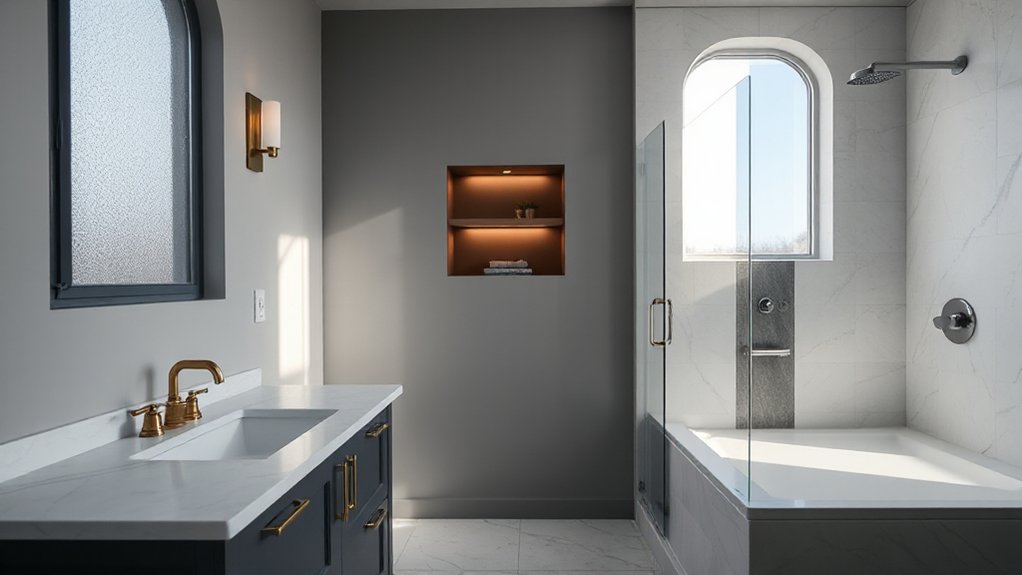
In semi-detached bathrooms, space and sound are the two tightest constraints you’ll feel. You’ll prioritize layouts that minimize wasted footprint, with compact fixtures and smart storage that keep daily rituals streamlined.
Shared wall insulation matters, because you’ll notice noise transfer between units if it’s不足. Choose denser materials or resilient channels to dampen impact from plumbing and vibrations.
Ventilation optimization becomes non-negotiable: a balanced system with a quiet exhaust, smart humidity sensors, and continuous airflow prevents mold and odor buildup without overpowering the space.
Build services close to the access wall to reduce chase complexity and finishes that hide seams.
Favor acoustic-sealing seals around doors, and consider soft-closing hardware to preserve calm.
These choices protect privacy, comfort, and enduring appeal in tight quarters.
Smart Layouts to Make a Small Bath Feel Bigger
If you’re tight on space, clever layouts can make a small bath feel instantly bigger. Aim for a linear vanity with wall-hung storage to free floor area, and pair it with a compact toilet to maintain sightlines.
Consider a corner shower with a glass enclosure to maximize perceived depth, while a recessed niche keeps toiletries within reach without bulking the room.
A pocket door can reclaim precious inches, and a single, continuous mirror edge visually expands the space.
Choose fixtures with slim profiles and matte finishes to reflect light without adding bulk.
Prioritize bathroom ventilation to prevent dampness from compact layouts, and optimize plumbing efficiency by aligning water lines to minimize elbows.
These moves sharpen flow and reduce clutter, enhancing the sense of roominess.
Light-Forward Palettes That Read as Spacious
Light-forward palettes aren’t just pretty; they actively widen perception. You’ll notice airy whites, soft beiges, and pale neutrals that bounce natural light across walls and surfaces. Think cool undertones to reduce heaviness, with warm accents kept sparse to avoid crowding the eye.
Color coordination matters: align cabinet tones, tile edges, and countertop veining to create a seamless continuum rather than competing blocks. Keep contrasts minimal but intentional—perhaps a linen cabinet in eggshell beside a porcelain sink in off-white.
Fixture placement matters, too; wall-mounted fixtures near mirrors elongate sightlines, while recessed lighting softens corners that can shrink a room. Reflective backsplashes and glossy floors multiply light, yet stay low on saturation to preserve spaciousness.
Storage-Driven Design to Hide Clutter
Storage-driven design isn’t just about tucking away odds and ends—it’s about making every item earn its keep. You optimize bathroom function by pairing hidden storage with accessible layouts, so daily routines stay seamless and calm.
Choose built‑in vanities, alcove cabinets, and recessed niches that blend with your walls, reducing visual clutter without sacrificing capacity. Use vertical space with tall linen towers and pull-out organizers that keep essentials in reach yet out of sight.
Sleek, invisible hardware minimizes distraction, while labeled bins aid quick tidying. Prioritize multifunctional pieces, like mirrors with hidden compartments or vanity tops with integrated trays.
This approach delivers clutter concealment without sacrificing style, keeping surfaces clean and the room feeling larger, brighter, and thoughtfully curated.
Quiet and Private: Soundproofing the Shared Wall
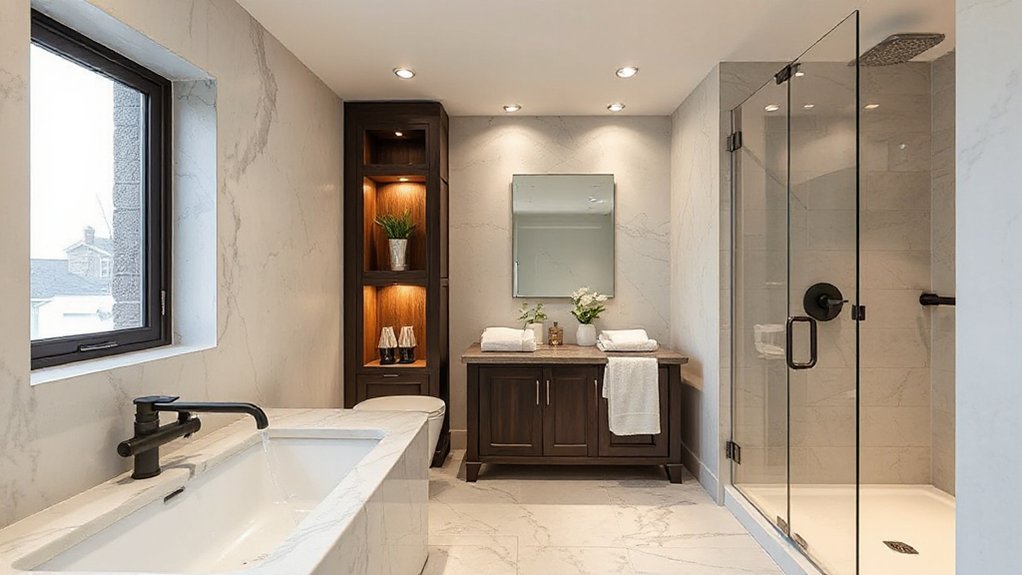
With clutter tucked away, you’re free to address sound without compromising layout. In semi‑detached homes, you’ll want a practical plan for the shared wall that doesn’t crowd the room or blow your budget.
Start with soundproofing techniques that have measurable impact: dense mineral wool batts, mass-loaded vinyl, and double drywall with decoupling. Seal gaps around outlets, trays, and light fixtures to block flanking sound.
Consider resilient channels to decouple studs and reduce vibration transfer. For privacy, opt for solid core doors with tight weatherstripping and vibration‑damping hinges.
Add soft, absorbent finishes like large towels, bath mats, and plush textiles to dampen echoes without clutter. Pair these steps with focused ventilation and moisture control to maintain comfort and long‑term performance.
Shared wall insulation becomes a quiet, reliable boundary.
Eco-Friendly Fixtures That Cut Costs
You’ll feel the impact of Eco-Friendly Water Sense by choosing fixtures that curb use without sacrificing performance.
Low-Flow Fixtures Savings add up quickly, lowering bills while keeping your shower and faucet experiences satisfying.
Recycled Material Alternatives offer stylish, durable options that reduce waste and support long-term cost efficiency.
Eco-Friendly Water Sense
Ever considered how a small switch in fixtures can slash water bills without sacrificing comfort? You can modernize a semi-detached bathroom with eco-minded choices that stay stylish. Start with user-friendly fittings: dual-flush toilets, low-flow taps, and aerated showerheads reduce usage without compromising feel.
Look for smart sensors on faucets to prevent drips, and choose durable, easy-to-clean surfaces to lower maintenance. Go beyond basics by incorporating rainwater harvesting and graywater recycling concepts where permitted, balancing practicality with aesthetics.
Install accessible shutoffs and clear labeling so guests respect-saving systems. Pair timing controls with seasonal usage tweaks, like garden-adjacent baths or outdoor taps.
The goal is measurable impact—clean lines, quiet efficiency, and consistent comfort that doesn’t waste water or break the bank.
Low-Flow Fixtures Savings
Are you maximizing savings without sacrificing comfort? Low-flow fixtures transform daily routines into money‑savvy moments. You’ll want luxury fixtures that still feel indulgent, not punitive, so choose well‑designed taps and showerheads with durable finishes and reliable performance.
Focus on water saving appliances that deliver measurable results, such as dual‑flush toilets and aerated faucets that reduce usage without sacrificing pressure. Install smart meters or leak detectors to catch drips early, and calibrate shower durations to a practical, comfortable length.
Prioritize materials and finishes that resist scale and corrosion, ensuring longevity in busy family bathrooms. Pair flow‑reducing options with good heat insulation and efficient lighting to compound savings.
The payoff: lower bills, smaller footprint, and consistently high‑end bathroom experiences.
Recycled Material Alternatives
Recycled material alternatives are reshaping eco-friendly fixtures without skimping on style or savings. You’ll notice how recycled tiles bring texture and character to baths without the price tag of new stone, while offering surprisingly durable performance. Pair them with glass grout and matte finishes for a modern, low-maintenance look.
Sustainable countertops (round) out the upgrade by prioritizing reclaimed or post-consumer materials that resist stains and heat, yet stay within budget. In semi-detached homes, these choices reduce waste and shipping emissions, helping your project stay lean.
Look for certifications, warranty coverage, and batch consistency to avoid surprises. With careful sourcing, you’ll enjoy striking baths that blend trend awareness with long-term value.
Luxe Looks on a Practical Budget
If you want luxe looks without blowing your budget, clever choices matter more than sheer splurges. You’ll elevate the space with smart sourcing, focusing on texture, finish, and pace.
Choose a subdued color base—warm neutrals or slate—then layer with high-impact details. Luxury accessories can be inexpensive when chosen with purpose: sculptural mirrors, tactile towel bars, and spa-like countertop trays.
Vintage fixtures bring character without breaking the bank, especially when you mix aged metals with modern hardware for contrast. Opt for quality materials in key areas: a solid surface vanity top, durable tiles, and a well-sealed shower niche.
Keep lines clean and fittings cohesive, so the result feels curated, not chaotic. Prioritize lighting, storage, and subtle symmetry to finish the luxe-on-budget look.
Zoning and Lighting to Create a Day-to-Night Retreat
To turn a bathroom into a true day-to-night retreat, zone the space to support changing moods: a bright, functional morning zone near the vanity and a dimmer, relaxing alcove for evenings.
You’ll optimize lighting with layered layers: bright task lights for grooming, warm ambient LEDs, and a dimmer switch for unwinding.
Use zoning to guide airflow and scent: a near-window area benefits from natural ventilation, while the calmer alcove emphasizes seclusion.
Choose fixtures and finishes that read contemporary yet timeless, like matte textures and brass accents.
Incorporate aromatherapy options via discreet diffusers or candle alternatives to shift mood without clutter.
Keep storage streamlined so you can reassemble the scene quickly, matching color temperature to the hour and your mood.
Frequently Asked Questions
How Can You Maximize Privacy in a Shared Bathroom Space?
Start by creating privacy zones with clear sightlines and doors that seal well; add soundproofing strategies like acoustic panels, soft-close hardware, and floating floors, then isolate storage. You’ll enjoy quieter showers and more comfortable, private routines.
What Are the Best Materials for Moisture Resistance in Semi-Detached Baths?
Moisture resistant tiles and water proof paints top the list. Think of a rainproof jacket: you wear it and stay dry. You’ll install moisture resistant tiles and water proof paints for durable, trend-aware bath durability.
How Can You Integrate Smart Tech Without Cluttering the Design?
To achieve smart integration without clutter, hide devices behind minimalist fixtures, run cables invisibly, and choose wall-mounted controls; opt for wireless sensors. This discreet setup keeps spaces sleek, modern, and functional, emphasizing minimalist fixtures and seamless, trend-aware tech.
Are There Curb-Less Showers Suitable for Narrow Layouts?
Yes, you can; curbless showers work in narrow bathroom layouts, keeping lines clean and accessible. Opt for a single-glass panel, linear drain, and wall niches to maximize space while maintaining a sleek, trend-aware, detail-focused design.
What Budget-Friendly Upgrades Yield the Biggest Impact?
“First things first: you’ll save big with smart paint and hardware.” You upgrade with vintage fixtures and bold color schemes, tweaking lighting and finishes to maximize impact, while keeping costs low and design on-trend, and instantly elevating your space.
Conclusion
If you redesign around wall-hung fixtures, hidden storage, and pocket doors, your semi-detached bath becomes unexpectedly spacious. One striking stat: up to 40% of a bathroom’s footprint can vanish with smart layouts and vertical storage. Prioritize soundproofing the shared wall and light, neutral palettes to keep the space airy. Combine eco-minded fixtures with budget-friendly luxe finishes, and finish with precise zoning and layered lighting to craft a day-to-night retreat you’ll actually use.