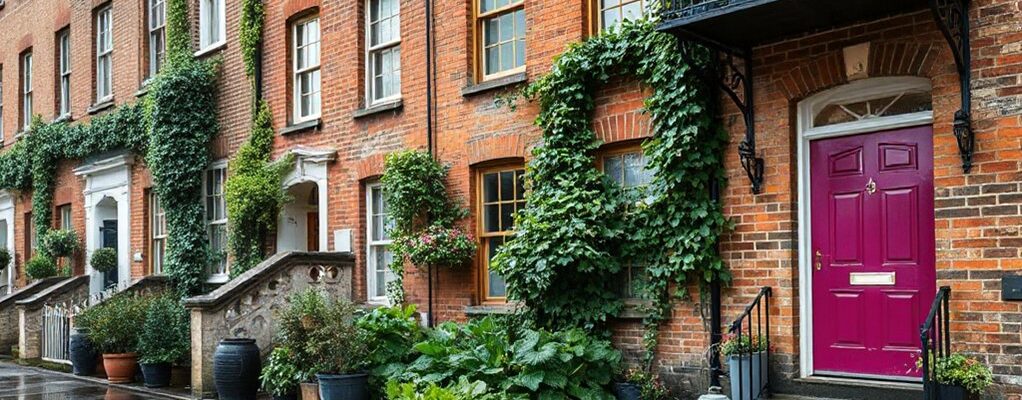
A coincidence often nudges you toward design, as the plain brick suddenly feels like a canvas for texture and light. You’ll assess your terraced home’s baseline, then choose color schemes that brighten walls without clashing with neighboring façades. Use contrasting textures and thoughtful exterior detailing to add depth, and plan lighting that reveals rhythm along the row. With purposeful garden elements and durable finishes, you’ll create a cohesive character—yet the next step holds subtle choices that could transform the entire streetscape.
Assess Your Terraced Home’s Baseline
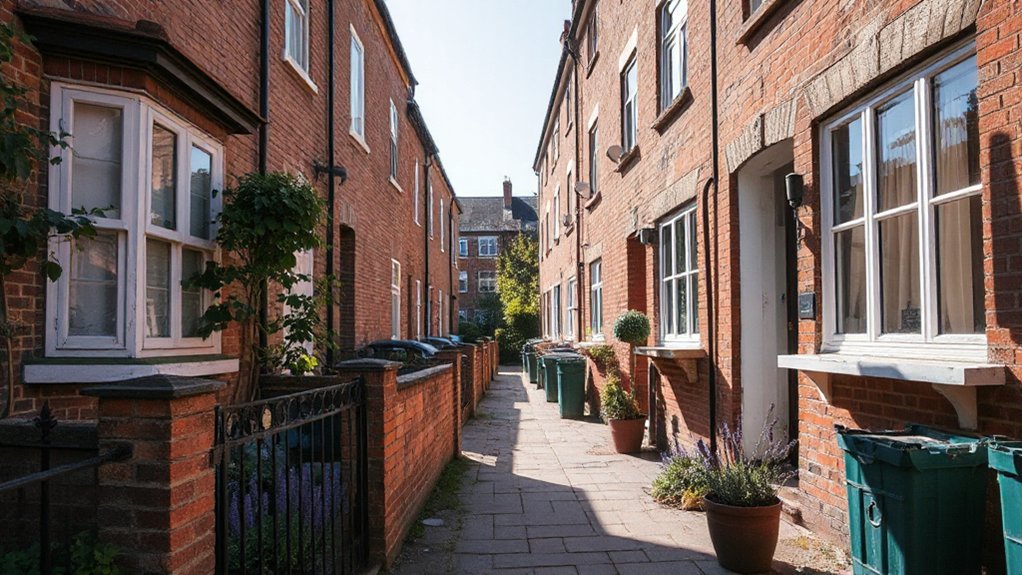
Assess your baseline by surveying your terraced home’s current structure, load paths, and usable footprint. You’ll map primary wall lines, floor slabs, and transfer routes to identify stiffness, redundancy, and weak points.
Note intertenancy factors, such as party-wall behavior, roof geometry, and potential retrofits, to inform future character enhancements.
Document existing openings, stairs, and service routes to understand usable ceiling heights and daylight access.
Evaluate garden layout opportunities for external rhythm without compromising structural integrity, while planning for drainage, soil conditions, and privacy screens.
Consider window treatments as a controllable contributor to daylight, ventilation, and perceived depth, ensuring they integrate with load-bearing elements.
This baseline informs safe, efficient, and intentional design decisions that respect the terraced context.
Color Schemes That Brighten Terraced Walls
Color schemes can visually expand terraced walls by manipulating tone, contrast, and reflectivity to enhance depth and daylight. You’ll choose palettes with light-valued neutrals or cool tones on facades facing open space, using higher reflectivity paints to bounce light inward.
For narrow elevations, pair restrained base colors with brighter trim to create perceived layers without crowding. Consider garden planning goals: how color interacts with plant silhouettes and seasonal sun paths, and how reflections shift as the day progresses.
In window treatments, select coverings that modulate glare without absorbing warmth; sheer films or light fabrics preserve daylight while reducing visual heaviness. Test swatches on small patches to confirm luminance balance, ensuring accessibility and consistency across terraces for a cohesive streetscape.
Texture and Materials for Depth Without Crowding
Texture and material choices can deepen perceived space on terraced walls without adding bulk. You’ll use subtle contrasts, lean palettes, and tactile finishes to create dimension without crowding the facade.
Favor light-reflective surfaces and linear patterns that guide the eye along the wall, not toward busyness. Incorporate garden pathways as foreground elements that draw attention outward, while keeping wall textures calm and restrained.
Choose materials with varied but compatible scale—large, smooth plasters paired with fine-grained tiles or brick slips—to create depth without visual clutter. Window shutters can modulate light and mass, provided they remain proportionate and recessed.
Limit ornament to functional details, like recessed joints or purposeful texture shifts, so depth emerges from material logic rather than superfluous decoration.
Exterior Detailing for Terraced Curb Appeal
How you detail the façade can make a terraced frontage sing without adding bulk. Exterior detailing for terraced curb appeal focuses on proportion, rhythm, and durable finishes.
Use understated cornices, lintels, and string courses to articulate storeys without overwhelming rows. Select light-reflecting paints or subtle contrasts to emphasize depth rather than mass.
Windows and doors should align with historic patterns; introduce narrow vertical trims to accentuate vertical rhythm.
Materials chosen should weather gracefully and minimize maintenance, reducing garden maintenance needs around front areas.
Incorporate discreet drainage and edging that blend with the facade.
Add privacy solutions at ground level—trellis screens, lattice panels, or evergreen planting—without blocking street view.
Keep detailing cohesive with overall massing, ensuring a refined, legible street presence.
Lighting and Accessories That Tie the Row Together
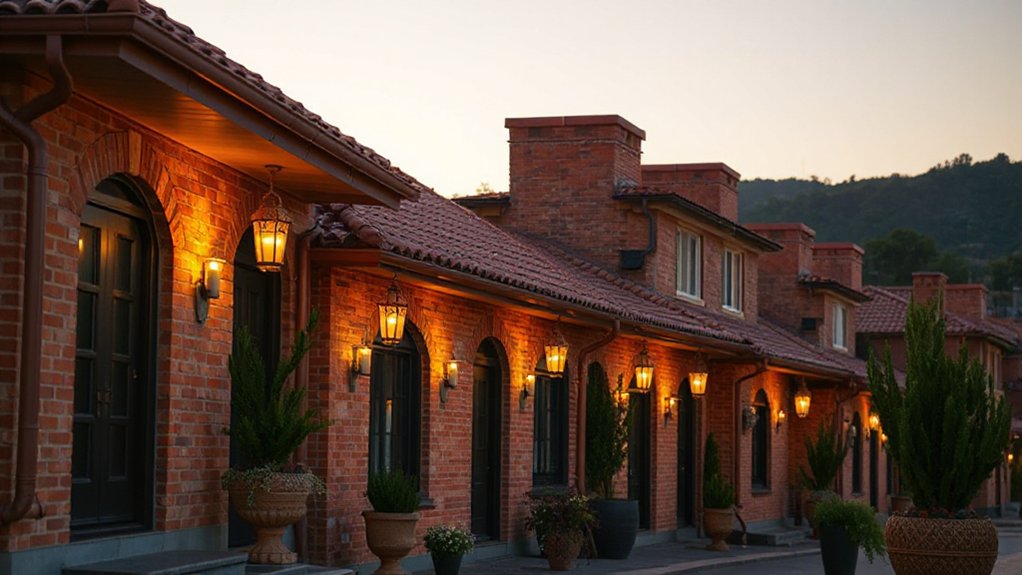
Lighting and accessories are the cues that unify a terraced row at night and in all seasons. You should select lighting that emphasizes depth, shape, and rhythm across elevations, avoiding overpowering glare.
Use garden lighting to outline doors, steps, and shared boundaries, creating a continuous glow that guides movement without distraction. Integrate subtle uplights for architectural features and low-level path lamps to enhance nighttime safety.
Choose a cohesive color temperature to maintain consistency between homes. Decorative planters act as punctuation marks; place them at intervals to echo repeating bays and gate entrances.
Opt for weatherproof, durable containers that complement materials used on the facades. Combine greenery with seasonal blooms to preserve visual interest when lighting is dim or seasonal shadows lengthen.
Frequently Asked Questions
How Can I Add Character Without Compromising Privacy on a Terrace?
You can boost character without compromising garden privacy by choosing tall, dense plantings and frosted or privacy glass for ground-floor windows. Use window treatments like motorized blinds, and install trellises or lattices with climbing plants for subtle separation.
What Budget-Friendly Accents Create Unique Charm in Rows?
Garden lighting plus decorative plaques give budget-friendly accents that add charm to rows; you’ll create definition and personality, while preserving privacy. Install warm LEDs, subtle bollards, and weatherproof plaques to highlight architectural lines and garden nooks.
Are There Sustainable Materials That Suit Terraced Exteriors?
Yes, you can: opt for sustainable cladding and eco friendly paint, choosing certified materials and breathable finishes to protect terraced exteriors, reduce environmental impact, and maintain long-term aesthetics with minimal maintenance.
How Do I Balance Bold Elements With Historical Features?
You balance bold elements with historical features by prioritizing architectural harmony and period preservation, using restrained color and proportion, where contrasts highlight craftsmanship rather than overwhelm it, ensuring modern updates respect scale, materials, and the building’s intrinsic rhythm.
Can Landscaping Extend the Perceived Space Between Houses?
Yes, landscaping can visually extend space between houses. Use garden lighting to guide the eye and outdoor sculptures as focal points, structuring sightlines while keeping scale balanced and textures cohesive for a calmer, expanded exterior.
Conclusion
You’ve laid a thoughtful path from baseline to curb appeal. By layering color, texture, and lighting, you’re not just dressing a wall—you’re composing a living street symphony. Keep contrasts deliberate, rhythms steady, and details purposeful—each element should cue the next, like notes in a melody. When you harmonize finishes with planting and shade, your terrace becomes a character in its own right, resilient and inviting. Charm isn’t chaos; it’s well-tuned, enduring conversation.