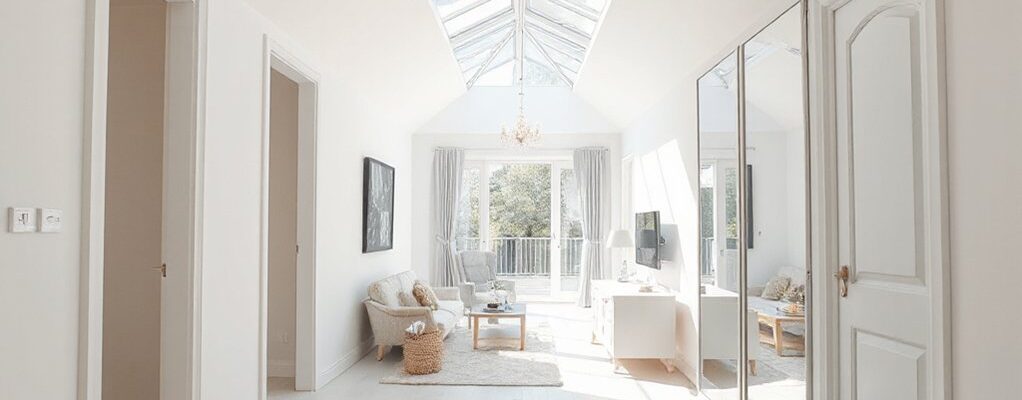
In a narrow terraced home, you might find your living room only gets a glow from a single sash window, masking the space’s true potential. You can start by mapping daylight paths and testing how window size, placement, and reflective surfaces shift the feel of the room. With precise tweaks to layout and finishes, you’ll uncover how subtle changes release brighter, more open interiors—but the next steps require careful planning and measurements. Ready to chart your first moves?
Why Daylight Matters in Narrow Terraces: And What It Means for You
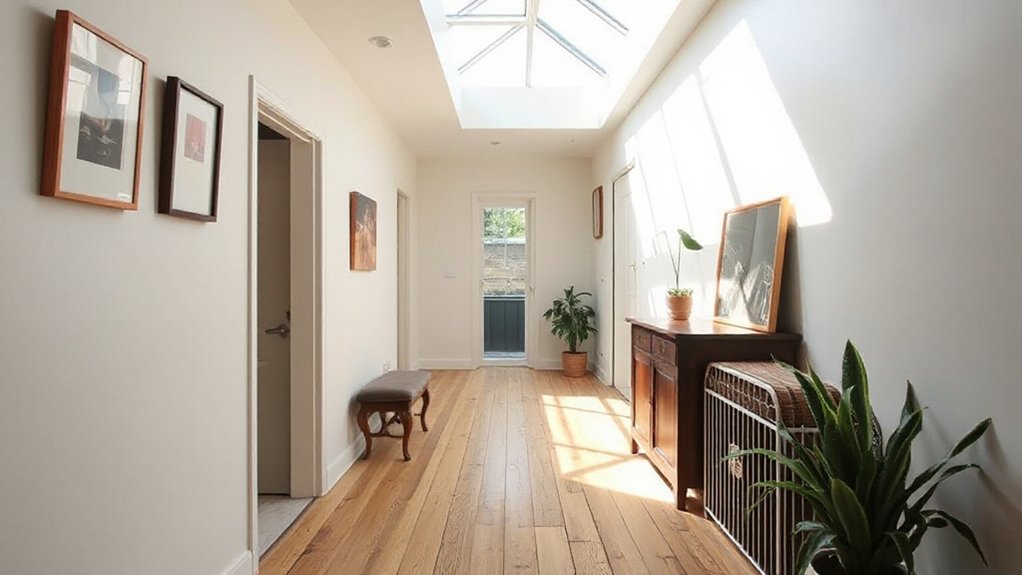
Daylight is essential in narrow terraces because it directly affects mood, comfort, and perceived space. You experience brighter interiors when daylight reaches deeper zones, reducing reliance on artificial lighting and lowering energy use.
Daylight quality guides occupant behavior, influencing task performance, circadian rhythm, and perceived safety. In tight layouts, even small improvements in light distribution alter spatial perception, making rooms feel larger and more connected to the outdoors.
Practical gains come from optimizing light pathways, rather than oversized illumination. For indoor plant placement, position species with modest light needs near windows to maximize photosynthesis without overcrowding.
Evaluate window treatment options that balance glare control with luminance, ensuring consistent illumination throughout the day. These considerations underpin effective daylight-aware design in narrow terraces.
Assessing Your Space for Daylight: Where Daylight Can Reach First
To determine where daylight can reach first, map each room’s primary axes of exposure and note any internal barriers such as partitions, stairs, or built-ins that could block sun along the day.
Assess exterior obstructions, near-neighbor shading, and seasonal sun paths to identify zones of openness versus shadows. Record window placement relative to light flow, including high vs. low openings and sill heights, to predict usable daylight hours.
Evaluate interior layouts for sunlit corridors and glare-prone areas, prioritizing routes with consistent illumination. Consider interior plants as indicators of ambient light; their health reflects light availability.
Use this data to plan targeted daylight improvements, ensuring access to multiple exposure axes while preserving function. Document findings for precise, repeatable comparisons across time.
Invite Daylight With Smart Layout Tweaks
Smart layout tweaks can invite more daylight without major renovations. You should map light flow across each zone, prioritize open sightlines, and position primary living and work areas to maximize sun exposure during peak hours.
Use corridor and room angles to create reflective pathways, placing seating and tasks along the brightest axes. Consider removing nonessential partitions or reorienting them to avoid shadowing.
Employ compact, multifunctional furniture to preserve floor area for daylight. Interior plantings can soften glare while supporting vertical interest and micro-climates near windows.
Window treatments should be chosen for adjustable diffusion—slats or sheer fabrics enable light without sacrificing privacy.
Test layouts with daylight simulations or simple noon-and-afternoon checks to confirm improved illumination throughout the day.
Brighten Rooms With Reflective Surfaces and Color Choices
Reflective wall treatments and light-coloring strategies work together to bounce natural light deeper into narrow spaces.
Choose high-reflectance finishes (near-white or pale cool tones) on walls, ceilings, and large surfaces to maximize light diffusion.
Pair these with thoughtfully selected colors for furniture and decor to maintain brightness without sacrificing depth or coherence.
Reflective Wall Treatments
In narrow terraced spaces, reflective wall treatments brighten rooms by maximizing light bounce. You enhance the effect with strategically placed mirrors and high-sheen surfaces that direct daylight toward deeper zones.
Use decorative wall panels with light-reflective finishes to maintain a controlled sheen without glare. Mirror placements should consider room geometry: position panels opposite windows to double apparent depth, and stagger mirrors to distribute light evenly across corners.
Avoid busy patterns that create visual noise; opt for smooth, consistent textures that preserve specular reflection. Choose neutral, cool or warm whites with subtle undertones to sustain true color fidelity under daylight.
Install edges flush to walls to prevent shadows, and ensure hardware is minimal to reduce interruption of reflective paths. Regularly clean surfaces to maintain maximum reflectivity.
Light-Coloring Strategies
Color-lighting schemes combine color choices with reflective surfaces to maximize perceived brightness. You’ll optimize tone by pairing light, cool whites with subtle warm accents to avoid flatness, while maintaining color contrast for depth. Use semi-gloss or satin finishes on walls and ceilings to reflect more light without glare.
Select mid-tone neutrals as anchors and reserve brighter hues for focal zones, trims, or art to amplify daylight cues. Implement reflective surfaces strategically: mirrors opposite windows, glass panels, and polished hardware can multiply natural luminance.
Consider window placement in your layout to balance axial light flow; align openings to capture morning and afternoon rays. Keep clutter minimal and maintain consistent saturation levels to prevent busy reflections. This approach preserves clarity, minimizes color bias, and enhances perceived brightness throughout the space.
Opening Strategies That Maximize Daylight in Narrow Homes
Are there simple opening strategies that can substantially increase daylight in a narrow home? Yes. Start with window placement that prioritizes vertical sightlines and high-contrast glazing to maximize light transfer without excessive heat gain.
Favor larger openings on the sunward exterior wall and align interior partitions to preserve uninterrupted light paths. Consider slim-framed, low-emissivity units to reduce energy loss while maintaining glare control.
Integrate interior landscaping adjacent to windows to reflect light deeper into rooms and create perceived brightness. Use lintels and sills that don’t interrupt glass area, and avoid heavy, recessed reveals that trap shade.
If possible, stagger openings along the corridor to create continuous daylight channels. Maintain clear zones around windows for cleaning access and consistent luminosity throughout the day.
Quick, Budget-Friendly Fixes to Keep Spaces Bright
Quick, budget-friendly fixes can sustain brightness in narrow spaces without major renovations. You’ll apply practical tweaks that minimize cost while maximizing daylight perception.
Prioritize high-reflectance finishes on walls and ceilings—matte white or pale neutrals trap fewer shadows and boost ambient light. Use sheer or light-filtering window treatments to preserve openness.
For furniture placement, maintain clear sightlines from entry to far walls and avoid bulky, dark pieces that absorb light.
Emphasize Garden integration conceptually by trimming external sight obstructions and, where possible, framing small exterior greenery to blur boundaries and extend perceived depth.
Leverage layered lighting to supplement daylight: task, ambient, and accent lights calibrated for focal points.
Reassess layout quarterly to refine circulation, brightness, and visual balance.
Frequently Asked Questions
How Do Building Regulations Affect Daylight Improvements in Terraces?
Building codes set daylight standards you must meet, so you’ll need project-specific calculations and approvals before construction. You comply by documenting glazing areas, light transmitters, and shading, ensuring daylight targets align with regulations and your scheme remains compliant.
Can Plants Outdoors Block or Enhance Interior Daylight Access?
Outdoor shading can either block or enhance interior daylight access; plant placement matters. You’ll improve daylight by selecting heights and arrangements that don’t obstruct low-angle sun, while leveraging gaps for diffused light and seasonal shading.
What Are Humane Ways to Install Skylights in Terraced Roofs?
When installing skylights humanely, you prioritize Skylight placement above secure support and natural drainage, minimize roof weakening, and preserve Roof insulation; use reinforced frames, low-profile units, and proper flashing to reduce heat loss and avoid structural strain.
Do Window Films Affect Daylight Quality and Glare Balance?
Like sunlight sifted through lace, window films affect daylight quality and glare balance. You’ll notice Window tinting and glare reduction depend on film density, reflection, and orientation; choose designs that optimize brightness while reducing harsh glare for comfortable viewing.
How Long Do Daylight Optimization Remedies Typically Take to Show Results?
You’ll typically see daylight optimization effects within 1–4 weeks, depending on system complexity. Implement interior shading and exterior reflectors promptly, then monitor gains; you’ll notice brighter rooms and reduced glare as the configurations optimize natural light delivery.
Conclusion
You can’t overstate the impact of daylight in a narrow terrace—every inch of reflected light compounds brightness. By reelementing openings, trimming partitions, and orienting layouts for sun and flow, you’ll see rooms feel dramatically larger. Use high-reflectance paints, mirrors, and strategic plant placement to bounce light deeper. Keep fixes budget-friendly and scalable, so incremental gains add up fast. In short: brighter spaces, happier homes, and a daylight performance that’s almost miraculous.