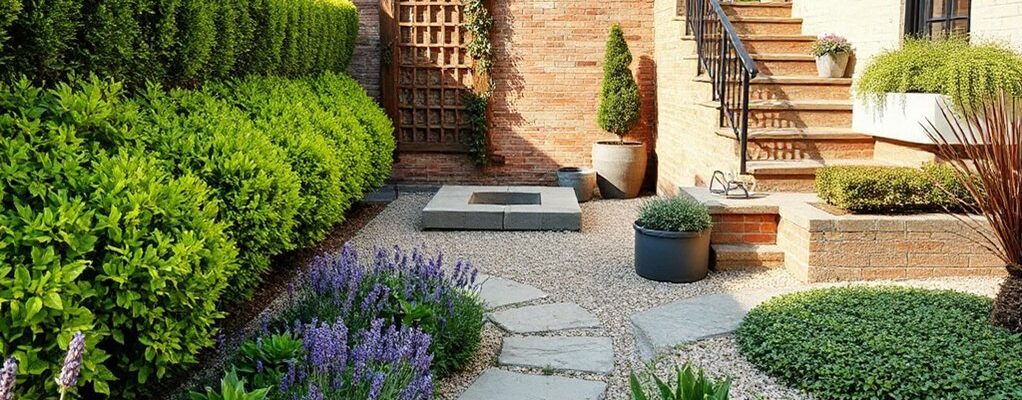
You might think a terrace is too small to feel coherent, but careful zoning, vertical layering, and compact, modular furniture can transform it. Start by defining space, sun, and edges, then stack planting in tiers to maximize depth. Use hidden storage and adjustable seating to keep the area flexible, and guarantee drainage is integrated for seasonal care. The next step reveals how to balance circulation with focal points while keeping maintenance efficient—a practical approach to a surprisingly expansive feel.
Define Your Terrace: Space, Sun, and Boundaries
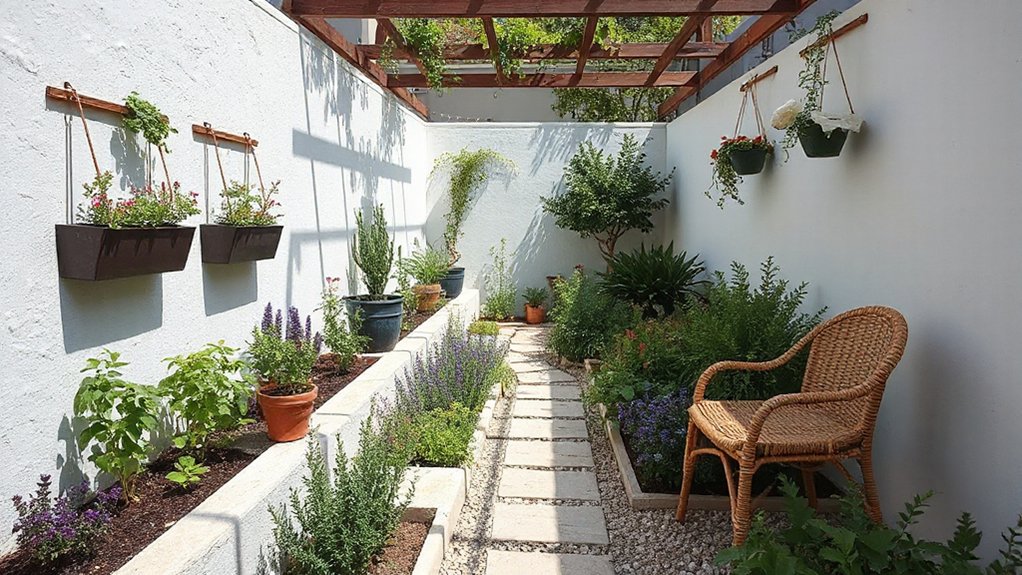
Begin by mapping the terrace’s usable footprint, noting how much width and depth you have for circulation, seating, and planters. You’ll quantify sun exposure across hours and angles to determine viable planting zones and microclimates.
Define clear boundaries using sightlines, edges, and materials that read as continuous flows from indoors to outdoors.
Assess structural limits, drainage, and wind patterns to anticipate maintenance needs and safety considerations.
Allocate zones for primary functions: dining, lounging, and garden lighting implementation, then verify that each zone supports access without crowding.
For pest control, plan inconspicuous exterior strategies, like sealed seams and non-toxic barriers, integrated with habitat-friendly practices.
Document measurements and constraints so future revisions stay aligned with the terrace’s defined use and resilience.
Tiered Planting for Narrow Yards: Layer Height and Texture
In narrow yards, tiered planting leverages vertical space to create depth and texture without expanding footprint. You structure layers by height, selecting plants with complementary forms to form a coherent visual hierarchy.
Begin with ground covers or low rosettes to establish a stable base. Then introduce mid-height shrubs for mass and seasonal interest. Cap with defined, architectural perennials or small trees at the upper tier.
Focus on Layer height to ensure sightlines remain unobstructed from entry points and windows.
Texture layering matters: pair fine textures with bold leaf shapes to prevent flatness and emphasize rhythm across axes.
Use recurring materials—mulch, stone, or timber edging—to unify layers, minimize maintenance, and reinforce clean delineations between zones.
Regular pruning maintains proportionality and tight, predictable scale.
Compact Seating for Flexible, Multi-Use Zones
Where space is tight, compact seating becomes a functional anchor for flexibility and circulation in terraced plots. You select modular furniture that folds, nests, or stacks, enabling instantaneous reconfiguration between dining, lounging, and work tasks without footprint creep.
Prioritize clean lines, low profiles, and integrated surfaces to maintain sightlines and accessibility across levels. Place seating along edges to preserve central pathways, and use narrow benches with slim backs to avoid visual bulk.
For versatility, pair modular units with movable cushions and lightweight tables that can be rearranged into larger gatherings or compact setups. Guarantee durability through weather‑resistant fabrics and weathering steel or powder-coated frames.
Define zones with subtle contrasts in color or texture, so each function reads clearly without obstructing circulation.
Vertical Gardens and Hidden Storage for Small Terraces
Vertical gardens and hidden storage maximize verticality on small terraces by integrating planting trellises, modular planter walls, and discrete compartments that double as seating or steps.
You configure a tight footprint with vertical horticulture, selecting structural planters that support weight, drainage, and accessibility. Use programmable irrigation zones to nourish indoor herbs without wall clutter, linking a compact controller to each planter column.
Choose decorative containers that stabilize asymmetrical layouts while masking hardware; pair them with slim shelves to maintain sightlines. Embedding storage within seating boosts usability, concealing hoses, tools, and potting mixes.
Optimize material progression—aluminum, powder-coated steel, or Ipe—to resist weathering while preserving a clean aesthetic. Maintainable joints and removable panels simplify future reconfigurations, enabling modular growth without sacrificing space integrity.
Drainage, Maintenance, and Seasonal Care for Terrace Gardens
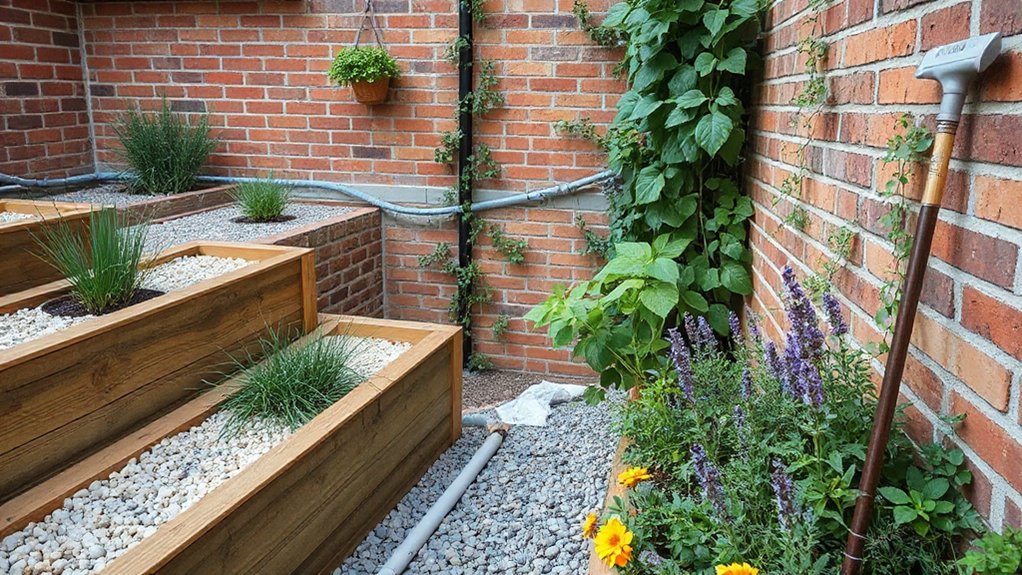
Drainage is the foundation of a healthy terrace garden: properly graded surfaces and integrated drainage infrastructure prevent perched water, root saturation, and structural load issues.
You implement a continuous, slope-based strategy with perforated sub-surface pipes and slope drains to channel excess moisture away from rooting zones.
Regular checks target clogging, sediment buildup, and slope integrity, ensuring uniform water distribution during irrigation cycles.
Water management hinges on targeted timing, avoiding overwatering while maintaining consistent soil moisture.
Use a layered soil profile with high-quality amendments to sustain structure between seasons.
Soil enrichment includes compost and mineral additives aligned to crop demands, improving nutrient availability and microbial activity.
Seasonal care emphasizes pruning, protective netting, and mulching to minimize evaporation and thermal stress while preserving root health.
Frequently Asked Questions
How Can I Maximize Privacy on a Small Terrace?
You can maximize privacy on a small terrace by integrating vertical screens and dense planting for Urban privacy, while installing modular sound barriers along edges; use permeable fencing, and acoustic trellises, to maintain airflow and sound containment without visual clutter.
What Are Budget-Friendly Materials for Terrace Gardens?
You should choose cost effective fertilizers and affordable container options for a budget-friendly terrace garden. You’ll optimize growth with precise spacing, light-weight planters, and durable substrates, ensuring reliable irrigation while avoiding waste and maintaining a clean, efficient design approach.
Which Plants Thrive in Shady Terrace Conditions?
Shade-tolerant plants prosper on your shady terrace, selecting microclimates and moisture regimes carefully. For a terraced garden, you’ll group shade-tolerant plants by light gradient, ensuring drainage, companion planting, and durable foliage, while considering wind exposure and sun-shadow cycles.
How Do I Safely Install Vertical Planters?
Did you know 75% of vertical planter failures trace to improper water drainage? You can safely install vertical planters by securing wall brackets, distributing weight evenly, and ensuring container placement with drainage, while monitoring drip lines and anchoring hardware.
What Trellising Options Suit Windy Balconies?
For windy balconies, choose robust trellises with windbreak barriers and anchored supports; use climbing vines that tolerate exposure. You’ll install adjustable tension grids, then train climbers to optimize airflow, moisture, and shade while minimizing sway and debris buildup.
Conclusion
Optimizing a terrace boils down to disciplined layering, tight circulation, and smart storage. When you confirm a theory that vertical complexity expands perceived space, couple it with tiered planting, modular seating, and concealed drainage to realize tangible gain. Visualize the idea as a stepped grid: boundary cues, sunlit zones, and a living wall that scripts depth. The result is a technically sound, design-forward outdoor room—refined, adaptable, and surprisingly expansive despite limited footprint.