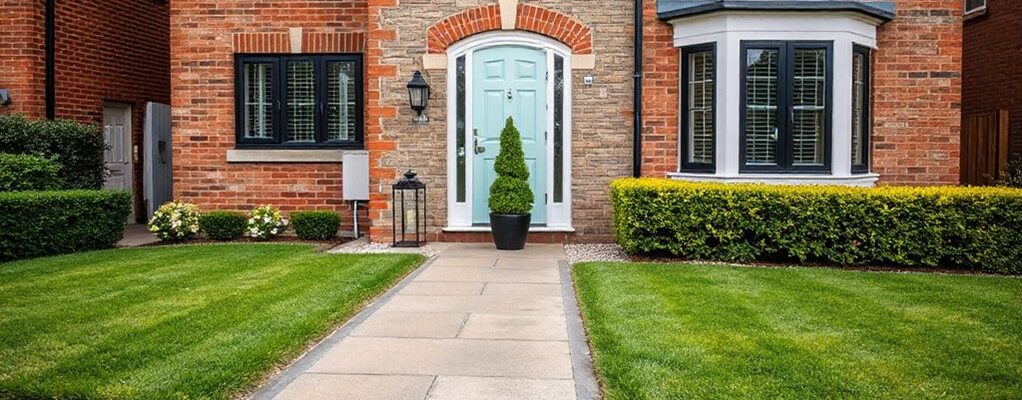
Did you know the right boundary choices can unify a semi-detached pair without costing a fortune? You’ll get practical, durable ideas for your front entrance, lighting, and plant schemes that feel cohesive with your neighbor’s look. Start with accessible upgrades that make a solid first impression, then plan how to extend that harmony across every inch of curb appeal. There’s a clear path to a welcoming, low-maintenance result, if you’re ready to align materials, color and spacing.
Quick Wins to Elevate Your Front Entrance
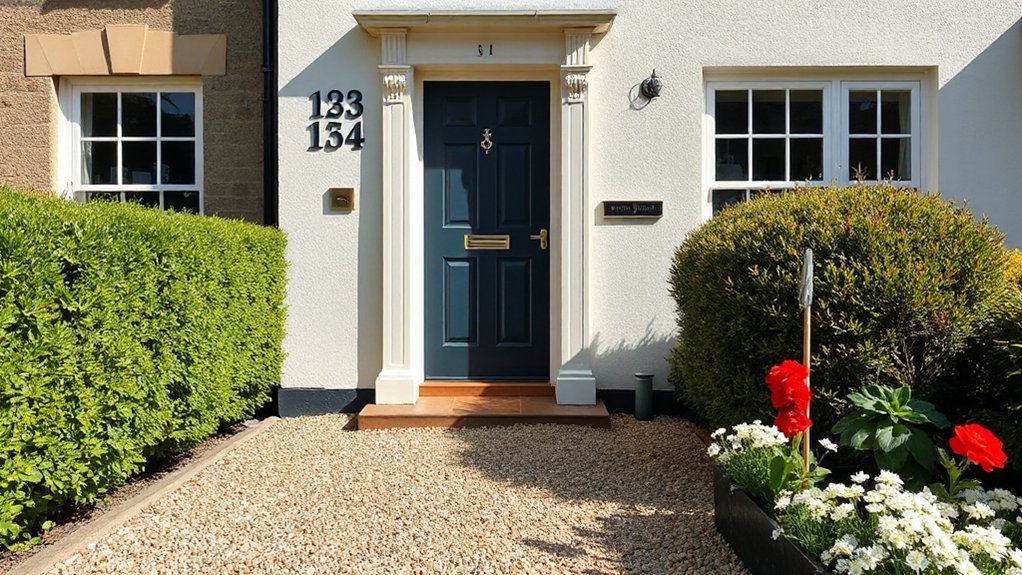
Freshen your front entrance with a few quick, high-impact tweaks. You’ll start by defining a focal point, like a bold door color or a statement garden sculpture, so attention lands where you want.
Next, swap in decorative planters at door height and along the path; choose durable materials and weather-safe finishes for longevity.
Keep paths clear and lighting bright but unobtrusive—motion-activated sconces or a solar rail light work well.
Consider a tidy trim on hedges and a fresh welcome mat that mirrors your home’s tones.
Add seasonal greenery—evergreen accents for winter, flowering annuals for spring—to create constant visual interest.
Finally, make sure hardware (knocker, handle, hinges) is polished and aligned for an immediate, professional lift.
Choose Complementary Boundaries That Harmonize With Your Neighbour
To keep your kerb appeal cohesive, start by choosing boundary materials that echo your neighbour’s, so the line feels seamless rather than confrontational. Consider pairing textures and colors from their fence or wall with your own.
Agree on height or cap finishes to avoid abrupt shifts. If you’re unsure, select a neutral palette and a simple, low-maintenance option that aligns with nearby features.
Harmonize With Neighbors
Harmonizing with neighbors means choosing boundary treatments that complement, rather than clash with, adjacent properties. You’ll aim for subtle continuity: similar setbacks, aligned fence heights, and shared scale that respects both homes.
Start by surveying sightlines from each curb, noting where hedges, gates, or low fencing create a cohesive rhythm.
Favor finishes and colors that echo your neighbour’s palette, so progression feels intentional rather than incidental.
Maintain clear sight and access for both properties, avoiding obstructive plantings or oversized structures that dominate the boundary.
Consider gradual changes rather than abrupt shifts to preserve street character.
In your garden symphony, these mindful choices support color coordination across lots, boosting curb appeal without drawing attention to boundaries themselves.
Practical, durable options keep harmony intact long-term.
Boundary Material Choices
Choosing boundary materials that complement your neighbour’s, rather than compete with it, starts with simple alignment: select shared tones, textures, and heights so the boundary reads as a single, intentional element.
You’ll want fence styles that mirror your neighbour’s silhouette—low rails for visibility, or solid panels for privacy—so the line feels continuous. Consider wall textures that echo brick, render, or timber cladding on the house, avoiding jarring contrasts.
Material durability matters: choose weather-resistant options with similar maintenance cycles to reduce upkeep. Height compliance matters too; align with local rules and your neighbour’s boundary to avoid disputes.
Plan for access gates and staining schedules that synchronize with your neighbour’s. By harmonizing colour, texture, and scale, you create a cohesive frontage that enhances kerb appeal and property value.
Subtle Lighting That Extends Your Curb Appeal Into Nighttime
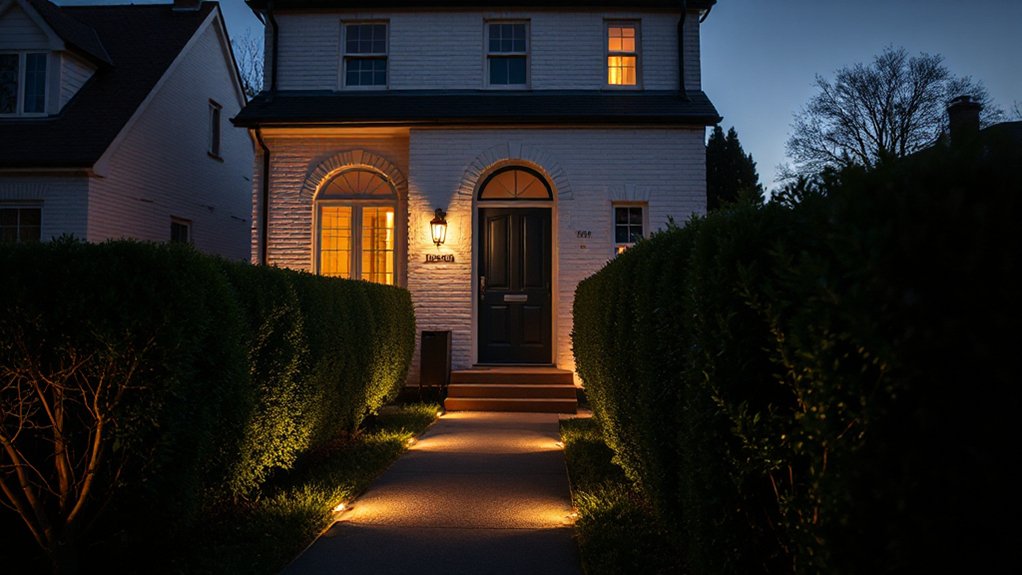
Think about subtle night lighting that guides visitors along the path without overpowering your façade. Start with low-angle, warm-toned LEDs to highlight the pathway and key architectural details.
Then layer in soft wash lighting to create depth. We’ll explore practical techniques and exact placements to extend your curb appeal into nighttime.
Subtle Night Lighting
Subtle night lighting can dramatically extend your curb appeal without overpowering the rest of the facade. You’ll want low, warm illumination that highlights architectural features without glare.
Place shielded wall lights at eaves to cast soft downlight, and install pathway lighting that guides without creating harsh contrasts. Keep beam angles modest to preserve nighttime color of materials and avoid fan-out onto windows.
Use dimmable fixtures so you can adjust intensity for events or daily viewing.
Integrate garden sculptures or decorative planters as focal points, lighting them indirectly to avoid silhouettes and glare.
Choose color temperature around 2700–3000K for a natural look.
Verify wiring, weather sealing, and transformer placement are accessible for maintenance, ensuring reliability and safety throughout the year.
Pathway Glow Techniques
Pathway lighting should guide visitors with gentle clarity, not glare, so use low-profile fixtures that cast even, warm light along walkways. Place lights at regular intervals, about 6–8 feet apart, to create a steady glow without hotspots. Aim for a color temperature around 2700–3000K to preserve warm tones on brick and greenery.
Integrate subtle uplighting for garden sculptures to add texture and depth after dark, avoiding overpowering beams. Consider recessed path lights near edges to accent edges and improve safety on steps.
Use contrasting driveway patterns, ensuring lights won’t reflect off glossy surfaces. Use solar-assisted options where wiring is impractical, but prioritize hardwired fixtures for reliability.
Finish with a discreet linear washer along the border to create a cohesive, inviting nighttime entry.
Landscape Tricks for a Cohesive Semi‑Detached Look
A cohesive semi-detached landscape starts with a clear, repeating framework: use similar plant shapes, colors, and materials on both sides of the boundary to read as one, connected design. You create balance by mirroring focal points and repeatable line work along the curb line.
Choose a restrained palette: two or three greens, plus one flowering accent, and carry them through shrubs, groundcovers, and pots. Keep bed edges tidy and consistent in width; this foreground rhythm guides the eye.
Introduce garden sculptures or simple statuary as shared anchors, positioned at equal distances from the boundary. Use plant arrangements that reinforce symmetry—layer heights, then tuck taller specimens toward the back.
Maintain tidy pruning, uniform mulch, and deliberate seasonal tweaks for cohesive impact.
Shared Focal Points That Tie the Pair Together
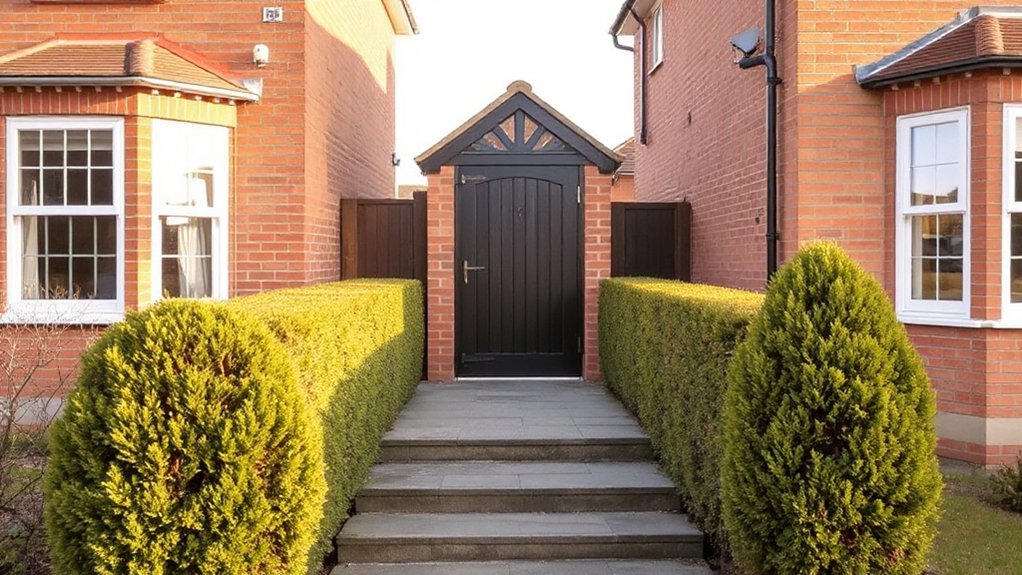
Shared focal points act as the unifying anchors that visually connect the two sides of a semi-detached pair. You’ll create visual continuity by selecting elements that repeat or mirror across the boundary, so the eye moves smoothly from one façade to the other.
Start with a shared material palette—brick, render, or cladding in complementary tones—and carry it through doors, windows, and trim. Use aligned window grids or consistent mullion patterns to reinforce symmetry without rigidity.
Include a central feature—such as a matching porch canopy or a coordinated planting bed—that anchors both elevations. Keep landscaping restrained and mirrored; shrubs, height, and color should echo on each side.
These shared focal points establish Visual continuity, elevating curb appeal with coherent, deliberate design.
Practical Maintenance Plans to Keep It Looking Fresh
To keep your semi-detached exterior looking fresh, establish a simple, seasonal maintenance schedule and stick to it. You’ll gain consistency by listing weekly, monthly, and quarterly tasks, then marking them on a shared calendar.
Focus on garden maintenance: trim overgrowth, weed regularly, mulch beds, and check irrigation for leaks or clogs.
Schedule gutters, downspouts, and fascia inspections after storms, clearing debris and repairing loose fittings promptly.
Clean windows and pathways seasonally to prevent staining, using mild cleaners to protect surfaces.
Maintain outdoor furniture by inspecting for rust, loosened screws, and fabric wear; apply protective coatings, tighten joints, and store cushions during harsh weather.
Document completed tasks and adjust timing based on growth cycles, ensuring a fresh, well-kept curb appeal year-round.
Weather‑Resistant Colors and Materials That Blend With Neighbours
Weather-resistant colors and materials that blend with neighbours should be your guiding criteria when selecting exterior elements. Choose hues that echo adjacent homes—muted beiges, sage greens, and stone grays—so your façade reads cohesive rather than competing.
Opt for durable materials like fiber cement siding, brick, or cedar with protective finishes, ensuring longevity and low maintenance. Reserve bold accents for doors or shutters to preserve harmony while still delivering curb appeal.
Avoid trends that starkly contrast neighbouring palettes; instead, test samples at different times of day. Incorporate garden ornaments and seasonal decorations sparingly, ensuring they sit within the established color and material rhythm.
Maintain uniform rooflines and trim widths to reinforce a seamless streetscape. Regular weatherproofing preserves the look long-term.
Affordable Upgrades With Big Visual Impact
A practical way to boost curb appeal without blowing your budget is to focus on high-impact, affordable upgrades that readers notice first. Choose garden decor that frames the entry and creates inviting sightlines: a compact, drought-tolerant planting scheme, defined borders, and a clear path with low-maintenance edging.
Swap tired railings or aging posts for fresh, durable finishes in neutral tones that echo the house brick. Implement roof enhancements that are visually decisive yet cost-conscious—clean fascia, aligned gutters, and a neat porch canopy or overhang to sharpen silhouette.
Use lighting to elongate shadows at dusk, highlighting architectural features without overdoing it. Keep materials cohesive, prioritizing quality over quantity to deliver immediate, lasting impact.
Plan updates around the front facade’s strongest focal points for maximum effectiveness.
Frequently Asked Questions
How Can I Budget for Semi-Detached Curb Appeal Upgrades?
Yes. To budget for semi-detached curb appeal upgrades, set a clear cap, itemize garden lighting and driveway improvements, research costs, compare quotes, and allocate 50% for essentials, 30% for aesthetics, 20% contingency; track spending weekly.
What Wall Textures Suit Both Homes in a Pair?
You’ll notice 60% of buyers judge first impressions by wall texture. Choose a balanced pairing: one side with subtle stucco, the other with clean smooth plaster. Add garden lighting and window shutters for cohesive, timeless curb appeal.
Which Front Door Styles Signal Symmetry Without Copying?
Choose front door styles that signal symmetry without copying: opt matched panels and sidelights with varied but coordinated colors; use color coordination and architectural accents, like balanced trim and matching hardware, to convey harmony while preserving unique character.
How Do I Reduce Exterior Maintenance Across Two Properties?
Research shows that homeowners save 20% on exterior maintenance by consolidating two properties into a single routine. You’ll implement landscaping ideas and lighting enhancements, streamline tools, schedule shared tasks, and use durable materials to reduce ongoing upkeep.
What Seasonal Tweaks Keep Both Facades Looking Fresh?
Seasonal tweaks keep both facades fresh by prioritizing garden lighting and durable outdoor furniture, rotates plants for color, cleans gutters, trims hedges, power-washes paths, and seals wood; you’ll create vibrant, welcoming exteriors with minimal maintenance.
Conclusion
You’ve got a clear, budget-friendly playbook for turning a semi‑detached pair into a cohesive curb appeal. Start with a welcoming entrance, match boundary materials, and soften the scene with warm lighting and tidy paths. A single shared focal point—a sculpture, planter line, or color theme—pulls the look together. Do a quick maintenance sweep weekly, and choose weather‑resistant colors that blend with neighbors. Fun fact: homes with coordinated exteriors sell up to 7% faster than mismatched ones.