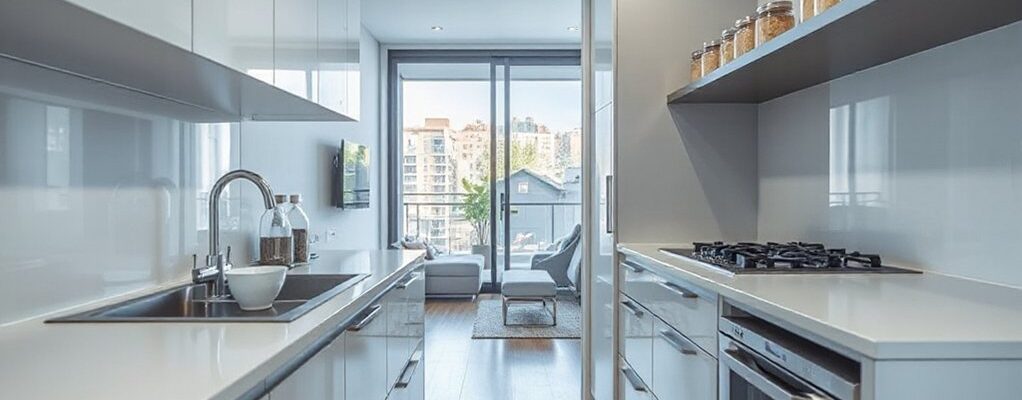
When you’re designing a compact kitchen, focus on efficiency and flow: a galley or L-shaped layout keeps work zones within reach, while smart storage and integrated appliances free up precious space. Balance corners, light, and usability with clean finishes and open shelving to keep a small area feeling open. Curious about which layout fits your space best and how to tweak it for daily life? Let’s map out your priorities and start optimizing.
What Makes a Small Kitchen Work Efficiently for You
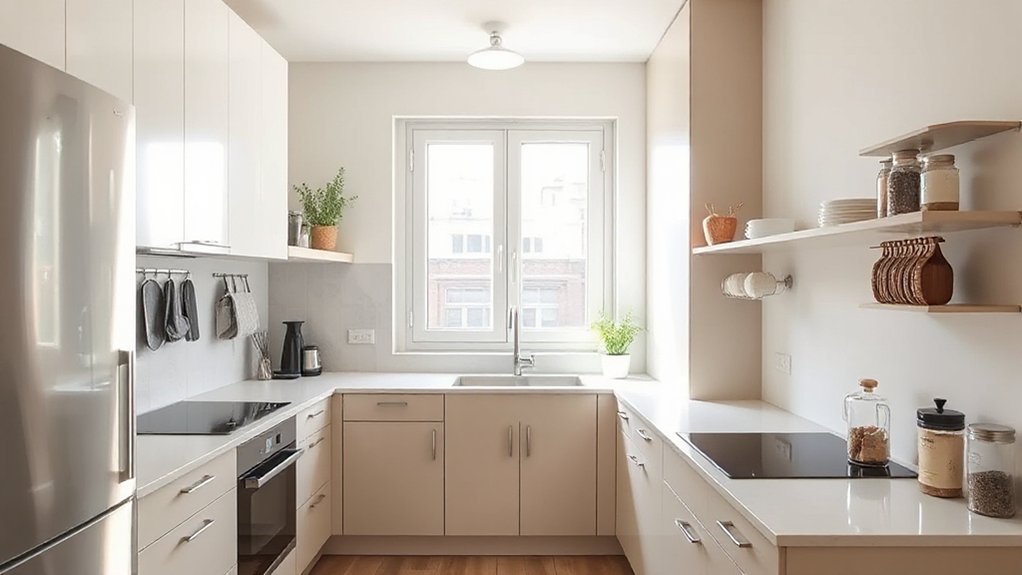
Small kitchens demand smart choices, so start by defining your must-haves and constraints. You’ll work with a compact footprint, so prioritize flow and accessibility. Identify tasks you perform most—cooking, cleaning, prep—and map them to a clear sequence.
Use color coordination to visually unify appliances and cabinets, making the space feel larger and cohesive. Favor ergonomic design: drawers that glide, counters at comfortable heights, and pull-out shelves that reduce bending.
Choose a shallow sink and a one-level cooking zone to minimize reaching. Opt for multifunctional pieces, like a prep island that doubles as a dining surface, and compact appliances that don’t crowd counters.
Plan lighting that eliminates shadows and brightens work zones. This approach yields a calm, efficient, fashion-forward kitchen you’ll actually use.
Plan a Galley Layout for Tight Spaces
A galley layout makes the most of narrow spaces by placing two parallel work zones for efficient workflow. You’ll gain a streamlined corridor that keeps prep, cooking, and cleanup in close reach without wandering.
Start by aligning the primary work triangle along the two walls, with the sink opposite the range and prep area nearby.
Choose compact storage solutions to maximize every inch: pull-out organizers, corner carousels, and vertical racks that keep essentials within arm’s reach.
Prioritize space-saving appliances that fit snugly, like slender dishwashers and slim refrigerators, so you retain full cabinet depth for dishes and pantry staples.
Use open shelves sparingly and finish with a light color palette to enhance brightness.
End with integrated handles for a clean, modern visual.
Choose Between U- and L-Shaped Kitchens
U- and L-shaped kitchens both maximize space, but they suit different workflows and layouts. You’ll choose based on how you work, how much counter space you need, and how you want traffic to flow.
If you cook in bursts and entertain, a U-shape keeps everything within arm’s reach while containing steps in a defined zone. An L-shape, with its open toe-kick, promotes social cooking and fits narrow, long rooms, leaving a dining or living spillover area.
Consider color schemes that enhance perceived space: light tones feel airy in both shapes, while accent walls or cabinets can define zones without crowding.
Flooring options matter too—continuous material unites the layout and reduces visual breaks. Pick the shape that respects your prep rhythm and daily life.
Master Storage and Appliance Placement in Small Flats
Smart storage and smart placement go hand in hand in tight flats, where every inch counts. You optimize by grouping high-use appliances together, keeping the most-used items within arm’s reach. Choose compact, integrated units to reduce visual bulk, and prefer drawers over shelves to minimize dust and clutter.
Think vertical: tall pantry shelves, wall-mounted racks, and magnetic strips free counter space while preserving accessibility. Appliance arrangement should separate perishable prep from cooking zones, letting you move fluids or hot items without crossing paths.
Use pull-out organizers, labeled bins, and toe-kick drawers to hide infrequently used tools. Align outlets with planned workflows to prevent trailing cords.
Finally, select cohesive finishes to create a seamless, uncluttered look that feels larger and more intentional.
Zone, Light, and Finish Your Small-Kitchen Makeover
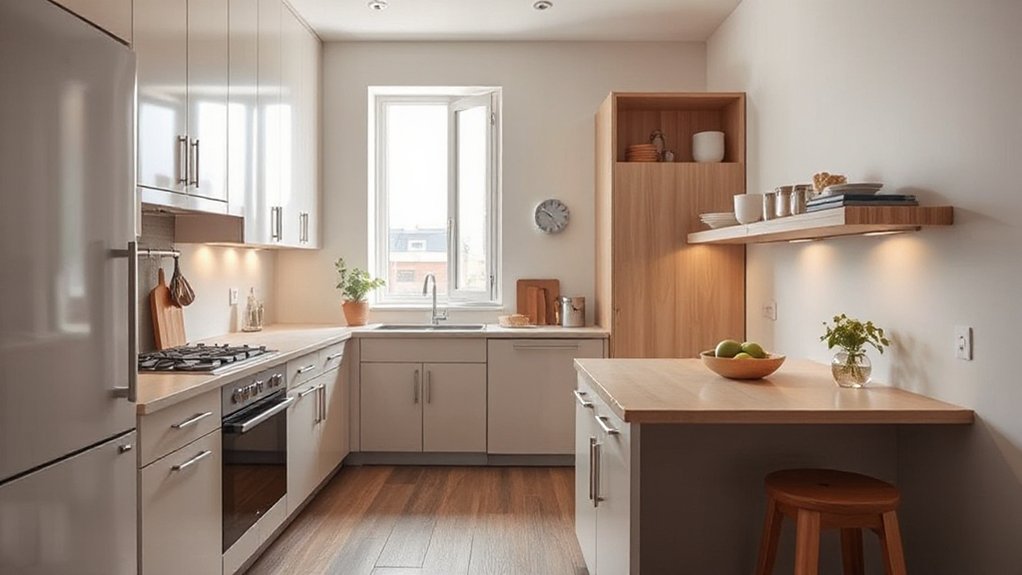
Now that you’ve optimized storage and appliance placement, it’s time to zone, light, and finish your small-kitchen makeover. Start with subtle zones: prep near the sink, cook near the range, and cleanup close by.
Use lighting as a design cue—under-cabinet LEDs for task light, a dimmable central fixture for ambiance, and a reflective backsplash to brighten the space.
Choose matte finishes to hide fingerprints and glossy accents to catch the eye without glare.
For color schemes, keep a cohesive palette with one dominant shade and two supporting tones to create depth without clutter.
Material textures matter: pair warm wood grains with cool concrete or metal for contrast.
Finish with slim, integrated hardware and a few statement pieces that elevate style without sacrificing function.
Frequently Asked Questions
How Do I Budget for a Compact Kitchen Renovation?
You should start with a clear budget, then track every expense. Budget planning helps you prioritize must-haves, while cost saving tips trim costs. Use modular components, compare quotes, and reserve a 10–15% contingency for surprises.
What Are Hidden Storage Ideas for Tiny Flats?
Hidden compartments and vertical shelving maximize tiny-flat storage; you’ll tuck away odds and ends while keeping surfaces sleek. Install pull-out organizers, slim bins, and mounted rails. You’ll access gadgets at a glance, stay organized, and feel stylishly efficient.
Can a Kitchenette Be as Functional as a Full Kitchen?
Yes, a kitchenette can be as functional as a full kitchen if you optimize space with open shelving and compact appliances, you’ll keep everything accessible, stylish, and organized while you cook.
Which Appliances Maximize Space Without Sacrificing Usability?
Appliances that maximize space without sacrificing usability include compact, multi functional devices placed strategically: appliance placement matters as you combine burners with prep areas; opt stackable or integrated units, and choose versatile appliances that perform several tasks in one.
How Do I Improve Ventilation in Small Kitchens?
Ventilate efficiently by installing a high-CFM range hood and exhausting to the exterior. Position the window to cross-ventilate, use Ventilation fans strategically, keep doors open when cooking, and add a compact, stylish vent above the stove.
Conclusion
If you want a kitchen that feels bigger than it is, think flow, not fuss. Visualize your space as a sleek runway: galley precision, L‑shape warmth, smart nooks, and hidden appliances. Use light tones, open shelves, and magnetic strips to keep surfaces clean and chic. Zone by how you cook, light every corner, and finish with durable, stylish fixtures. In short, efficient, fashionable function turns small kitchens into big statements.