
Take a recent kitchen remodel you saw go over budget and ask yourself if the issues were clear upfront about licensing, timelines, and change orders. You’ll want to pin down credentials, project milestones, and who handles delays before you sign. If you don’t get specific answers about materials, subs, and cost-tracking, you’re leaving room for surprises later—so it’s worth outlining the questions that separate reliable builders from the rest.
What Credentials Should You Verify Before Hiring a Builder?
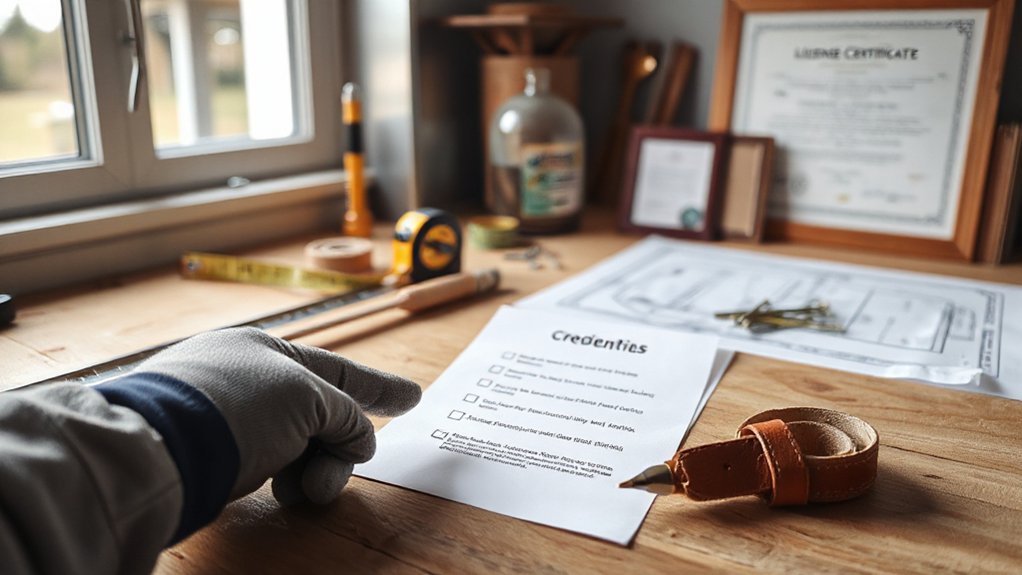
When hiring a builder, you must verify several credentials to protect your project and investment. You evaluate licensing requirements to guarantee legitimacy and ongoing compliance with local codes. Verify certification levels, trade licenses, and any specialized accreditations relevant to your scope.
Next, confirm insurance coverage—general liability, workers’ compensation, and, if applicable, commercial vehicle policies—to shield you from claims and project disruption. Request current certificates of insurance and confirm policy limits meet your risk tolerance.
Check bond status where required, and ask about past disciplinary actions or license suspensions. Cross-check the builder’s status with the licensing authority and insurer for validity.
Document all verifications in writing, noting issue and expiration dates, so you have a verifiable trail should issues arise. This diligence streamlines decision-making and reduces risk.
How Long Will a Renovation Take, and What Factors Affect the Timeline?
Renovation timelines vary, but clarity starts with expected milestones and the factors that push them. You should map a baseline schedule—from prep and framing to finish—so you can spot deviations early.
Key drivers include sequence logic, permit approvals, and trade coordination, which determine buffer needs and pace. Construction delays often hinge on trade availability and material lead times, so build contingencies for critical path tasks.
Weather impacts, especially in exterior work or concrete pours, can pause progress for days, affecting crew deployment and sequencing. Communicate realistic milestones tied to weather windows and permit status, then monitor daily progress against those targets.
What Materials, Vendors, and Subs Will Be Used, and Why Should You Care?
Choosing materials, vendors, and subs matters because it directly shapes quality, cost, and schedule. You want clarity on what’s in the plan, not promises.
Material selection sets durability, finish, and maintenance, so verify specs, warranties, and compatibility with your design intent. Ask which vendors supply the core products, and why those relationships were chosen—are they proven, timely, and cost-competitive? Understand substitutions criteria if supply issues arise and how substitutions impact aesthetics and performance.
Look for a documented bill of materials and reliability history, including lead times and delivery certainty.
Vendor relationships matter because a builder’s network affects pricing leverage, fault resolution, and on-site coordination. Confirm the subs’ qualifications and roles are clear, with accountability for workmanship and sequencing.
How Will Renovation Costs Be Estimated and Tracked Against Your Budget?
Establish how the estimator will derive costs, including labor, materials, and contingencies, so you can compare bids on a like-for-like basis.
Then outline how the budget will be tracked in real time, with thresholds for overruns and clear reporting intervals.
This sets up a disciplined, transparent process to keep renovations on target and your decisions data-driven.
Estimating Methodology
To estimate and track renovation costs effectively, you’ll want a clear, formal methodology that ties every line item to a budget baseline and a defined timeline. Your approach should be itemized, transparent, and repeatable, so you can verify assumptions at each milestone.
Begin with a standardized bill of quantities, unit costs, and contingency bands aligned to scope certainty. Use a bottom-up estimation for core trades, then normalize with historical data and market intelligence.
Integrate design trends and sustainability practices to anticipate premium finishes or efficient systems, but document where they influence cost.
Maintain a live comparison dashboard showing committed, forecast, and earned value, with quarterly reconciliations.
A disciplined, auditable process reduces surprises, supports decision points, and keeps stakeholders aligned throughout the project lifecycle.
Budget Tracking Process
How will you keep renovation costs aligned with your budget across the project lifecycle? You’ll establish a transparent tracking system that ties each line item to the baseline estimate, with weekly updates and variance analysis.
Start by defining a clear budgeting framework: categories, contingency, escalation allowances, and sign-off gates for scope changes. Use a living cost matrix that reflects current supplier quotes and labor rates, updating as decisions firm up.
Require approvals for design aesthetics shifts and sustainability considerations that impact price. Track commitments vs. actuals, flagging overages early and sequencing corrective actions.
Institute reporting dashboards for stakeholders, plus post-moneysaving reviews to capture learnings. This disciplined approach keeps costs predictable while supporting quality design and responsible sustainability.
What’s the Communication Plan and Decision-Making Process During a Project?
Establish your project’s Communication Cadence Plan to set when and how updates arrive, who gets them, and through which channels.
Clarify the Decision-Making Protocols You’ll rely on during key milestones, bottlenecks, and change requests to avoid delays.
This framework keeps decisions timely, transparent, and aligned with budget and timeline goals.
Communication Cadence Plan
A clear communication cadence is essential to keep a project aligned and on schedule; it sets expectations, accelerates decision-making, and reduces rework. You establish a rhythm of updates, meetings, and check-ins that match project milestones and critical phases.
Define who, when, and how often reports occur, and specify preferred channels to avoid delays. Rely on concise summaries, visual dashboards, and single-point accountability for issue escalation.
Incorporate quality assurance moments—pre- and post-signoffs—into the cadence so defects surface early. Maintain flexibility to adjust frequencies without compromising progress.
Document decisions and action items promptly, and distribute them to all stakeholders. A disciplined cadence prevents miscommunication, keeps subcontractors aligned, and supports timely course corrections when risks emerge.
Decision-Making Protocols During Project
To keep decisions timely and aligned with project goals, define a clear decision-making protocol that pairs a documented communication plan with a structured escalation path. You’ll specify who approves changes, how stakeholders are notified, and the criteria for urgent decisions.
In practice, decisions flow through defined stages: issue identification, impact assessment, alternatives, and final choice. Tie each stage to measurable criteria—cost, schedule, risk, and quality—so you can defend outcomes.
Establish decision rights by role, not title, to avoid bottlenecks and confusion. Use Design innovation as a guiding lens, ensuring options prioritize value without compromising safety.
Integrate sustainability practices into every decision, from materials to methods, and document rationale for traceability.
Regularly review the protocol to adapt to scope shifts and evolving constraints.
What Red Flags Should Pause the Project Before You Sign a Contract?
Red flags should pause the project before you sign a contract, because they reveal risks that could derail timelines, budgets, and quality. You should pause when the builder shows vague timelines, unavailable subcontractors, or unverified licenses.
Red flags also appear in sloppy proposals: missing scope details, ambiguous change orders, or unusually low bids that mask hidden costs.
Inspect their communication: delayed responses, evasive answers, or inconsistent project records signal reliability issues.
Examine finances: inconsistent payments, project financing gaps, or no lien waivers.
Evaluate design planning: ignored design trends or untested material choices threaten feasibility and durability.
Ask for references, past audits, and a transparent materials list.
Prioritize material durability and alignment with your goals, ensuring the contractor can deliver within a realistic design framework.
Proceed only when confidence is justified.
Frequently Asked Questions
How Will Changes in Scope Be Priced and Approved?
Changes in scope are priced via change orders, with written approvals and a documented impact analysis. Budget adjustments occur when approved changes alter cost projections. You should track changes, analyze impacts, and monitor approvals to maintain control and accountability.
What Is the Builder’s Process for Handling Permits and Inspections?
The builder’s permit process follows your project timeline, coordinating with authorities and obtaining approvals efficiently. They document deadlines and applicant responsibilities, then schedule inspections, verify compliance, and address any issues promptly through clear communication and proactive problem-solving.
Can You Provide Client References From Similar Projects?
Yes, I can share client references from similar projects. You’ll get honest feedback, and it helps you gauge design flexibility and material selection. It’s a strategic move, because you assess outcomes, risks, and budget adherence with precision.
What Warranties and Post-Project Support Do You Offer?
You’ll get clear warranties and post-project support, including code-compliant fixes if issues arise. You should expect material selection guidance and budget planning follow-ups, ensuring accountability, timelines, and documented guarantees for long-term performance and peace of mind.
How Do You Manage Subcontractor Scheduling and Quality Control?
You schedule subcontractors with a bird’s-eye view, aligning timelines and milestones while you monitor quality. You’ll track material selection and budget adjustments, adjusting plans as needed, and you’ll guarantee clear communication for on-time, on-spec completion.
Conclusion
Choosing a builder isn’t just about price—it’s about trust, processes, and predictability. Verify licenses, insurance, and past performance; demand detailed timelines, change-management plans, and transparent budgeting. Confirm materials, subs, and vendor relationships to guard quality. Establish a clear communication plan and decision-making process to avoid drift. Look for red flags that halt work before signature. If a builder checks these boxes, your project will flow smoother like a well-oiled machine in a tight, strategic sequence.