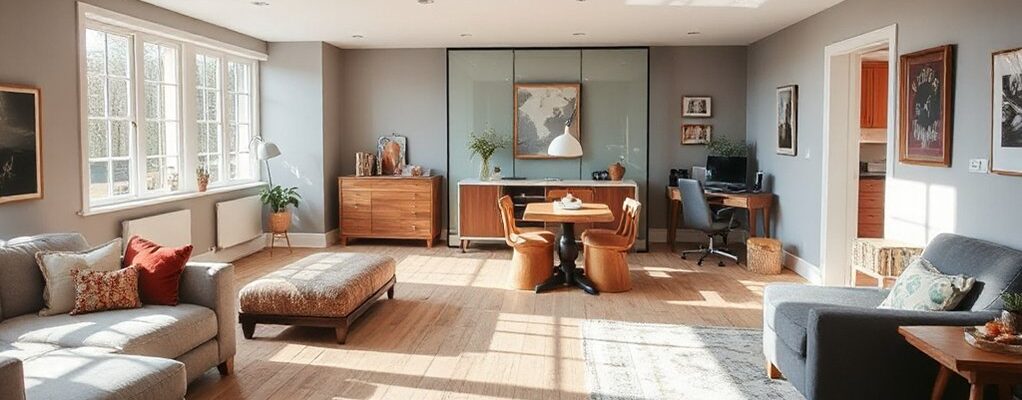
Open-plan living will blow you away with brightness and sociability, yet you’ll miss quiet corners and crave privacy when the party roars on. You’ll weigh open sightlines against noise control, daylight against acoustics, and flexible layouts against dedicated rooms. You’ll feel the pull of both worlds as you map zones, choose materials, and plan storage. The question isn’t which is best, but how you balance openness with private spaces to suit your UK home and life. Keep reading to map your ideal balance.
Open-Plan Living in UK Homes: What It Delivers and What It Costs
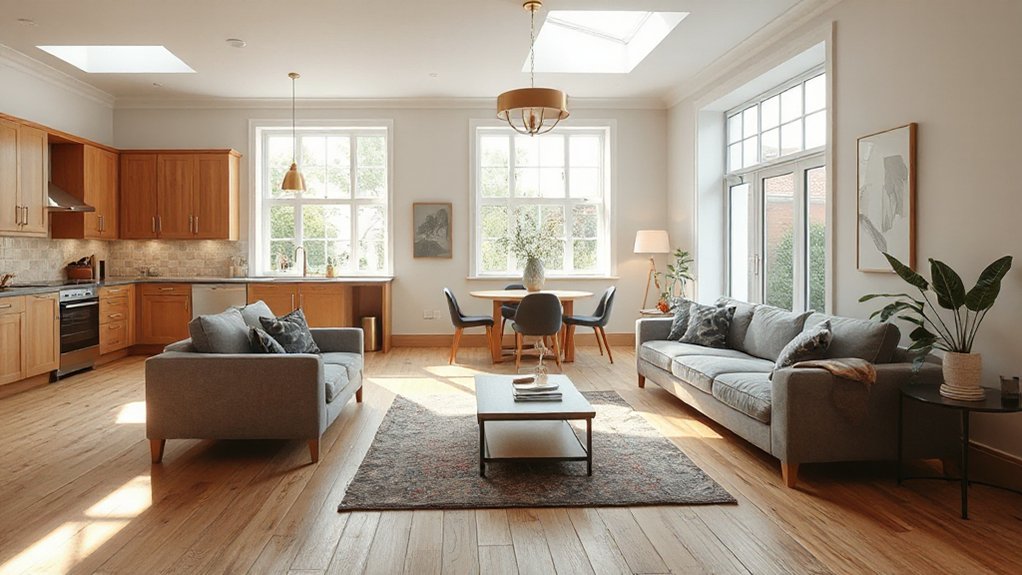
Open-plan living in UK homes delivers a flexible, sociable space that blends kitchen, dining, and lounge into one continuous zone. You’ll experience visual openness with fewer walls, which improves natural light distribution and circulation paths. The main deliverables include adaptable furniture arrangement that supports everyday tasks and social interaction, plus zones that read as coherent because of thoughtful alignment of colors, textures, and materials. You’ll benefit from streamlined services, integrated storage, and efficient pursuit of activity without barriers. Costs fall into structural modifications, acoustic considerations, and heating/cooling implications, plus furniture and partition strategies that influence budget. Aesthetic cohesion emerges when scale, proportion, and finish choices repeat across elements, ensuring the space feels intentional rather than disparate. Plan for flexibility, but quantify impact on comfort, energy, and maintenance.
When Separation Wins: Privacy, Light, and Noise Control
When separation proves advantageous, privacy, light control, and acoustic performance take center stage in design decisions. You’ll prioritize defined zones, allowing you to tailor daylight without glare, and to minimize cross-traffic disruption. In practice, solid evidence walls, staggered sightlines, and door seals address privacy concerns while maintaining usable floor area. You’ll balance glazed inserts with solid cores to control sightlines without sacrificing light where it matters most. Noise insulation becomes a measurable metric: thickness, material density, and floating or decoupled floors reduce transfer between rooms, preserving quiet for work, study, and rest. Consider lobby spaces and envelope detailing to prevent leakage of activity. The result is predictable acoustics, enhanced privacy, and targeted light, delivered through deliberate, technically grounded separation.
Open-Plan vs Separate: Energy Use in Real Homes
In real UK homes, open-plan layouts and discrete, compartmented spaces drive markedly different energy profiles. You’ll see higher peak demand in communal rooms, but with centralized heating, overall thermal efficiency can improve when space is used as intended. Open plans risk heat loss through shared boundaries and larger surface areas unless insulation and airtightness are well integrated. Effective zoning flexibility lets you target heating and ventilation to occupied zones, reducing wasted energy in vacant corners. You should consider thermal bridges at openings and the need for controllable irradiation via daylight and solar gains. Design strategies emphasize task-specific comfort, where radiative and convective loads align with occupancy, furniture layout, and window orientation, preserving comfort without excessive energy use.
Value and Costs: What Layouts Actually Pay Off
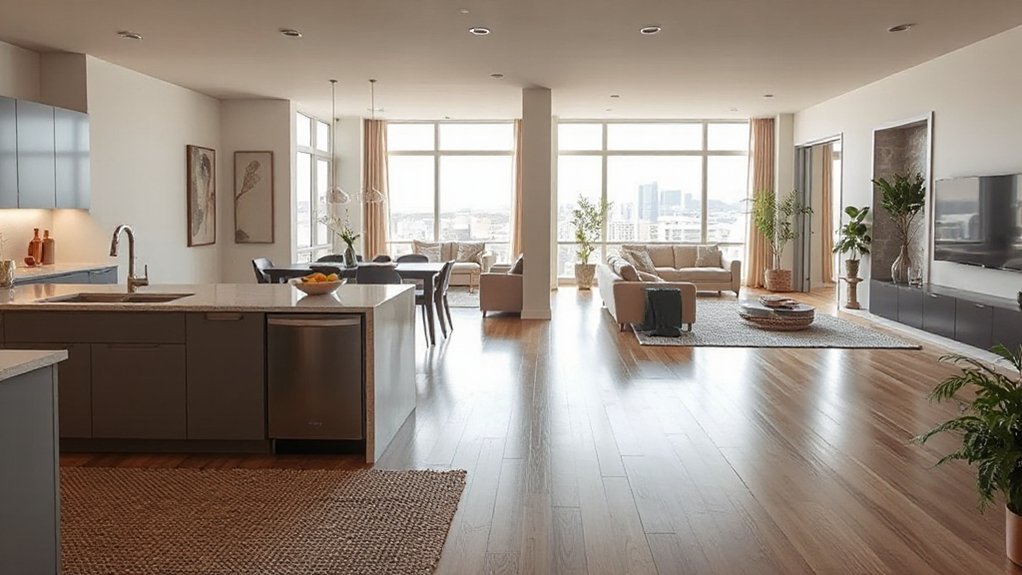
What layouts actually pay off, and why do some deliver better life-cycle value than others? You’ll evaluate costs against returns, considering build complexity, material longevity, and adaptability. Open-plan regions can boost perceived space, seasonal efficiency, and resale appeal, but may demand higher acoustic treatment and flexible furniture placement to preserve privacy. Separate rooms often reduce sound spill and improve function for work and study, yet may incur higher construction costs and longer planning cycles. Interior aesthetics matter: cohesive finishes, daylighting, and durable surfaces sustain value more than trendy details. When calculating payback, quantify energy implications, maintenance tempo, and reconfiguration options as family needs shift. Choose layouts that minimize costly renovations, support evolving routines, and facilitate durable furniture placement for flexible living.
Practical Design Tricks: Social Spaces With Quiet Nooks
Open-plan and separate-room layouts each shape social spaces, but practical design now means creating zones that encourage interaction while preserving acoustic privacy. You’ll design cozy corners within the living area by placing compact seating and low-soft furnishings to absorb chatter without closing off sightlines. Use visual dividers like shelves or varied ceiling heights to define zones without severing flow. Incorporate sound-damping materials—upholstered furniture, woven textiles, and textile wall panels—in high-traffic hubs to create soundproof zones that feel intentional, not boxed in. Align lighting to cue different moods: brighter for gathering, warmer for intimate chats. Guarantee circulation paths stay clear, so movement doesn’t disrupt conversations. This approach yields flexible social spaces that sustain connection while reducing noise spillover.
A Clear Decision Framework: Choose Open-Plan or Traditional Rooms
Open-plan layouts optimize space, light, and flow, but you’ll trade defined zones for acoustic and privacy drawbacks. Consider traditional rooms if you need clear function separation and controlled sightlines, yet accept narrower sightlines and potentially slower circulation. Use this framework to weigh Open-Plan Pros and Cons, Space, Light, and Flow, and Traditional Rooms Tradeoffs before committing.
Open-Plan Pros and Cons
A well-designed open-plan layout blends living, dining, and kitchen zones to maximize sightlines and natural light, but it can also blur boundaries and amplify noise. You’ll weigh benefits against drawbacks as you plan around activity, privacy, and acoustics.
- Furniture arrangement guides traffic flow and zones without clutter, but it demands deliberate sightline management.
- Acoustic insulation helps contain sound, yet may require costly treatments or strategic zoning.
- Flexibility this design offers supports changing needs with minimal walls, though it can complicate quiet work areas.
- Natural light and sociable interaction boost ambiance, while glare and overheating risks demand careful shading and layout.
Space, Light, and Flow
Space, light, and flow are the trio you’ll use to decide between open-plan and traditional rooms. You’ll evaluate how daylight disperses through zones, how sightlines affect perceived space, and how movement between areas feels under daily use. Open plans maximize daylight penetration and perceived spatial continuity, but may demand strategic acoustic privacy solutions to prevent noise spill. In traditional layouts, you gain defined zones that control glare and provide penetrations for quiet corners, yet daylight may be constrained and flow can feel segmented. Prioritize interior aesthetics by aligning material palettes, ceiling heights, and furniture scales to your function, sightlines, and heat/load considerations. Use a clear movement map, identify glare risks, and balance openness with control to optimize space efficiency and comfort.
Traditional Rooms Tradeoffs
Traditional rooms offer distinct zones that can enhance privacy, glare control, and acoustic separation, but this clarity comes at the expense of daylight reach and seamless circulation. You’ll weigh tangible controls against flexibility, guided by cultural preferences and historical influences that shape UK housing. A clear decision framework helps you map tradeoffs to living patterns, occupancy, and future adaptability.
- Privacy vs daylight: separate spaces reduce sound bleed but cut light sharing.
- Circulation rigidity: fixed paths hinder spontaneous interaction and flexible use.
- Heritage alignment: traditional layouts reflect cultural preferences and historical influences.
- Reconfiguration risk: future needs may require expensive or invasive changes.
Frequently Asked Questions
How to Measure True Open-Plan Acoustic Comfort in Homes?
You measure true open-plan acoustic comfort by testing sound insulation between zones and monitoring daytime noise reduction, using calibrated SPL meters, reverberation time, and subjective surveys to quantify how effectively the space resists noise and preserves speech intelligibility.
Which Layout Improves Resale Value Most Reliably?
You’ll boost resale value most reliably with a flexible layout that blends interior lighting and smart flooring options, prioritizing cohesive flow. You optimize appeal by choosing durable flooring options and layered lighting to highlight space and proportion.
Can Hybrid Designs Balance Openness With Privacy?
Hybrid designs balance openness with privacy by acting like an adaptable storyteller, switching scenes on demand. You address privacy concerns with modular screens, and design versatility lets light flow while preserving zones for work, rest, and focused tasks.
What Are Key Zoning Tricks for Multi-Use Spaces?
You should use furniture placement and zone differentiation to carve multi-use spaces. Start with clear sightlines, then place modular cores and rugs to define zones, ensuring acoustics, flow, and storage stay balanced for flexible daily tasks.
How to Budget Renovations Without Losing Ceilings or Light?
Ever wondered how to budget renovations without losing ceilings or light? You can balance form and function with soundproofing strategies and budget-friendly upgrades, safeguarding brightness while meeting performance targets and staying within your cash flow. Are you ready?
Conclusion
So, you stand at the threshold, where light spills into open sightlines and doors murmur privacy. The plan, search for balance: a kitchen that breathes with sociable air, and quiet corners that retreat from the chatter. The cost, the acoustics, the daylight—each choice reshapes how you live. Decide what you truly defend: a shared pulse or a private refuge. The right layout isn’t an all-or-nothing gamble; it’s a measured compromise you’ll feel every day. The rest remains to be revealed.