
About 30% of UK terraced homes lose daylight access due to neighboring competition, which directly limits usable space and comfort. You’ll want a design-led, technically grounded approach that aligns window placement, phase of sun, and interior finishes to maximize light without compromising privacy or energy performance. The choices you make now—layout, glazing, and reflective strategies—will steer outcomes as you explore practical steps and regulatory constraints that follow. So, what specific moves will you test first?
Diagnose Your Daylight Deficit in a UK Terraced or Semi-Detached Home
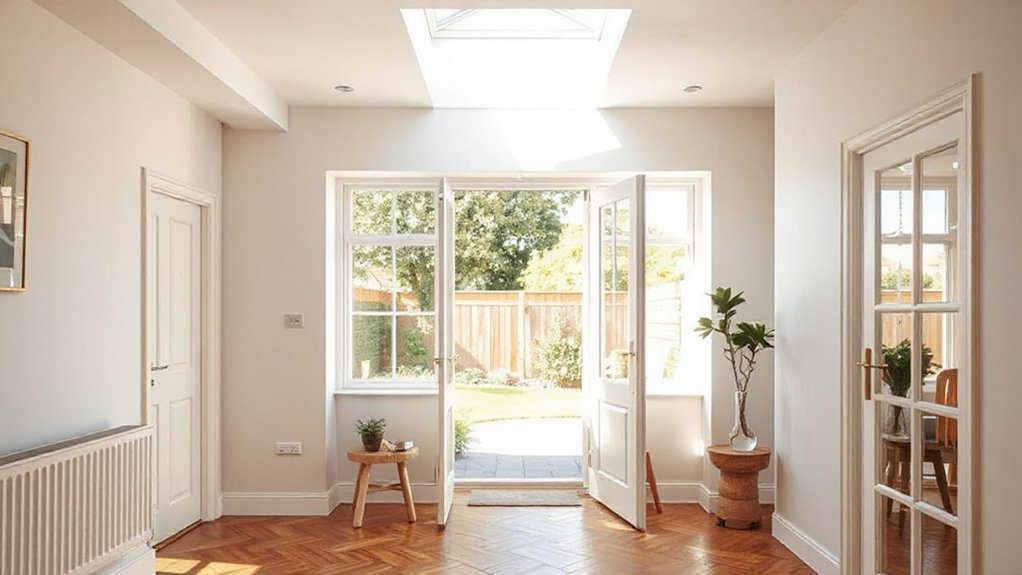
A daylight deficit in terraced or semi-detached UK homes typically arises when room layouts, window placements, and external obstructions limit the quantity and quality of natural light reaching key living areas. You assess existing geometry, measure ceiling heights, and map axial daylight paths using a simple grid to identify low-transmission zones. Evaluate window placement relative to sun paths and shading from adjacent structures, foliage, or balconies, noting hours of useful daylight across seasons. Document internal reflectance, surface finishes, and floor area devoted to primary living zones. Deploy daylight sensors to track ambient light levels and correlate them with occupant tasks. Prioritize configurations that maximize direct and diffuse daylight while minimizing glare, ensuring accurate baseline metrics for targeted interventions.
Plan Your Layout to Maximise Light Where It Matters
To maximize light where it matters, start by mapping living areas by daylight priority: identify zones where occupants spend the most time and align them with the prevailing sun paths. Plan circulation and partition strategies to preserve daylight continuity from entry through core spaces, minimizing internal obstructions. Orient core rooms to receive ideal daylight exposure while ensuring year-round comfort. Use linear layouts and staggered walls to shorten light travel distances, and place frequent-use spaces near primary southerly or southwest facades, with secondary connections to easterly light for morning activity. Integrate Natural ventilation and thermal insulation considerations into every partition decision, balancing airtightness, humidity control, and solar gain. Document daylight profiles for different seasons and adjust layouts accordingly to sustain bright, energy-efficient living zones.
Maximise Windows in Terraced Homes for Bright, Efficient Rooms
Maximising window areas in terraced homes requires precise detailing of openings along shared walls and exposed facades to capture daylight without compromising thermal performance. You should specify lintels, sills, and reveals that align with party walls to minimise thermal bridging while maximizing daylight delivery. Choose frame materials with high thermal comfort and low U-values, and position openings to exploit solar gain without overheating. Consider continuous side returns or light wells to extend daylight deeper into rooms, and make sure glazing types match thermal and acoustic targets. Integrate window treatments that modulate glare without blocking ambient light, such as diffusing films or interior screens. Plan outdoor shading to prevent overshading in summer while preserving morning and evening light access. Maintain robust detailing to support long-term performance and ease of maintenance.
Use Reflective Interiors to Multiply Daylight Indoors
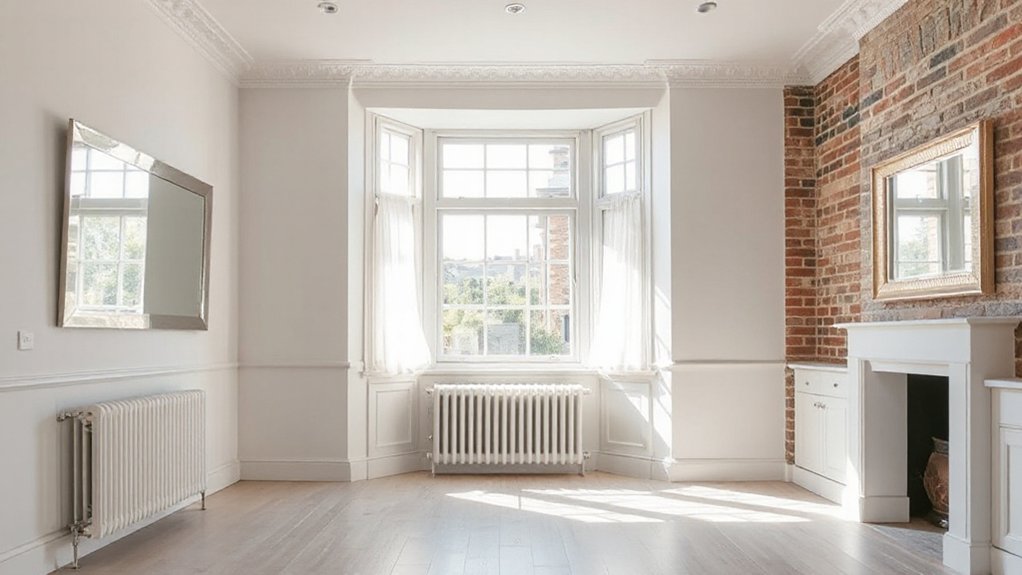
Strategically selected reflective surfaces amplify daylight by bouncing it deeper into rooms, reducing the need for artificial lighting. Light-boosting interior choices, such as high-gloss finishes, pale neutrals, and glass or mirrored accents, optimize contrast and distribution without compromising spatial clarity. Consider material durability, maintenance, and glare control to guarantee consistent daylight performance across varying UK climates and orientations.
Reflective Surfaces Benefits
Reflective surfaces can considerably amplify daylight penetration by bouncing light deeper into interior spaces, improving luminance without added energy. You leverage material choice, finish, and geometry to control specular versus diffuse reflections, maximizing usable daylight while preserving contrast and color fidelity. In practice, select high-reflectance finishes for walls and ceilings with low sheen to minimize glare, and pair them with mid-toned surfaces to maintain depth perception. Reflective decor should be intentional, not ubiquitous; use a restrained palette that reinforces daylight directions and avoids dead zones. Mirror placement requires precision: position mirrors to intercept existing light paths without creating visual discomfort or privacy conflicts. Use calibrated angles to extend shade-free hours, ensuring consistent daylight diffusion across living zones while preserving architectural tact and material legibility.
Light-Boosting Interior Choices
Mirror, wall, and floor treatments can actively multiply daylight indoors when chosen and placed with intention. You’ll select reflective finishes with high luminance and neutral undertones to avoid color shifts, pairing gloss or satin sheens with matte surroundings for balanced diffusion. Position light-collecting surfaces opposite windows and along corridors to create continuous brightness without overheating or glare. Use pale, low-contrast palettes near work zones to preserve contrast sensitivity while maximizing perceived daylight. Integrate light shelves and shallow reveal detailing to bend afternoon sun deeper into rooms. Consider natural ventilation alongside these choices to maintain comfort, and guarantee insulation optimization supports stable temperatures, reducing thermal lag that can mute daylight efficacy. Document performance targets and iterate with calibrated luminance measurements for consistent results.
Side-Return Light: Layout Tricks to Add Brightness
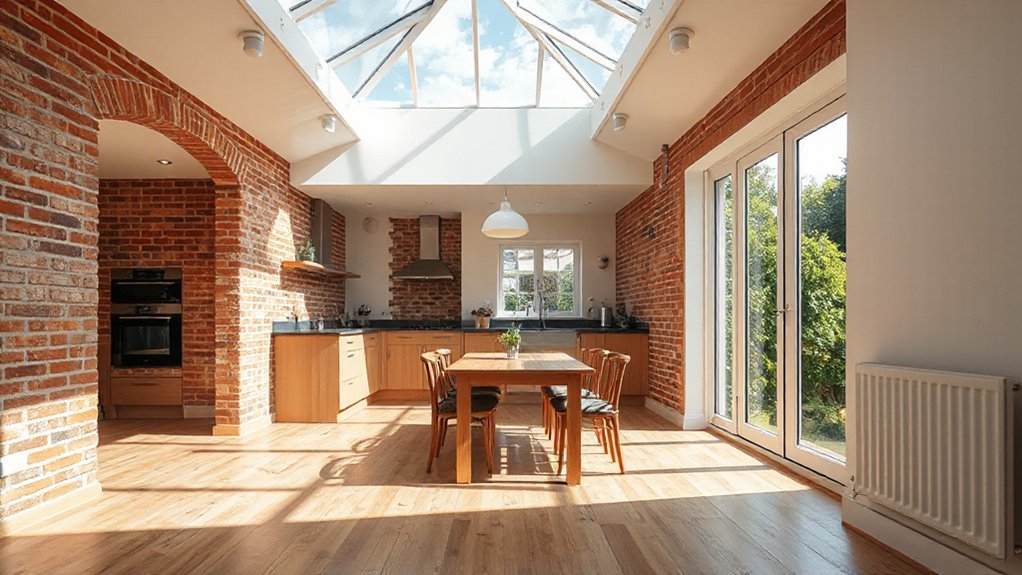
Side-return light can be optimized through purposeful layout tweaks that maximize daylight penetration and reduce shading. You’ll harness geometry, material transparency, and traffic flow to sustain brightness along the corridor and into adjacent rooms. Focus on how garden orientation guides sun angles and where you place openings for continuous light feedback. Window placement becomes a strategic tool to eliminate dead zones, while preserving privacy and thermal performance.
- Align windows to capture low-angled winter sun from the garden orientation, while avoiding excessive heat gain
- Use narrow, high openings that channel light deeper without compromising room scale
- Pair exterior glazing with internal reflectors to distribute light evenly
- Modular partitions that don’t obstruct sightlines or airflow, preserving legibility of the space
Note: avoid skylight-depth discussions; stay rooted in side-return strategy.
Skylights and Roof Access: Depth and Brightness for Small Homes
Skylights can dramatically boost daylight depth in small homes when their size, placement, and roof access are coordinated with the building’s geometry. You evaluate aperture scale against room depth, ensuring glazing aligns with primary sightlines and ceiling slopes to maximize perceived brightness without glare. Depth benefits arise from roof access strategies that minimize shading from upper-storey geometry and adjacent structures; consider a stepped or staggered layout to preserve vertical light shafts. Choose solar powered skylights for continuous operation without rewiring, and specify low-profile flashing to preserve airtightness. Integrate trusted roof access safety details—guarded hatches, compliant fall protection, and intentional egress routing. Document maintenance access for cleaning and weatherproofing, verifying performance metrics through calibrated daylight simulations and post-occupancy reviews.
Light-Smart Materials and Finishes for UK Climates
Light-smart materials and finishes tailor interior brightness and perceived warmth to UK conditions by pairing high reflectance with controlled permeability and dynamic thermal response. You’ll select finishes that balance diffuse daylight with glare control, using smart coatings that adapt to minor temperature shifts and occupancy patterns. UV filtering reduces fabric fading and reduces heat gain, while maintaining color fidelity. Material choices should align with airtight walls and modest solar gains typical of terraced and semi-detached homes, ensuring consistent brightness without overheating. Consider surface textures and substrate compatibility to prevent micro-blemishes under seasonal shifts. Integrate sensors and controllable finishes to sustain visual comfort across rooms and times of day.
1) High-reflectance, low-absorption coatings
2) UV-filtering, color-stable finishes
3) Dynamic thermal-responsive layers
4) Seamless integration with interior geometry and glazing
When to Boost Artificial Light: Daylight vs. Lighting Balance
In spaces where daylight provides most of the perceptual brightness, you still need a clear rule for when to supplement with artificial light. Establish a daylight-contrast threshold: if illuminance drops below a defined lux level during key tasks, activate artificial lighting to maintain target luminance. Use calibrated zoning to avoid overlighting, reserving fixtures for functional areas while preserving daylight dominance in living spaces. Pair constant and controllable sources to support color rendering and mood perception, avoiding glare and flicker. Consider layered lighting: ambient, task, and accent layers with independent controls to preserve atmosphere without waste. Document compensatory adjustments for seasonal variation and window orientation. Artificial lighting should support mood enhancement while preventing contrast fatigue, ensuring consistency with daylight-dominant design intent.
Budget-Friendly Daylight Upgrades With Real Impact
To maximize daylight impact on a budget, start with targeted window and room layout tweaks that minimize heat gain while boosting natural light distribution. You’ll achieve measurable results by prioritising low-cost changes that integrate with historic preservation principles and energy efficiency goals, ensuring aesthetic integrity remains intact while performance improves.
- Reposition furniture to align sightlines with windows, increasing apparent brightness without enlarging openings.
- Use light-reflective paints and minimalist trims to amplify daylight without costly glazing changes.
- Install energy-efficient blinds or shades that reduce glare yet preserve passive light during peak sun.
- Retrofit secondary glazing or draft seals to reduce heat loss while keeping original character.
These steps balance historic preservation with energy efficiency, delivering daylight gains without extensive renovation.
Planning, Permissions, and UK-Specific Daylight Considerations
Planning and permissions in the UK require a clear assessment of how daylight improvements interact with local controls, building regulations, and conservation area stipulations. You’ll navigate listed building considerations, permitted development rights, and any neighbourhood plan guidance before proposing changes. Assess potential impacts on neighbouring light, privacy, and visual amenity, documenting compensatory measures where appropriate. For terraced and semi-detached homes, consider how rooflight, extension, and render choices influence daylight distribution inside and onto adjacent properties, ensuring compliance with the Spatial Planning Rules and BRE guidance where cited. Integrate garden landscaping strategies to maintain or enhance daylightEntry angles and glare management. When proposing alterations, specify window treatments and shading that preserve daylight without compromising safety, sustainability, or thermal performance. Confirm approvals through a design-led, evidence-backed package.
Frequently Asked Questions
How Does Boundary Daylight Affect Room Brightness in Terraces?
Boundary daylight enhances room brightness in terraces if you minimize external obstructions and optimize interior layout; get light to focal points, avoid deep plan zones, and align glazing. External obstructions reduce bounce, so adjust interior layout accordingly.
Can We Legally Install Skylights in Listed or Conservation Areas?
Yes, you can, but with caveats. Historic restrictions may apply, and planning permissions are typically required; consult conservation officers before proposing skylights in listed or conservation areas to guarantee compliance and avoid inadvertent restrictions.
What Is the Fastest ROI for Daylight-Focused Upgrades?
You’ll see the fastest ROI from daylight-focused upgrades by optimizing interior layout and window placement, prioritizing large, strategic openings and light-wocusing layouts that reduce clutter, boost perceived space, and align with passive design principles for consistent daylight.
Do Lighter Window Frames Improve Daylight Reception Effectively?
Brighten up: yes, lighter window frames improve daylight reception by reducing contrast loss. Frame materials matter; choose low-absorbent options. Consider color contrast between frame and wall to maximize light diffusion and preserve perceived brightness.
How Does Weather Impact Daylight Hours in UK Homes?
Weather reduces daylight hours during winter and overcast days, and increases them in summer. You should optimize indoor plant placement for sun paths and choose window treatment choices that modulate glare while preserving ambient light.
Conclusion
You’ve mapped daylight routes, optimized layouts, and boosted glazing where it counts. With reflective finishes, side-returns, and light-smart materials, you’ll coax daylight deeper into rooms while preserving privacy and energy efficiency. Balance remains key: tune artificial lighting to daylight levels, not replace them. Your terraced or semi-detached home will feel as bright as a lantern in a shallow vault—efficient, precise, and design-led, delivering consistent comfort through the year.