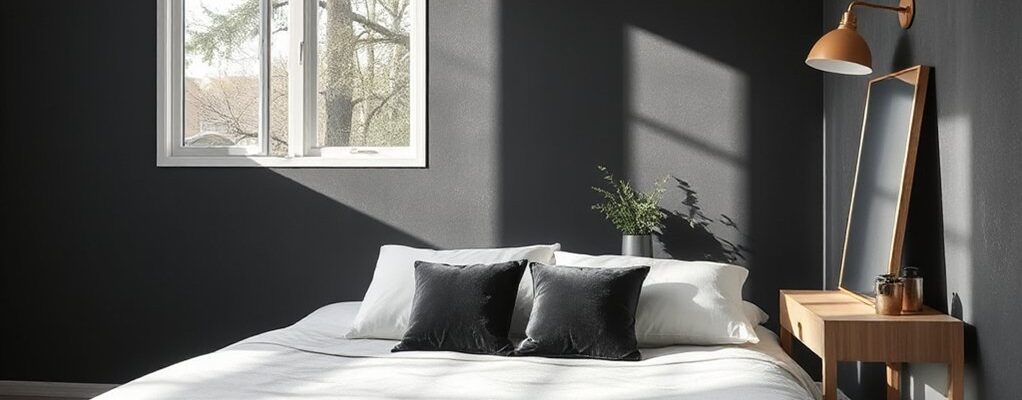
Did you know that a well-chosen accent wall can boost perceived room depth by up to 20%? You’ll pick a focal wall with architectural interest, then use bold color, texture, or pattern to anchor the space. Weigh it with scaled furniture, layered lighting, and restrained metallics to keep balance. Curious how to pair it with texture and lighting to avoid overwhelm? Keep going to learn the steps that turn it into a refined retreat.
How to Pick the Best Wall for an Accent
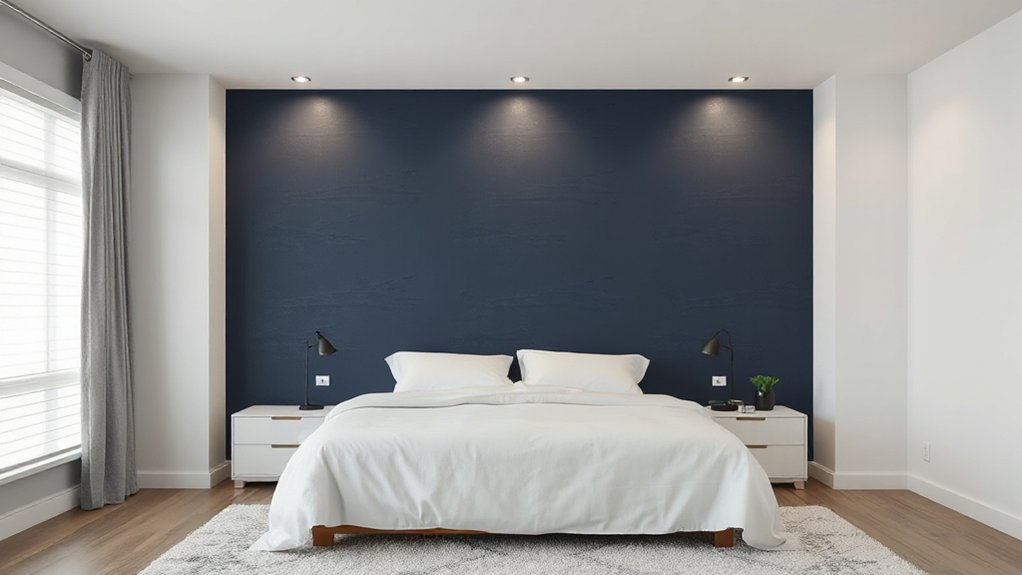
Choosing the right wall sets the tone for the room, so start with the focal point you want to emphasize—neath windows, behind the bed, or opposite a door. You’re selecting a canvas that guides rest, mood, and lighting play. Prioritize sightlines: the wall you face when you enter, or the one that anchors your bed. Consider how color palettes interact with natural and artificial light, creating depth and harmony without overcrowding. If you crave drama, pick a wall with architectural interest or texture to anchor the scene. For a calmer vibe, choose a smoother surface in a soft hue. Keep wall textures subtle near busy patterns, and reserve bold color palettes for accents, so balance remains intact.
Set the Mood: Color Strategies for Accent Walls
Set the mood with color by treating your accent wall as a mood dial rather than a splash of paint. Choose hues that map to desired emotions: calm blues, energizing greens, or moody charcoals. Use color psychology to guide intensity—deep tones for drama, lighter shades for airiness, or muted saturations for restfulness. Consider paint finishes to refine the effect: matte reduces glare and feels softer, eggshell adds a touch of sheen for subtle sophistication, satin boosts durability in high-traffic bedrooms, and semi-gloss highlights architectural details. Test chips in multiple lighting moments to read the true hue. Limit color companions to two complementary accents to maintain coherence. Align your wall color with textiles and art, so the mood remains intentional, cohesive, and visually balanced.
Texture and Material: Elevating Surface Interest
Layer texture into your bedroom walls and surfaces to add depth without overwhelming the palette. Texture and material elevate surface interest by pairing tactility with color restraint. You’ll shape a room that reads dimensional rather than busy, using deliberate wall treatments and refined surface finishes.
- Choose a primary wall treatment with a tactile, subtle pattern to catch light without shouting.
- Layer a second material in a narrow strip or inset to create visual edge and contrast.
- Finish with a matte or satin seal to balance shine and wear.
Texture should feel cohesive with furniture silhouettes and textiles, not competing. Favor materials that age gracefully and respond to your lighting plan, ensuring a calm, curated payoff.
Light It Right: Layered Lighting for the Accent Wall
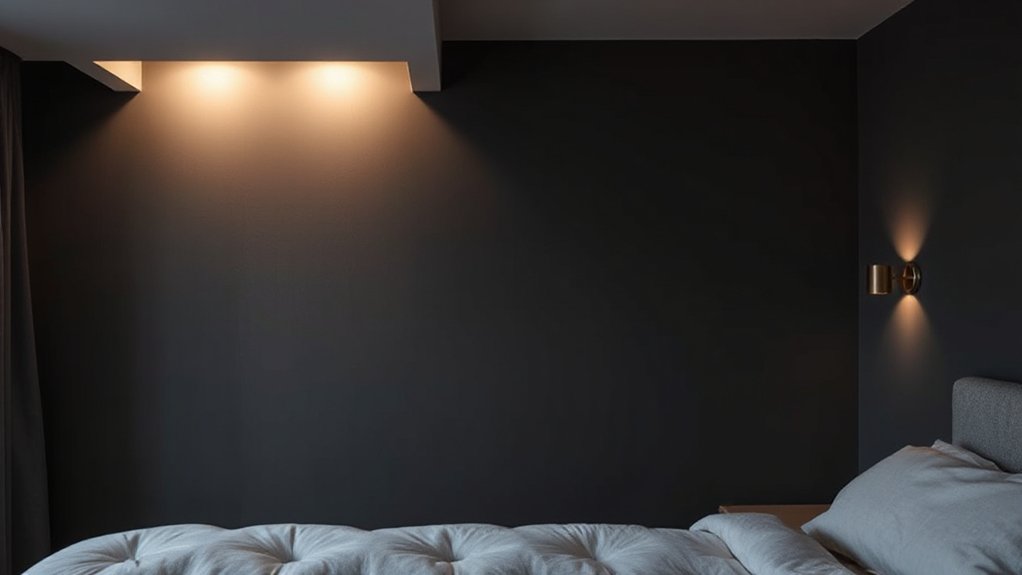
Layered lighting basics set the stage, guiding how you sculpt depth and mood around your accent wall. Think warm washes, precise task beams, and subtle backlighting that highlight texture without glare. This approach keeps the wall as a focal point while ensuring the entire room reads balanced and video-friendly.
Layered Lighting Basics
Curious about how light shapes mood in an accent wall? Layered lighting basics help you sculpt texture and depth without overpowering the room. You’ll combine three core approaches to highlight accent wall textures and create atmosphere.
1) Ambient glow sets the scene, evenly weaving softness across the wall.
2) Task-worthy accents spotlight texture, grain, or pattern for tactile interest.
3) Decorative highlights punch up contrast, drawing the eye to focal points.
Together, these layers deliver flexibility: you can switch from moody evenings to bright mornings without changing the decor. Choose fixtures that complement the wall’s material—matte paint, wood, or fabric—so layering feels intentional, not random. The goal is balance: light enhances texture, texture guides mood, and mood elevates the entire bedroom.
Accent Wall Illumination Tips
A well-lit accent wall instantly elevates the room, but the key is layering light to reveal texture without washing it out. You’ll balance ambient, task, and focal layers so the wall reads at different moments, not just at one brightness. Use dimmable LEDs as your backbone, with a cool-to-Warm range to shift mood quickly. Up-lighting from floor fixtures or recessed shelves adds sculptural depth, while a discreet wall washer emphasizes texture without glare. Incorporate a dedicated, adjustable strip along the top edge for subtle backwash that enlarges the space. Accent wall illumination tips include pairing a warm bias with a cooler center light to avoid yellowing tones. For mood lighting, keep color temperature coherent across fixtures to maintain harmony and focus.
Anchor the Room: Furniture and Scale Around the Accent
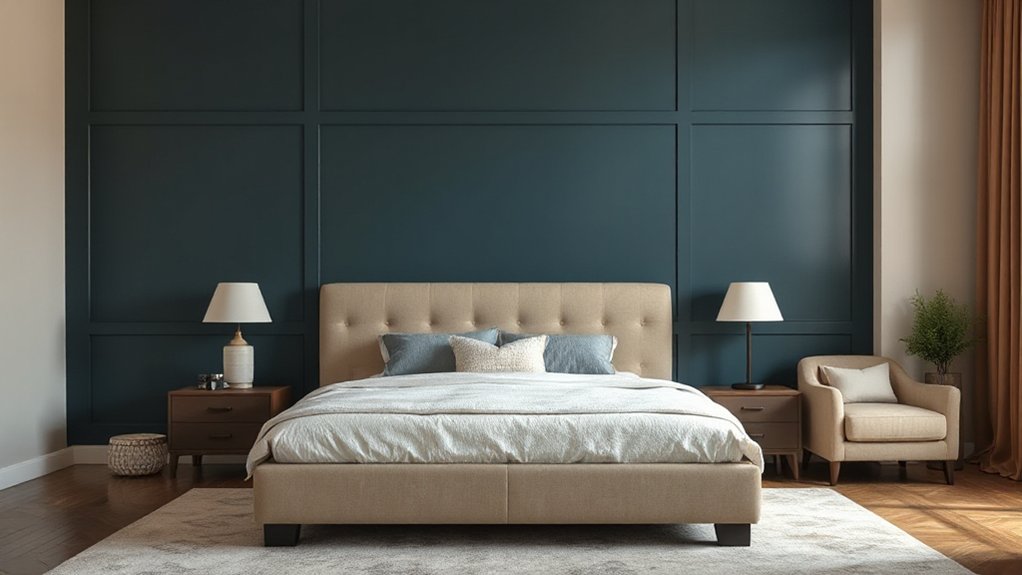
You’ll balance the accent wall by anchoring visual weight in the foreground and letting the rest of the room read lighter. Consider how scale and room proportions guide your furniture footprint, creating clear hierarchy without crowding the focal wall. Let furniture rhythm—where pieces align, repeat, and breathe—support the accent as the room’s visual pulse.
Anchor Visual Weight
Anchor the room by balancing visual weight around your accent wall. You’ll guide the eye with proportion, ensuring the focal wall stays dominant without overwhelming the space. Use furniture scale and placement to anchor the rest of the room, creating a cohesive flow that reads intentional and calm. Color psychology informs your choices; warm hues feel intimate, cool tones feel expansive, and neutrals keep the room versatile. Wall treatments on adjacent surfaces can reinforce balance without stealing attention.
- Align major pieces to the accent wall’s verticals, creating a clean rhythm.
- Mix textures at similar weights to avoid visual clutter while adding depth.
- Limit high-contrast patterns nearby to preserve the wall’s impact.
Scale Room Proportions
To scale the room around the accent wall, start by sizing furniture to the wall’s verticals, not to the room corners. You want anchor points that reinforce the wall’s height, creating cohesive proportions. Choose a dominant piece that aligns with the wall’s center and treat surrounding furniture as supporting rhythm rather than competing visuals. Keep depth and width balanced with the wall’s presence, so seating, consoles, and nightstands read as a unit rather than scattered masses. Use wall treatments to emphasize verticals—tall lamps, slim dressers, and artwork that travels upward. Mind accent placement to avoid crowding or gaps, ensuring negative space around the focal wall remains intentional. This approach yields a grounded, modern room where scale supports calm, not clutter.
Furniture Placement Rhythm
Once you’ve sized the room around the accent wall, shape the rhythm of furniture placement to reinforce its impact. Aim for a balanced flow that guides the eye toward the wall while keeping sightlines clear. Use scale and spacing to create a visual beat—not clutter. Consider these moves:
- Anchor the bed or seating opposite the accent wall to establish a focal axis.
- Align key pieces with its edges, then stagger smaller accents to echo its color or pattern.
- Place wall art at eye level within the rhythm to reinforce color psychology and mood.
This approach yields a cohesive, modern vibe, where the accent speaks softly yet decisively, and every piece proves purposeful.
Decor Coordination: Art, Textiles, and Accessories
When coordinating art, textiles, and accessories for accent walls in bedrooms, start with a unifying color or texture that ties elements together. You aim for color harmony across pieces—frame finishes, fabric weaves, and decorative objects—so the room reads as a cohesive whole. Choose a dominant mood hue from the wall color and echo it in artwork mats, textiles, and lighting accents. Keep scale purposeful: large art anchors the wall, while smaller textiles and accessories punctuate without crowding. Embrace wall treatment as a narrative device, aligning frames, shelves, and rugs to a shared finish or sheen. Limit metallics to one or two accents to avoid distraction, then let contrast come from texture rather than color intensity. This disciplined approach yields refined, gallery-like balance.
Patterns and Proportion: Keeping the Room Harmonious
You’ll balance patterns and textures so the room feels cohesive, not chaotic. Start by pairing a bold print with quieter textures and keep a clear proportion across surfaces. Aim for a visual rhythm: repeat a motif, vary scale, and maintain harmony between color and texture.
Proportion With Patterns
Patterns can define proportion in a bedroom by scaling prints to the room’s size and the bed’s focal point, ensuring no single element overwhelms another. You’ll create visual rhythm by pairing bold accents with quieter textures, guiding the eye without clutter. Pattern contrast sharpens focal points, while proportion balance keeps the space calm and cohesive.
- Scale prints to the bed width and wall height for harmony
- Pair large motifs with subtle repeats to avoid overload
- Mix high-contrast patterns with softened backgrounds to maintain visual flow
With intentionality, your accent wall reads as the room’s anchor, not a shout. Maintain proportion by limiting the number of complementary patterns and aligning their directions. This approach maintains clarity, emphasizes pattern contrast, and preserves proportion balance.
Balance Across Textures
Striking balance across textures means pairing tactile finishes—rough vs. smooth, matte vs. gloss—to keep patterns from shouting at one another. You’ll achieve harmony by mixing surface variety without overwhelming the eye. Prioritize textural contrast: a velvety bedspread paired with a leather headboard or a woven rug against a slick plaster wall creates focal cadence without competing patterns. Keep scale in mind: larger textures anchor the room, finer ones layer detail. Limit the palette to two or three tones to avoid visual clutter while textures do the talking. Use lighting to emphasize material differences—directional LEDs highlight weave, satin reflects, and matte absorbs. The result is a cohesive, calm space where accent walls cue depth and personality without visual noise.
Shadow and Highlight: Creating Depth on the Focal Wall
Shadow and highlight work together to sculpt the focal wall, giving it depth that reads as effortless rather than loud. You’ll see how subtle shifts in shade and light create perception, not volume, guiding the eye precisely where you want it. This is Shadow depth paired with highlight contrast, yielding a refined, gallery-like effect.
- Emphasize texture with contrasting finishes (matte, satin, velvet) to deepen perception.
- Layer color subtly, moving from cooler to warmer tones to push the wall forward or pull it back.
- Use controlled lighting angles to sculpt shapes, avoiding glare and flatness.
The result feels curated, modern, and visually legible, with depth that remains quiet yet unmistakable.
Common Pitfalls Avoided: Lighting, Scale, and Maintenance
When you design an accent wall, lighting, scale, and maintenance pitfalls can quietly derail the effect—so plan for them upfront. You’ll want lighting that complements the color palette without washing or flattening texture, and avoid harsh glare that distorts color psychology. Scale matters: a bold wall in a small room can overwhelm; opt proportionate artwork and furniture to keep the wall as a focal point, not a vignette. Maintenance pitfalls sneak in with high-contrast finishes or textured surfaces that trap dust or wear quickly—choose durable materials and easy-clean surfaces. Track design trends to ensure a timeless vibe rather than fleeting hype, while preserving cohesion with surrounding decor. A thoughtful plan balances color, contrast, and daily practicality for lasting impact.
Maintenance, Longevity, and Refresh Timing
Maintenance matters most when the wall’s texture, color, and finish meet daily life; plan aggressive wipe-down routines, swap-out accents, and reseal surfaces before wear chips the look. You expect long-term chic, so monitor how wall treatment holds up under humidity, sun, and brushing. For longevity, prioritize paint durability and seal integrity, not just color. Schedule refreshes at perceptible intervals to stay current.
- Inspect every 6–12 months for wear, fading, or scuffing
- Re-seal high-traffic panels to preserve texture and gloss
- Replace accents as styles shift to keep the room feeling fresh
Track return-on-aesthetics by noting how easily the surface cleans and how true the color remains, then adjust before it signals age.
Frequently Asked Questions
How to Choose a Second Accent Wall Without Cluttering the Space?
Choose one bold second accent wall by color-blocking with a contrasting hue; keep clutter low with a single statement texture. Prioritize color coordination and wall textures, balancing tone with furniture silhouettes for a fresh, modern, visually calm space.
Can Accent Walls Work in Small Bedrooms or Just Large Ones?
Two-thirds of designers notice rooms feel bigger with an accent wall, even in small bedrooms. You can absolutely pull it off. Consider color palettes, texture options, and keep patterns subtle to avoid crowding the space.
Are Wallpapers or Paints Better for Longevity on Accents?
Wallpaper durability typically beats paint longevity for accents, but modern paints can last impressively with proper prep. You’ll notice richer texture and thinner upkeep with wallpaper, while paints simplify changes. Choose based on desired look, maintenance, and room humidity.
How Many Accent Walls Are Too Many in One Room?
Answer: Three accent walls max is ideal; more can overwhelm. You scale color coordination with neutral tones and texture options to keep balance. You’ll feel cohesive, bold, and visually crisp, like a curated gallery—studied, not chaotic.
What Budget Range Should I Expect for an Accent Wall Project?
Expect to spend roughly $200–$1,200 for an accent wall, depending on color coordination and material options. You’ll save with paint, splurge on wallpaper or textured finishes, and plan for DIY prep to keep costs down.
Conclusion
You’ve got the blueprint for a stunning bedroom focal wall. Pick the right wall, layer color, texture, and light, then balance it with scale and negative space. Keep metallics sparse and refresh cues timely to stay timeless. Fun fact: homes with a dedicated accent wall report a perceived room depth increase of up to 25%, making spaces feel larger without changing footprint. Lean into bold but thoughtful choices for a retreat that’s both current and enduring.