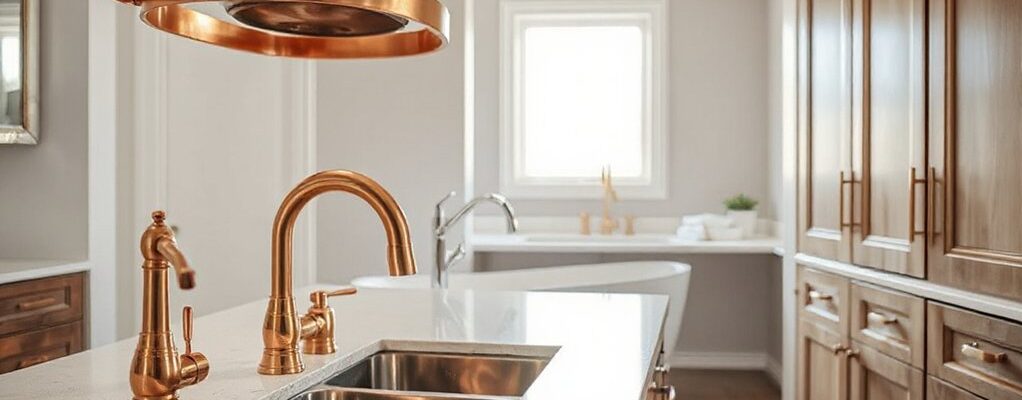
You might not realize how small surface contrasts can alter perceived space height; mixing metals creates those precise shifts without breaking cohesion. You’ll want a measured palette, so one finish dominates and a few accents support it, guiding the eye and defining zones. Start with practical placements that balance durability with nuance, then pair them with lighting and textures that reinforce the effect. Keep going to see how the details come together—and what to adjust next.
Why Mix Metals in Kitchens and Bathrooms Makes Sense
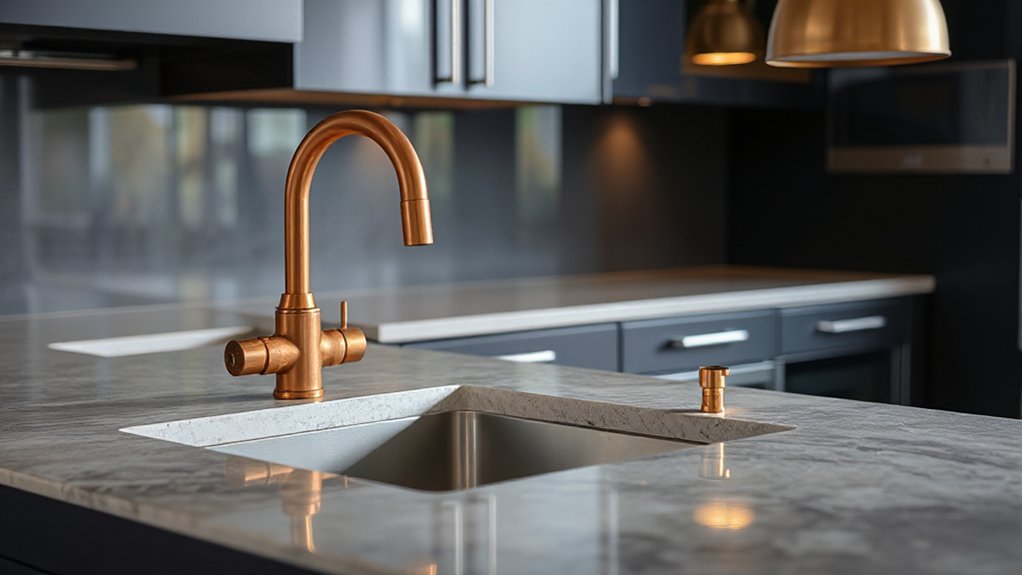
Mixing metals in kitchens and bathrooms makes sense because it creates visual interest without sacrificing cohesion. You evaluate how different finishes interact under lighting, texture, and use patterns, and you find that contrasts can highlight architectural details instead of overpowering them. When you consider metal finish durability, you test how brushed, polished, and matte surfaces resist fingerprints, scratches, and corrosion in high-traffic zones. You also weigh historical metal trends to understand expectations and longevity, recognizing that past choices inform practical limits and maintenance needs. The empirical takeaway is that deliberate pairing reduces monotony and supports functional zoning, provided you balance warmth, cool tones, and sheen levels. In short, thoughtful metal mixing enhances clarity, flow, and perceived value.
How to Choose a Cohesive Metal Palette for Small Spaces
A cohesive metal palette in small spaces hinges on intentional restraint: select one dominant finish and one or two accents, then map them to key surfaces (hardware, fixtures, and lighting) that readers will encounter most. You should establish a clear hierarchy: dominate with a neutral or subdued tone, then introduce accents to highlight focal points. Limit contrast to keep visual flow intact and reduce cluttered perception. Test color coordination under varied lighting to confirm balance across daily activities. Use Accent accessories sparingly to anchor the design, ensuring they read as deliberate highlights rather than competing tones. Documenting your decisions with swatches and mockups helps you avoid late-stage mismatches. Precision in selection prevents misalignment across materials, textures, and reflected light, yielding a cohesive, calm small-space aesthetic.
Practical Placement: Where Each Finish Should Go
To optimize harmony and function, assign each finish to surfaces where it will be most impactful and least prone to wear. In kitchens, place high-use options like stainless or brass on faucets, cabinet hardware, and appliance trim, where daily contact emphasizes durability and ease of cleaning. Reserve softer, decorative finishes for accents—drawer pulls, utensil rails, or open shelving—so they read as Vintage accents rather than faddish statements. In bathrooms, pair robust metals with wipeable surfaces (vanities, towel bars) and protect delicate hardware behind doors or under vanities. Use color contrast to guide placement: a darker finish anchors light countertops, while a lighter finish brightens shadowed zones. Balance across zones to avoid monochrome heaviness, ensuring each finish earns its function rather than merely its appearance.
Elevating the Look: Lighting, Texture, and Materials That Complement Metals
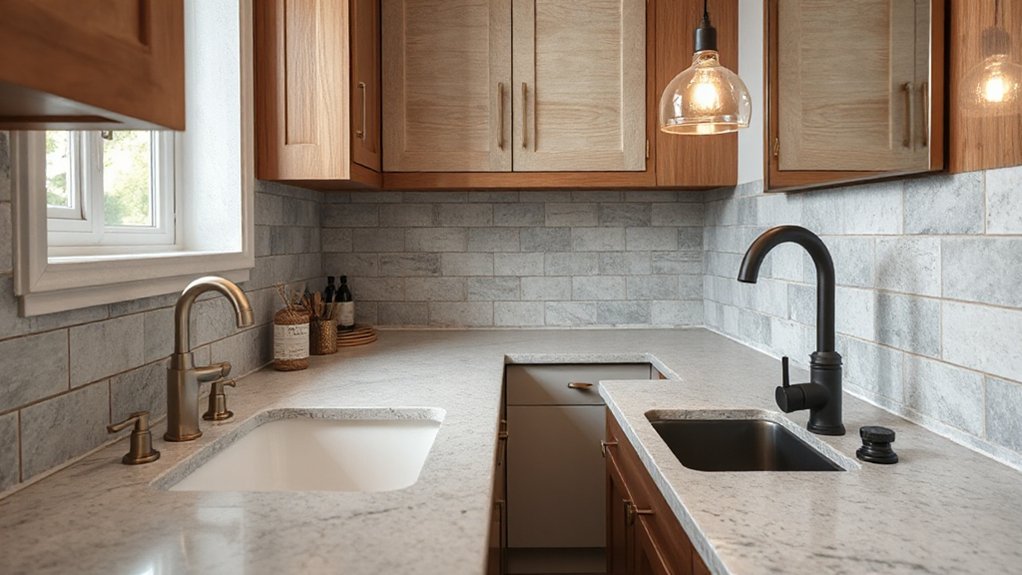
Lighting, texture, and materials act as the connective tissue that ties metals into a cohesive kitchen or bathroom aesthetic. You assess metal finishes alongside adjacent surfaces, ensuring contrast or harmony without visual overload. Start with lighting fixtures that complement the metallic tone; choose fixtures that reflect the same temperature as your primary metal to maintain cohesion. Texture matters: matte surfaces reduce glare, while polished textures highlight reflective edges. Introduce材料 textures such as stone, wood, or ceramic in controlled quantities to balance weight and scale. Consider undertones in metal finishes—cooler silvers pair with ceramic whites, warmer brass with natural oak. Spatial rhythm matters: repeat a finish or texture in hardware, cabinetry, and fixtures to create a unified look without crowding. This approach yields deliberate, empirical cohesion.
Troubleshooting and Finishing Touches for a Polished Mix
When mixing metals in a kitchen or bath, anticipate common clashes—uneven shine, mismatched undertones, or competing scales—and address them with targeted fixes. You assess finishes first, confirming metal finish durability under daily use, cleaning, and humidity. Next, establish a discipline for spacing and proportion: align faucet, hardware, and lighting in a cohesive rhythm, then test metal pairings under artificial and natural light. If glare distracts, introduce a unifying accent—low-contrast trim or a neutral countertop—to soften transitions. Document your process with a color and finish chart to ensure coordinating color schemes remain consistent as spaces evolve. Finally, implement protective coatings where appropriate and schedule periodic touch-ups to preserve luster. Regular checks prevent corrosion, tarnish, and mismatched patinas, ensuring a refined, durable ensemble.
Frequently Asked Questions
How Do Metal Finishes Affect Resale Value in Kitchens and Baths?
You’ll boost resale value when finishes align, because design harmony improves perceived quality, and material durability supports longevity. You notice that cohesive metals reduce upgrades later, making countertops, fixtures, and cabinetry feel consistent and investment-worthy.
Can Mixed Metals Cause Galvanic Corrosion in Wet Areas?
Yes, mixed metals can cause galvanic corrosion in wet areas if metals are dissimilar and poorly isolated. You assess metal compatibility, use non-conductive barriers, and implement corrosion prevention strategies to minimize wear and preserve finishes.
What Maintenance Routine Best Preserves Varied Metal Finishes?
Yes, implement a cleaning schedule with routine inspections, using mild cleaners and soft cloths. You’ll apply protective coatings where appropriate, reapply as needed, and document wear patterns to preserve varied metal finishes accurately and consistently.
Do Certain Metals React Differently Under Humidity or Heat?
Metal oxidation accelerates under humidity and heat; certain metals react more than others. You’ll see faster temperature effects with humidity, metals like copper or brass. You’’ll notice corrosion trends, and you’ll monitor humidity closely for longevity.
Are There Architectural Limits to Mixing Metals in Small Rooms?
Yes, you can, within practical space and clearance limits. Design harmony arises from scale and placement, while material contrast provides focal points; guarantee ventilation, lighting, and code compliance to avoid cramped, unsafe layouts in small rooms.
Conclusion
You’ll see the room unify as you mix finishes with intent, not chance. By matching one dominant metal and a few accents, you create contrast without chaos, like a well-tuned instrument. Trust practical placements and durable choices to guide the eye, then let lighting and texture finish the narrative. If something feels off, step back, recalibrate the palette, and re-balance. The result: a cohesive, functional space that reads intentionally designed, not coincidentally styled.