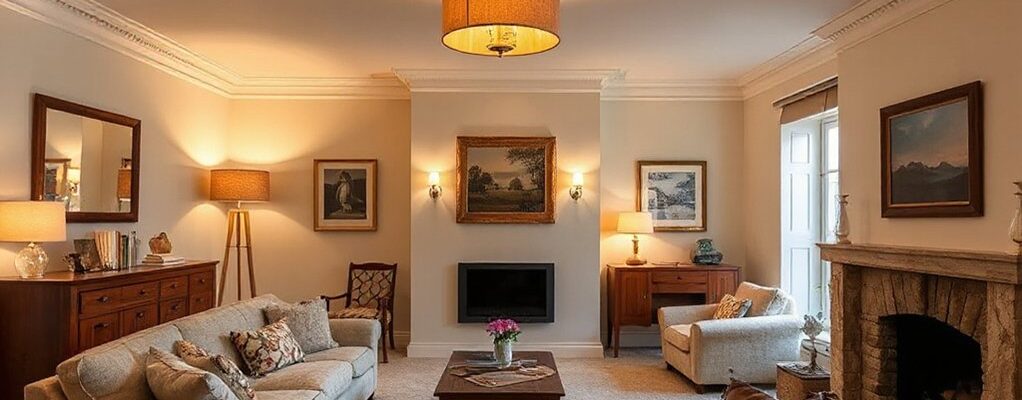
Think of your living room as a stage where light tells the story, and you set the scene with layers that flex from dawn to night. You’ll balance ambient, task, and accent lighting to suit a UK home’s small spaces and low ceilings, using dimmers and smart controls to shift mood on demand. Start with even ceiling or recessed light, add adjustable task lamps, then highlight art or architecture without overpowering the room. Ready to map fixtures and controls for maximum versatility?
Define UK Living Room Lighting Layers
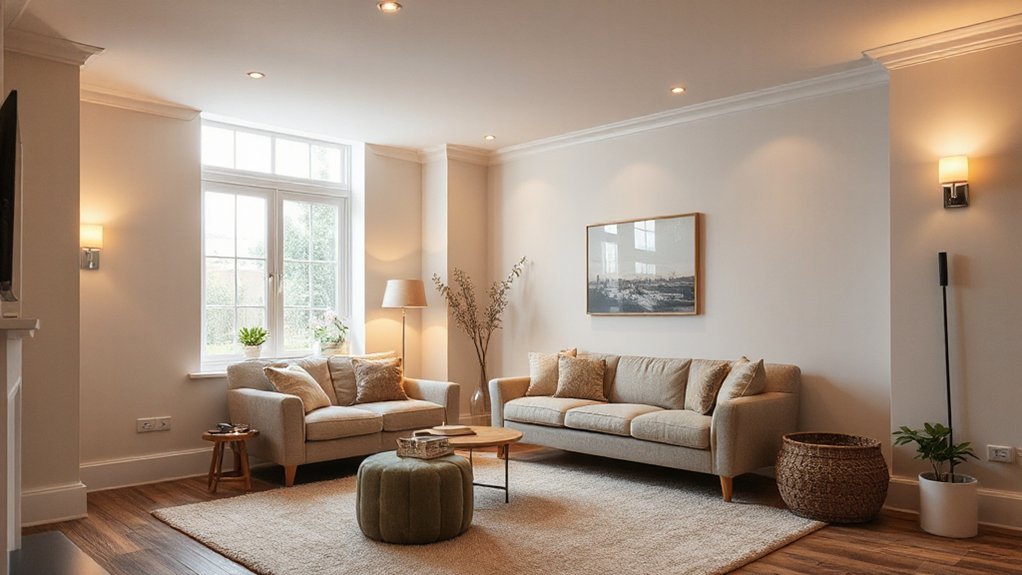
Think of UK living room lighting in layers: ambient, task, and accent. You define each layer by purpose and placement, then weave them for flexibility. Ambient lighting provides general coverage, so you can see clearly without glare. Use evenly distributed sources or a central ceiling light to set the base level. Task lighting targets reading or hobbies, like a floor lamp beside cushions or a desk lamp at a coffee table. Accent lighting highlights architectural features or art with directed beams. When selecting, consider Vintage fixtures for character and Colour temperature to match rooms and moods. Balance is key: keep warm tones for cozy evenings and adjust with cooler tones for daytime clarity. Practical control—dimmers and smart switches—lets you shift layers quickly.
Ambient, Task, and Accent: Practical Roles
Ambient lighting defines the mood, while task lighting handles specifics like reading or cooking prep, and accent lighting highlights art or architecture. Better synergy comes from pairing the glow you need for daily use with focused, unobtrusive task light and a few well-placed accents to draw the eye. Start by mapping roles to zones so each layer supports the others without clutter or glare.
Ambient Layer Roles
Ambient lighting forms the foundation of a living room, serving three practical roles: ambient, task, and accent. You shape this layer to establish mood, navigation, and character without overpowering the space. Keep ambient light diffuse and even, avoiding hot spots that distract from focal areas. Use a central ceiling fixture or wall-washers to create balance, then supplement with floor or table lamps for soft, flexible glow. This is where Ambient importance matters: it sets the baseline brightness and tonal warmth that supports every other layer. When planning, aim for Layer integration: guarantee the ambient level remains constant as you add task and accent elements, preventing contrast fatigue. Prioritise dimmable options to adapt daily routines and seasonal changes.
Task and Accent Synergy
Balancing task and accent lighting with the ambient layer creates a practical, flexible living room. You pair task light where you work, like a desk or coffee bar, with accent highlights on artwork or architectural features. The goal is to avoid glare, shadows, and uneven brightness, so your eyes stay comfortable during activities and viewing. Use innovative fixtures to direct light precisely: under-cabinet strips for desks, wall washers for sculptures, and adjustable spotlights for reading corners. Accent lighting should complement, not compete with, task glow, enriching textures and focal points. Integrate smart technology to tailor scenes—quiet mornings, focused work, or cinematic evenings—without fiddly controls. Coordinate dimming, color temperature, and timing to maintain harmony across layers and sustain performance.
Choose Uk-Friendly Fixtures for Small Spaces
When space is tight, choose UK-friendly fixtures that maximize comfort without crowding the room. Opt for compact pendants, wall sconces, and slim-floor lamps that don’t overwhelm alcoves or small layouts. Favor integrated LEDs and low-profile shapes to keep sightlines open while delivering even illumination. Prioritize flexible options: adjustable arms, swing-arm sconces, and multi-spot fixtures let you direct light without adding clutter. Consider ceiling-mounted or recessed fittings to free surface space, then layer with a small table lamp for task lighting. Check compatibility with UK electrical standards and guarantee safe spacing from water or heat sources. Match finishes to walls to maintain cohesiveness, and choose fixtures with dimmable drivers for adaptable ambience without crowding the footprint. Lighting fixture types matter for scale and flow.
Plan Controls: Dimming, Schedules, Energy Savings
Dimming, schedules, and energy savings aren’t afterthoughts; they’re the backbone of a flexible, efficient living room lighting plan. You’ll want smart controls that adjust with activity and time of day, not manual overrides alone. Use dimming in zones to soften evenings yet brighten for tasks, maintaining comfort without glare. Schedule lighting to respond to natural daylight hours and occupancy; motion sensors can fill gaps, but don’t overdo them. Favor layered scenes: a high-contrast general layer, a task layer, and a warm, ambient layer for relaxation. Prioritise energy efficiency by selecting LED sources, efficient drivers, and smart controls that learn routines. Keep wiring simple, with central hubs or app-based controls you can trust, ensuring reliable performance and predictable bills.
Layout for Low Ceilings and Changing Daylight
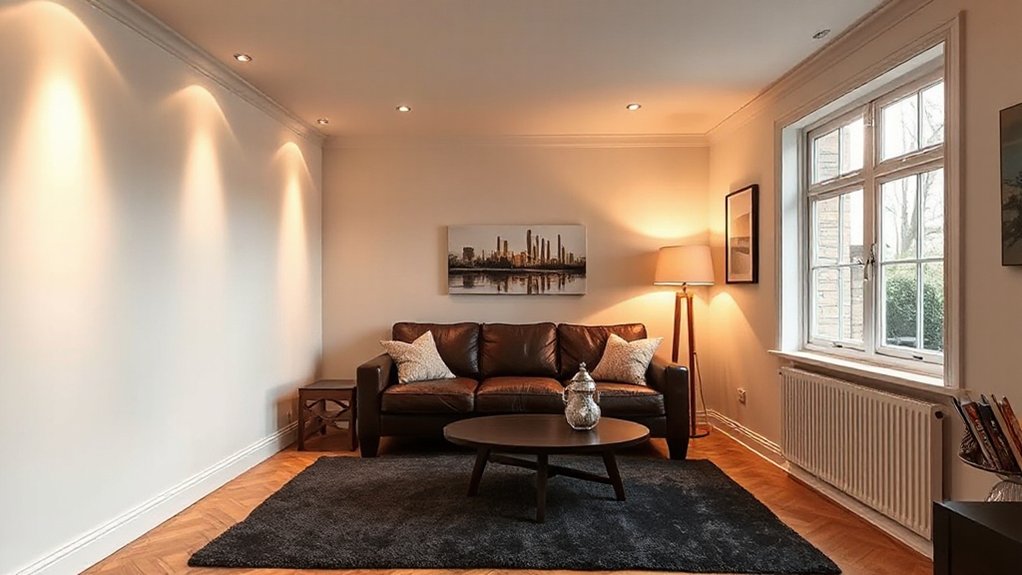
If you’re working with a low ceiling, start with a compact layout that keeps fixtures close to walls to avoid crowding the room’s vertical line. Shape daylight by using vertical window treatments and mirrors to bounce light without adding bulk, while a layered plan adds task, ambient, and accent lighting without glare. Keep your strategy tight around Low Ceiling Layouts, Daylight Shaping Strategy, and a cohesive Layered Lighting Plan to adapt as daylight shifts.
Low Ceiling Layouts
Low ceilings demand a thoughtful lighting plan that adds height and depth without clutter. Start by focusing on ceiling height, using slim, glare-free fittings to avoid visual bulk. Choose recessed or track lighting to keep surfaces clean and unobtrusive, while providing even illumination across the room. If you want a focal point, opt for decorative fixtures that sit close to the ceiling rather than oversized pendants. Layer light by combining ambient, task, and accent schemes without overloading walls or shelves. Use dimmers to adapt brightness to activities and daylight changes. Reflective surfaces, pale paints, and minimal ornamentation help bounce light upward, enhancing perceived height. Plan routes so cables stay hidden, and ensure switches are easily accessible from seating areas.
Daylight Shaping Strategy
Even with low ceilings, you can shape daylight to feel brighter and more consistent by planning routing and fixtures that pull light deeper into the room. Daylight shaping relies on strategic window placement and careful fixture layout to distribute natural light evenly, reducing glare and shadows. Use reflective surfaces to bounce light toward task zones, and consider larger, unobtrusive windows if possible. Avoid blocking sight lines and maintain a balanced feel throughout the day.
- Map the path of natural light across surfaces to maximize diffusion.
- Position key fixtures to complement window placement without creating hotspots.
- Use light-colored, matte finishes to enhance brightness without glare.
- Schedule shading controls to adapt to seasonal changes in daylight.
Layered Lighting Plan
A layered lighting plan for low ceilings hinges on balancing ambient, task, and accent light while accounting for shifting daylight. In practice, arrange soft ambient light first, using ceiling or wall wash fixtures that scatter evenly without glare. Add task lighting where you read or work, choosing adjustable, directional options that stay close to the surface and don’t cast harsh shadows. Accent lighting should highlight features like art or architectural details, but keep it subtle to avoid overpowering the room. Select decorative fixtures that suit the scale of the space and ceiling height, ensuring they don’t dominate the view. Consider colour temperature to maintain a cohesive mood, switching between warmer tones in evenings and cooler ones during daytime. Adjust layering as daylight shifts, rebalancing light levels seasonally.
Tune Lighting for Moods, Seasons, and Gatherings
To tune lighting for moods, seasons, and gatherings, start by identifying the scene you want: soft and intimate for evenings, bright and energetic for hosting, or warm and seasonal for holidays. Then adjust these elements precisely to hit the target atmosphere.
1) Set colour temperature to match the moment: warm for coziness, neutral for daily use, cool for focus.
2) Use lighting automation to switch scenes with sensors or timers, keeping consistency across rooms.
3) Layer task, ambient, and accent lights to reinforce the chosen mood without glare.
4) Include dimming controls to fine-tune intensity as the event evolves.
Frequently Asked Questions
How Do UK Electrical Regulations Affect Lighting Plans in Living Rooms?
UK electrical regulations require you to follow Electrical safety standards and Wiring regulations for any living room lighting plan; you must install compliant fittings, use proper circuits, and preserve safe clearance, ensuring inspections and certification where applicable.
What Budget-Friendly UK Brands Suit Small Living Rooms?
Affordable brands suit small spaces: Ikea, Argos, and B&Q offer budget-friendly options. For small space solutions, pick compact fittings, slim floor lamps, and white finishes to maximize light. You’ll save without sacrificing function or style.
Can You Combine Smart Bulbs With Non-Smart Fixtures Safely in the UK?
When you mix smart bulbs with non-smart fixtures, you’ll navigate like a careful navigator: symbolizing balance. Yes, it’s safe if you check smart compatibility and Fixture safety, use compatible dimmers, and avoid overloading circuits.
Which UK Energy Labels Apply to Household Lighting Products?
UK energy labels for household lighting products follow EU/UK energy efficiency classifications, such as A–G, with updates under Label standards. You’ll find efficiency marks on packaging and product bodies; verify current standards for energy efficiency and Label standards.
Are There Uk-Friendly Dimming Options Compatible With Recessed Lights?
Yes—UK-friendly dimming options exist for recessed lights. Use dimming switches with compatible fixtures, ensuring labels show compatibility. You’ll install compatible dimmers and LEDs, guaranteeing smooth, flicker-free dimming and compliant electrical performance for safe, effective lighting.
Conclusion
In short, you’ve got a clear blueprint to light a UK living room with confidence. Start by nailing ambient, add task where you read or cook, and punctuate with careful accents on art or architecture. Choose compact, UK-friendly fixtures for low ceilings, and wire in dimmers or smart controls for flexibility. Plan around changing daylight and seasons, so you’re ready for any mood or gathering. Remember: good lighting is your most versatile furniture—use it to shape space, function, and atmosphere. Consider it persuasion by illumination.