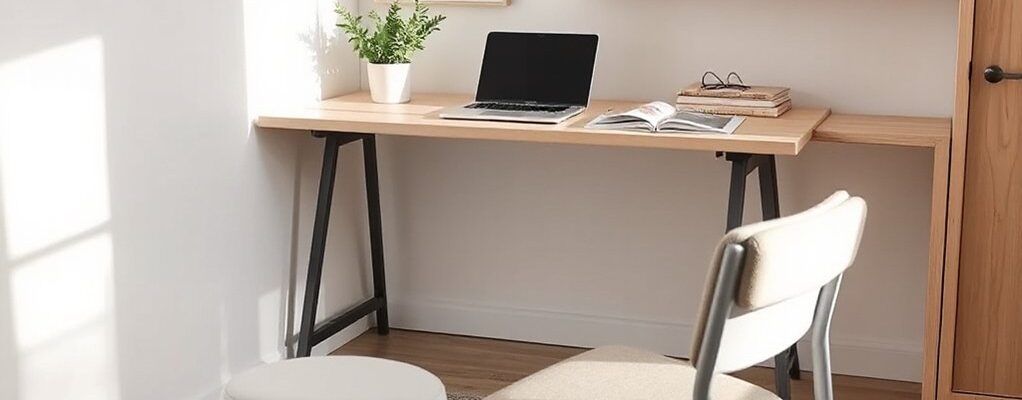
You may not know that small changes in your study space can boost attention as much as a full schedule change. Start by choosing a quiet, clutter-free spot with natural light, then tailor it to your routines so you feel in control rather than overwhelmed. You’ll establish a calm, practical baseline that reduces distractions, but the real payoff comes when you adjust details over time to fit how you work and what motivates you.
The Challenge Teens Face: Distractions, Overwhelm, and Homework Resistance
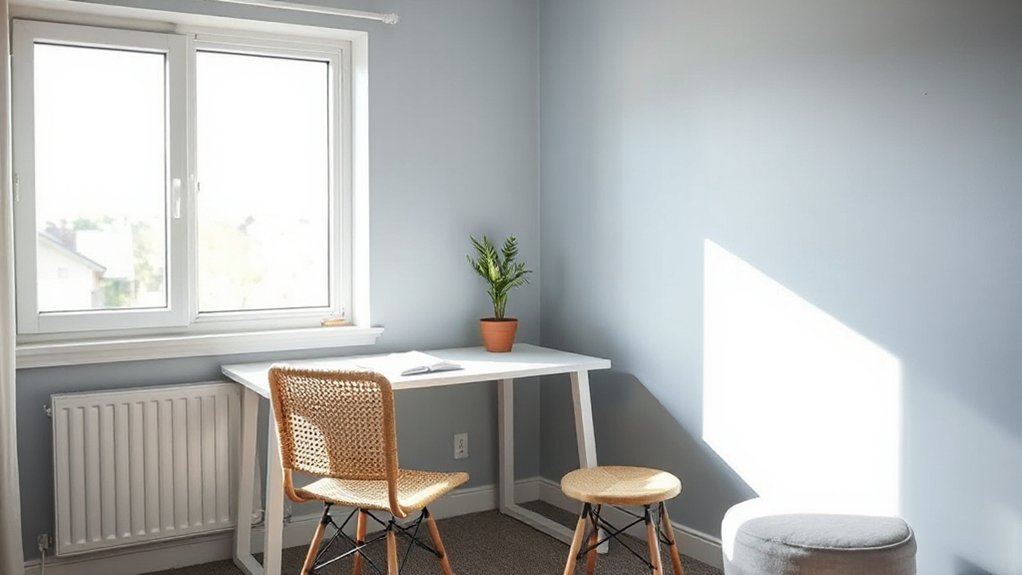
Distractions, overwhelm, and homework resistance are common hurdles for teens, especially when study space and routines feel uncertain. You’re not alone in this struggle, and small, evidence-based tweaks can make a real difference. Start by identifying your top three distractions and testing brief, targeted strategies to reduce them. Music therapy can help regulate arousal levels when used purposefully—choose instrumental tracks and set a timer to avoid drifting into playlist browsing. Pair this with brief mindfulness exercises, like a two-minute breath check before you begin, to reset your attention. Create a predictable routine: a consistent start time, a warm-up task, and a short review. Celebrate progress, not perfection, and adjust your plan based on what works for you.
Why a Calm Study Space Improves Focus and Mood
A calm study space helps you regulate arousal and sustain attention, which makes it easier to start tasks, stay on track, and complete work with less stress. When your environment feels orderly, your brain can lean less on willpower and more on consistent cues, boosting focus over time. Mindfulness exercises help you notice rising tension before it derails a session, while brief breathing or grounding practices shift you from reactive to proactive. Consistent ambient conditions—quiet, predictable lighting, and comfortable seating—support mood stability and reduce cognitive load. Aromatherapy benefits may offer subtle mood cues that complement routines without distraction. Pair these practices with a realistic study plan, short bursts, and clear goals to enhance both concentration and confidence during homework and learning tasks.
Pick the Right Spot: Quiet Corner or Purposeful Nook
Choosing the right spot matters: a quiet corner or a purposeful nook can dramatically boost focus and mood. You’ll pick a location with minimal distractions, good natural light, and a predictable routine. Evidence shows that dedicated study spaces reduce cognitive load and help shift between school and home tasks. Prioritize walls and surfaces you can personalize without clutter, so you feel ownership and motivation. Consider traffic flow, nearby outlets, and ventilation to sustain attention during longer sessions. Test different spots for a week, noting how often you’re tempted to check devices or wander. Favor Flexible furniture that can adapt to changing needs, like a small desk height option or modular storage. Add Personalized decor to reinforce goals while keeping the space tidy.
Set Up a Desk That Supports Focus and Comfort
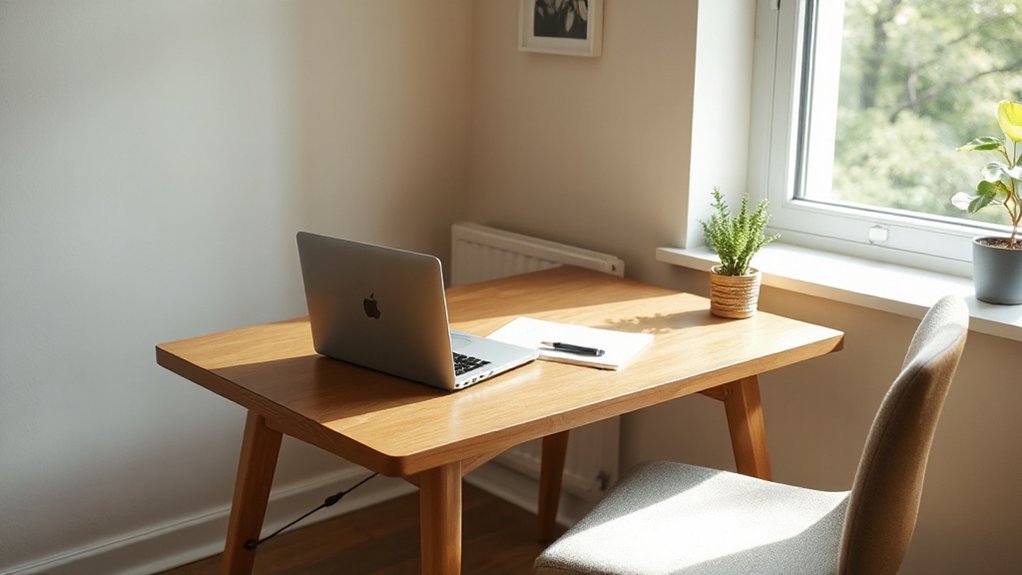
Set up a desk that supports focus and comfort by prioritizing posture, reach, and predictability. You’ll want Ergonomic chairs that support neutral spine alignment and adjustable desks to tailor height for sitting or standing. Keep essentials within easy reach to minimize neck strain and unnecessary head turning. A stable surface reduces tremor and distractions during work. From setup to routine, aim for predictable patterns—same chair, same monitor height, same lighting. Use adjustable desks to alternate postures and reduce fatigue. Your desk should promote clear boundaries between study and rest, helping you stay engaged without cramping or slumping.
- Ergonomic chairs with lumbar support and adjustable arms
- Adjustable desks that switch between sitting and standing
- Proper monitor height aligned with eye level
- Cable management and a tidy surface for focus
Decluttered Storage That Reduces Distractions
Ever notice how clutter can steal your focus? When you declutter your storage, you cut visual noise and support sustained attention. Start with a simple baseline: only keep items you actively use for studying this week. Use labeled boxes or bins for supplies, chargers, and notebooks, so you can return things quickly and minimize hunting time. Choose storage solutions that fit your desk footprint and promote ergonomic reach—tempting to stack, but that invites rummaging. Create a dedicated drawer for current projects, and clear it daily to prevent build-up. Pair practical organization tips with habit-building, like a 60-second nightly reset. The goal is a calm, predictable workspace where you can think clearly and stay on task.
Lighting That Eases Eyes and Uplifts Mood
Warm ambient lighting helps you see clearly without harsh glare, which can reduce eye strain during long study blocks. Pair this with eye‑comfort illumination—like softer task lights for close work and the option to adjust brightness—to support focus and reduce fatigue. In practice, aim for a balanced setup you can customize by room and task, so your mood and attention stay steady across study sessions.
Warm Ambient Lighting
Soft, warm ambient lighting helps teenagers focus without straining their eyes and improves mood after long study sessions; choose fixtures that emit soft, yellowish or amber tones (around 2700–3000K) rather than harsh white light.
You’ll create a calmer string of cues for study by layering light sources, not relying on a single harsh bulb. Opt for dimmable lamps and warm bulbs to shape the ambiance, supporting sustained attention and recovery between tasks.
- Soft bedside lamp beside the chair to cue focus
- Overhead fixture with amber-tinted shade for even glow
- Desk lamp with adjustable angle to reduce glare
- Light strip or smart bulb to fine-tune warmth and intensity
Eye-Comfort Illumination
Eye-comfort illumination focuses on reducing eye strain while boosting mood, so you can study longer without fatigue. You’ll want lighting that minimizes glare on screens and papers, while still keeping tasks clearly visible. Choose layered lighting: a steady, diffuse ceiling light combined with desk lamps positioned to avoid reflections. Prioritize color temperature around 3000K to 4000K for a neutral, alert feel without harsh blue light. If you work late, switch to warmer tones later to ease wind-down cues. Use dimmers or adjustable lamps to tailor brightness to task and time of day. Place light sources between you and your screen, not behind you, and align desk height to reduce neck strain. Test setups with classmates or instructors for practical tweaks.
Color and Texture That Help Teens Focus
Color and texture play a key role in sustaining teens’ focus, so choose walls and surfaces that feel calm but engaging. You’ll benefit from color psychology that favors muted blues, soft greens, and warm neutrals, which support sustained attention without overstimulation. Pair these with simple textures to avoid visual noise; texture selection should emphasize tactile variety without distraction. Subtle patterns can add depth but stay low-contrast to reduce cognitive load. Keep surfaces clean and matte to minimize glare and reflection. Use natural materials where possible to ground the space in realism and comfort. Align color and texture with study goals, not trends, so teens stay engaged over time.
- Muted wall tones that promote concentration
- Gentle, non-reflective finishes
- Subtle, high-clarity patterns
- Natural textures for grounding presence
Tech Boundaries and Daily Rituals to Minimize Distractions
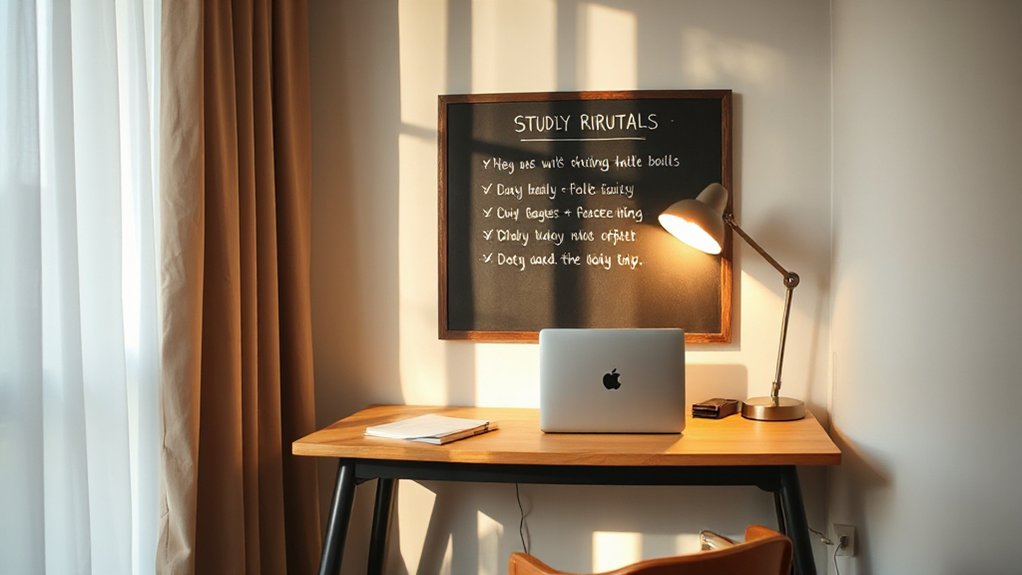
Technology can disrupt the calm you’ve built, so set clear boundaries and daily habits that protect study time. You’ll perform better when you define digital boundaries, separating study from distraction. Create a predictable routine: designate specific study blocks, start with a 5-minute prep, and end with a quick review. During focused periods, use apps that block nonessential sites, or turn off notifications, maximizing deep work. Establish tech free zones in your room or desk, where phones stay in another space, away from your hands. Communicate expectations with family and roommates to reduce interruptions. Pair study with short breaks to reset attention, not to scroll. Track progress briefly each day, adjusting as needed. Practical boundaries sustain momentum and reduce cognitive overload over time.
Simple Routines and Habit Tracking That Stick
Simple routines stick when they’re predictable and easy to start. You create momentum by pairing small tasks with existing habits, keeping expectations clear and win-worthy. Use mindful journaling to reflect on what worked each day and where you can adjust, building awareness without judgment. Pair this with goal visualization to map concrete steps toward study blocks, breaks, and bedtime consistency. Track progress with a simple chart or app reminder, focusing on consistency over intensity. The goal is sustainable habits that fit your life, not perfection.
- A quiet corner you touch every morning, cueing focus
- A 25-minute timer followed by a 5-minute recharge
- A brief 2-minute review of what you planned to accomplish
- A short reflection note on what helped today
Frequently Asked Questions
How Can I Involve My Teen in Designing Their Study Space?
You can engage your teen with teen input and collaborative design by inviting them to set goals, test different setups, and pick preferred colors and tools; involve them in decision-making, monitor progress, and adjust based on evidence and feedback.
What Budget-Friendly Upgrades Make the Biggest Impact?
In short, you’ll upgrade with affordable lighting and cozy seating, because these cost-effective tweaks noticeably boost focus. You’ll choose adjustable lamps, warm bulbs, and comfy chairs, then place them for natural flow, reducing distractions and supporting sustained study sessions.
How Should We Handle Siblings Sharing a Study Area?
You should set clear sibling boundaries and rotating schedules, plus designate a shared space organization plan that respects each student’s needs; use visual dividers, noise options, and posted rules to minimize interruptions and maximize focus for both of you.
Which Plants Are Best for a Calm, Productive Desk?
Imagine a gust of invigorating, minty air as you study: choose spider plant, pothos, or snake plant. They provide air purification, are low maintenance, and help you stay focused with evidence-based, student-centered, practical placement.
How Long Should Study Blocks and Breaks Be?
A study session duration of 25 minutes works well for focus, followed by a 5-minute break; extend to 45 minutes if needed. Break interval suggestions: short walks or stretch breaks refresh your attention and sustain motivation throughout the session.
Conclusion
You settle into a space that feels less like a classroom and more like a calm harbor. Light spills softly, a desk feels tailored to your body, and shelves hold your goals, not clutter. You notice your focus quieting as distractions drift away like clouds. Small routines—checklists, daily resets, short breaks—form a steady rhythm. By shaping this nook, you build confidence, sustain effort, and move through homework with clarity, consistency, and a growing sense of ownership.