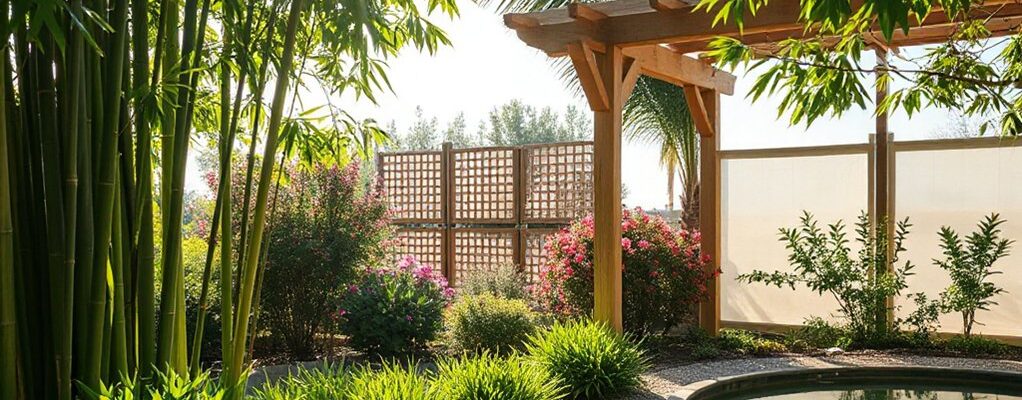
If you want privacy without darkening your yard, start with light-friendly screens set at angles to filter rather than block sun. Pair them with tall, airy planting and reflective surfaces to keep daylight moving through. Choose pale, glossy finishes and open sightlines, pruning strategically to avoid clutter. The result should feel open yet sheltered, with spaces that invite motion from sunlit corners to shaded nooks. Ready to map out where light and privacy meet in your space?
Key Takeaways
- Use permeable, angled screens (slats, lattice, transparent fencing) to block view while letting light filter through.
- Position screens to channel daylight into shaded zones and maintain open sightlines toward focal points.
- Combine light-reflecting surfaces (pale colors, mirrors, glossy planters) to bounce daylight deeper into the garden.
- Choose tall, airy plants and layered greenery that conceal without heavy shading; prune to preserve light transmission.
- Integrate multifunctional furniture and water features to reduce clutter and reflect or diffuse light around the space.
Set Privacy Goals That Keep Your Yard Bright
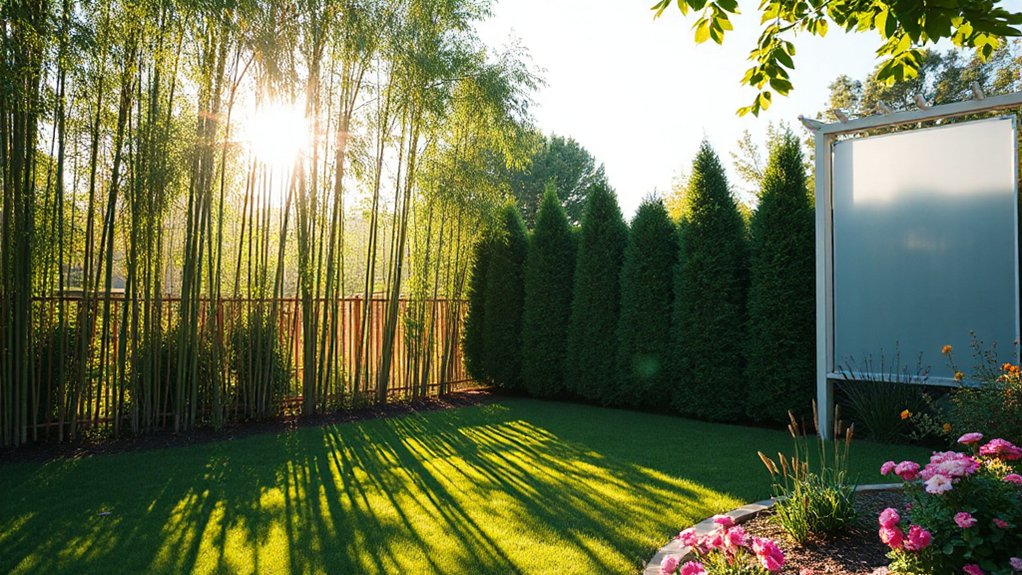
Start by defining what you want to protect and how much light you’re willing to trade. You’ll set clear privacy goals that fit your yard’s rhythm without dimming its mood.
Begin with practical priorities: sightlines you won’t compromise, then areas you can shield with selective screening. Consider garden furniture placement to preserve open, inviting corners, and use elevation and texture to frame views rather than block them.
Think about wildlife habitats, ensuring screens don’t disrupt breeze paths or forage zones. Choose materials and heights that balance shelter with openness, allowing dappled sunlight to filter through.
Measure sun patterns across seasons and map how privacy elements affect them. Document targets, tolerances, and timelines so you can refine and maintain bright, functional outdoor rooms.
Choose Light-Friendly Screening Materials
Choosing light-friendly screening materials means prioritizing textures and gaps that let sun mingle with shade. You’ll want options that form a soft barrier without casting heavy shadows or blocking breezes. Permeable barriers, like slatted screens or lattice with open sections, control sightlines while preserving air flow and daylight.
Consider materials that age gracefully—cedar, bamboo, or powder-coated metal—so your screen remains subtle yet sturdy. Transparent fencing offers clarity while delimiting space, helping you see plant vigor and movement beyond.
Mix vertical and horizontal rhythms to soften edges and reduce glare, avoiding dense, solid walls. Test height and spacing at multiple sun angles, ensuring privacy without creating a tunnel effect.
Prioritize low-maintenance finishes and clean lines for a refined, light-holding boundary.
Plantings That Screen Yet Stay Bright
A good screen uses plants that provide concealment without dulling daylight, so choose tall, airy specimens that form a living veil rather than a solid wall. You’ll want repeated, lightweight foliage that filters sun while preserving brightness behind it.
Favor natural fencing options like columnar arboreal grasses and layered shrubs that grow up and outward, not inward. Shade tolerant plants handle poorer light without sacrificing form, so mix begonias, hydrangeas, and ferns with slender evergreens for year-round structure.
Space gaps intentionally to preserve light transmission; overlaps should feel breathable, not bulky. Maintain clean lines, pruning to preserve upward reach and thin canopies.
Choose species with small to medium leaflets to avoid shade glare, and stagger heights for continuous yet soft screening. This approach delivers privacy plus preserved daylight.
Spatially Clever Screens That Bend Light
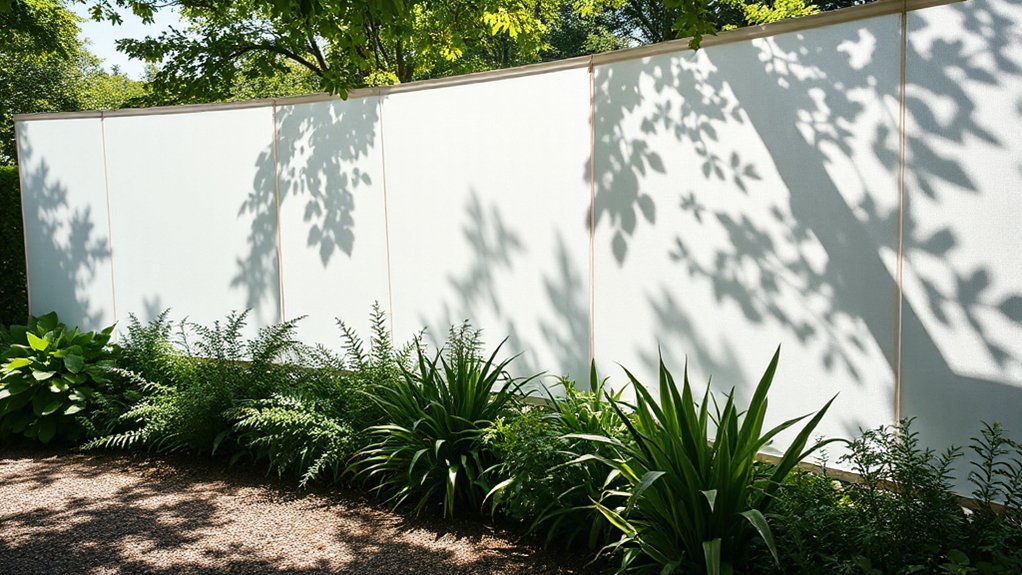
Spatially clever screens don’t just block sight; they bend light to maintain illumination behind them. You select materials with refractive or diffusing properties and place them at angles that scatter rays toward shade-tolerant zones. Think slats, lattices, or etched panels that channel daylight deeper into the garden without exposing you fully to view.
Precision geometry matters: keep gaps narrow enough for privacy yet wide enough to permit glow to travel. Integrate water features so reflected light adds sparkle around the screen’s base, softening edges and enhancing perception of depth.
Pair with multi functional furniture that doubles as plant support or storage, reducing clutter and maximizing space. This approach yields a bright, intimate outdoor room with practical, elegant screens.
Reflective Surfaces and Color to Amplify Daylight
Reflective surfaces and color can dramatically amplify daylight without adding clutter. You can tilt, angle, and position mirrors or glossy planters to bounce light deeper into shady corners, reducing the need for artificial illumination.
Choose smooth, durable finishes in neutral or cool tones to minimize glare while maximizing brightness; color enhancement comes from white, pale gray, or soft ivory hues that reflect rather than absorb.
Place reflective panels opposite windows or open spaces to extend the daylight reach, and test angles seasonally for consistent spill without creating harsh hotspots.
Keep surfaces clean to retain their reflective quality, and weave subtle color accents through textiles or ceramic pots to maintain cohesion.
This approach enhances visibility and mood while preserving privacy and atmosphere.
Movable Planters for Seasonal Privacy
You can deploy movable planters to sculpt privacy with seasonal flexibility. Choose lightweight, sturdy containers on wheels or casters for easy repositioning.
Use tall, dense species in evergreen tones to create perimeters that block sightlines, then swap to airy, open configurations when light is needed.
Planters with trellising offer layered screening while preserving airflow and sky views. Group several units to form a modular screen or align them along borders to control neighbor exposure.
Consider height, width, and plant maturity—start with compact varieties and fill in as roots establish.
Use weatherproof pots in neutral colors to blend with your garden palette. Label placements for rotation, and store off-season planters to maintain longevity.
Seasonal privacy adapts without sacrificing daylight or aesthetics.
Site-Specific Design Tweaks for Sun Angles
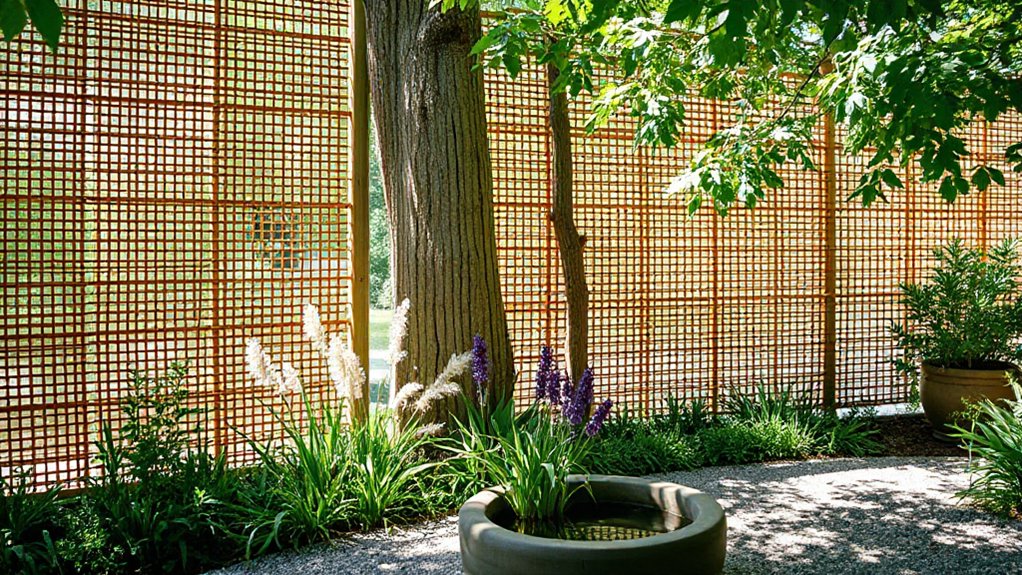
To optimize privacy without shading your garden, tailor your plant screen to the sun’s arc at your site. Start by mapping peak and low sun angles across seasons, then align taller elements away from seating zones to prevent glare.
Choose plant heights that create vertical rhythm without blocking daylight; staggered screens read as garden art, not walls. Use evergreens for winter privacy and deciduous textures for summer light, ensuring gaps align with paths and windows.
Prune and rotate fast-growers to maintain a sculptural silhouette that punctuates sunlit moments. Consider wildlife corridors—integrate trellises or narrow hedges that thread through, guiding birds and pollinators along usable routes.
Keep margins clean, soils nourished, and irrigation discreet to sustain a balanced, light-conscious screen.
Practical Case Studies: Small, Sunny, Private Gardens
You’ll explore sunny, private corners that feel intimate without crowding light, using small-scale layouts and thoughtful screening.
Light-preserving screens frame views and add depth while keeping neighboring exposure minimal.
Pair scale-aware planting with crisp textures to create bright, serene nooks that stay private all season.
Sunny Yet Private Nooks
You’ll maximize light with reflective hardscaping and staggered plant heights, letting low borders frame views without blocking sun. Choose slender, upright shrubs and trellised vines to form vertical privacy that still breathes air and offers sky glimpses.
Groundcovers keep soil cool and clean, while stepping stones invite curiosity without crowding. To add sensory depth, plant a garden scent layer near seating and a selective wildlife attraction near a corner path.
Keep maintenance simple: mulch, prune, and refresh seasonal blooms. With thoughtful layout, your sunny nook stays open, inviting, and quietly private all season.
Light-Preserving Screens
When light is the star, practical screens for small, sunny yards balance shade and openness by combining narrow profiles with reflective surfaces. You choose privacy fences or trellis inserts that run slim to minimize bulk while maximizing light diffusion.
Opt for materials with low glare and matte finishes to keep glare from overpowering views. Use shading techniques like angled slats, partial panels, or perforated metal that cast gentle shadows without heavy sections blocking sun.
Position screens to frame views rather than enclose them, preserving perceived openness. Ground them with pale, clean edging and reflectors that bounce light deeper into the yard.
Maintain sightlines toward key architectural features, and reserve denser screening for corners and boundary lines only. This keeps your sunny garden bright, private, and legible.
Scale-Appropriate Planting
- Use columnar or dwarf varieties near boundaries to minimize shadowing while creating vertical rhythm.
- Combine light-reflective foliage and pale blooms to brighten corners without bulk.
- Schedule periodic pruning to maintain sightlines and airflow while preserving structure.
Frequently Asked Questions
How Can Privacy Be Added Without Reducing Overall Yard Daylight?
Hedges aren’t your only option; you can add privacy without dulling daylight by choosing hedge alternatives and windbreak options that stay airy. Use narrow, tall plantings with gaps, lattice screens, or vertical garden panels that meet above eye level yet let light pass.
Opt for deciduous varieties in mixed heights, and place windbreaks along property edges to funnel breeze rather than block sun. You’ll gain seclusion, interest, and bright outdoor rooms.
Which Low-Growing Screens Preserve Afternoon Sun Most?
You’ll want low screens that stay lush yet airy, preserving afternoon sun. Choose climbers trained on lightweight trellises and ground covers that fill gaps without hogging light.
Climbing plants like Jasminum or Clematis offer vertical privacy, while low ground covers keep the base bright.
Opt for sun-loving varieties, keep pruning tight, and space plants to reduce shading. This approach creates a practical, aesthetic screen that stays open and appealing all season.
Can Privacy Solutions Adapt to Changing Sun Angles Seasonally?
You can, and you should, adapt privacy as sun angles shift by using Seasonal plant choices and Adjustable privacy screens.
Start with modular screens that slide or hinge, so you block or reveal as the sun travels.
Pair them with deciduous, fast-growing evergreens for seasonal structure.
Choose plants that thrive in both light and shade, and staggered planting keeps privacy constant.
Revisit height and angles each season to maintain balance between light and seclusion.
Do Mirrors or Reflective Surfaces Truly Boost Perceived Daylight?
Yes, mirrors and reflective surfaces can dramatically boost perceived daylight in your garden. You’ll bounce light deeper, brighten shadows, and open up space.
But beware privacy trade offs—reflections can reveal areas you’d rather keep private. Consider strategically placed panels, angle control, and garden aesthetics to guide light without glare.
Use reflective surfaces sparingly to avoid clutter, and balance openness with screening for a practical, precise, and beautiful result.
This effect isn’t a miracle, it’s a clever tool.
Are There Maintenance Tips to Keep Light-Friendly Borders Open?
Yes. You keep light-friendly borders open by regular weeding, deadheading, and light trimming of bordering shrubs, so airflow stays clear.
Mulch sparingly to avoid smothering root zones, and inspect for invasive growth monthly.
Maintain Wildflower patches with timely reseeding and erosion control.
Use vertical trellises to confine climbers without crowding borders.
Check irrigation leaks, prune after bloom, and replace damaged stems promptly to preserve bright, airy edges.
Conclusion
You’ll gain privacy without dimming your light. Think of screens as gentle cues, not barriers, curving to guide sunbeams where you want them. Choose airy textures, pale gloss, and reflective accents to brighten shaded corners. Let tall grasses and layered shrubs whisper concealment while keeping pathways open. Moveable planters offer seasonal privacy without permanence. With mindful pruning and smart angles, your garden stays serenely private, warmly bright, and quietly elegant.