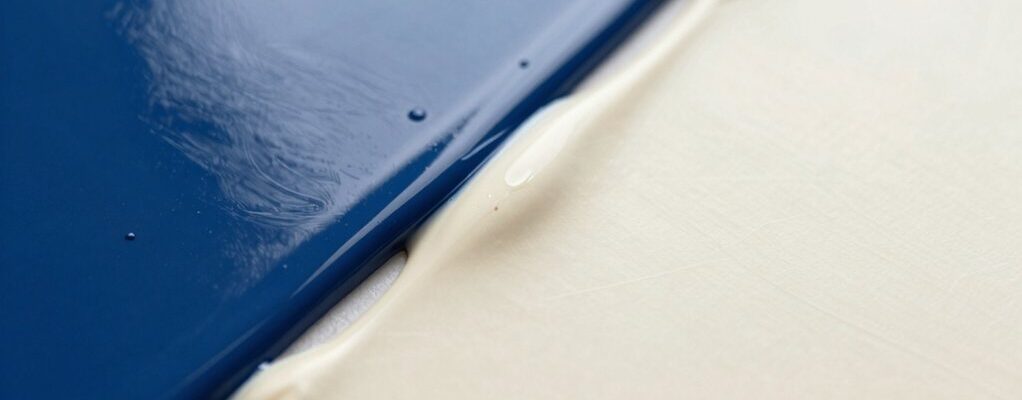
Enamel paint offers rugged durability and a glossy finish, while emulsion provides a softer, matte to low-sheen look; you weigh hardness against ease of application. You’ll notice enamel resists scratches and weathering, but it dries slowly and can fade in harsh sun, whereas emulsion dries quickly and cleans easily yet may require more frequent touch-ups. Since your choice affects interior feel, exterior exposure, and maintenance, consider how each trait aligns with your project goals as you weigh options.
Durability and Surface Finish Compared
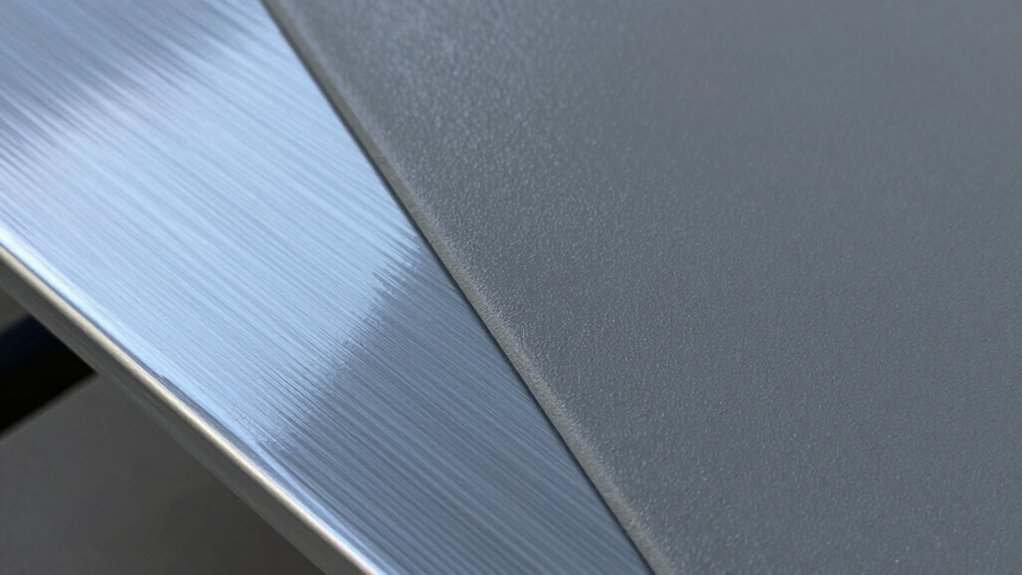
Enamel paint generally offers superior durability and a smoother surface finish than emulsion paint. You assess resilience by substrate compatibility, film hardness, and tolerance to moisture, UV exposure, and temperature cycles.
Enamel forms a crosslinked, glossy film with higher scratch resistance, reducing micro-damage under frequent handling. You’ll observe longer service life in high-traffic, sanitary, or exterior environments, where resistance to abrasion, chemicals, and humidity matters most.
Emulsion, while easier to apply and quicker to cure, yields a softer, somewhat porous film that traps moisture more readily, elevating early wear risk on strenuous substrates. You compare cure regimes, film thickness, and adhesion tests to quantify performance.
For a given environment, durability converges on a material choice that aligns with substrate prep, coating thickness, and anticipated exposure conditions.
Shine, Sheen, and Aesthetic Outcomes
Shine and sheen define perception of depth, resilience, and maintenance implications, making finish level a practical criterion alongside color and texture. Enamel paints typically yield higher gloss and sharper specular highlights, which can emphasize surface imperfections but enhance perceived cleanliness and dimensionality.
Emulsion paints, especially VOC-reduced or matte variants, provide lower sheen with subtler reflections, improving concealment of minor flaws and creating a softer, more uniform appearance. The choice influences eye-line integration: high-gloss finishes draw attention to edges and joints, while flat or eggshell finishes publicize a room’s overall tone without glare.
Aesthetic outcomes also hinge on base preparation, filming, and lighting. Consider maintenance expectations: higher sheen may demand meticulous cleaning, whereas lower sheen tolerates casual upkeep with less visible wear.
Drying Time and Curing Process
Drying time and curing are governed by film formation chemistry, substrate moisture, and environmental conditions, so you should expect distinct phases: surface touch-dry, partial cure, and full cure.
In practice, enamel paints form a crosslinked polymer network that resists flow as solvents evaporate; this yields a hard, glossy film, while emulsions rely on water evaporation and coalescence of latex particles to reach cohesion. You’ll observe an initial surface set within minutes, followed by progressive solvent loss and polymer relaxation over hours.
Temperature, humidity, and airflow accelerate or retard the process; higher temperatures shorten drying intervals but may cause defects if rapid solvent loss occurs. Curing, involving chemical crosslinking or film coalescence, completes over days, enhancing adhesion, hardness, and chemical resistance.
Avoid exposing fresh surfaces to abrasion or immersion during the cure window.
Prep, Priming, and Surface Preparation
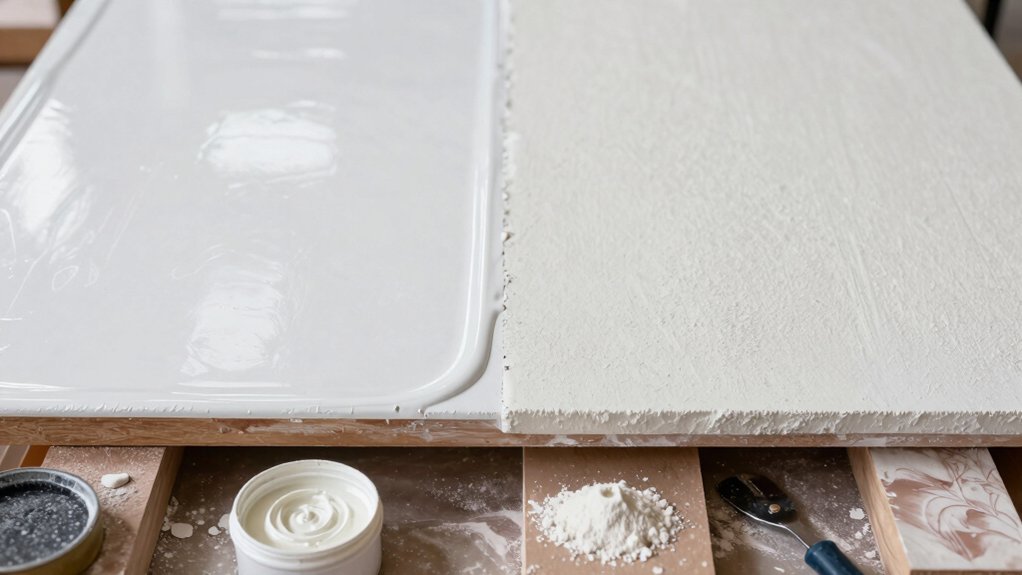
When preparing to apply either enamel or emulsion coatings, surface prep sets the stage for adhesion and finish quality. You assess substrate condition, remove contaminants, and address porosity. Degrease with a solvent or mild detergent, rinse, and dry thoroughly to prevent interaction with the film.
The substrate must be clean, sound, and dry to a specified moisture level; repair defects with appropriate filler, followed by sanding to a uniform key. Sanding grit depends on substrate and coating type, preserving edges without creating gouges.
Remove dust with tack cloths or vacuums before priming. Choose a compatible primer: epoxy, acrylic, or shellac-based, tailored to substrate and coating chemistry. Apply primer in even coats, allow full cure, then re-evaluate for uniform adhesion potential and surface readiness.
Application Methods and Techniques
Application methods for enamel and emulsion coatings require selecting the appropriate equipment and techniques to achieve consistent film thickness, adhesion, and finish quality. You assess substrate texture, porosity, and confinement to determine spray, roll, or brush application.
Enamel benefits from controlled viscosity, nozzle sizing, and fan patterns to minimize runs and sagging. Emulsion demands gentle agitation, compatible reducers, and even roller loads to prevent pigment separation.
Surface temperature, ambient conditions, and cure schedule guide air-assisted spraying or electrostatic methods, with cross-coat audits to verify uniformity.
Tool cleanliness, substrate pre-wetting, and tack-free times inform workflow sequencing. Technique selection prioritizes film build replication, edge coverage, and defect mitigation, ensuring reproducible dry and cure milestones.
Document parameters, inspect discrepancies, and adjust parameters for repeatable, quality finish outcomes.
Maintenance, Cleaning, and Longevity
Enamel and emulsion finishes differ in durability across surfaces, so you’ll want to assess substrate compatibility and expected wear when planning maintenance.
Cleaning methods must match finish chemistry to avoid degradation, with guidance tailored to surface type and coating age.
We’ll compare longevity drivers, then outline practical maintenance steps to extend performance for each system.
Durability Across Surfaces
Durability across surfaces hinges on how enamel paint and emulsion paint resist wear, cleaning, and environmental exposure. Enamel coatings typically exhibit higher hardness and scratch resistance, maintaining gloss and film integrity on metal, wood, and high-traffic substrates. They respond well to solvent-based cleaners but may show surface blooming or yellowing when trapped solvents persist.
Emulsion paints, by contrast, prioritize flexibility and moisture tolerance, performing well on plaster, drywall, and interior walls with lower abrasion demands. For outdoor exposure, enamel films often offer superior UV resistance and abrasion resistance, while emulsions risk chalking or fading without UV stabilizers.
Long-term durability also depends on substrate preparation, film thickness, and cure completion, which govern cracking, delamination, and water ingress trajectories.
Cleaning and Maintenance Tips
To keep enamel and emulsion finishes performing as intended, implement a routine that prioritizes uniform cleaning, timely stain removal, and proper curing by substrate and film type.
Begin with surface conditioning: dust and light debris first, then wipe with a damp microfiber to minimize residue.
Enamel surfaces tolerate higher solvent exposure; use mild cleaners and, for stubborn spots, isopropyl alcohol in small quantities.
Emulsion coatings benefit from neutral pH detergents and soft, non-abrasive scrubbers to prevent gloss loss and micro-scratching.
Avoid aggressive solvents on emulsion; they degrade film over time.
When curing, maintain consistent temperature and humidity per manufacturer guidelines, and prevent sudden temperature shifts.
Regular inspection detects deglossing, cracking, or peeling early, allowing timely touch-ups and re-coating to preserve longevity.
Interior Vs Exterior Performance
Interior and exterior performance differ in how each paint type resists environmental stresses. You’ll evaluate adhesion, flexibility, and film integrity under temperature shifts, humidity, and UV exposure.
Enamel typically forms a harder, more water-resistant surface, reducing chalking and rundown in exterior climates but risking cracking if substrate movement is pronounced.
Emulsion often offers more forgiving elasticity, supporting façade substrates with minor movement yet tolerating moisture without rapid degradation.
When you apply enamel, anticipate superior stain resistance and scrub durability, but monitor for gloss loss and micro-cracking in heat cycling.
Emulsion provides easier cleaning and longer-term color retention in shaded or damp conditions, yet it may show gloss fade and surface whitening in harsh sun.
Match performance to substrate, climate, and maintenance cadence.
Cost, Availability, and Environmental Considerations
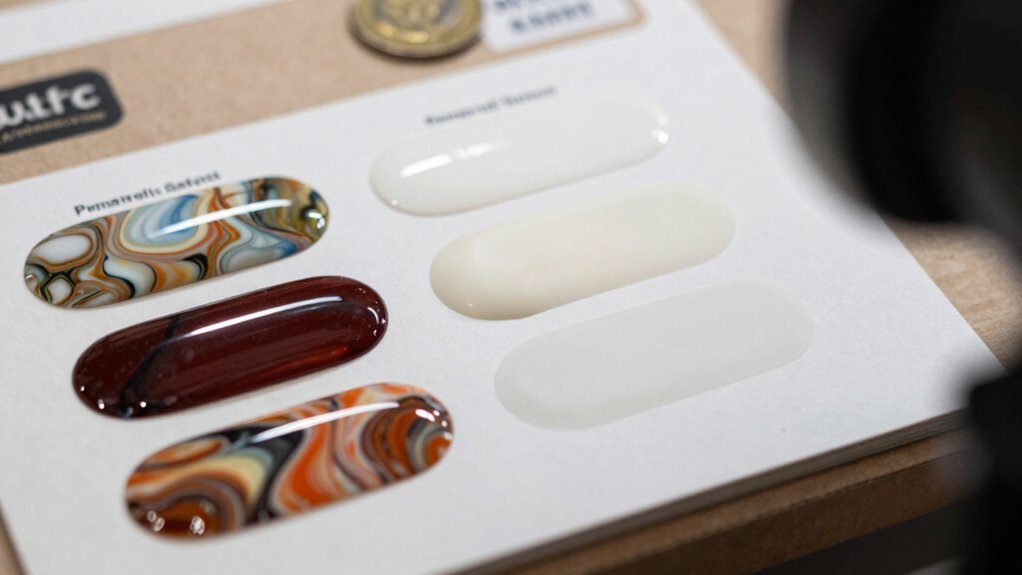
Cost, availability, and environmental considerations influence your paint-selection strategy as much as performance data. You weigh total cost of ownership, including upfront price, recoat intervals, and maintenance needs, against durability and aesthetic outcomes.
Availability matters: regional stock, supply chain stability, and batch consistency affect project timelines and color matching. You assess environmental impact by VOC content, low-emission formulations, and lifecycle considerations, balancing regulatory compliance with indoor air quality goals.
Compatibility with substrates, primers, and existing finishes informs choice, while waste disposal and chorus of recycling options influence sustainability metrics. You compare brands on transparency of ingredient disclosures, performance warranties, and local service support.
Common Pitfalls and Practical Tips
You should start with proper surface prep and verify compatibility before applying, since improper prep leads to peeling or adhesion failures.
Watch for finishing issues by keeping consistent film thickness and using the correct reducer or thinner for the chosen product.
If you encounter bubbling or brush marks, reassess technique, application temperature, and cure times to identify the root cause.
Application Precautions
To prevent coating defects, follow these practical precautions when applying enamel paint or emulsion paint.
Prepare surfaces with thorough cleaning, degreasing, and dust removal; ensure dryness before coating.
Maintain environmental controls: 50–70% humidity, 15–25°C, and avoid rapid temperature shifts during cure.
Use compatible primers and correct product for substrate; verify pot-life and mixed-store times to prevent premature drying or viscosity drift.
Measure viscosity with a standard rheometer or cup, update with each batch, and adjust spray or brush settings to achieve uniform film thickness without runs.
Apply in even passes, maintaining a consistent distance and angle; avoid overworking corners.
Protect edges with masking where needed, and allow proper curing between coats.
Inspect for pinholes, solvent blooming, and edge pulling before final topcoat.
Finishing Troubleshooting
Finishing Troubleshooting: Common pitfalls often stem from curing irregularities, surface incompatibilities, or application midpoints that leave visible defects. You’ll diagnose by inspecting gloss consistency, humidity during cure, and substrate cleanliness before recoating.
When chalking or whitening appears, verify solvent compatibility and over-wiping history; adjust your reducer choice or drying conditions accordingly.
Feathered edges indicate improper edge control; re-sand edges with fine grit and reapply in controlled passes to restore film continuity.
Peel or blistering signals trapped moisture or incompatible primers; identify source and re-prime with a compatible sealer.
Brush or roller marks reveal tool impact or insufficient leveling; use high-quality applicators and cross-roller techniques.
Document cure times, ambient conditions, and material batches to prevent recurrence and guide future refinishing decisions.