
Swindon offers steady demand, steady rents, and steady returns. You’ll see occupancy above 92% and rent growth in the 2–4% range year over year, driven by tech, logistics, and professional sectors along with ongoing regeneration. With prime locations near transport links and amenities, long-term tenants are common, but market saturation creates risk that smart diversification and value-add upgrades can mitigate. This combination invites careful analysis as you consider next steps.
Swindon Rental Market Snapshot: Current Performance
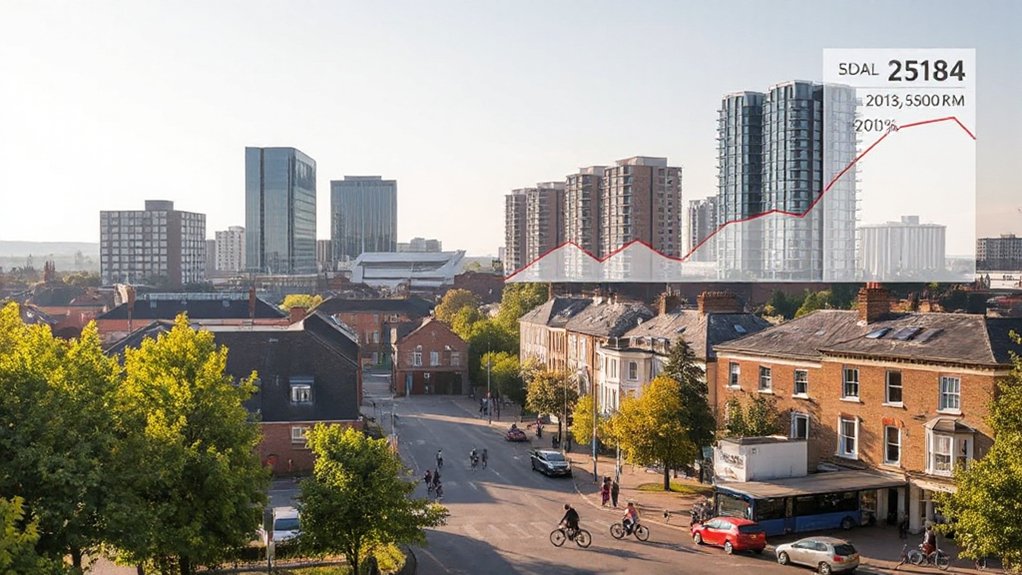
Swindon’s rental market is holding steady with steady demand and tight supply in key areas, signaling reliable cash flow for investors. You’ll observe moderate occupancy levels across central and commuter belts, with rent growth hovering in the 2–4% range year over year.
Market saturation remains uneven: pockets near new developments show competitive pricing, while older stock in peripheral wards keeps vacancy durations short due to high turnover.
Tenant preferences increasingly favor properties with energy efficiency, parking, and flexible layouts, guiding briefings for asset upgrades.
Vacancy risk is mitigated by diversified submarket exposure and proactive lease renewals.
Looking ahead, you should expect gradual expansion of supply as builds complete, but demand remains resilient, supported by commuting corridors and value-conscious renters seeking stable, predictable yields.
Key Demand Drivers in Swindon Right Now
You’re seeing housing demand tighten as you move through Swindon’s market, with higher occupancy rates and rising rents signaling tight supply.
Employment growth signals point to a stable, expanding labor base that sustains rental demand over the next 12–24 months, especially in tech, logistics, and professional services.
Improved transport connectivity further strengthens appeal, expanding catchment areas and accelerating tenant turnover while supporting price resilience.
Housing Demand Dynamics
Housing demand in Swindon is shaped by a tight jobs market, with growth in both STEM and logistics sectors fueling higher rental turnover and shifting age demographics toward early-career renters and new families.
You’ll see rising demand concentrated in zones near tech parks and distribution hubs, reinforcing shorter tenancy cycles and more frequent renewals.
Data indicates seasonal spikes tied to graduate intake and project-based roles, signaling durable turnover rather than volatility.
Urban renewal efforts expand supply density, while transport links bolster commuter appeal for multi-year occupancy.
Cultural influences are steering preferences toward mixed-use neighborhoods and accessible amenities.
Looking ahead, occupancy metrics suggest a gradual shift toward higher-quality, compact units to meet evolving affordability and lifestyle expectations.
Employment Growth Signals
Despite a cooling macro backdrop, Swindon’s employment growth remains a core driver of rental demand, with STEM and logistics sectors leading hiring momentum and supporting steady turnover.
You’ll see resilience in workforce growth, with data showing above-average private-sector job creation across targeted employment sectors.
Quarterly reports highlight sustained hiring in tech-related roles, coupled with continuing expansion in distribution and inbound logistics, reinforcing housing demand stability.
Salary trajectories, vacancy rates, and business investment cycles corroborate a positive outlook for rental yields, even as macro-headwinds persist.
You should monitor workforce diversity and inclusion trends, as a more varied talent pool can broaden employer demand for mid-market and affordable housing.
Transport Connectivity Boost
Transport connectivity is accelerating Swindon’s housing demand, with recent upgrades and planned improvements acting as a direct boost to renter attraction and retention. You’ll see measurable impact in commute times, modal split, and vacancy stability as rail and road projects align with commuter patterns.
Data indicate increased take-up near new park-and-ride sites and enhanced bus rapid transit corridors, supporting tighter household budgeting and higher demand for centrally located units. Forward-looking projections expect further yield compression for well-connected properties, with rental growth outperforming broader regional benchmarks.
Consider neighborhoods that blend accessibility with character, where historical architecture adds appeal without sacrificing modern efficiency. Local cuisine clusters near transit hubs correlate with longer renter tenancies.
Rent Level Outlook for Swindon in the Coming Year
Swindon’s rent trajectory over the coming year is shaped by steady demand from professionals and families, a modest supply response from developers, and evolving mortgage costs that influence affordability.
You’ll see rental pricing gravitate toward a measured increase as new units enter the market, offsetting some pressure from housing costs elsewhere. Data suggests vacancy rates remain low enough to support gradual uplift, with premium segments—particularly properties with Luxury amenities—maintaining stronger inflows.
Seasonality will play a role, but overall pace should stay modest in line with income trends and borrowing costs. Expect landlords to optimize portfolios through targeted rent calibration, lease structuring, and longer tenancies.
You should monitor macro indicators and local project completions for precise timing and pricing discipline.
Occupancy, Turnover, and Tenant Flow in Swindon

You’ll want to start with the occupancy dynamics, tracking how vacancy rates shift across neighborhoods and property classes.
Tenant flow trends show where rents tighten or soften, signaling future demand hotspots.
This forward-looking view ties vacancy timing to turnover velocity, guiding you on where to optimize pricing, marketing, and investment timing.
Occupancy Dynamics Snapshot
Occupancy dynamics in Swindon show steady resilience amid market fluctuations, with occupancy staying above 92% on average while turnover remains modest—suggesting stable demand and smooth tenant shifts.
You’ll see turnover clustered around short cycles, enabling predictable vacancy periods and quicker re-leasing. Tenant flows indicate balanced inbound and outbound movements, aided by diversified property types and targeted incentives.
Data signals suggest occupancy gains align with growing professional sectors and limited new supply constraints, supporting price stability and rent progression.
I foresee continued strength from proactive property management, responsive maintenance, and transparent communication channels—bolstering tenant retention.
Community engagement and environmental sustainability emerge as differentiators, driving occupancy depth among eco-conscious renters.
Tenant Flow Trends
Turnover and occupancy dynamics in Swindon continue to reflect a balanced, data-driven pattern that supports stable cash flow and predictable re-leasing timelines. You’ll observe steady tenant flow where occupancy remains high even as turnover ticks up modestly in seasonal spikes.
The data indicates shorter vacancy windows, driven by competitive pricing and effective tenant targeting. Tenant satisfaction emerges as a key predictor of renewal likelihood, with higher satisfaction correlating to longer stays and smoother lease renewals.
As lease renewal opportunities arise, you should monitor renewal rates, rent step-ups, and any concessions offered, because these factors shape occupancy continuity. Looking forward, client portfolios benefit from proactive lease management, timely tenant communications, and calibrated incentives that sustain occupancy and optimize net operating income.
The Swindon Tenant Profile: Families, Professionals, and Students

Swindon’s rental market reflects a balanced mix of family, professional, and student demand, with each segment shaping neighborhood choices and price dynamics. You’ll see families prioritizing stable schools, transport links, and safe green spaces, driving demand for mid-range towns and leafy suburbs.
Professionals seek efficiency, new-build sites, and commutable zones, nudging rents higher around key corridors.
Students, drawn to universities and affordable options, diversify occupancy patterns and short-term lettings, creating dynamic caps on vacancy rates.
Across all groups, consistent data shows steady appendages to demand during term shifts and exam periods.
Community engagement elevates tenant retention, while cultural diversity expands amenity footprints and service offerings.
Looking ahead, you should expect targeted product strategies that balance yield with resident satisfaction.
Swindon Districts With Strongest Rental Demand and Yields
You’ll want to start by identifying the Swindon districts with the strongest rental demand and the highest yields, using latest occupancy and rent data as your baseline.
From there, compare turnover, time-on-market, and similar-area performance to spotlight areas with resilient demand and scalable returns.
This forward-looking view will guide where to prioritize investment and risk-adjusted opportunities.
Strongest Rental Demand Areas
Among Swindon districts, the areas commanding the strongest rental demand and yields are those with solid transport links, growing applicant pools, and targeted amenity upgrades. You’ll see demand concentrate near major commuting corridors and regeneration sites, where occupancy rates stay high across traditional leases and flexible arrangements.
Data indicate Premium segments attract longer tenancies in areas with safe neighborhoods, schools, and walkable retail clusters, while entry-level stock fills quickly in well-connected hubs.
Forward projections show rising rents driven by ongoing infrastructure investments and developer activity. Luxury apartments remain a magnet for professional renters, while short term rentals help stabilize seasonal occupancy and cash flow.
Focused targeting of amenity upgrades and density optimization will sustain resilience and incremental yields.
Highest Yielding Districts
Which Swindon districts deliver the strongest rental demand and the highest yields today, and where will the rents head next? In this snapshot, you’ll see yield leaders clustered around areas with robust rental turnovers and steady employment access.
Based on recent rents, occupancy rates, and time-to-let metrics, districts such as Wroughton, Highworth, and central Swindon exhibit elevated gross yields, supported by demand from commuters and city center amenities.
Continuous population growth and new housing stock entries keep leverage for rent growth modest but positive. For investors, prioritizing properties with efficient property management and rigorous tenant screening reduces vacancy days and default risk, strengthening net yields.
Monitor macro factors, seasonal demand shifts, and council planning to refine your acquisition pipeline and exit timing.
Swindon Rental Market Cycles: Seasonality and Timing
Swindon’s rental cycle shows clear seasonality and timing patterns driven by school terms, wage cycles, and local demand shifts. You’ll see peaks in late summer as families relocate, with quieter Q1 periods reflecting budget resets and tenancy renewals.
Data indicates vacancy rates tighten when school years begin, pressuring rents modestly upward in spring and early autumn. You should time renewals to align with term starts, maximizing occupancy while preserving stable yields.
Expect seasonal dips around winter holidays, offering opportunities for rent concessions or upgraded fixtures to attract new tenants.
Regulatory clarity matters: stay current on Rental regulations and adapt offers accordingly. You’ll also protect tenant rights by documenting condition surveys and clear move-in/out procedures, reducing dispute risk and maintaining consistent cash flow through cyclical fluctuations.
Investment Playbook for Swindon: Which Property Types Perform Best
If you’re aiming to maximize returns in Swindon, focus on property types with demonstrated rent resilience, strong occupancy, and scalable demand drivers. In practice, consider build-to-rent and multi-unit houses that align with steady demand from families and professionals, plus suburban lettings near tech parks.
Data points show lower vacancy when units offer flexible layouts and good transport links, supporting resilient rents through cycles. Studio to two-bedroom flats perform consistently in city-center corridors, while three-bedroom houses attract longer tenancies in expanding outskirts.
Prioritize properties with efficient management, clear rent escalation, and scalable maintenance plans. Incorporate prudent tenant screening and property tax considerations early to protect yields.
This playbook emphasizes diversification across high-occupancy segments to hedge against localized shifts.
Financing Swindon Buy-To-Let: Key Metrics and Lender Comparisons
Financing a Swindon buy-to-let hinges on understanding key metrics and comparing lender offerings to optimize cash flow and risk. You’ll assess loan-to-value, interest rates, and amortization to gauge monthly payment stability against projected rents.
Cash-on-cash return and net operating income illuminate the true profitability under varying occupancy scenarios. Market saturation data informs vacancy risk and rent-forecast sensitivity, helping you calibrate underwriting assumptions.
Compare lenders’ product suites, including fixed versus variable rate periods, prepayment flexibility, and lender fees, to minimize carrying costs over the investment horizon.
Stress-test scenarios for rental affordability shifts—lower rents or higher maintenance—so you aren’t blindsided by cyclical swings.
Use forward-looking metrics to prioritize lenders that align with your occupancy plans and exit strategy.
Swindon-Specific Regulations and Compliance for Landlords
Swindon landlords should anticipate evolving licensing and safety requirements that directly impact onboarding, ongoing compliance costs, and portfolio risk.
Our data indicates tighter enforcement and new standards for House in Multiple Occupation licensing and annual safety checks, with potential cost and time implications for property upgrades.
Looking ahead, aligning your practices with upcoming amendments will help sustain occupancy, protect tenants, and optimize long-term returns.
Landlord Licensing Requirements
In Swindon, landlord licensing requirements are evolving to curb ineffective property management and raise housing standards, so staying compliant isn’t optional—it’s essential for steady cash-flow and risk management.
You’ll find licensing thresholds tightening as data shows uneven performance across portfolios, with higher scrutiny for properties in areas of perceived overcrowding or neglect.
Rental regulations increasingly emphasize minimum safety checks, response times, and documented energy performance.
Your strategic compliance plan should map properties to local licences, renewals, and applicant timelines, plus maintain transparent tenancy records to expedite audits.
Data suggests licensed landlords experience steadier occupancy and fewer enforcement actions, improving long-term yield.
Stay proactive: track policy shifts, anticipate tightened criteria, and invest in systems that demonstrate consistent, verifiable compliance.
Landlord licensing remains a core profitability pillar.
Safety Compliance Standards
Effective safety compliance in Swindon hinges on proactive, data-driven adherence to local standards, inspections, and timely remedial actions. Landlords who implement rigorous checks now tend to avoid costly penalties and maintain steadier occupancy.
You’ll find that Swindon’s regulatory environment emphasizes proactive risk assessment, documented remedil timelines, and clear reporting channels.
Standards enforcement intensifies around gas, electrical safety, and smoke/CO alarms, with periodic mandatory inspections and certification renewals tracked in centralized databases.
You should adopt a systematic compliance calendar, leveraging digital reminders and standardized checklists to reduce gaps.
Data shows improved tenant retention where compliance incidents are rare and transparent.
Looking ahead, higher enforcement intensity and evolving guidance will push you toward automated monitoring, real-time anomaly alerts, and proactive remediation to sustain safe, compliant dwellings and resilient returns.
Tax Considerations for Swindon Landlords (Uk Rules With Local Implications)
Given the evolving tax landscape for landlords, understanding UK rules and local implications in Swindon is essential to optimize net returns. You’ll navigate changes to allowable expenses, mortgage interest relief phaseouts, and Stamp Duty adjustments with a focus on cash-flow impact.
Data show that UK tax bands, NRB reductions, and mortgage interest rules shift after-tax yields, making precise planning imperative. Local implications include council tax treatment for furnished vs unfurnished holdings and potential reliefs for energy efficiency upgrades.
You should implement tax strategies that optimize deductions while sustaining compliance, avoiding penalties from misclassification or late filings. Regular benchmarking against regional rental performance clarifies risk-adjusted returns, guiding acquisition or disposition decisions.
Prioritize legal compliance, documentation, and proactive forecasting to safeguard long-term profitability.
Capital Appreciation vs. Cash Flow in Swindon: Balancing Goals
In Swindon, you’ll weigh capital growth against steady income, using metrics like projected price appreciation and cash-on-cash returns to map outcomes.
We’ll compare risk-adjusted returns across scenarios, highlighting how financing choices and leverage shape both growth and liquidity.
This approach sets a forward-looking framework to balance capital appreciation with dependable cash flow as your investment goals evolve.
Capital Growth vs Income
Balancing capital growth and income in Swindon hinges on trade-offs between appreciation potential and cash flow certainty. You’ll see rising demand from premium sectors like luxury apartments and student housing, which can lift cap gains while sustaining rental yields.
Historical data show Swindon’s development cycles often push property values during infrastructure upgrades and employer expansion. Yet yield dips can occur if accruals outpace rent growth.
You’ll want to model scenario analyses: if capital appreciation accelerates, price resilience supports longer hold periods; if income focus dominates, stable rents and occupancy protect cash flow through cycles.
Market signals suggest diversified exposure—mixing luxury apartments with student housing—can balance appreciation ceilings with predictable occupancy.
In practice, articulate exit or refinance plans anchored to measurable rent growth and value benchmarks.
Risk-Adjusted Returns
In a market nearing saturation, capital gains may temper as price cycles lag rent growth, so you balance appreciation potential with reliable cash flow. You’ll monitor tenant preferences—affordability, amenities, proximity to transport—to forecast occupancy stability and turnover costs, which directly shape yield.
Stress-test portfolios against longer void periods and refinancing risk to identify acceptable risk-adjusted hurdles. The goal: framed targets that optimize upside from price momentum while preserving resilient income streams, ensuring your strategy remains disciplined amid cyclical volatility.
Financing Impacts Balance
Financing choices tilt the equation between capital appreciation and cash flow in Swindon by influencing leverage, debt service, and risk tolerance. In this lens, you’ll see that higher leverage can lift early appreciation potential but raises sensitivity to rent declines and vacancy risk, especially as market saturation edges upward.
Debt service coverage and financing terms shape monthly cash flow, dictating how long you can sustain vacancies without eroding returns. A forward-looking view shows cap rates compressing during periods of rapid rental growth, yet softening when affordability constraints bite.
Consider how rental affordability pressures demand stronger cash flow buffers, while valuation upside hinges on sustained occupancy.
Align financing with your risk profile, monitor rent-to-value shifts, and stress-test scenarios to balance market dynamics with your investment goals.
Yield by Property Type in Swindon: Houses, Flats, and PBUs

Swindon’s yield landscape varies by property type, with houses, flats, and PBUs each delivering distinct cash-on-cash and total return profiles. You’ll see higher gross yields for PBUs in high-demand areas, yet lower occupancy stability compared to houses.
Flats often offer more predictable monthly cash flow but face tighter rent controls and turnover risk, affecting long-term total returns. Houses tend to deliver more robust appreciation potential and steadier tenant tenure, especially in family-centric neighborhoods.
Across all types, net yields hinge on efficient property management and precise tenant screening to minimize vacancies and defaults. Look for markets with diversified demand, competitive rents, and disciplined capex plans to sustain cash flow.
Forecasts point to incremental yield compression in saturated pockets, offset by value-add opportunities in improving submarkets.
Financing Pitfalls and Risk Management for Swindon Portfolios
To navigate Swindon portfolios effectively, you’ll want to anticipate financing pitfalls that can erode returns and magnify risk during cycles of rate volatility and rental stress. You’ll focus on tailoring debt structures to cash-flow, stress-testing for rent pauses, and guarding against leverage creep.
Mortgage pitfalls often stem from fixed vs. variable rate misalignment, insufficient buffers, and over-optimistic rent growth assumptions; each amplifies vacancy or maintenance shocks. Implement disciplined debt-service coverage targets, diversify lenders, and lock hedges where feasible to dampen rate spikes.
Risk mitigation hinges on scenario analyses, contingency reserves, and transparent covenant monitoring. In a data-driven framework, quantify sensitivity to vacancy, capex, and refinancing windows, then iterate plans quarterly to preserve yield, limit drawdowns, and sustain portfolio resilience.
Market Entry Playbook for First-Time Swindon Investors
Entering Swindon’s market as a first-time investor requires a disciplined, data-informed approach: start with a clear target profile, quantify local demand drivers, and map the financing and operatings paths that sustain cash flow through cycles.
You’ll establish benchmarks on rent per square foot, vacancy rates, and seasonality for Luxury apartments and Commercial spaces, then stress-test without overleveraging.
Build a concise underwriting rubric: cap rate expectations, debt service coverage, and incremental capital needs.
Prioritize markets with transit access, amenity clusters, and employer concentration to align occupancy with value growth.
Create a phased entry plan: pilot small, diversify across asset classes, and scale as occupancy confirms projections.
Maintain a live dashboard to adjust pricing, renewal strategies, and expense controls as Swindon’s dynamics evolve.
Value-Add Opportunities in Swindon: Renovations That Pay Off
Optimizing value in Swindon starts with targeted renovations that lift rents, reduce operating costs, and shorten vacancy cycles. You should focus on high-ROI upgrades that align with demand shifts, such as modern kitchens, efficient heat pumps, and improved insulation, which cut energy bills and appeal to long-term tenants and discerning professionals.
In luxury apartments, smart-home features and durable finishes translate into higher rents and lower maintenance.
For short term rentals, consider durable communal amenities and flexible layouts that support corporate stays and staycations without sacrificing turnover speed.
Data suggests incremental capex yields payback within 3–5 years when aligned with local supply gaps and amenity trends.
Prioritize cost-benefit analyses, market segmentation, and proactive lease-up strategies to maximize overall profitability.
Exit Strategies for Swindon Landlords: Sell vs. Refinance
When deciding between selling or refinancing, Swindon landlords should weigh current cap rates, interest-rate trajectories, and local rent growth against your portfolio’s debt maturity profile and tax implications.
In practice, you’ll compare after-tax cash flows under a refinance versus a sale, using forward cap-rate assumptions and loan-structure costs.
If refinancing improves debt service coverage and preserves tax shields, you gain optionality to weather market cycles while supporting tenant retention by avoiding disruptive moves.
Conversely, selling may open access to equity for higher-yield opportunities or diversification, though you’ll face transaction costs and potential capital gains.
Landlord psychology matters: how you frame outcomes affects tenant retention and morale.
Model scenarios with sensitivity to rate paths, vacancy risk, and local demand to guide disciplined exit timing.
How to Model a Swindon Investment: Next Steps and Checklists
To model a Swindon investment effectively, start with a structured checklist that anchors your assumptions to forward-looking data and deal-specific metrics.
Begin with rent growth projections, occupancy stability, and cash flow sensitivity to interest-rate shifts.
Validate using local comps, area zoning plans, and economic indicators like job growth in Swindon’s tech and logistics sectors.
Build scenario ranges for cap rates, refurbishment costs, and tenancy turnover, then map them to your required return and risk tolerance.
Incorporate qualitative factors such as Urban art and Green spaces, evaluating their impact on tenant demand and retention.
Ensure your model tracks exit options, tax implications, and financing terms.
Document sources, assumptions, and limitations, and rehearse stress tests to refine your investment thesis.
Regularly update inputs as market signals evolve.
Frequently Asked Questions
How Quickly Can Rent Prices Rebound After a Vacancy Spike?
Rent prices rebound within 3–6 months after a vacancy spike, depending on demand recovery and tenant churn. You’ll see a vacancy recovery curve trending upward as occupancy returns, supporting a stronger rent rebound and stabilized yields.
Which Districts Offer Best Student Rental Yields Currently?
You’ll find the best student rental yields where student accommodation demand is strongest, especially in central and university-adjacent districts, as Rental demand remains high and funding growth supports steady rent increases.
What Are Hidden Costs in Swindon Buy-To-Let Returns?
Hidden costs in Swindon buy-to-let returns include maintenance expenses and tenant screening. You’ll note a 12% average annual void period risk, guiding you to budget buffers, optimize screening, and forecast maintenance with data-driven, forward-looking precision.
How Do Council Policies Affect Small Landlords in Swindon?
Council policies tighten compliance for small landlords in Swindon, impacting costs and operations. You’ll navigate tenant rights requirements and landlord licensing, driving data-driven decisions, forecasting cash flow, and prioritizing risk mitigation to sustain profitability and secure compliant tenancies.
What Is the Impact of New Build Completions on Rents?
Rhetorical: you’ll see rents adjusted as new build completions flood the market. New build impact tends to stabilize rents over time, though short‑term spikes may occur; your strategy should anticipate gradual rent stabilization and data-driven adjustments.
Conclusion
You’re sitting on a gold mine in Swindon—the numbers don’t lie. occupancy stays north of 92%, rents climb 2–4% annually, and demand from tech, logistics, and professionals is only accelerating. With smart upgrades, proactive management, and strategic diversification, you can lock in steady cash flow while riding potential capital gains from ongoing regeneration. Model scenarios, stress-test yields, and time your exits. The data says: invest now, optimize fast, and watch your portfolio compound reliably.