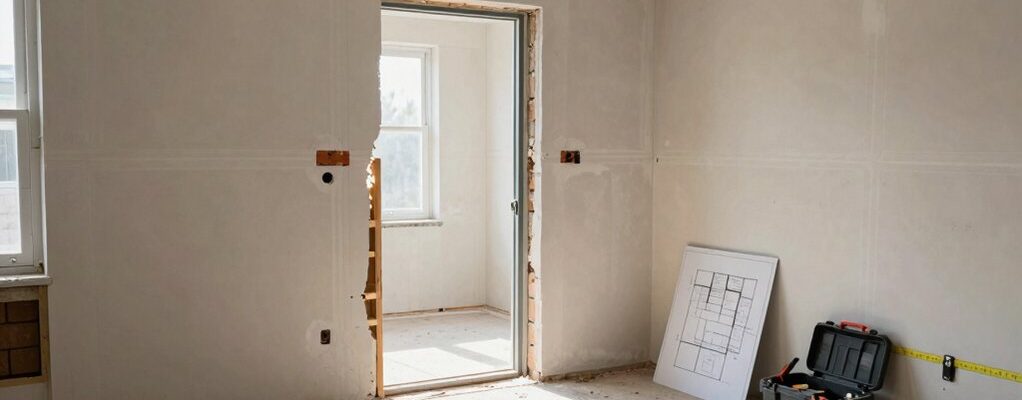
A wall you imagine as a quiet boundary suddenly becomes the doorway to a careful balance of load paths and light. You’ll need a clear plan for structural assessment, identify whether the wall is load-bearing, and decide if lintels or beams are required to transfer forces safely. Permits, codes, and precise documentation frame every step, while budgets must account for demolition, new materials, labor, and contingencies. Get ready to coordinate with engineers and contractors to avoid costly missteps.
Planning a Living Room Wall Knock-Through
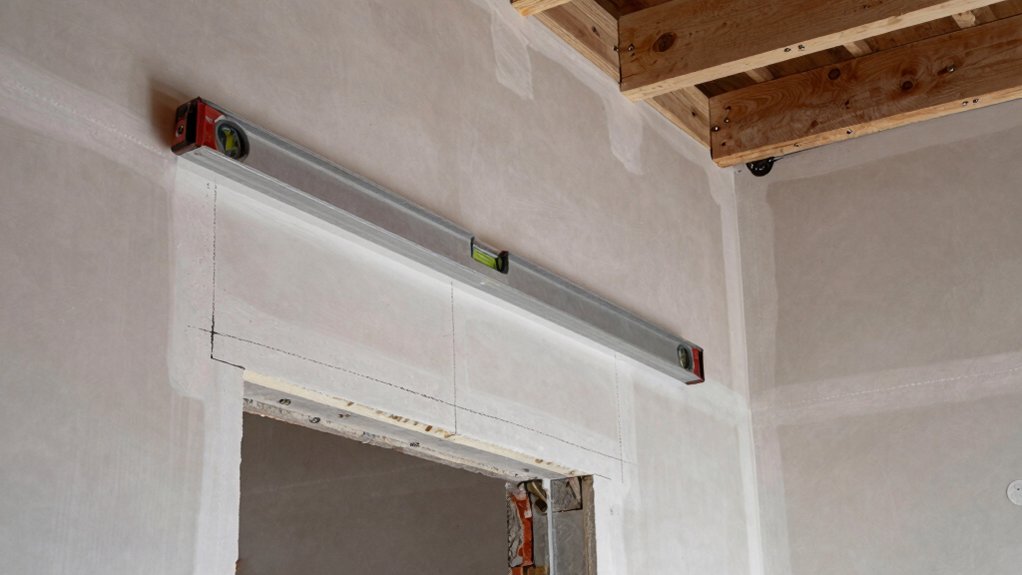
Planning a living room wall knock-through begins with a clear assessment of goals and constraints. You determine room function, traffic flow, and sightline priorities, then translate them into measurable criteria.
Next, identify existing conditions, including wall type, stud spacing, and utility placements, to establish achievable boundaries. Establish a boundary plan that defines span, opening width, and load implications, aligning with local code requirements.
Evaluate budget impact, scheduling, and sequencing, ensuring trades access without conflict. You should confirm allowable opening height, required shims, and temporary supports, plus post-installation finishes and paint compatibility.
Document your decisions in a concise brief, and secure stakeholder sign-off before design finishes. Finally, prepare a risk register highlighting potential delays, noise, and dust controls to inform procurement and safety planning.
Assessing Structural Needs and Safety
Evaluating structural needs and safety begins by verifying that the planned opening respects load paths, framing, and support conditions identified in the previous planning stage. You assess whether the lintel or beam sizing, bearing provisions, and connection details align with the intended load transfer through studs, joists, and roofing elements.
Document any deviations from original calculations, and determine whether temporary shoring is required during the work. You examine wall composition, gypsum board, plaster, or masonry, and verify that adjacent finishes won’t conceal critical deficiencies.
Confirm compatibility of demolition methods with framing, electrical boxes, and plumbing penetrations, ensuring risks to lateral stability are minimized. Finally, establish criteria for monitoring settlement, vibrations, and post‑modification deflection, enabling proactive mitigation and safe progression.
Permits, Codes, and Approvals
Permits, codes, and approvals require you to identify and document all applicable regulatory requirements before commencing work. You’ll determine which authorities oversee structural modifications, how permits are applied for, and what documentation is needed to demonstrate compliance.
Confirm project scope aligns with local building codes, fire safety provisions, and accessibility standards as applicable. Prepare structural calculations, wall and load details, and drawings that clearly reflect intended changes.
Verify required inspections at key milestones and establish traceable records for inspections, approvals, and amendments. Understand zoning constraints, setback limitations, and occupancy classifications that may influence sequencing and finish materials.
Coordinate with authorities having jurisdiction to resolve ambiguities promptly, minimize backtracking, and secure final sign-off prior to initiation. Maintain a documentation trail to support compliance throughout construction.
Costs, Budgets, and Contingencies
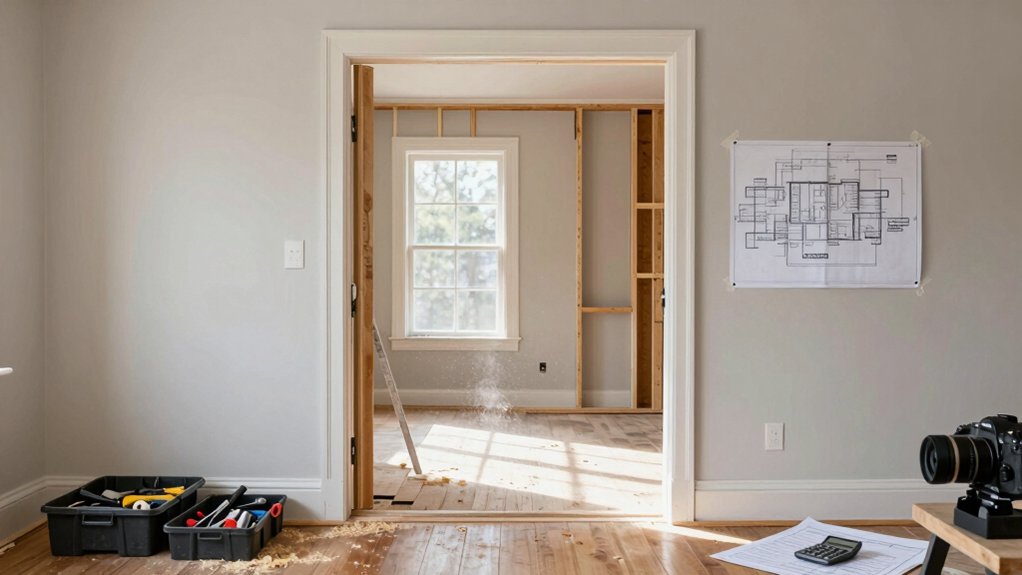
Costs, budgets, and contingencies demand a disciplined, numbers-driven approach. You quantify scope, estimate materials, and forecast labor hours with documented assumptions to create a baseline budget.
Establish unit costs, include waste factors, and account for permit and inspection fees relevant to your project.
Build a contingency reserve proportional to risk, recognizing unknowns in framing, wiring, or structural modification.
Track change-order probabilities and define thresholds for approvals, ensuring the budget remains aligned with design intent.
Include escalation factors for price volatility and timing delays, plus post-construction allowances for finish selections.
Present a cash-flow plan that matches milestone progress, avoids gaps, and reduces financing costs.
Regularly review variances, implement corrective actions, and maintain transparent documentation for stakeholders and future reference.
Finding and Working With Contractors
Finding and working with contractors requires a structured approach: define clear criteria for qualifications, assemble a short list of candidates, and verify track records before inviting bids.
You assess project scope, required licenses, insurance, safety compliance, and sequencing impacts on existing structures.
Request written proposals that specify methodology, milestones, material specifications, and warranty terms, then compare total costs against value-added performance.
Verify past performance with reference checks, site visits, and documented outcomes, focusing on schedule adherence and defect resolution history.
Establish communication protocols, decision points, and change-order processes to minimize disruption.
Conduct preconstruction meetings to align safety plans, access logistics, and temporary support strategies.
Finalize a contract that links payments to measurable milestones, holds liability for subcontractors, and provides dispute resolution mechanisms.
Maintain an auditable record of selections and rationale.
Hidden Services and Final Finishes
You’ll evaluate concealed utilities, ensuring accessibility for future maintenance while preserving structural integrity.
Consider how access points and maintenance paths are integrated with final finishes without compromising safety or aesthetics.
You should align finishing touches with defined standards, balancing concealment, serviceability, and overall performance.
Concealing Utilities
Concealing utilities requires a systematic approach to guarantee both accessibility and safety while achieving a clean final appearance. You plan concealment by mapping all hidden networks, then grouping services to minimize cross-interference.
Use standardized sleeves, chase dimensions, and fire-stopping where required to maintain compliance with building codes. You select materials with appropriate fire ratings, moisture resistance, and durability for concealed runs, avoiding over-ambitious concealment that hinders future access.
Document each run’s location, diameter, and termination details, attaching diagrams to the project file. Coordinate with electrical, plumbing, and HVAC installers to ensure sleeves, boxes, and access panels align with finished surfaces.
Maintain clean junctions, avoid sharp bends, and verify that service clearances remain within specification. Prioritize safe, efficient future maintenance while preserving finish quality.
Access and Maintenance
Access and maintenance of hidden services require deliberate planning to preserve accessibility without compromising finish quality. You map service routes before concealment, marking access points for inspection, testing, and fault isolation.
Maintain clear separation between structural elements and concealment supports to enable straightforward removal without damaging finishes. Use standardized access panels sized to accommodate required tools, with hinge, latch, and gasket specifications that resist dirt ingress and maintain air-tight or water-resistant performance as applicable.
Establish a maintenance schedule aligned with utility characteristics, recording valve positions, sensor calibrations, and drainage checks. Specify pull cords or pull-downs for soft-access retrieval where panels reside behind furniture or flooring.
Document materials, hardware, and access dimensions for future renovations, ensuring compatibility with hidden-service protection and ongoing finish integrity.
Finishing Touches Ready
Hidden services should be finalized with precise coordination between concealment finishes and service performance, ensuring accessibility remains straightforward without compromising aesthetics. You verify that concealed runs meet code and maintain future service access, implementing standardized access panels and labeled routes.
You specify finish materials that tolerate vibration, temperature variation, and routine maintenance, avoiding misaligned joints or visible fasteners. You plan tolerances for floor, wall, and ceiling interactions to prevent binding or occupancy hazards, documenting measured clearances for doors, switches, and outlets.
You coordinate with electricians and plumbers to align service risers with aesthetic screens, ensuring consistent color and texture. You test functionality under simulated loads, confirm moisture barriers, and confirm that concealment systems permit quick repair without demolition.
You finalize documentation, preserving warranty eligibility and future retrofit potential.