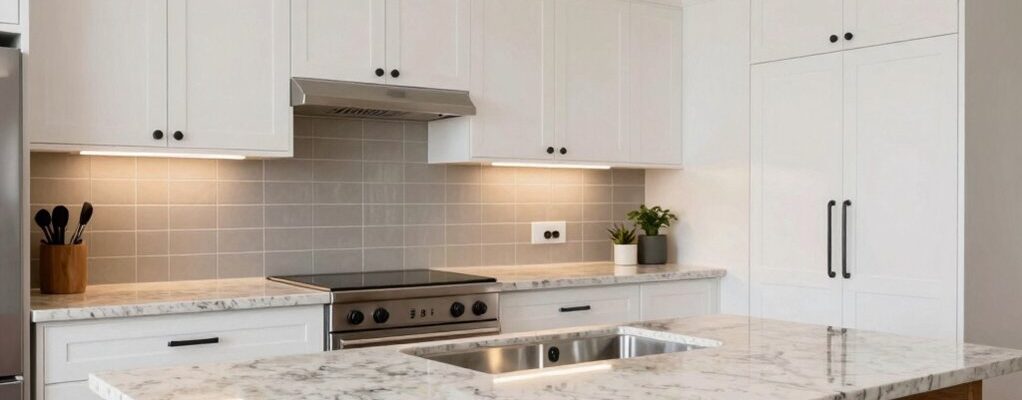
You might believe you can get a high-end kitchen by skimping on basics, but the truth is you’ll benefit more from strong layout fixes and durable surfaces than flashy finishes. You’ll want to focus on practical upgrades that pay off in daily use, while skipping costly trends that don’t add long-term value. Start with what matters most, then weigh DIY vs. pro help to maximize every dollar. There’s more to uncover before you decide how to proceed.
Prioritize Cabinet Refresh and Layout Optimization
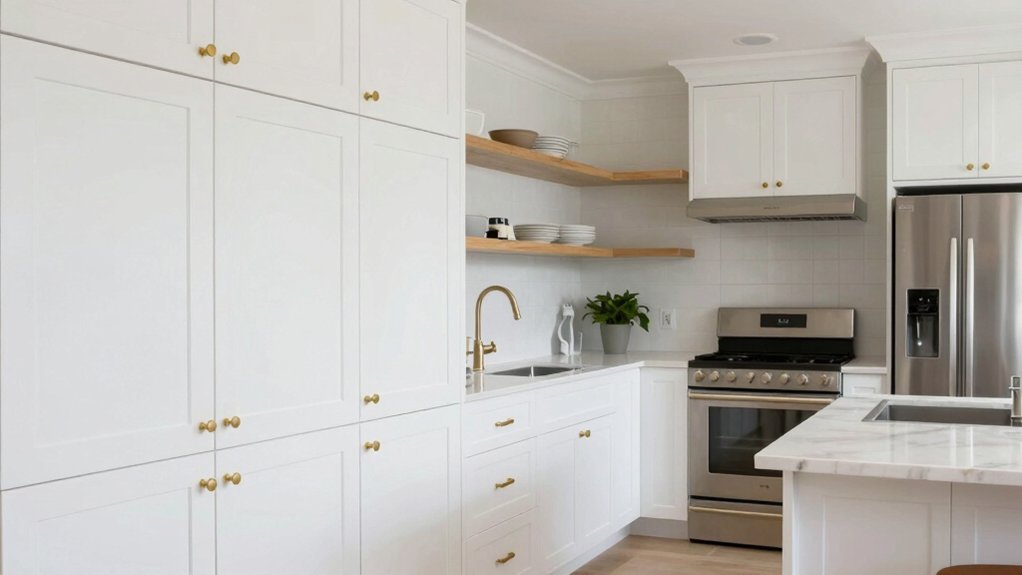
Prioritize cabinet refresh and layout optimization by making targeted updates that yield big impact with minimal spend. You can transform the space with focused changes that matter most.
Start by reassessing cabinet layout: keep essentials accessible, remove bottlenecks, and consider a shallow soffit or open shelving to improve flow.
Then update the surfaces: select a durable paint finish in a light, neutral tone to widen the space and reflect light.
Update cabinet hardware to create a renewed feel without full replacement; choose knobs or pulls that match your style and resist wear.
If possible, rehang doors to balance gaps and ensure doors close cleanly.
Finish with a quick waterproof seal on splash zones to guard against spills while maintaining clean lines and a cohesive look.
Budget-Friendly Lighting Upgrades That Matter
Lighting can transform a kitchen on a budget, so focus on small, high-impact upgrades that brighten work zones and improve usability. Start with task lighting over prep areas: install under-cabinet LED strips or plug-in puck lights that you can position precisely. Swap harsh overhead bulbs for dimmable LEDs to set the mood and save energy.
Add accent lighting to highlight architectural features or glass-front cabinets, using inexpensive track fixtures or clip-on lamps. Choose fixtures with clean lines and a neutral finish to avoid dating the space quickly. Incorporate colorful accessories and vintage fixtures selectively to add character without clutter.
Prioritize reliability and ease of installation, and cap the project with smart controls for consistent, simple operation. Budget-friendly lighting upgrades matter when they improve visibility and workflow.
Durable Surfaces: Countertops and Backsplashes That Deliver
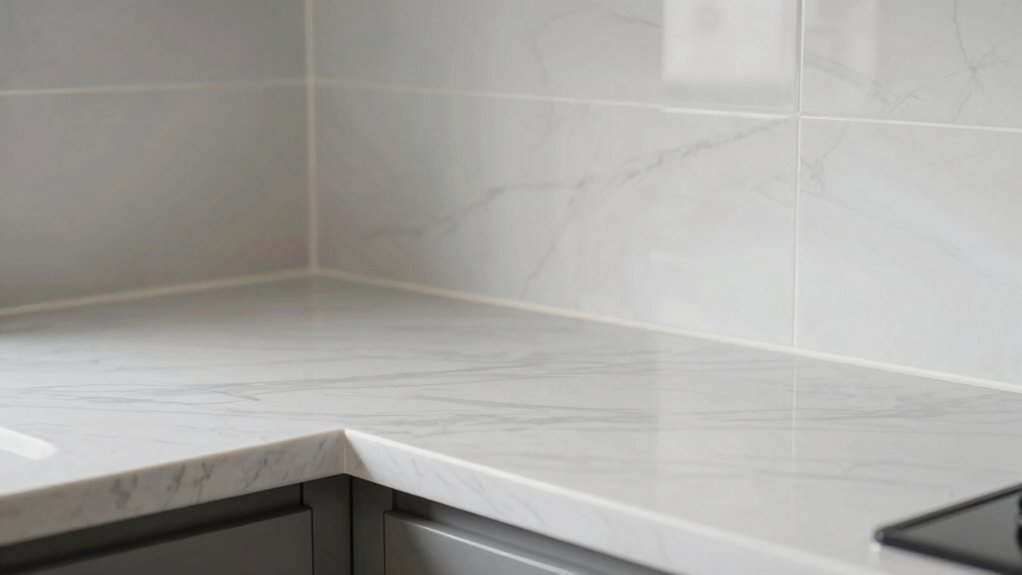
Durable surfaces matter most when they stand up to daily use and still look good for years. When you choose countertops and backsplashes, prioritize materials that tolerate heat, knives, spills, and cleaning without showing wear.
Granite countertops offer natural resilience, low maintenance, and timeless appeal that fits budget-conscious remodels if you seal properly and avoid abrasive cleaners.
For backsplashes, tile backsplashes provide flexibility, quick repairs, and design variety without breaking the bank. Consider a simple, cohesive look: match edge profiles and grout choices to minimize maintenance.
Avoid trendy, high-maintenance finishes that dull quickly. Establish a practical compromise between cost and durability: select robust tops, easy-to-clean surfaces, and a backsplash that tolerates daily scrapes and splatters while remaining visually coherent with the rest of the kitchen.
Smart Storage Solutions for Small Kitchens
Maximize every inch with storage that’s built for small spaces. In a tight kitchen, you must prioritize accessibility and adaptability.
Begin with vertical real estate: wall-mounted racks, magnetic strips, and peel-and-stick pegboards free countertop space fast.
Choose modular shelving that you can reconfigure as your needs shift; it scales from spice corners to full pantry zones, keeping items visible and reachable.
Hidden compartments, like pull-out spice drawers, toe-kick drawers, and under-sink organizers, hide clutter while adding function without widening footprints.
Opt for smartly sized cabinetry with adjustable shelves to accommodate unusual items.
Use door-mounted organizers for lids and baking sheets.
Finally, label bins and group similar tools to reduce rummaging and save time during busy cooking moments.
When to DIY vs. Hire Pros to Save Money
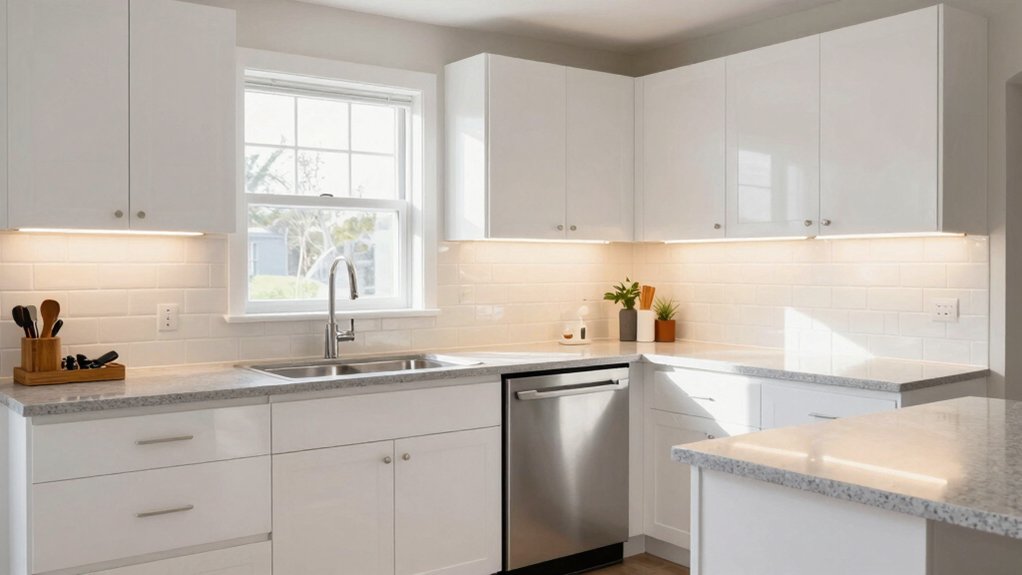
Decide what you can safely handle and where costs and risks spike, because DIY saves money but mistakes can cost more. Weigh the pros and cons—like time, quality, and impact on permits or warranties—and know when to hire help for complex tasks.
When in doubt, prioritize safety and accuracy, and plan to bring in pros for critical installations or code-required work.
DIY Pros, Cons
Knowing when to DIY versus hiring pros can save time and money, but it hinges on the task’s scope, your skill level, and available tools. The DIY route shines for small, non-structural updates you can control, like tile caulking, painting, or cabinet organizers. It keeps costs low and accelerates progress when you have patience and clear instructions.
However, weigh risks: mistakes can escalate costs and create safety hazards without proper planning. DIY safety matters—protective gear, steady measurements, and proper disposal prevent mishaps.
For larger or technically demanding tasks, such as electrical work, plumbing, or structural changes, prioritize using professional tools—readily available for rent—and consider pro labor to avoid costly errors. Balance ambition with realism, and reserve pro help for components that threaten safety or compliance.
When to Hire Help
If you’re weighing DIY versus hiring pros, start by critiquing the task’s scope, your skill level, and timing. Some jobs demand expert consultation to avoid costly mistakes, like electrical work, plumbing, or venting.
If you don’t have the tools, permits, or safe procedures, skip DIY and book professional installation instead.
For straightforward updates—paint, countertops, cabinetry—you can DIY, but factor learning curves and downtime.
Budget-conscious decisions hinge on tradeoffs: you may save time and margin by outsourcing complex tasks while handling finishes yourself.
Clarify responsibilities, warranties, and cleanup before committing.
Prioritize tasks that shrink costs without compromising safety or code compliance.
In critical areas, professional installation protects your investment and delivers predictable results.
Budgeting Tips and Common Pitfalls to Avoid
Track your budget from day one and call out big-ticket items before you start so surprises don’t derail you.
Watch for common pitfalls like scope creep, underestimating install costs, and skipping a realistic contingency fund.
Use smart, concrete cost-saving moves—prioritize fixes that deliver value and plan for quality where it matters.
Budgeting Pitfalls to Avoid
Budgeting pitfalls can derail your remodel before you start the first demo, so recognize common traps and head them off early. You’ll save time and money by naming risks upfront and sticking to a realistic plan.
Expect unexpected costs to surface; build a contingency fund—typically 10 to 20 percent—and earmark it for hidden fixes, permits, or supplier delays.
Avoid overestimating savings from DIY labor; quantify your capability and time as part of the budget.
Get accurate, written quotes from licensed pros and materials suppliers, then compare apples to apples, including delivery fees and taxes.
Track changes in real time, and document every adjustment to prevent scope creep.
Finally, confirm payment terms and warranty coverage to prevent post-project surprises.
Smart Cost-Saving Moves
Smart cost-saving moves start with a clear plan and disciplined spending. You’ll map priorities, set a budget, and track every dollar. Begin by pairing needs with realistic timelines; delaying nonessential upgrades prevents budget creep.
When it comes to appliance selection, opt for energy-efficient models that deliver long-term savings, and compare total cost of ownership rather than upfront price.
Reuse or refinish existing cabinetry where possible to slash costs without sacrificing style. Paint color choices should favor durable finishes in neutral tones that resist wear and stay relevant longer. Avoid trendy fads that date quickly.
Seek multi-use solutions, like a single large island for prep and storage. Finally, anticipate hidden costs—delivery, installation, and permits—to prevent surprises and stay on target.