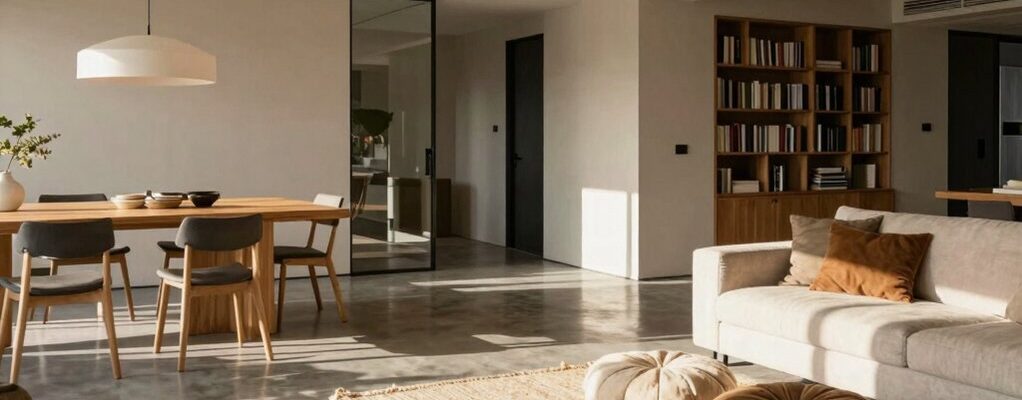
Imagine you walk into a space where sounds mingle and lines blur between cooking, lounging, and work. Open plans invite connection, but you’ll trade corners of privacy for a shared vibe that adapts to life’s moments. Separate rooms offer retreat and focus, yet demand more careful zoning. So which layout fits your rhythm—endless flow or defined sanctuary? Consider your daily routines, noise tolerance, and how you host guests to guide the choice.
Understanding Open-Plan Living
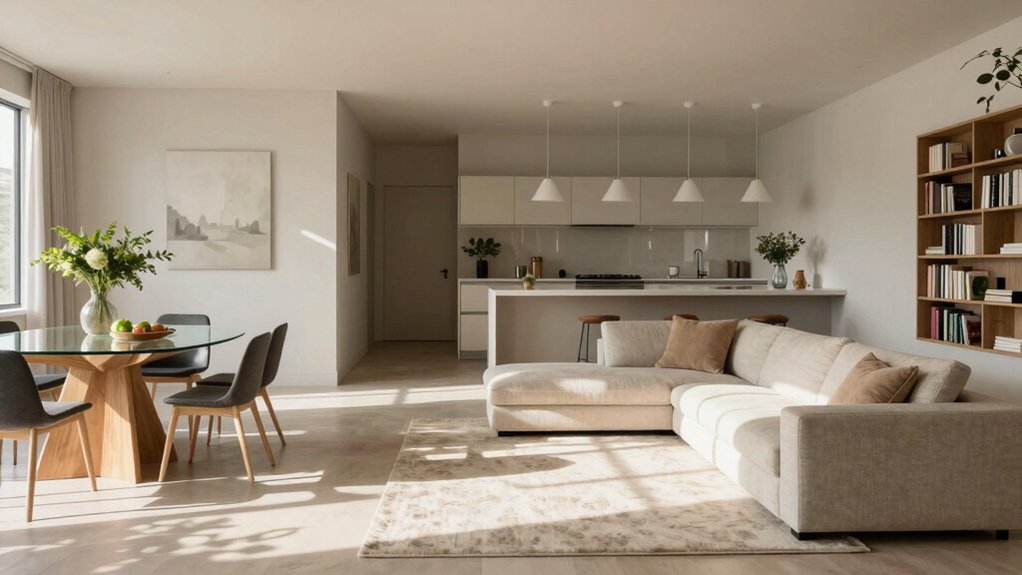
Open-plan living blends cooking, dining, and lounging into one uninterrupted space, making it feel larger and more social. You’ll notice how color blocks define zones, guiding your eye from kitchen backsplash to rug edge without walls interrupting flow.
Choose decorating styles that harmonize warm woods with cool neutrals to maintain cohesion while adding personality. In this layout, furniture arrangement matters more than ever: position seating to foster conversation, create a clear path for traffic, and leave room for natural light to travel across the room.
Consider a cohesive palette with accent colors that repeat across furniture and textiles to unify the space. Opt for modular pieces that adapt to daily rhythms, and ensure storage is discreet yet accessible for a tidy, open feel.
The Privacy Advantage of Separate Rooms
Despite the privacy that separate rooms provide, you gain clearer boundaries that reduce visual and acoustic interruptions, letting you focus, rest, or work without the constant pull of shared activity. In this setup, every room becomes a dedicated zone, colored by its purpose, from a calm study to a cozy retreat.
You’ll notice you control light, sound, and temperature, shaping environments to suit tasks and moods. Private retreats emerge where doors close softly, furnishing choices emphasize quiet corners and visual order.
Noise isolation plays a starring role, diminishing hallway chatter, kitchen clatter, and living-room buzz. The result isn’t isolation for isolation’s sake, but intentional space that respects your rhythm.
You preserve privacy while preserving significance for when connection matters.
Impact on Daily Routines and Flow
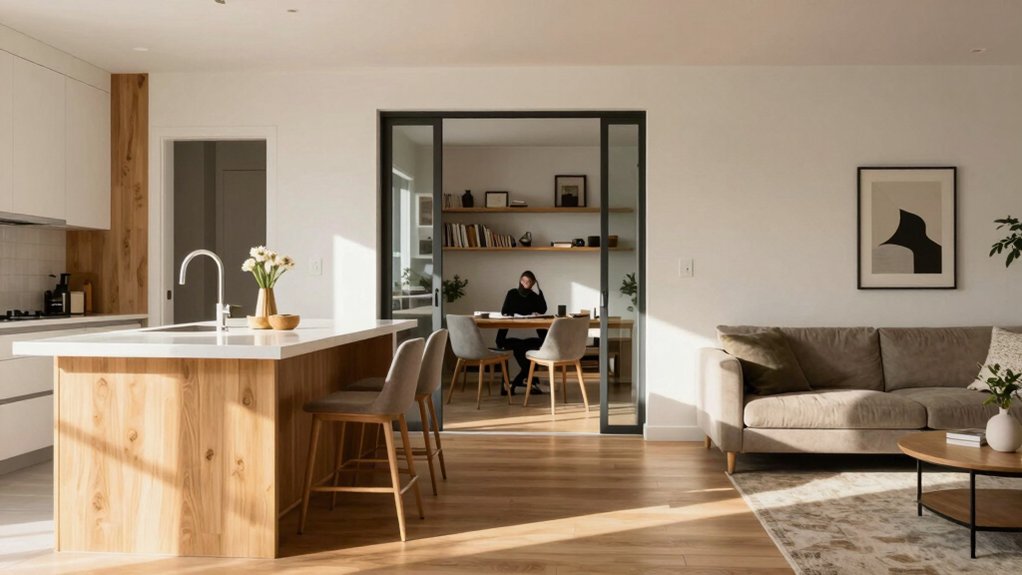
When your daily routines contrast with the rhythms of the space, flow becomes more about intentional choreography than mere habit. You tune movement to sightlines, transitions, and the tactile cues of your surroundings.
In open plans, you map routes that minimize backtracking, linking cooking, dining, and lounging with a single, graceful arc. You counter distractions by deliberate zoning and color cues that cue focus or social immersion. Noise management matters: soft textures, muted palettes, and strategic shelving create pockets of quiet amid activity.
In separate rooms, spatial flexibility shifts you toward modular use—room adjacency, movable screens, and adaptable storage redefine what “daily” feels like.
Ultimately, you curate cadence: bright mornings, calm afternoons, purposeful evenings.
Work-From-Home Considerations
A well-designed work-from-home setup blends focus, function, and flow, so you can switch between deep work and collaborative moments without constant reconfiguration. When you choose a layout, consider how it supports a dedicated home office space and quick alterations to video calls or brainstorming sessions.
Prioritize natural light, neutral accents, and sound-dampening solutions to keep distractions at bay. Comfort matters, but so does posture and chair support for long sessions.
Establish clear boundaries with others to protect productivity windows and privacy. Address privacy concerns by using physical dividers, secure storage, and screen shields for sensitive material.
Keep cables tidy and wiring accessible, yet concealed, to reduce visual noise. Finally, test your setup during typical workdays and adjust as needed for consistent performance.
Entertaining and Social Dynamics
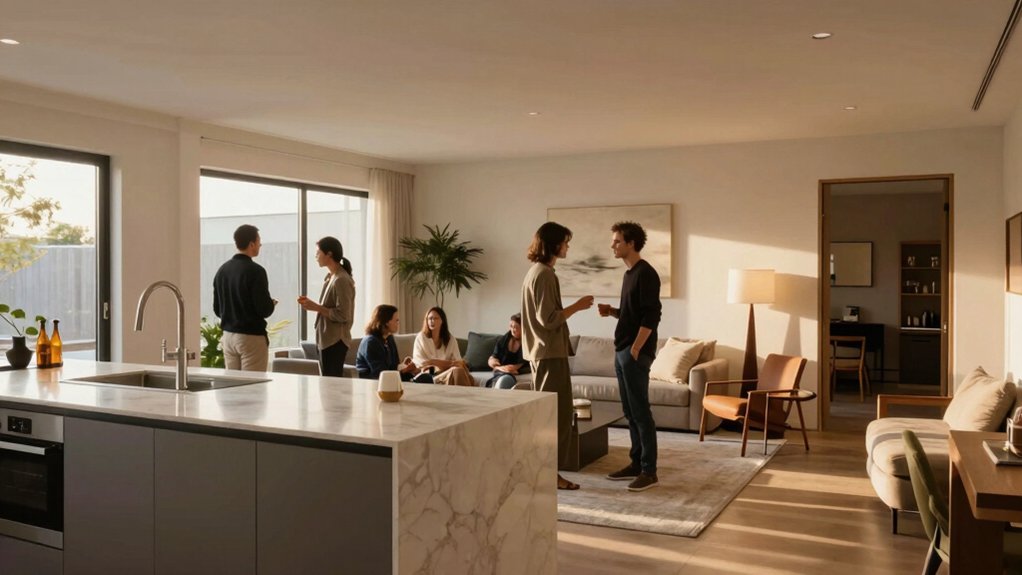
Entertaining and Social Dynamics hinge on how spaces invite connection without sacrificing comfort. When you choose open plans, you invite flow between kitchen, dining, and living areas, letting conversations drift like perfume through the air.
You’ll notice color psychology guides mood: warm woods, soft neutrals, and bold accents cue hospitality without shouting. Consider sightlines that keep you included from every corner, so guests feel welcomed yet never crowded.
Garden privacy matters too; strategically placed screens or planters create intimate gathering pockets while preserving openness. Noise insulation subtly supports relaxed chatter, avoiding echoes during lively meals.
In quieter rooms, you’ll still entertain with confidence—your layout supports casual mingling, focused conversations, and spontaneous celebrations with equal ease.
Sound, Light, and Climate Control
Sound, light, and climate control shape how a space feels the moment you walk in, tying together the openness you’ve designed with everyday comfort. You’ll notice color cues guiding mood: cool whites with slate accents feel airy, while warm neutrals soften echoes.
In open areas, embed acoustic privacy through soft furnishings, perforated panels, and area rugs to dampen steps and chatter without closing the room off. Let daylight roll in from multiple angles, then balance with blackout options for media zones and sleep nooks.
For temperature regulation, pair radiant floors with targeted vents and ceiling fans to maintain consistent comfort across zones. Choose materials with natural warmth or cool resilience to reinforce your palette, ensuring sound, light, and climate converge into a cohesive, livable rhythm.
Real-World Layout Scenarios and Tips
Open-plan layouts trade openness for acoustics and privacy, so you’ll notice how traffic flow and sightlines shape each zone.
Use room-zones to guide furniture placement and function, keeping major tasks visually and acoustically distinct.
Start with clear cues—color, texture, and lighting—to define spaces without clutter.
Open-Plan Tradeoffs
Open-plan layouts promise a spacious feel and flexible use, but they trade privacy and acoustics for that openness. In real-world setups, you’ll notice how sightlines shape daily flow: traffic through common areas, work at desks, meals in shared spaces.
To mitigate privacy concerns, choose furniture placement that creates subtle zones—back-to-back seating, bookcases, or low screens—without cutting visual continuity. Consider acoustic tweaks that dampen noise levels: plush rugs, upholstered seating, and ceiling treatments that absorb sound.
Lighting plays a role too: layered illumination defines zones and reduces the sense of chaos. For a practical balance, integrate dedicated work nooks and flexible surfaces that can morph with your routine, preserving sociability while lowering distractions.
Clear boundaries help you tune comfort without sacrificing openness.
Room-Zone Guidance
When you zone a space, you’ll balance function and flow by aligning activity with sightlines, traffic patterns, and acoustic cues. In real-world layouts, use decor zoning to cue different uses without walls: a warm rug and low shelving define a living corner, while a rugless, light-dominant area signals dining.
Space partitioning can be achieved with furniture placement, screens, or ceiling-height contrasts to subtly separate hubs. Consider sightlines from entry points; keep key tasks within easy reach of natural light.
Sound becomes a cue too—soft textiles absorb noise near conversation zones, while work stations stay comparatively quiet. Choose color warmth to reinforce function: muted neutrals in work zones, richer tones for gathering nooks, and consistent hardware for cohesion.
Enduring practicality comes from deliberate, flexible planning.