
Choosing the right contractor starts with clear goals, a realistic budget, and a shared vision for your space. You’ll gather can-do recommendations, verify licenses, and compare detailed, itemized quotes side by side. You’ll want open communication, transparent contracts, and clear milestones to track progress. Watch for red flags and push for warranties. The next steps matter, because a careful, collaborative approach now keeps surprises small and your project moving smoothly—but there’s more to contemplate as you tighten the plan.
Establish Your Renovation Goals and Budget

Before you talk to contractors, define what you want to achieve and how much you’re willing to spend. You’ll start by outlining goals for each room, timing, and any must-haves versus nice-to-haves.
Translate goals into a realistic scope, avoiding scope creep from the outset. Establish a clear budget, including contingency, permits, and hidden costs, and decide your preferred payment schedule.
Map priorities to outcomes so designers and builders align on expectations. For design inspiration, collect references and note what resonates—colors, layouts, and finishes.
When considering material selection, pair longevity with cost, estimating maintenance needs and warranties. Document decision criteria and approval processes to keep decisions transparent.
Finally, set a communication cadence and decision deadlines to keep the project moving smoothly.
Gather Recommendations and Do Your Own Research
To gather solid recommendations and do your own research, start by asking trusted sources—neighbors, friends, and coworkers who’ve recently renovated—for contractor referrals and honest feedback.
Then tally a short list of candidates and follow up with targeted questions about timeliness, communication, and problem-solving.
Compare estimates side by side, noting any gaps between promised work and documented details.
Use online reviews to spot consistent patterns, not one-off positives or negatives. Check whether reviewers mention budget handling, cleanup, and respect for timelines.
Explore social media for project photos, responsiveness, and client interactions; look for transparency in posting progress and addressing issues.
Reach out to former clients for quick references, and request a brief on-site meeting to gauge compatibility and responsiveness before you commit.
Verify Licenses, Insurance, and Credentials
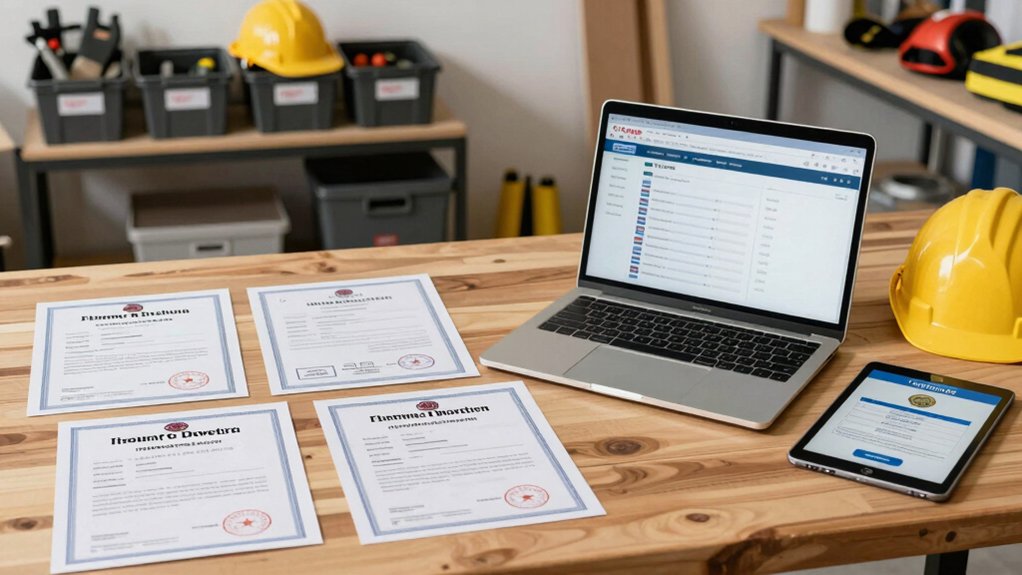
Now that you’ve gathered recommendations, the next step is to verify licenses, insurance, and credentials. Start with license verification by confirming your contractor’s license type, number, and status with the relevant state or local board. Check for any past or current disciplinary actions and ensure the license covers the project scope.
Next, review proof of insurance, including general liability and workers’ compensation, and request certificates that name you as an additional insured when appropriate. Credential checks should cover decades of experience, trade certifications, and valid permits for work you’ll undertake.
Verify ties to legitimate subcontractors and confirm a clean safety record. Document investigators’ names, dates, and outcomes, and keep digital and paper copies accessible during the project.
Request and Compare Detailed Quotes
Start by requesting detailed quotes that itemize every line—labors, materials, permits, and contingencies—so you can compare fairly.
Then review each quote line by line, noting where costs align or diverge, and track any assumptions or exclusions.
Finally, open a negotiation on the total price with several practical trade-offs in mind, aiming for clarity and a shared path forward.
Requesting Detailed Quotes
When you request detailed quotes, provide a clear brief that outlines project scope, materials, timelines, and site conditions, so contractors can price accurately. You’ll want a consistent format you can compare later, including assumed inclusions, exclusions, and any known constraints.
Invite written estimates with itemized line items for labor, materials, permits, and contingencies. Ask for a stated delivery schedule and payment terms, plus assumptions used in pricing. Encourage bidders to flag potential risks and alternate approaches.
Compare pricing strategies openly, noting how changes in material quality or timelines impact totals. Consider contractor reputation as a tie-breaker: responsiveness, transparency, and references.
Document questions and responses, keeping a single master sheet to track amendments, clarifications, and final commitments before selecting a firm.
Comparing Line Items
Are your line-item quotes truly comparable, or do hidden differences skew the total cost? You compare line items side by side, focusing on scope, materials, and timing.
Start by confirming each quote lists identical work packages, substitutions, and allowances. Check how material costs are stated—unit prices, delivery charges, waste handling—and whether warranties or cad drawings are included.
Review labor estimates next: hours allocated, crews involved, overtime rules, and productivity assumptions. Look for missing line items that often appear as change orders later.
Seek clarifications on any ambiguous items, and request updated quotes with itemized subtotals. Document discrepancies in a simple matrix, and recalculate totals to verify consistency.
Always ask for a revised, fully itemized quote before you commit to a contractor.
Negotiating Total Price
With detailed quotes in hand, you’re ready to tackle negotiating total price by requesting and comparing exhaustive price breakdowns. Start by asking for line-item costs for materials, labor, permits, contingencies, and subcontractors. Demand clarity on unit prices, labor hours, and any markups so you can spot discrepancies quickly.
Use pricing strategies to set a target range, then present your benchmarks calmly and collaboratively. Compare quotes side by side, noting who includes warranty terms, maintenance, and post-project cleanup. Request a clear payment schedule tied to milestones to avoid cash-flow issues.
Employ negotiation tactics like anchoring with a reasonable counteroffer and highlighting long-term value over lowest bid. Document changes in writing, and confirm final total before signing to protect your budget.
Evaluate Communication and Availability
Open a clear line of sight on how a contractor communicates and what availability really means for your project. You assess when and how you’ll hear back, not just that you will. Look for defined response times in the project plan or onboarding notes, and verify they align with your schedule.
Ask about preferred contact methods and who handles updates during each phase. A responsive team should provide timely confirmations, clear next steps, and realistic timelines when questions arise. Note any patterns: delays, missed calls, or vague answers signal potential friction later.
Establish a communication cadence—weekly check-ins, daily progress notes, and a single point of contact. Your aim: reliable, proactive updates that keep the project on track and minimize surprises.
Review the Written Contract and Warranties
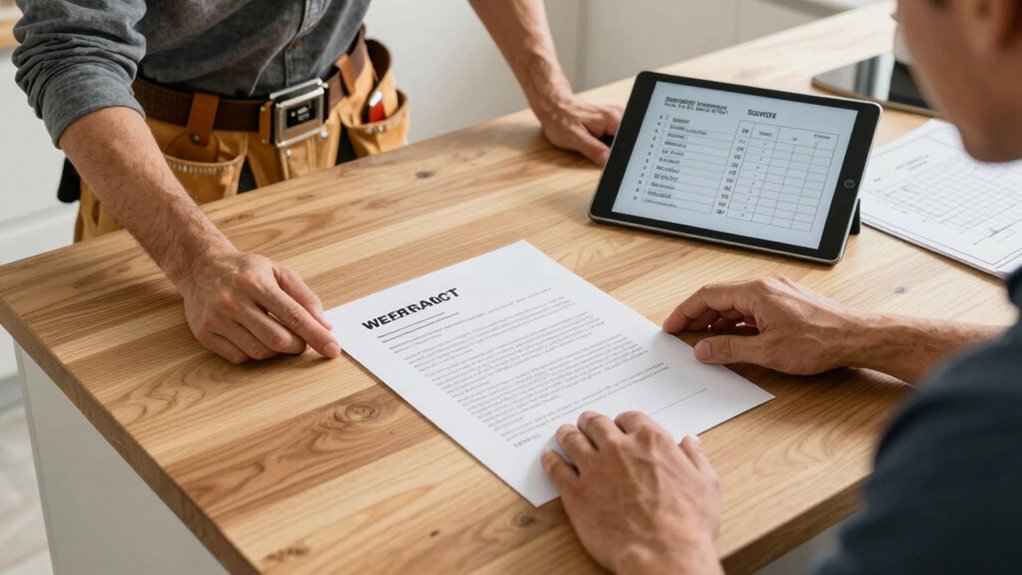
When reviewing the written contract and warranties, start by confirming that every agreed-upon scope, materials, and workmanship standards are clearly spelled out in detail. You’ll want precise descriptions for each room or area, including finishes, fixtures, and performance benchmarks.
Check which contract clauses govern changes, dispute resolution, and responsibilities if issues arise, and ensure responsibilities aren’t buried in vague language. Confirm who bears costs for incidental work, permits, and inspections, and verify that timelines aren’t tied to incomplete payment terms.
Review warranty coverage carefully: what’s covered, for how long, and any exclusions or required maintenance. Document any deviations from the original agreement and secure written confirmations.
Finally, ensure that the warranties align with local regulations and manufacturer’s guidelines.
Assess Timelines, Payments, and Change Orders
Evaluating timelines, payments, and change orders requires clear alignment on what happens when delays occur, how progress is measured, and how any changes are approved.
You’ll lock in realistic project timelines by mapping milestones to specific dates and defining acceptable buffers for weather or supply delays.
Pair this with a transparent paymentSchedule that ties payments to completed milestones, not calendar dates, so cash flow matches work progress.
When a change order arises, document scope, cost, and impact to the schedule, then obtain written approval before starting.
Establish a swift formal review process to minimize disruption.
Build in regular check-ins to compare actuals to plans, adjust timelines as needed, and prevent scope creep by confirming decisions in writing.
Collaboration and precise tracking keep your project on track.
Check Past Projects and Gather References
Before you commit, check past projects and gather references to validate the contractor’s track record and craft your expectations accordingly.
You’ll review completed jobs similar to yours, noting workmanship, consistency, and adherence to specs. Ask for a portfolio and visit active sites if possible; assess organization, safety, and cleanliness.
When you talk to references, ask about communication, problem-solving, on-time progress, and how changes were handled. Compare project timelines with real outcomes and how delays were managed.
Verify material quality by inspecting samples, warranties, and substitutions, ensuring specs match your plans.
Document details in a concise checklist, then discuss findings with the contractor to confirm alignment.
A solid reference base helps you feel confident moving forward and sets realistic, shared expectations.
Spot Red Flags and Make the Final Decision
After reviewing past projects and references, you’re now ready to spot red flags and make the final decision. You’ll verify contracts, licenses, and insurance, ensuring everything aligns with local codes and project scope.
Look for inconsistent timelines, vague payment terms, and demand-driven changes that aren’t documented; these are red flag indicators signaling risk. Confirm the contractor’s capacity to coordinate subs, obtain permits, and manage contingencies without collapsing schedule or budget.
Seek clear communication about milestones and quality standards, plus a written warranty that covers workmanship and materials. Gather a final set of references and recent work photos to validate claims.
When concerns are resolved and bids are transparent, you’ve gathered the final decision cues to proceed confidently with the right, accountable partner.