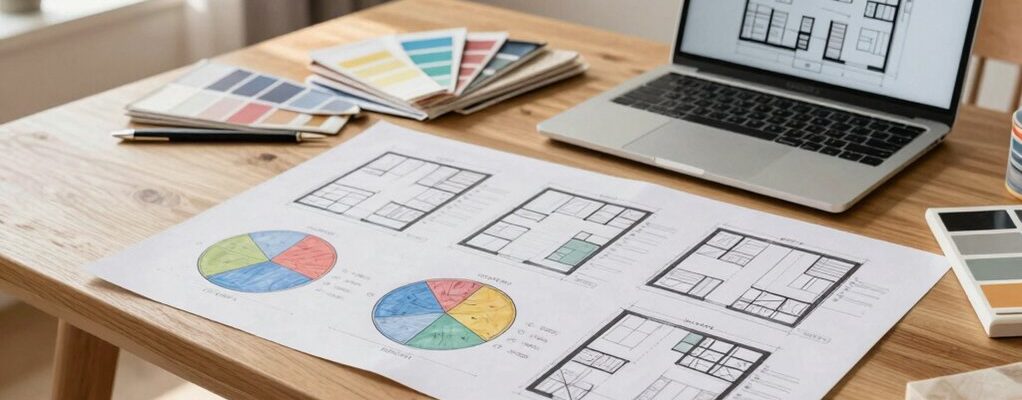
For a kitchen makeover, you’ll see costs shift from cabinets to countertops as you balance durability with style. You’ll want a clear budget baseline, realistic timelines, and early orders for high-demand materials. As you compare options room by room, you’ll uncover where minor upgrades deliver big value and where spend should be minimized. The next step reveals how to quantify each choice and keep the project on track without sacrificing quality.
Planning and Budgeting Basics by Room
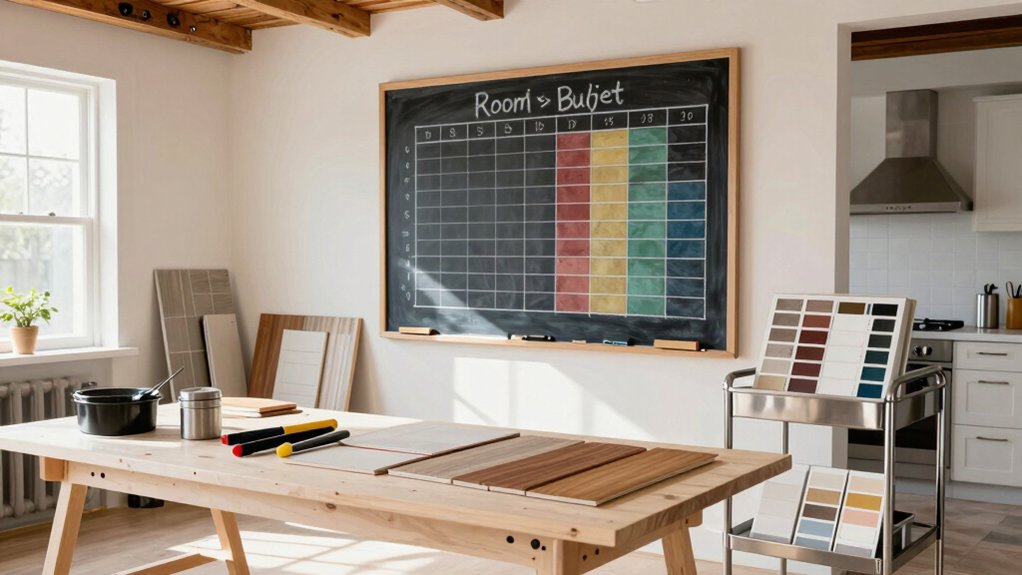
Planning and budgeting by room start with a clear scope of work and a realistic cost framework. You establish objective deliverables for each space, then assign cost drivers tied to performance expectations. Identify essential versus optional elements, quantify quantities, and fix the evaluation criteria for tradeoffs.
Use a standardized template to track materials, labor, permits, and contingencies, ensuring alignment with overall project goals. For each room, assess sustainable materials availability, durability, and lifecycle costs, incorporating long-term savings into the budget.
Integrate smart technology where it meaningfully reduces ongoing expenses or improves functionality, while documenting installation timelines and compatibility constraints. Maintain rigorous change control; reject scope creep by validating changes against the original scope, cost framework, and prioritized requirements.
Communicate performance milestones clearly to stakeholders and decision makers.
Kitchen Renovation: Costs, Options, and Tradeoffs
In a kitchen renovation, your choice of cabinet materials affects durability, maintenance, and upfront cost, so weigh real-world performance against price.
Countertop tradeoffs determine work surface longevity and heat resistance, influencing long-term value beyond initial install costs.
Layout and space costs hinge on how you balance storage, traffic flow, and appliance placement to optimize function without inflating budget.
Cabinet Material Choices
Choosing cabinet materials hinges on durability, cost, and aesthetics: plywood, MDF, particleboard, and solid wood each offer different performance and price points, so your selections should align with cabinet use, moisture exposure, and the overall design.
You evaluate core performance first: load, door alignment, and long-term stability inform material choice. Plywood excels in rigidity and moisture resistance; MDF provides smooth surfaces for paint and consistent edges; particleboard is economical but less durable; solid wood offers prestige with higher cost and potential expansion.
Consider cabinet styles to match your design system, and ensure hardware finishes are compatible with chosen materials and finishes.
Also, assess installation complexity, warranty terms, and maintenance needs to minimize lifecycle costs while preserving cabinet integrity.
Countertop Tradeoffs
Countertop tradeoffs hinge on balancing cost, durability, and aesthetics across material types, edge profiles, and maintenance demands. You’ll evaluate options by comparing lifecycle costs, repairability, and long‑term performance.
Material selection drives both upfront price and resale appeal, so align choices with your usage patterns and cleanup tolerance. Granite and quartz offer strong countertop durability for high‑traffic kitchens, but require sealing or engineered resin backing to maintain uniform appearance.
Solid surface provides seamless integration and easier repair, yet softer surfaces may show scratches more readily.
Laminate keeps costs low but risks edge chipping and limited heat resistance.
Ceramic and glass tiles offer distinctive looks with modular repairability, while marble delivers prestige with higher maintenance and vulnerability to acids.
Prioritize predictable maintenance, then factor in installation complexity and warranty coverage.
Layout and Space Costs
Layout and space costs hinge on how you reconfigure the kitchen footprint, traffic flow, and storage, since each choice directly affects cabinet runs, appliance placements, and overall renovation duration. You assess interior layout options by mapping line-of-sight, work zones, and clearance, then quantify cost implications for walls, plumbing, and electrical work.
Space optimization focuses on minimizing wasted area while preserving function, enabling shorter runs and reduced material use. Consider island or peninsula additions, which add upfront cost but can improve workflow; or drawer-based storage upgrades, which boost efficiency without major layout changes.
Standardized pricing per square foot helps benchmark budgets, but variances arise from structural shifts and permit requirements. Document iterations, verify measurements, and align design decisions with long-term usability to avoid costly redesigns.
Bathroom Upgrades: What Works and What It Costs
Renovating a bathroom quickly reveals which upgrades deliver value and which don’t, guiding you to cost-effective choices. You should prioritize durable foundational fixes—new plumbing, efficient fixtures, and proper ventilation—over cosmetic changes that fade with use.
Expect midrange ceramic tile, solid-surface countertops, and reliable shower hardware to offer solid return if installation quality is high. When you consider luxury fixtures, weigh their longevity and maintenance against upfront premium; not all upgrades pay back.
For a targeted impact, invest in a contemporary vanity and efficient lighting, plus a more robust exhaust system to reduce unseen moisture damage. If you pursue custom designs, ensure compatibility with standard dimensions to minimize remodeling complexity and cost overruns.
Prioritize measured scope and documented warranties to protect your budget.
Living Areas: Updates That Boost Value on a Budget
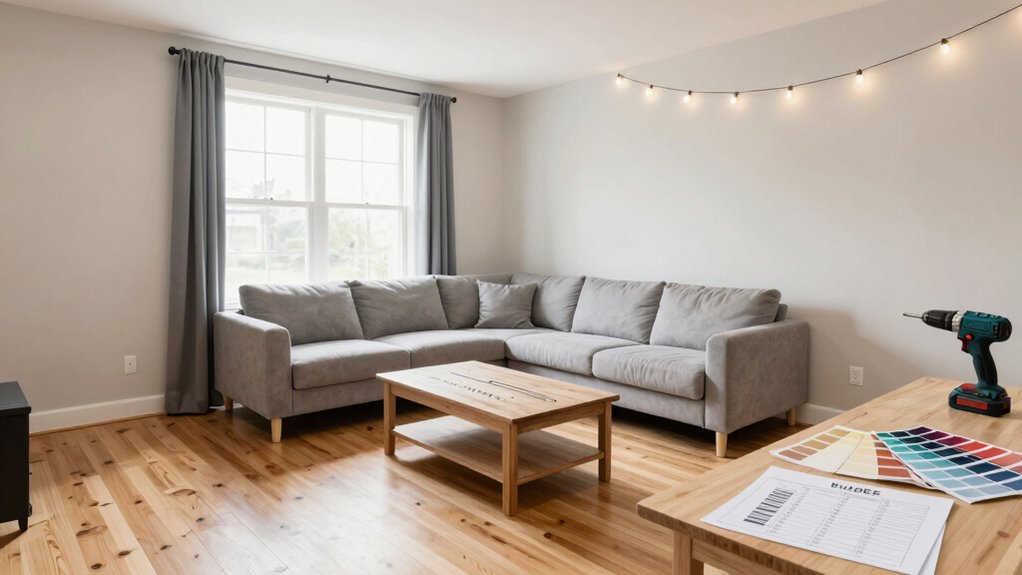
You can maximize value with budget-friendly living room updates that deliver big impact. Focus on high-impact, low-cost enhancements that refresh the space without overinvesting.
This discussion starts by outlining practical, data-driven options for cost-effective improvements.
Budget-Friendly Living Room Updates
If you’re aiming to refresh your living room without overspending, focus on strategic, high-impact updates that improve function and appearance. Prioritize scalable changes like layout optimization, lighting, and durable finishes that pair well with existing elements.
For cost control, pursue DIY projects that enhance ambiance without premium labor, and document material sourcing choices to compare value across suppliers. Reorganize furniture to improve flow, add multi-functional storage, and select universal accents in neutral palettes to maximize flexibility.
Opt for affordable, high-contrast textiles to refresh texture without costly overhauls. Invest in energy-efficient LEDs and smart outlets to boost usability and long-term savings.
Track costs with a simple budget, and reallocate funds only when a proven payoff is identified. This disciplined approach delivers measurable improvements without excess spending.
High-Impact, Low-Cost Enhancements
To maximize value without blowing budget, focus on high-impact, low-cost enhancements that improve daily use and perceived quality in living areas. You should prioritize durable, visible changes with quick payoffs, such as targeted lighting upgrades, refreshed paint in neutral tones, and improved acoustics via soft textiles and strategic rug placement.
Opt for modular storage solutions that declutter without extensive construction, and install hardware updates—drawer pulls, hinges, and hooks—that refresh cabinets without replacement. Consider scale, balance, and proportion to prevent over-investment in one zone.
When feasible, choose upscale fixtures to elevate perceived quality, and pair them with luxury appliances in service zones to convey a premium feel without full renovation. These choices yield meaningful value while maintaining budget discipline.
Exterior and Exterior-Related Updates: Curb Appeal on a Budget
Exterior updates that boost curb appeal don’t have to break the bank; small, targeted changes can produce a noticeable impact. You’ll maximize value by prioritizing durable, cost-effective improvements with clear payoffs.
Begin with exterior paint: choose neutral or accent colors that enhance architectural features and reflect climate resilience. A fresh coat often yields the highest immediate return, yet prep and quality matter; clean surfaces, primer where needed, and two coats for lasting coverage.
Landscape lighting adds nighttime emphasis and security without excessive expense, guiding attention to entryways and focal trees.
Update hardware and doors with weather-resistant finishes; inexpensive house numbers and a polished mailbox improve cohesion.
Maintain clean gutters, trim, and walkways to sustain the enhanced appearance over time.
Budget conservatively, measure ROI, and avoid over-embellishment.
Contingencies, Timing, and Smart Savings Throughout a Renovation
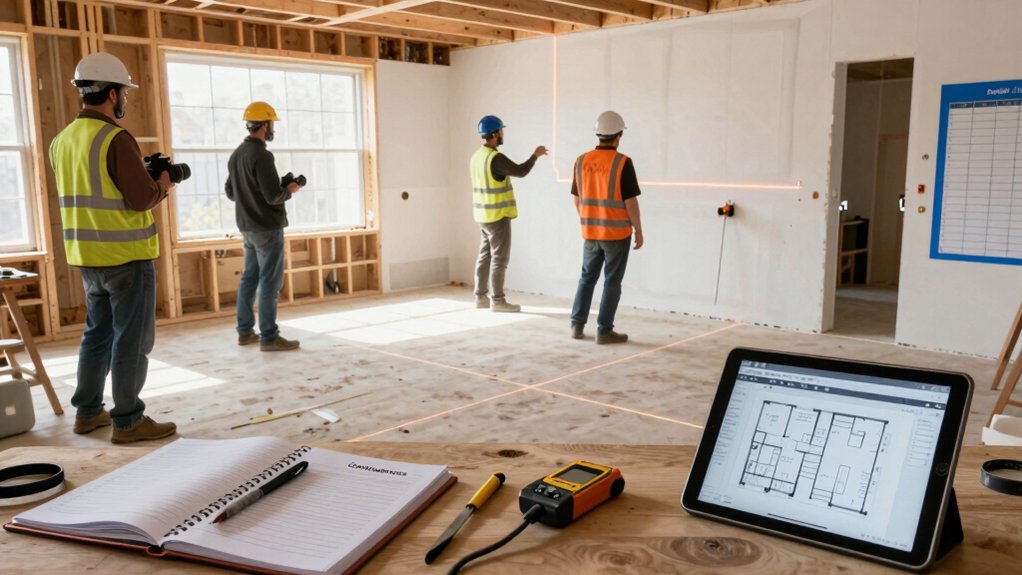
Contingencies, timing, and smart savings are essential to keeping a renovation on track and within budget. You manage risk by building a contingency into your budget for unexpected issues, such as supply delays or hidden structural problems.
Track material costs carefully, updating estimates as prices shift and orders change. Align procurement with project scheduling to minimize storage needs and price spikes, ordering critical items early when feasible.
Establish a clear sequence of tasks with realistic durations, and monitor milestones regularly to avoid cascading delays. Use fixed-price contracts for high-variance trades where possible, while maintaining flexibility for design refinements.
Build in a review cadence to reallocate funds from unused allowances to keep the overall budget balanced and protect planned scope.