
When you compare porcelain and ceramic tiles, you’ll notice key trade-offs in cost, durability, and best uses. Porcelain offers superior density, lower porosity, and longer life in moisture-prone or high-traffic areas, but it comes at a higher upfront price. Ceramic is more affordable and versatile for walls and low-traffic spaces, yet it won’t perform as well under demanding conditions. The question is how you balance budget with performance for your specific project, and where that line should be drawn.
Cost Comparison: Porcelain Vs Ceramic
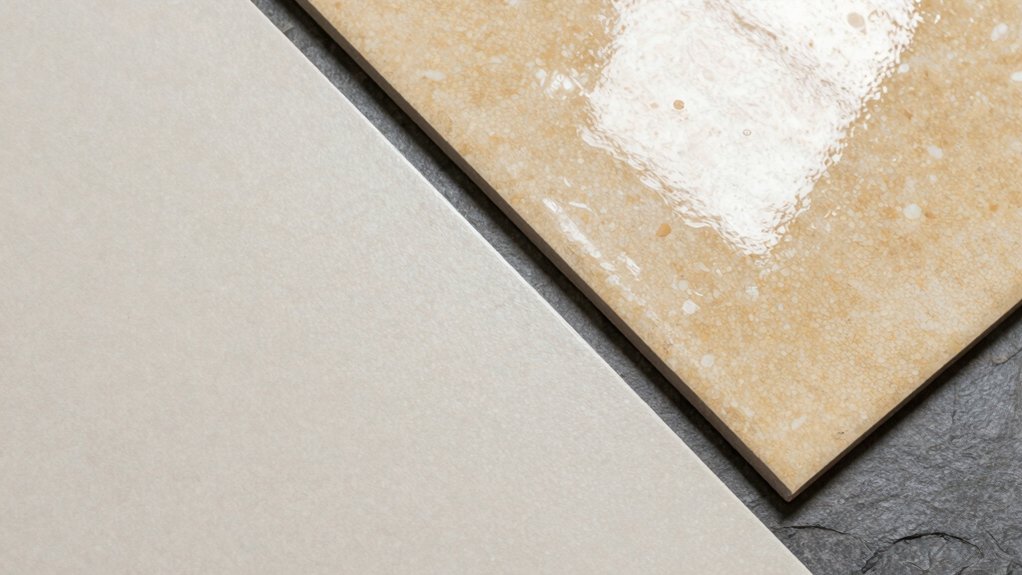
Ceramic and porcelain tiles differ primarily in manufacturing and material expenses, which directly affect overall project cost. You’ll see price gaps driven by clay quality, firing temperature, and density, making porcelain typically pricier per square foot at retail.
Yet, consider long-term value: reduced maintenance, minimal chipping risk, and extended lifecycle can offset initial outlays. Your budgeting should separate upfront material costs from installation and grout, then account for waste factors and sizing options.
When evaluating pricing differences, compare both product lines within the same style and thickness to ensure apples-to-apples results. Budget considerations also include substrate preparation and potential subfloor reinforcement, which influence total spend.
In practice, porcelain often delivers lower life-cycle cost in high-traffic areas, while ceramic offers lower upfront investment for lighter-duty applications.
Material Composition and Manufacturing Differences
You’ll see that porcelain and ceramic tiles differ in composition, with porcelain using finer clays and a higher firing temperature. This variance in raw materials drives distinct properties like density, porosity, and moisture resistance.
You’ll also note that manufacturing processes—including pressing methods, glaze application, and firing cycles—shape these outcomes and guide performance expectations.
Composition Variances
Porcelain and ceramic tiles differ in both material composition and manufacturing processes. You’ll notice porcelain uses finer clays and higher firing temperatures, producing a denser, less porous tile with reduced water absorption.
Ceramic tiles employ common clays plus feldspar and kaolin, fired at lower temperatures, yielding greater porosity and a softer surface. Composition variances hinge on particle size distribution, grain alignment, and fluxes that influence glaze adhesion and durability.
You should understand glaze chemistry plays a critical role in surface performance, including hardness, stain resistance, and color stability. Raw material sourcing sets the baseline for consistency, affecting batch-to-batch uniformity and long-term wear.
In short, composition dictates porosity, strength, and finish, while manufacturing specifics determine practical usability and finishing options.
Manufacturing Processes
Manufacturing processes closely align with composition to deliver predictable performance. You’ll see porcelain and ceramic tiles diverge in both formula and workflow.
Porcelain relies on a higher firing temperature and denser body, using finer clays and more controlled particle sizing, which tightens porosity and strength. Ceramic tiles employ a broader mix with varied additives, fired at lower temperatures, yielding greater flexibility in finishes and color expression.
Manufacturing techniques emphasize consistency, with strict quality controls for shrinkage and warpage to prevent defects.
Material sourcing matters: porcelain typically requires specialized kaolin and feldspar blends, while ceramic uses a wider supplier base and recycled content options.
The end result is a balance between durability, absorption, and design intent, guiding suitability for floors, walls, and moisture-prone environments.
Durability and Hardness: How They Hold Up Over Time
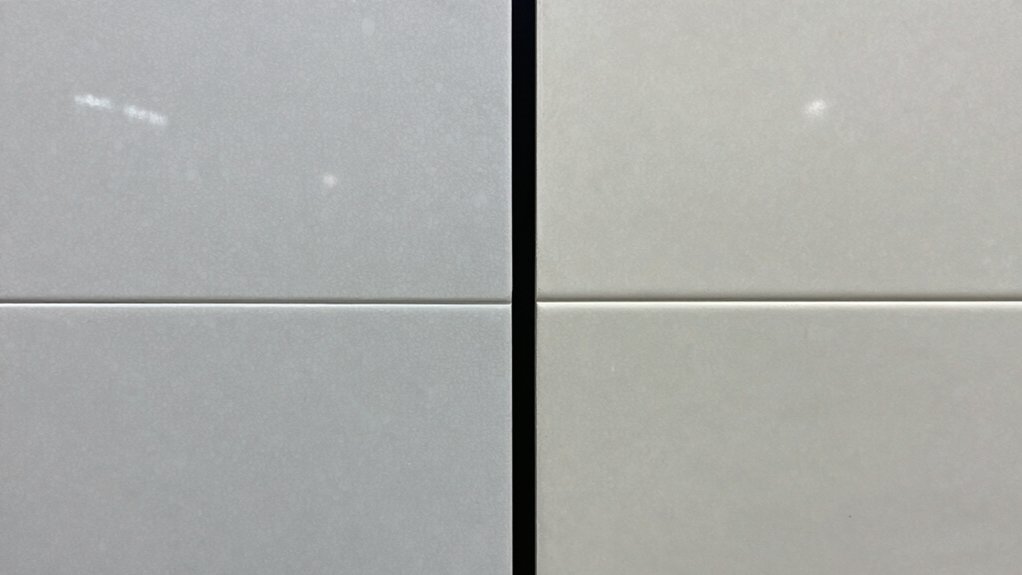
Durability and hardness determine how long porcelain and ceramic tiles resist wear, chips, and scratches in real-world use. You’ll measure performance by abrasion resistance, surface resilience, and the ability to retain finish under foot traffic.
Porcelain offers higher density and lower porosity, yielding superior abrasion resistance and reduced crack susceptibility in typical indoor settings. Ceramic tiles, while durable, exhibit more surface wear under heavy use, particularly in high-traffic areas or impacted zones.
Both types resist daily moisture and temperature shifts, but porcelain’s dense matrix minimizes microcracking and glaze crazing, translating to longer service life with fewer maintenance events. If you require lower maintenance and a longer interval between replacements, prioritize porcelain.
For cost-conscious installs, ceramic remains a viable option when matched to appropriate applications.
Water Resistance and Porosity
When evaluating water resistance and porosity, you’ll find porcelain tiles are denser and less porous than ceramic tiles, leading to lower water absorption and improved resistance to liquid penetration.
In practice, porcelain’s low porosity reduces moisture transfer, which translates to minimal swelling, staining risk, and faster drying after spills. Ceramic tiles, while adequately resistant, exhibit higher moisture uptake, especially if the glaze is compromised or the body contains more porous aggregates.
For applications with standing water or high humidity, porcelain demonstrates superior water permeability performance, lowering the likelihood of substrate damage and efflorescence.
Finish quality and manufacturing controls influence measured values, but the core distinction remains: porcelain offers consistently lower moisture absorption and reduced water permeability than ceramic tiles, enhancing long-term stability in wet environments.
Aesthetic Options: Design, Glazes, and Finishes
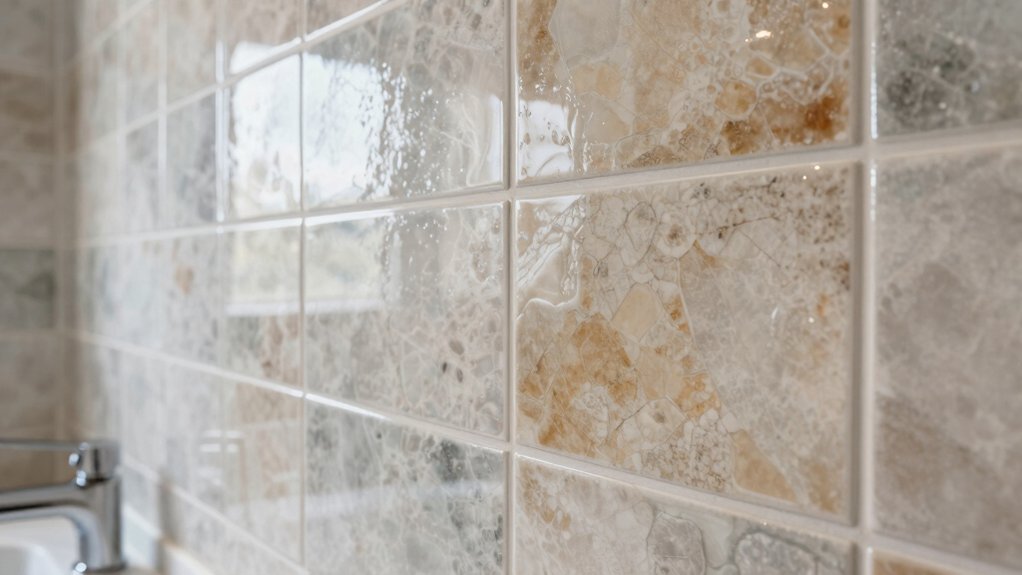
Design variations define the overall character of your tile project, guiding choices in pattern, scale, and layout to achieve the desired ambiance.
Glaze options affect color, depth, and resistance to wear, enabling precise control over aesthetics and maintenance.
Finish textures determine slip resistance and tactile feel, influencing application areas and perceived quality.
Design Variations
Design variations offer a range of aesthetic options for porcelain and ceramic tiles, including patterns, glaze types, and surface finishes. You’ll compare how patterns and motifs create visual rhythm, from geometric grids to organic repeats, and how scale impacts perception in different spaces.
Consider color palettes: neutral neutrals for timeless floors, bold contrasts for focal walls, and subtle tonal shifts for contemporary rooms. You’ll note glaze differences influence gloss, depth, and texture, affecting light reflection and slip resistance perception.
Surface finishes range from matte to high-gloss, affecting maintenance and scratch visibility. Porcelain often accepts sharper, more durable printing for intricate motifs, while ceramic provides versatility in color and texture at a lower cost.
Subtle border and field tile combinations offer design cohesion without compromising durability.
Glaze Options
Glaze options define the look and feel of porcelain and ceramic tiles, shaping color depth, texture, and light behavior. You evaluate glaze types by their chemistry, firing temperature, and compatibility with substrate porosity.
Aesthetic goals drive choices between glossy, matte, and satin finishes, each influencing slip resistance and glare.
Glaze durability matters for high-traffic areas, with you confirming resistance to abrasion, staining, and moisture intrusion under real-use conditions.
Decorative options include solid colors, variegated tones, and custom patterns achieved through overglaze techniques or digital printing; you balance realism, repeatability, and maintenance needs.
Consider glaze layer thickness, edge interaction, and curing when assessing long-term performance.
Documentation should verify color stability under UV exposure and cleaning protocols.
Final selection pairs design intent with practical upkeep and expected wear.
Finish Textures
How you choose finish textures integrates design intent with practical performance across porcelain and ceramic tiles. Finish textures influence both aesthetics and grip, influencing where you deploy them in a project. Surface textures vary from smooth, polished surfaces to coarse, slip-resistant types, shaping light reflection and perceived depth.
You’ll encounter tactile finishes that offer subtle or pronounced hand feel, affecting user perception and maintenance requirements. Porcelain generally supports more varied glazing and texturing without compromising density, while ceramic tiles can keep costs favorable with simpler textures.
Consider the environment: high-traffic floors benefit from micro-texturing or embossed patterns; walls and backsplashes can leverage glossier, low-absorption finishes for easy cleaning. Balance design intent with safety, durability, and cleaning practicality when selecting finish textures.
Best Applications: Bathrooms, Kitchens, and Outdoor Spaces
Porcelain and ceramic tiles each have distinct strengths for bathrooms, kitchens, and outdoor spaces; choosing the right one depends on moisture exposure, wear, and maintenance needs.
In bathrooms, choose porcelain for higher water resistance and reduced porosity, while ceramic can work in lighter-use zones when properly sealed and grouted.
In kitchens, both offer durability; porcelain resists staining and wear from foot traffic, whereas ceramic provides ample slip resistance with textured surfaces.
For outdoor spaces, porcelain performs better in freeze-thaw cycles and UV exposure; ceramic requires extra protection or indoor-like conditions.
Consider decorative patterns for visual interest and color customization to match design schemes.
Base material, glaze, and body strength determine wear tolerance and cleaning needs, guiding you to practical choices without overengineering complex installations.
Installation Considerations and Maintenance Tips
When planning installation and ongoing care, start by aligning substrate, tile type, and grout choice with the performance needs identified earlier. You’ll apply strict surface prep, choosing compatible primers, mortars, and backer boards to prevent cracking, debonding, or moisture intrusion.
Follow precise installation techniques: lippage control, consistent adhesive coverage, and appropriate grout depth to maintain flatness and joint integrity. Select porcelain or ceramic specifics, noting that body strength, water absorption, and edge tolerance drive method choices, cutters, and setting times.
For maintenance routines, implement routine cleaning with pH-neutral cleaners, promptly address spills, and reseal porous joints when required. Document wear patterns and traffic impacts to adjust future cycles.
Adhere to manufacturer specs and regional codes to ensure performance and warranty compliance.
Investment, Longevity, and When to Choose Each
Porcelain and ceramic tiles offer distinct value profiles, so your choice should hinge on total cost of ownership, expected wear, and the specific application.
You’ll choose porcelain when higher density and improved scratch, wear, and moisture resistance align with long-term use, especially in floors and high-traffic areas.
Ceramic suits moderate environments, simpler patterns, and lower initial cost, with adequate durability for walls and light-duty floors.
Consider installation challenges: porcelain’s density demands precise cutting and a stable substrate, while ceramic tolerates more forgiving installation.
Longevity hinges on grout quality, sealing, and maintenance cadence; both materials can last decades with proper care.
Environmental impact varies by production energy and waste; though similar mining footprints exist, porcelain’s stronger performance per square foot can reduce replacement cycles.
Choose based on expected wear, maintenance tolerance, and lifecycle cost.