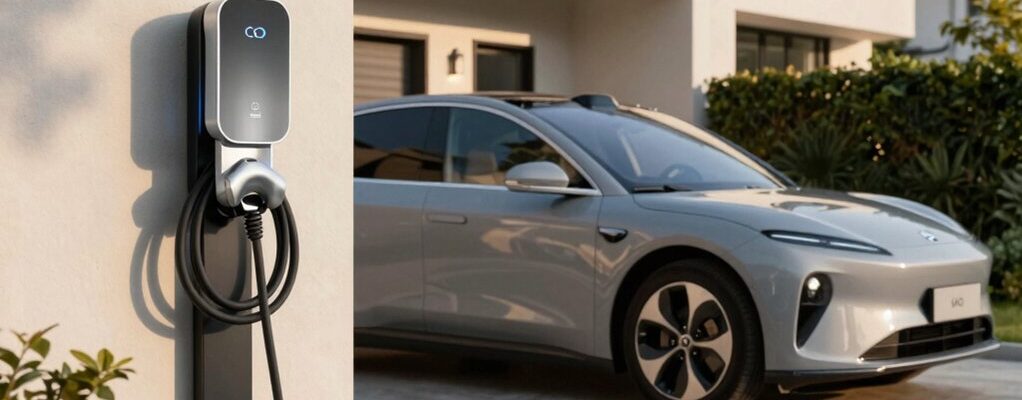
If you drive an EV regularly, a home charger can boost convenience and shorten trips, but it hinges on your home’s electrical capacity and space for installation. You’ll want to weigh upfront and ongoing costs against your driving patterns, potential upgrades, and compatibility with your vehicle. Consider how often you recharge at home and whether faster charging would change your routines—because the decision often comes down to the balance between practicality and feasibility.
Understanding Your Driving Habits and Charging Needs
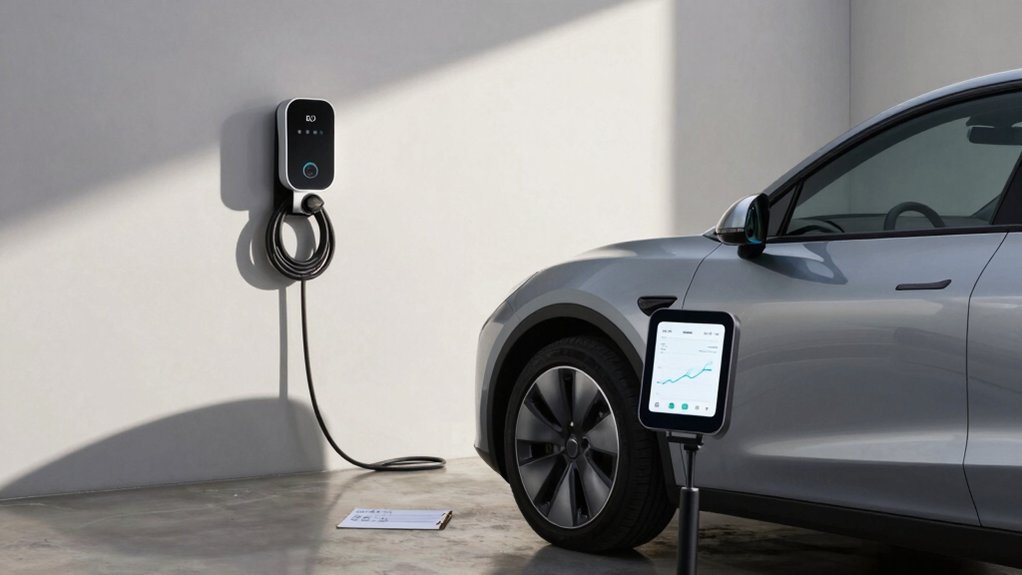
Understanding your driving patterns and charging needs is essential before choosing an EV charging setup. You’ll map daily ranges, weekly trips, and peak charging windows to determine charger power and location.
Assess whether you mostly drive locally or take longer commutes, and note where you can plug in at home, work, or public destinations. Your plan should balance battery capacity, charging speed, and access to grid capacity.
Consider how often you’ll charge to 80% versus 100%, and account for seasonal driving variability.
Here, Charging station aesthetics matter for integration with your space, while Environmental impact guides choices like energy sources and efficiency.
Document your expected sessions to choose a solution that minimizes downtime and maximizes convenience.
Types of Home Chargers: What Fits Your Home
Choosing the right home charger hinges on your electrical capacity, daily driving, and installation constraints. You’ll evaluate wall-mounted Level 1 and Level 2 units, plus smart adapters, based on circuit availability and physical space.
Level 1 uses a standard outlet, simple but slow; Level 2 demands a dedicated 240 V circuit, faster charging, and larger electrical load. Consider enclosure, conduit, and weatherproofing for outdoor installs.
Battery technology impacts charging compatibility, so confirm intermittence and state-of-charge profiling with your vehicle.
Smart chargers offer scheduling, remote monitoring, and energy reports, aiding Grid integration by aligning charging with off-peak rates or solar generation. If you have solar or demand-response programs, verify interoperability and utility approvals.
Finally, select a model with future-proof firmware updates to address evolving standards and safety features.
Charging Speed and Power: How Fast Can You Charge?
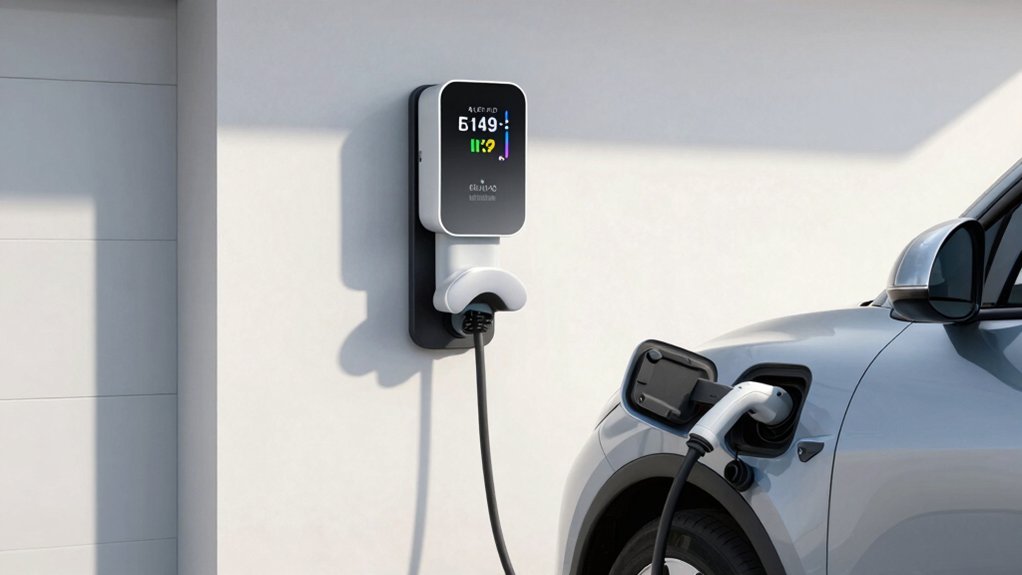
Charging speed is limited by both your home and vehicle capabilities, so you’ll want to map Charge Time Factors to your daily use.
Power Availability Limits determine how quickly you can top up, while Vehicle Compatibility Range defines the practical max speed your car supports.
Start by evaluating your circuit capacity, charger rating, and the car’s accepted charging modes to set realistic expectations.
Charge Time Factors
Power and time at the charger depend on several factors that determine how fast you can top up an EV battery. You’ll evaluate vehicle acceptance, charger type, and current capacity to estimate charging time. Battery state of charge, temperature, and age influence efficiency and available power.
Charging curves mean rapid gains early, then slower increases as you approach full capacity. Cable and connector standards, along with port compatibility, constrain the practical speed. Installation layout and cooling affect sustained performance, especially at higher power.
Real-world time varies with grid reliability and session interruptions. When selecting a system, consider charging station aesthetics to ensure placement doesn’t impair usage or access. Also assess environmental impact, including energy sourcing and potential heat management.
Clear expectations prevent misjudgments about total fill time.
Power Availability Limits
Power availability sets the ceiling on charging speed. Your charging rate depends on the electrical system’s ability to supply power without overloading circuits. The power grid delivers available voltage and current, while real-world limits come from your home’s electrical design.
Circuit capacity determines the maximum continuous draw you can safely support. If you plan fast charging, verify feeders, breakers, and panel space to avoid nuisance trips. A higher-capacity service or dedicated circuit for the charger can facilitate faster charging, but it may require upgrades or permits.
Consider including a demand-management device to modulate charging during peak grid periods. Keep in mind that building wiring, conduit, and subpanels influence achievable amperage.
In practice, select a charger within your circuit’s safe continuous load range to maintain reliability.
Vehicle Compatibility Range
Vehicle compatibility directly limits charging speed. Your vehicle’s battery capacity and charging profile determine how fast power actually flows from a charger to the pack. Different EVs support different DC fast charging and AC two-way rates, so two cars may charge at markedly different speeds on the same port.
To estimate practical charging, consider the vehicle’s peak charging power, its battery chemistry, and the accepted charging curves. If your battery capacity is large, you’ll reach a lower percentage gain per minute at high states of charge, even on capable infrastructure.
Your planning should align charging infrastructure with typical use—overnight fills versus quick top-ups. Also verify charging compatibility with adapters and confirm charging network availability for sustained access.
Cost Considerations: Upfront, Installation, and Running Costs
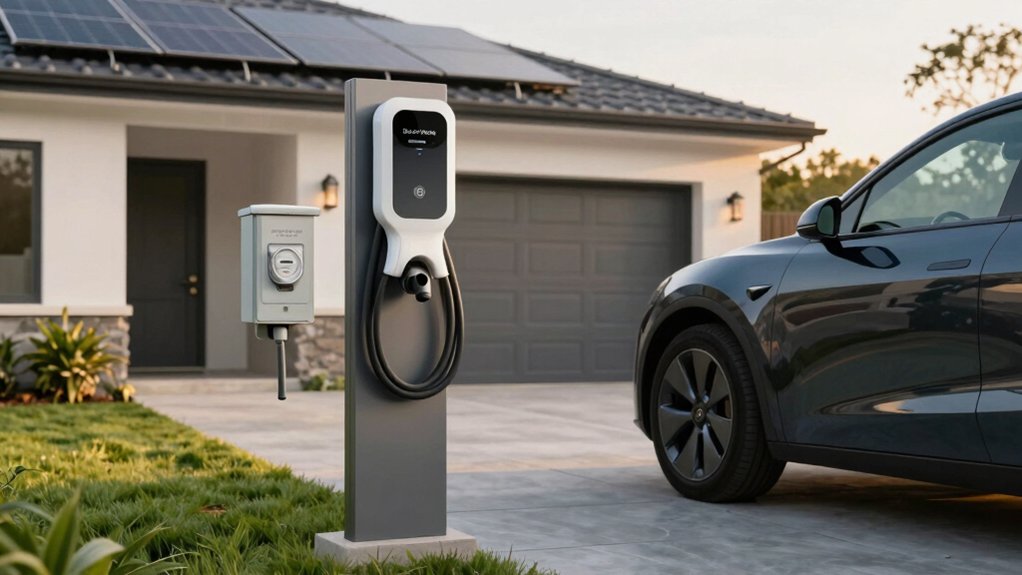
upfront costs, installation expenses, and ongoing energy costs frame the total price of ownership.
You’ll compare the upfront cost summary with installation requirements and the long-term energy bill to gauge overall value.
We’ll outline ways to optimize each area to minimize total running costs.
Upfront Cost Summary
What costs should you expect upfront when installing an EV charging station, and how do these components break down? You’ll face a discrete set of charges: hardware cost, permit fees, and electrical service upgrades.
Equipment costs vary by charging speed (Level 2 vs. DC fast) and power rating, influencing both upfront price and installation scope.
Permits ensure code compliance and can include inspections; fees differ by jurisdiction.
Electrical service upgrades may be needed to support higher amperage, impacting labor and materials.
Labor covers mounting, conduit runs, and any panel work, often tied to site complexity.
To make a smart choice, perform a cost comparison across feasible configurations and consider brand selection to balance reliability and warranty terms with price.
Plan for modest contingencies, but avoid overpaying for unnecessary features.
Installation Expenses
To understand installation expenses, you’ll separate costs into upfront, installation, and running categories and compare how each contributes to total ownership.
Upfront costs cover hardware, permitting, and delivery, with EVSE choice driving price variance.
Installation expenses include electrical work, trenching or routing, panel upgrades, and labor rates, which can push costs higher for older structures or long runs.
Running costs encompass maintenance, monitoring, and potential grid or demand charges, though ongoing expenses remain modest relative to total ownership.
When evaluating options, consider charging infrastructure durability, warranty terms, and modularity for future load growth.
Solar integration can reduce net running costs via on-site generation, but may add balance-of-system complexity.
Prioritize code compliance and simple expansion paths to limit future retrofit needs.
Ongoing Energy Costs
Ongoing energy costs encompass the ongoing power use, monitoring, and potential charges tied to EV charging, emphasizing how consumption patterns and utility incentives influence total ownership.
You’ll see variability from charging at peak hours, off-peak rates, and demand charges, which can alter monthly bills even with a stable vehicle. Track charging habits and use smart scheduling to minimize spikes.
Equipment efficiency, charger type, and grid incentives affect running costs, as does renewable integration when on-site generation or time-varied pricing is available.
Battery longevity considerations relate to charging strategies that avoid high-temperature or fast-charging at extreme states of charge.
Practical savings come from managed charging, energy storage, and grid programs, balancing convenience, reliability, and cost without compromising performance.
Electrical Capacity and Upgrades: What Your Home Requires
Before you install an EV charger, you must assess your home’s electrical capacity and any needed upgrades. You’ll evaluate service size, panel health, and potential load increases from other appliances. Check if your main breaker and feeders can handle added demand without nuisance trips.
Electrical wiring and circuit capacity are central: outdated or undersized conductors may require resizing or upgrading to support simultaneous charging with existing loads. Determine if a service upgrade to 200–400 amps is necessary based on charger amperage, expected daily usage, and future-proofing.
Local codes may mandate dedicated circuits, underscoring the need for a licensed electrician’s assessment and permit. Budget for panel work, conduit, and potential trenching, then plan for a clear upgrade path before installation.
Compatibility With Your EV and Network Features
Choosing the right charger depends on your EV’s capabilities and the network features you need. You’ll assess compatibility with your vehicle’s charging port, supported charging speeds (kW), and whether the connector type matches your EV model.
Consider whether your EV supports AC Level 2 charging or DC fast charging, and verify if the station’s maximum output aligns with your vehicle’s onboard charger.
Network features matter: whether the charger supports app control, time-of-use schedules, and remote diagnostics.
Check charger aesthetics in relation to your garage setup and wall space, ensuring mounting and cord length suit your installation.
Prioritize network security to protect credentials and prevent unauthorized access, firmware updates, and data privacy.
Make certain warranty and calibration policies align with long-term usage.
Benefits for Property Value and Convenience
Installing an EV charging station can boost property value and convenience by making charging easier and more reliable for residents, guests, and potential buyers. You’ll notice faster charging options and predictable availability, which reduces planning friction for daily use and visits.
From a property upgrades perspective, installed infrastructure signals a forward‑thinking, modern home, appealing to tech‑savvy buyers. The station can be a visible, tangible amenity that differentiates your property in markets with growing EV adoption.
Convenience extends to scheduling and compatibility with common charging standards, supporting long-term usage without costly retrofits. Expect incremental gains in resale value as buyers factor in reduced future charging hassles.
Guarantee proper placement, signage, and scalable capacity to sustain value and appeal across evolving charging needs.
Maintenance, Safety, and Warranty Considerations
Regular maintenance, safety checks, and a clear warranty plan are essential for reliable EV charging. You’ll want a structured approach: schedule periodic safety inspections, verify grounding and enclosure integrity, and confirm cable strain relief is intact.
Monitor for signs of arcing, loose connections, or overheating at the receptacle and the vehicle-side connector. Maintain a log of load performance, fault codes, and any nuisance tripping to identify emerging issues early.
Warranty coverage should be documented, including what components are protected and response times for repairs. Follow manufacturer guidance for firmware updates and interlock checks on smart chargers.
Ensure accessible emergency shutoffs, proper labeling, and clear separation from high-voltage areas. If concerns arise, contact licensed electricians to preserve safety and warranty coverage.