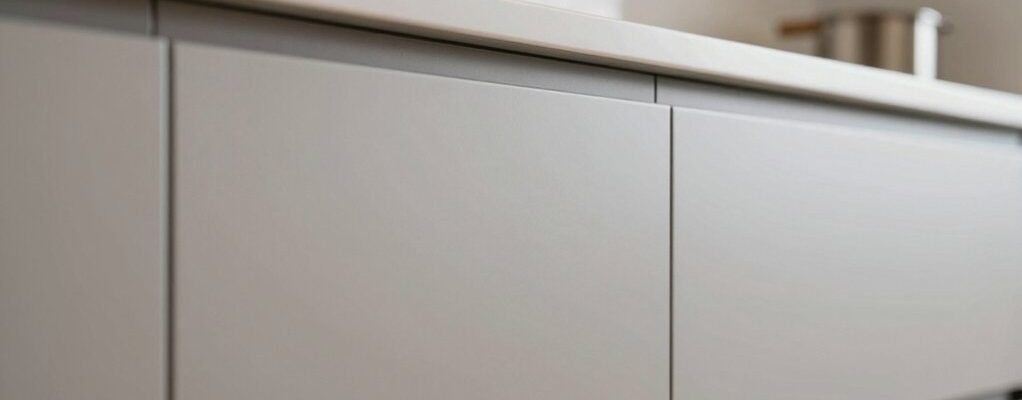
A recent survey shows that up to 40% of new kitchens feature flush or hidden-door cabinetry. You’re likely weighing a seamless, clutter-free look against the tradeoffs of installation complexity and cost. These invisible doors rely on hidden hinges, pull mechanisms, and matched surfaces to disappear into panels, making the line between cabinet and wall almost vanish. If you want to know which styles, materials, and hardware actually pull this off—and what it means for usability—there’s a method to assess before you commit.
What Are Invisible Cabinet Doors?
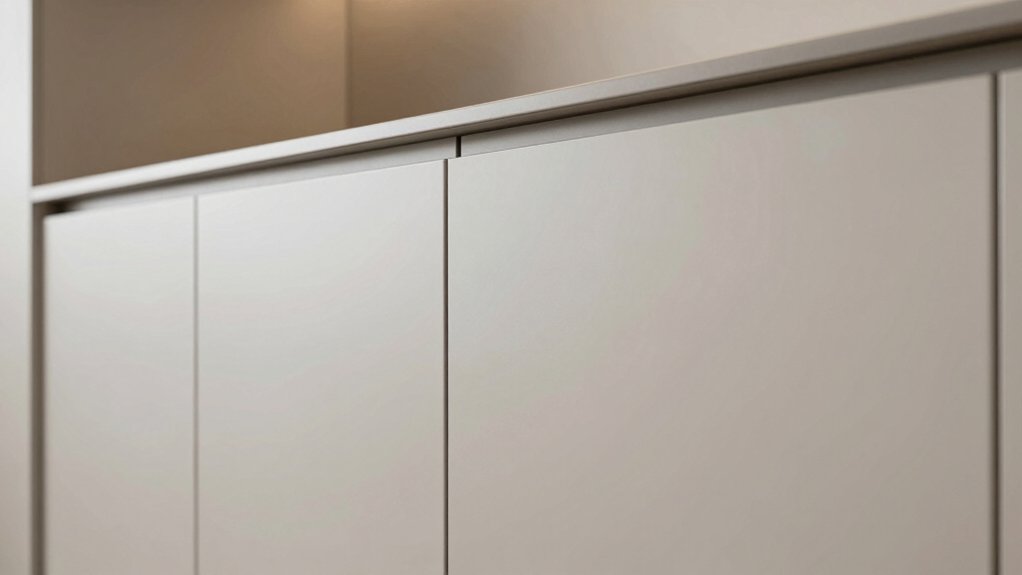
Invisible cabinet doors are hidden panels that look like part of the cabinetry but open to reveal storage or appliances. You’ll identify them by their seamless frame, with mechanisms concealed within the cabinet structure.
The defining characteristic is concealment: the door surface aligns flush with surrounding cabinetry, creating an uninterrupted plane. You’ll rely on hidden hinges to maintain alignment and support soft-closing functionality, ensuring no visible hardware interrupts the interface.
This design prioritizes accessibility without visual clutter, so you’ll opt for precise tolerances and high-quality joinery. Choose custom finishes that harmonize with adjacent surfaces, avoiding contrast that draws attention.
When evaluating options, consider panel thickness, edge treatment, and hinge placement to preserve the clean aesthetic. In practice, installation hinges on accurate measurements and meticulous calibration, delivering an unobtrusive, functional concealment.
Styles and Materials That Pull Off the Look
To pull off the look, choose styles and materials that blend seamlessly with surrounding cabinetry and disappear at a glance. You’ll favor flat-panel or frameless doors with minimal gaps, in finishes that match cabinet surfaces, or are a shade darker for depth. Matte and ultra-satin surfaces reduce reflections, enhancing invisibility in natural and artificial light.
Materials matter: plywood cores with veneer or thermofoil provide stable profiles; solid woods are workable but show grain, so select uniform figure for continuity. Concealed alignments rely on precise routing and inset reveals under 1/16 inch.
For modern design, maintain monochrome or restrained palettes; pair with integrated hardware or zero-profile pulls. Implement hidden storage strategies behind the doors, prioritizing clean lines and functional accessibility.
Hardware and Mechanisms Behind Hidden Doors
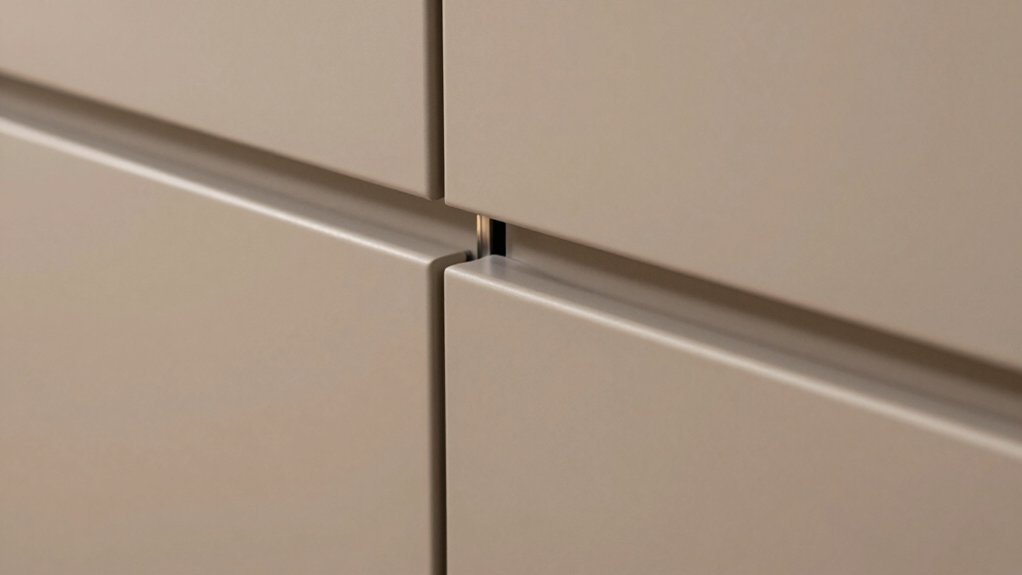
Hidden doors hinge on precise hardware and reliable mechanisms that disappear while performing. You align concealed hinges, flush-mount slides, and quiet rollers to eliminate gaps and misalignment.
Cabinetmakers select tangential and eccentric cams or magnetic catch systems to maintain zero reveal when closed, ensuring smooth actuation without rattles. In this domain, servo or pneumatic poppers may be integrated for controlled opening from a concealed pocket, while radiused strikes preserve edge integrity.
You verify load ratings, bearing life, and travel clearance across full extents, accounting for door weight, panel stiffness, and door-dip tendencies.
Smart technology enables touchless sensors, motorized retraction, and micro-adjustments for alignment. Custom fabrication tailors hinge spacing, hinge cup depth, and track geometry to your cabinet dimensions, delivering reliable performance and a truly invisible result.
Pros, Cons, and Maintenance Considerations
When evaluating invisible cabinet doors, weigh the benefits of seamless aesthetics, space efficiency, and streamlined interfaces against potential downsides like higher cost, more complex installation, and limited serviceability.
In practice, you assess durability, alignment tolerance, and access for maintenance, ensuring hinges or motors tolerate daily use without drift. The decision hinges on whether the aesthetic appeal justifies the commitment to precision fits, controlled environments, and potential service intervals.
Consider custom installation requirements, including wall prep, panel edge treatment, and concealment flushness, to avoid visible gaps. Prioritize reliability of actuation, repeatable closing, and resistance to dust ingress.
Weigh long‑term upkeep against initial investment, ensuring you can sustain performance without frequent intrusive adjustments. A balanced view supports deliberate, technically informed choices for lasting value.
Budget, Lighting, and Accessibility Impacts
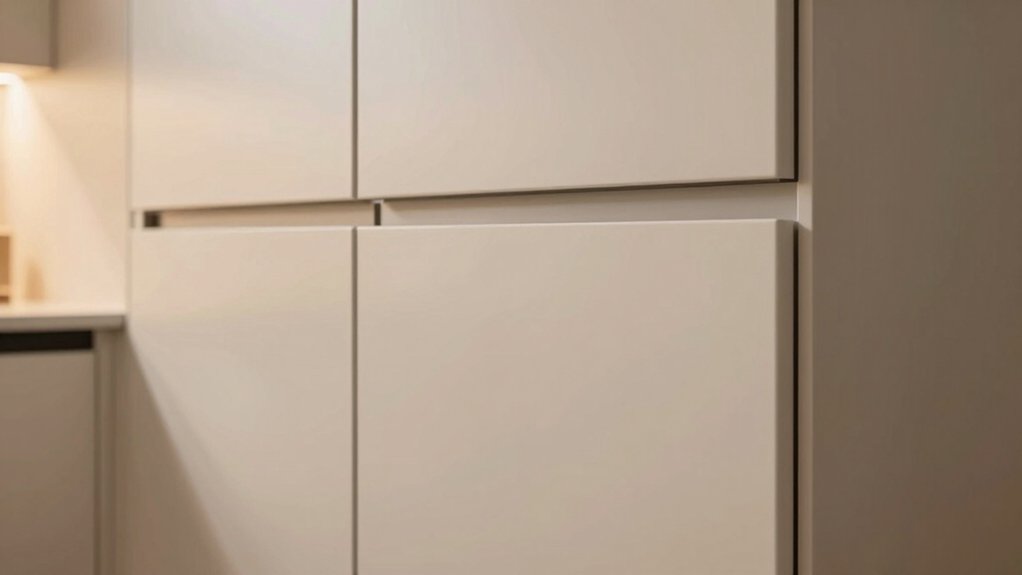
Budget considerations for invisible cabinet doors hinge on upfront costs, ongoing energy use, and the potential for value-added benefits like space efficiency and reduced visual clutter. You assess hardware expenses, track lighting compatibility, and transformer or driver requirements for integrated LEDs.
When evaluating options, prioritize cost effective options that balance purchase price with long-term savings from improved illumination efficiency and reduced need for traditional hardware maintenance.
Lighting design should align with cabinet depth and door flushness to minimize glare and shadow lines, enhancing accessibility without sacrificing aesthetics.
Space saving solutions emerge from interiorized hinge mechanisms and frameless overlays, while accessibility improves with tactile cues and consistent cabinet stops.