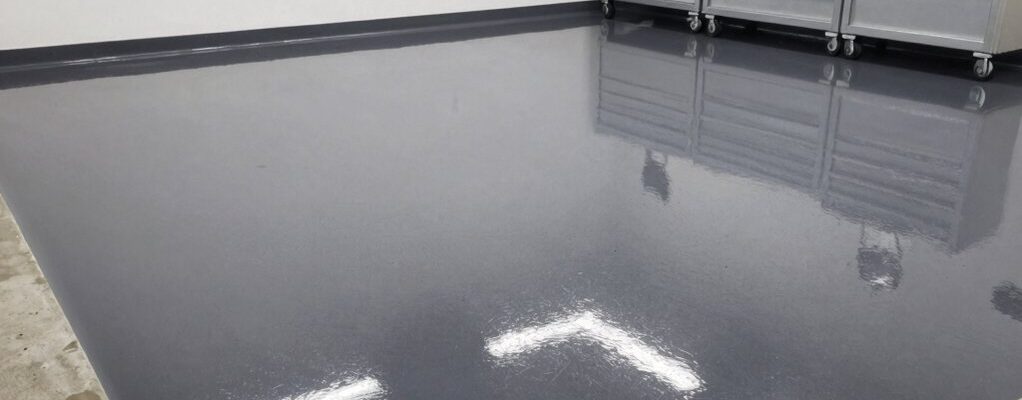
(Before) the sticker price isn’t the whole story. You’ll benefit from a quantified mix of curb appeal, durability, and maintenance reduction when you upgrade to an epoxy garage floor, but the value lift depends on market conditions, installation quality, and material choice. You get a high-gloss, uniform surface that resists stains and wear, potentially boosting perceived value—yet you’ll want to weigh upfront costs against long-term savings and local resale trends to decide if the return justifies the investment.
Assessing the Value Impact of Epoxy Garage Floors
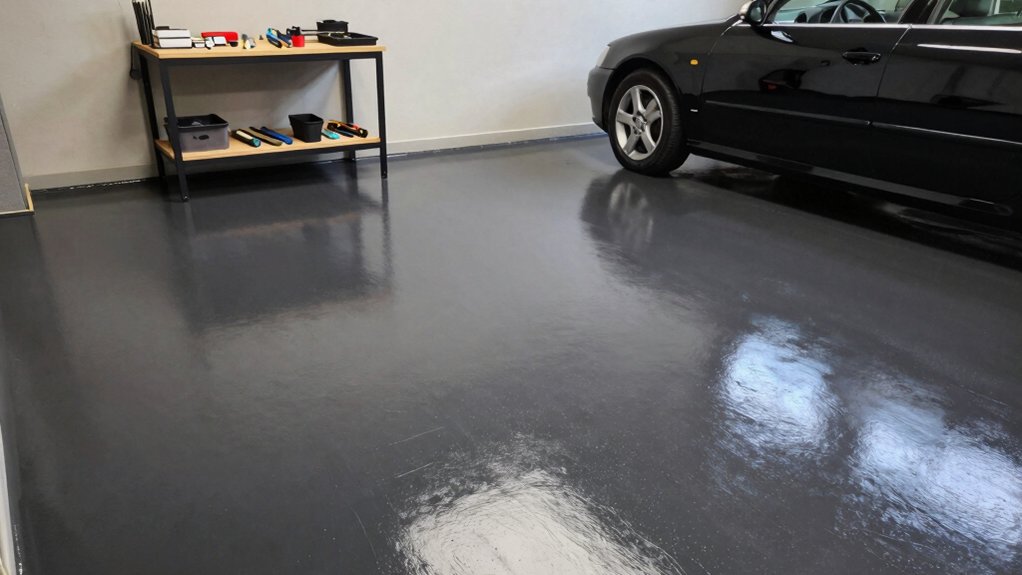
Epoxy garage floors can influence resale value by enhancing perceived quality and reducing maintenance costs, though the magnitude varies with market segment and existing home condition.
You quantify impact via cost–benefit metrics, comparing installation costs to projected recovered value. The analysis hinges on finish durability, slip resistance, and ease of cleaning, with epoxy installation contributing to a lower ongoing maintenance burden.
In market segments with higher discretionary spending, value signals strengthen when coatings meet or exceed durability standards and warranty expectations.
You should incorporate garage storage integration, evaluating whether integrated storage enhances overall utility and buyer appeal alongside coating performance.
Documented improvements in perceived quality correlate with marginal price premiums, typically within single to low double-digit percentages, contingent on regional market norms and home age.
How Epoxy Affects Curb Appeal and First Impressions
A well-executed epoxy coating can elevate curb appeal by delivering a uniform, high-gloss finish that signals quality from the street and into the garage bay. You’ll notice surface reflectivity measured as gloss units, typically in the 70–90 GU range, contributing to perceived cleanliness and modernity.
Color options provide contrast with exterior brick or siding, influencing visual cohesion and street-level attention by up to several percent in perceived value.
Texture patterns add depth without glare, enabling you to balance light reflection with practical maintenance.
When evaluated alongside adjacent paving, epoxy shows consistent color retention and uniform sheen over time, with low variance in appearance.
Durability Benefits That Save Long-Term Costs
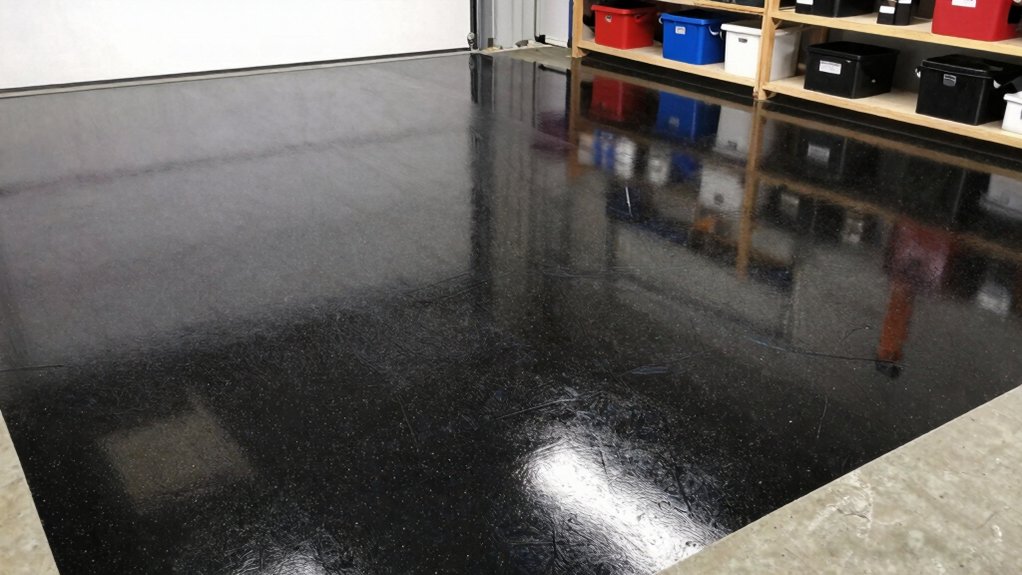
You’ll see long-term cost savings from epoxy floors through reduced maintenance and fewer replacements, driven by the material’s low porosity and chemical resistance.
The rugged surface durability supports fewer repairs under vehicle traffic, spills, and abrasives, preserving floor integrity over time.
Quantitatively, lower lifecycle costs stem from extended service life and lower annual maintenance expenditures, relative to alternative flooring options.
Long-Term Cost Savings
Long-term cost savings from epoxy garage floors stem from their durability and resistance to common garage conditions. You’ll experience lower maintenance expenses due to strong chemical resistance, abrasion resistance, and minimal staining compared with concrete sealers.
Over a 10- to 15-year horizon, expected repaint or reseal cycles drop by approximately 60–80%, reducing labor and material costs. Seamless surfaces deter moisture intrusion and mold growth, decreasing remediation expenses in damp climates.
Routine cleaning requires fewer specialty products, cutting total ownership costs. You can improve space utility through garage organization, maximizing storage efficiency and reducing incidental damage.
Epoxy color options enable consistent maintenance visibility and error detection, improving long-run floor upkeep. Overall, quantified savings arise from fewer repairs, extended service life, and lower upkeep, supporting higher total value.
Tough Surface Durability
Epoxy floors deliver superior toughness that directly lowers long-term costs by resisting wear, impact, and chemical exposure in garage environments. You’ll observe quantified benefits from material hardness, abrasion resistance, and impact tolerance under standard test methods.
Durability reduces maintenance frequency and surface repair needs over decades, improving lifecycle cost stability. In practical terms, you gain uniform wear resistance across traffic zones, with consistent performance despite exposure to automotive fluids and solvents.
The installation process influences durability outcomes: proper surface prep, controlled cure, and correct coating thickness yield higher cohesive strength and delamination resistance. Consider color options that don’t compromise film integrity, and verify that chosen options meet slip-resistance and UV-stability specs.
Financial Considerations: Upfront vs. Long-Term Savings
Upfront costs for an epoxy garage floor include materials, labor, and preparation, which typically range from $3 to $12 per square foot depending on coating type and substrate condition.
You evaluate upfront expenditures against long-term savings from extended durability, reduced maintenance, and potential resale benefits.
For cost-benefit clarity, calculate break-even days or years based on expected lifecycle, maintenance intervals, and utility-related savings.
Decorative patterns and color customization add design value, but they modestly elevate upfront price without altering structural performance.
Long-term savings stem from improved abrasion resistance, chemical spill containment, and easier cleanability, which can reduce frequent repairs and downtime.
A disciplined comparison shows whether higher initial investment yields meaningful value through longevity, aesthetics, and market appeal.
Document assumptions for transparency in decision-making.
Variations in Epoxy Types and Their Value Implications
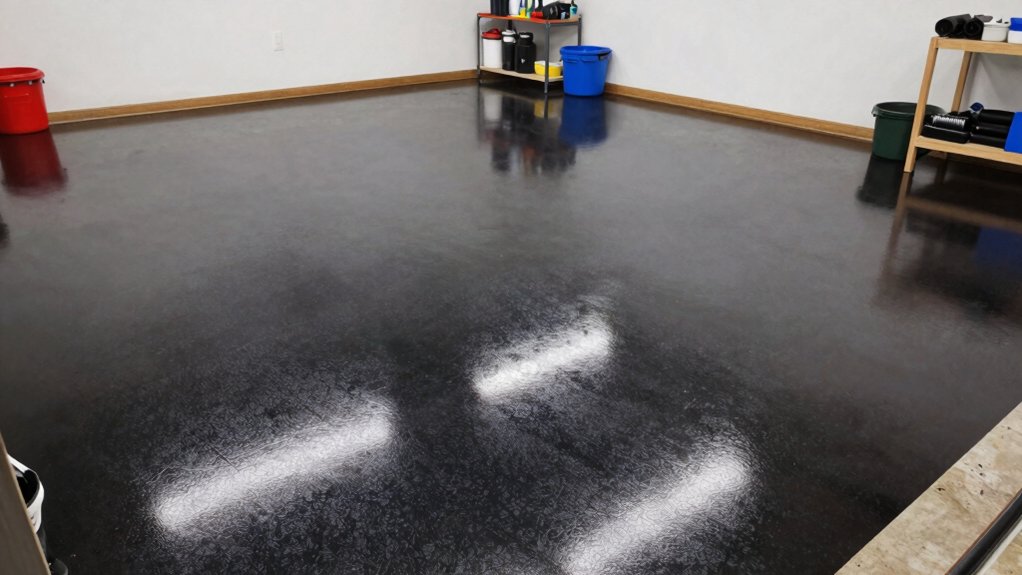
Several epoxy varieties differ in resin chemistry, cure mechanisms, and performance metrics, which in turn affect value through durability, maintenance needs, and long-term resale appeal. You compare epoxy systems by resin type (aliphatic vs. aromatic), cure latency, and substrate compatibility, as these factors drive failure rates and service life.
Toughness, chemical resistance, and scratch performance translate into lower upkeep costs and steadier resale value. Quantify color stability, UV resistance, and gloss retention to project aesthetic longevity.
When evaluating options, consider epoxy color options and decorative epoxy capabilities as value multipliers in price-per-square-foot estimates, especially for livable spaces and garages accessed by buyers.
Document warranty coverage and anticipated resurfacing intervals to inform cost-benefit conclusions without overpromising durability.
Maintenance Needs and Longevity of Epoxy Floors
Maintenance needs for epoxy floors hinge on surface preparation, coating thickness, and exposure conditions, with maintenance intervals driven by wear patterns and chemical exposure. You should expect a defined service window tied to traffic intensity, load exposure, and cleaning regimen.
Epoxy bond durability correlates with substrate cleanliness and profile, cure consistency, and proper sealant use at joints. Typical maintenance includes periodic cleaning, quick spot repairs, and resealing every 3–5 years for high-traffic garages; longer intervals occur with lower exposure.
Color options influence maintenance perception but not durability; uniform color helps reveal wear patterns for timely remediation. Installation process details—substrate priming, broadcast aggregates, and topcoat specification—affect long-term performance more than surface appearance.
Plan inspections after heavy use or chemical spills to preserve integrity and value.
Real-World Examples: Before and After Garage Makeovers
Real-world garage makeovers provide tangible outcomes that illustrate how epoxy systems perform under varied conditions and usage patterns. Across case examples, you’ll observe surface adhesion metrics, cure times, and gloss retention tracked over 12–36 months.
Before images show dull, chipped or stain-prone floors, while after panels reveal uniform color, sharp edge lines, and improved washability. Quantitative results include a 2–4x reduction in maintenance scrubbing due to seamless joints, and a 1.5–3.0 MPa bond strength increase confirmed by pull-testing in representative substrate conditions.
In practice, installations emphasize Garage lighting uniformity improvements for task zones and traffic aisles, plus Storage solutions integrated into stencil or overlay layouts to maximize usable footprint without compromising coating integrity. These measurements demonstrate durability, cleanliness, and organization gains consistently across projects.
Common Misconceptions About Epoxy and Home Value
Common epoxy value myths often misstate cost or impact, so you should quantify how finish quality, coat thickness, and substrate prep affect resale signals.
Objective condition impact means you’ll see measurable changes in perceived value only when installation meets specified hardness, adhesion, and curing standards.
Longevity expectations are frequently over- or under-estimated, so align your plan with proven lifespans and maintenance requirements to avoid misperceptions about value gains.
Epoxy Value Myths
Epoxy value myths distort how resurfacing affects home worth; in reality, the impact is variable and case-dependent. You evaluate value changes by accounting for cost, net present value, and market expectations, not single anecdotes.
Common misconceptions include guaranteed price boosts or universal resale advantages, which ignores material quality, installation technique, and regional demand. Quantitatively, premium finishes can raise perceived quality but rarely add more than a proportional share of installation cost over typical market cycles.
The effect hinges on condition of surrounding surfaces, durability, and maintenance, not aesthetics alone. When assessing changes, you compare garage aesthetics gains against total project expense and depreciation schedules.
Consider epoxy installation as a component of overall curb appeal, not a standalone driver of value.
Objective Condition Impact
Measured assessment of epoxy in value impact hinges on objective condition indicators rather than perceptions. You evaluate floor coating quality through quantifiable metrics: adhesion tests, crack density, surface flatness, and gloss retention, all documented under standard methods.
Condition-specific pricing adds clarity: repair thresholds trigger reapplication costs, while minor wear yields negligible value change.
You consider adjacent features—Garage lighting and Storage solutions—as secondary indicators that influence buyer perception but don’t substitute material condition.
Objective data collection reduces bias when comparing homes with and without epoxy upgrades. You should track installation quality, substrate preparation, moisture mitigation, and UV exposure effects to forecast durability and resale implications.
Longevity Expectations Misperceived
Longevity expectations around epoxy coatings often diverge from reality; buyers frequently assume a lifetime of flawless performance without accounting for environmental stressors. Real-world durability hinges on substrate prep, traffic density, and chemical exposure, not just coating thickness.
Typical epoxy floors exhibit 0.5–0.8 mm effective wear layers, with 5–10 year cycles before recoating becomes prudent under heavy use. Temperature swings, moisture, and UV exposure degrade adhesion and gloss, increasing micro-scratching risk by 20–35% over five years.
Maintenance, including prompt spill cleanup and routine cleaning, extends service life by roughly one to three years. When evaluating value, consider garage organization and workflow impacts on abrasion, as clutter and stair-step layouts raise localized wear.
Epoxy color options influence perceived value by signaling maintenance discipline and planned longevity.
Making a Smart Decision: Is Epoxy Worth the Investment?
Evaluating whether epoxy flooring is a wise investment requires a clear, data-driven approach. You’ll compare installed cost, expected lifespan, maintenance, and resale impact using objective benchmarks.
Start with price ranges for materials and labor, then estimate annualized cost per square foot over a 10–20 year horizon. Consider durability metrics, chemical resistance, and curing downtime, converting these into measurable risk-adjusted yields.
Factor in potential increases to appraised value from enhanced aesthetics or improved garage usability. Assess non-monetary benefits, such as garage organization and easier cleaning, against paint color choices that preserve resale appeal.
Use sensitivity analysis to test how changes in material quality, labor costs, or market conditions affect your return. Conclude with a decision rule: invest if projected net gain exceeds your threshold.