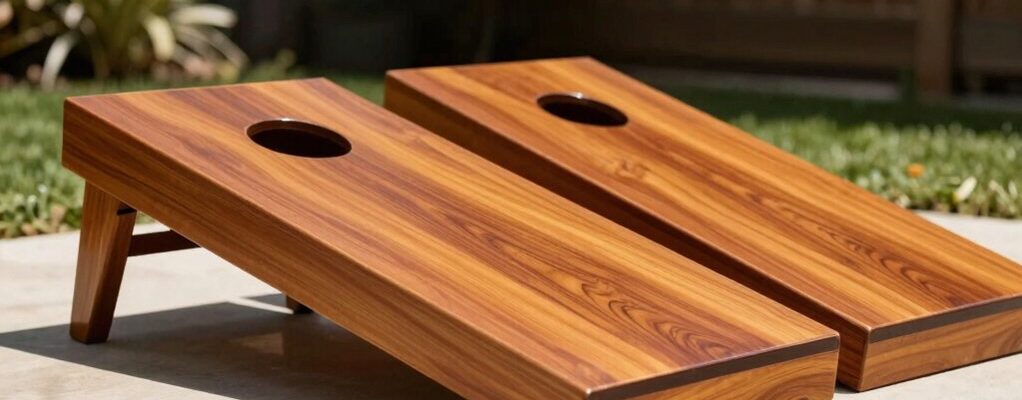
For durable, predictable play, use a hard, outdoor-rated finish like polyurethane or epoxy. Apply thin coats with light sanding between layers to build protection without sacrificing feel. Outdoor boards benefit from weather resistance, UV stability, and a mid-gloss or satin sheen that reduces glare while preserving grip. Balance slip and control so throws stay precise. Test texture and grip areas as you go, and keep refinishing simple with proper prep. If you keep exploring, you’ll uncover more practical steps.
Types of Finishes for Cornhole Boards
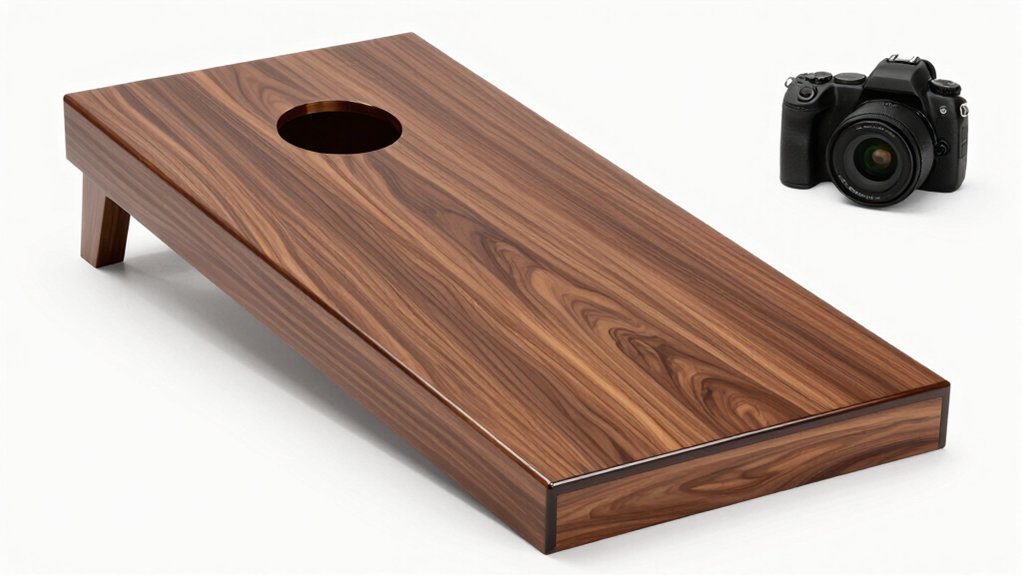
There are several finishes you can choose for cornhole boards, each balancing durability, grip, and aesthetics. You’ll assess polyurethanes, epoxies, oils, and water-based seals by how they wear, dry time, and ease of application.
Polyurethane and epoxy offer hard, durable surfaces but may alter board aesthetics with ambering or sheen; weigh visibility of artwork against protection. Oil wraps provide a natural look and easier repair, yet require more maintenance. Water-based finishes reduce odor and cure quickly, preserving color but potentially softer wear resistance.
Consider the environment, foot traffic, and refinishes when evaluating cost considerations. Test small areas first to verify adhesion and uniformity.
Choose a finish that maintains grip without sacrificing longevity, ensuring consistent play.
How Finishes Affect Slide and Grip
Your choice of finish directly shapes slide vs. grip on the board. We’ll compare how texture and dryness influence whether the disc settles with faster slide or steadier control.
Consider how finish options balance slickness and traction to fit your play style and conditions.
Slip vs. Grip Play
Slip and grip on a cornhole board are determined primarily by finish resistance to slide and by texture. In this subtopic, you assess how different finishes influence slide versus grip during play. You’ll notice that slicker surfaces reduce friction, enabling smoother throws and greater distance, while tackier or lightly textured finishes increase control around the hole.
Systematic testing helps you quantify consistency: measure slip events per game, then compare across finishes. Practical setup includes uniform board temperature, consistent oil or sealant coats, and standardized chalk use to avoid external bias. Balance is key: enough grip for accuracy without impeding release.
Consider board aesthetics and player preferences when selecting a finish, ensuring the surface looks and feels right to you for repeatable results.
Finish Texture Impact
Finishes don’t just look nice; they shape how a surface feels under a throw. Finish texture directly influences slide and grip, so you can predict results by testing two or three passes with your chosen coating.
Coarser textures reduce pin-slip and increase control on release, while smoother textures promote more consistent glide but may demand cleaner boards or more deliberate release technique.
In practice, seek a balanced texture that tolerates minor dust and humidity changes without abrupt grip loss. Document how a given layer dries, then compare outcomes with diverse discs and throwing styles.
If you add Custom graphics or paint colors, verify texture remains uniform across the artwork. Track your measurements, and adjust sanding or coat counts to achieve repeatable performance.
Weather-Resistant Options for Outdoor Play
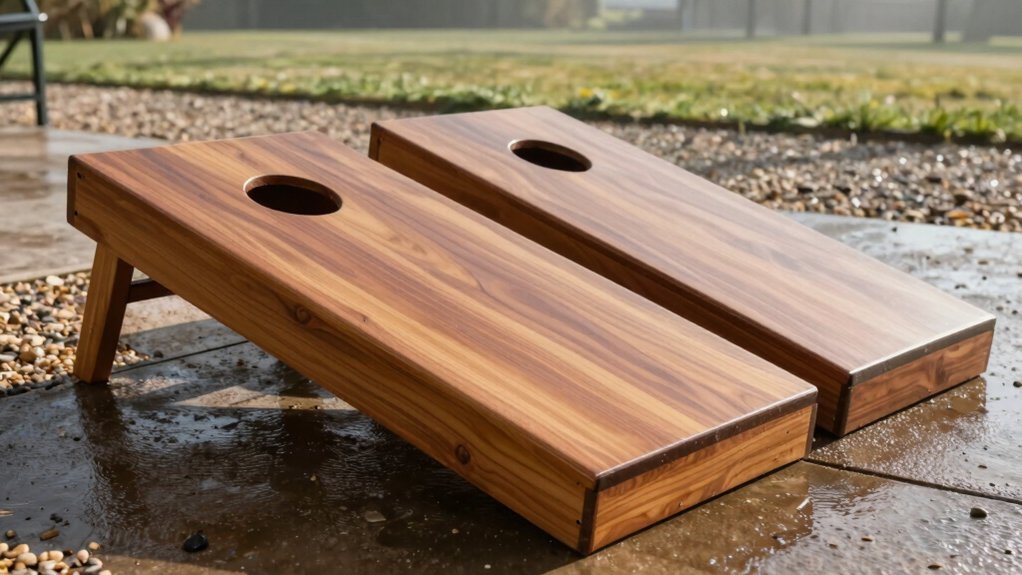
Weather-resistant options are essential for outdoor cornhole play, since moisture, sun, and varying temperatures can degrade boards and gameplay. You’ll want finishes that resist water intrusion and UV fading without cracking. Consider outdoor-rated polyurethanes or marine-grade finishes designed for exposure.
Prioritize products labeled for exterior use and verify compatibility with your board material. For durability, apply multiple thin coats, sanding lightly between layers, and allow full cure before use.
When choosing, compare Indoor vs. outdoor durability claims to ensure real outdoor performance. Also think about finish color options that retain visibility and aesthetics after weathering.
Select a mid-gloss or satin sheened finish to minimize glare and maintain practical grip. Reapply per manufacturer guidance to sustain protection seasonally.
DIY Finishes: Clear Varnish, Polyurethane, and Shellac
Clear varnish offers a fast-curing, clear shield with easy touch-ups, but you’ll trade a bit of durability for flexibility in application.
Polyurethane provides tougher surface protection and longer wear, though it requires careful brushing or spraying to avoid lap marks.
When you weigh options, consider how each finish handles UV exposure, visibility of grain, and maintenance needs for your outdoor cornhole boards.
Clear Varnish Pros
When choosing a clear varnish for cornhole boards, you’ll want a finish that pairs durability with ease of application. Clear varnish pros include straightforward application, quick wet-sand cycles, and a smooth, forgiving glide over wood. It builds a protective film without ambering, preserving natural board aesthetics while resisting scuffs from bags.
You’ll notice consistent leveling, minimizing brush marks with thin coats and light sanding between sessions. Drying times are practical: allow a coat to cure before the next layer, and account for finish drying time in your schedule.
Clean-up is simple with mineral spirits, reducing downtime. If you value repeatable results and a clear, transparent look, varnish remains a reliable, low-maintenance option for a durable surface.
Polyurethane Considerations
Polyurethane offers a tougher, more durable film than many varnishes, but it requires attention to surface preparation and application technique to prevent issues like milky appearance or brush marks.
You’ll start with a smooth, dust-free surface, sand between coats with fine grit, and wipe away residue before each layer. Use a high-quality brush or a foam applicator, apply thin coats, and avoid overworking the finish to minimize bubbles.
Temperature and humidity matter, so work in a controlled environment and allow adequate cure time between coats. For durability, apply multiple thin layers rather than a single heavy coat.
Consider polyurethane durability when choosing a sheen; gloss highlights flaws, while satin hides imperfections. Finish color options are limited with oil-based formulas, so test samples first.
Sealing Techniques and Preparation for Longevity
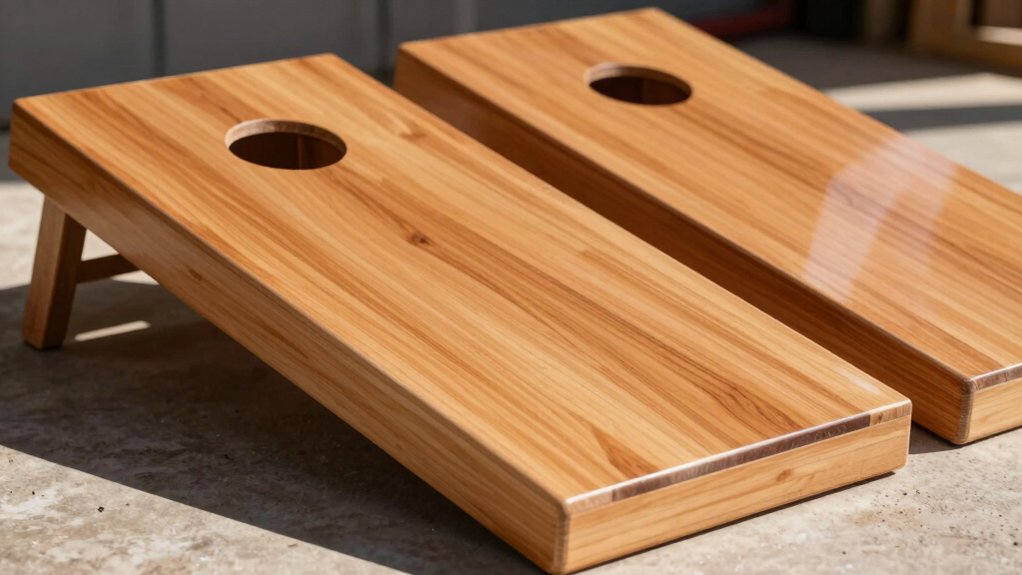
Sealing your cornhole boards begins with a clean, dust-free surface and a well-ventilated workspace; preparation sets the foundation for a durable finish. You should sand progressively, from 120 to 220 grit, removing all tool marks and dust between passes. Wipe with a damp cloth, then dry completely before sealing.
Choose a compatible sealant that adheres well to your base coat and is UV-resistant to prevent yellowing. Apply thin, even coats, letting each dry fully and light-sanding with 320 grit between layers to minimize nibs. Inspect for misses and touch up as needed.
For color matching, blend sealant lightly with your base color if permitted, ensuring uniform appearance. When you’re satisfied, assess for uniform sheen and consider subtle aesthetic enhancements that won’t compromise durability.
Application Tips and Maintenance for Long-Lasting Shine
To guarantee long-lasting shine, apply your finish in thin, even coats and maintain a steady, controlled pace across the entire surface. You’ll avoid lap marks by brushing along the grain, then back-buff the edges to remove inconsistencies.
After each coat, inspect for dust, runs, or bubbles and correct promptly. Allow the finish to dry fully before applying the next layer, noting the finish drying time specified by the product and environment.
Lightly sand between coats with fine grit and wipe away dust before resealing. Maintain consistent pressure to preserve board aesthetics and prevent uneven sheen.
Complete with a final topcoat that cures evenly in a dust-free area, ensuring a durable, smooth finish. Store boards upright and ventilated to extend longevity.