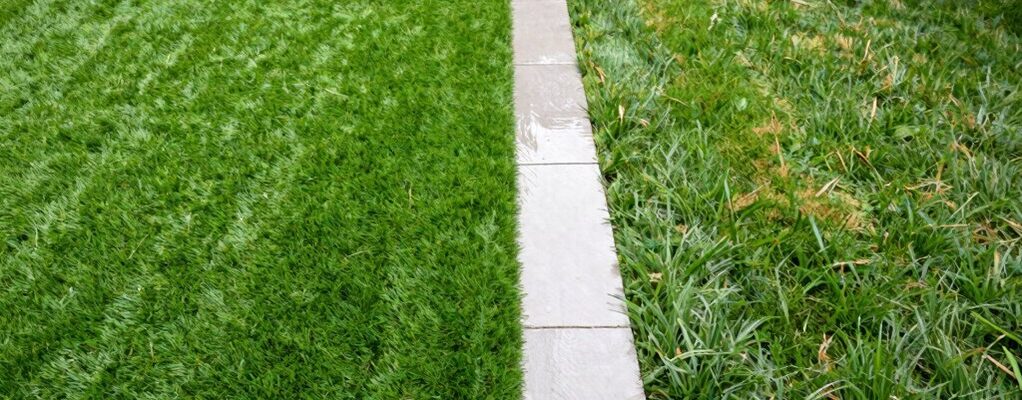
Artificial grass has higher upfront installation costs—turf, backing, infill, underlayment, and site prep—but can cut long‑term expenses through lower mowing, fertilizing, and irrigation needs. Over 10 years, synthetic turf typically stabilizes total costs via reduced labor, water use, and energy, especially in drought or high-maintenance regions. Real lawns start cheaper but accrue ongoing costs for equipment, water, and chemicals. If you want detailed cost breakdowns and scenarios, you’ll uncover more practical insights ahead.
Installation Costs: Artificial Grass Vs Real Lawn
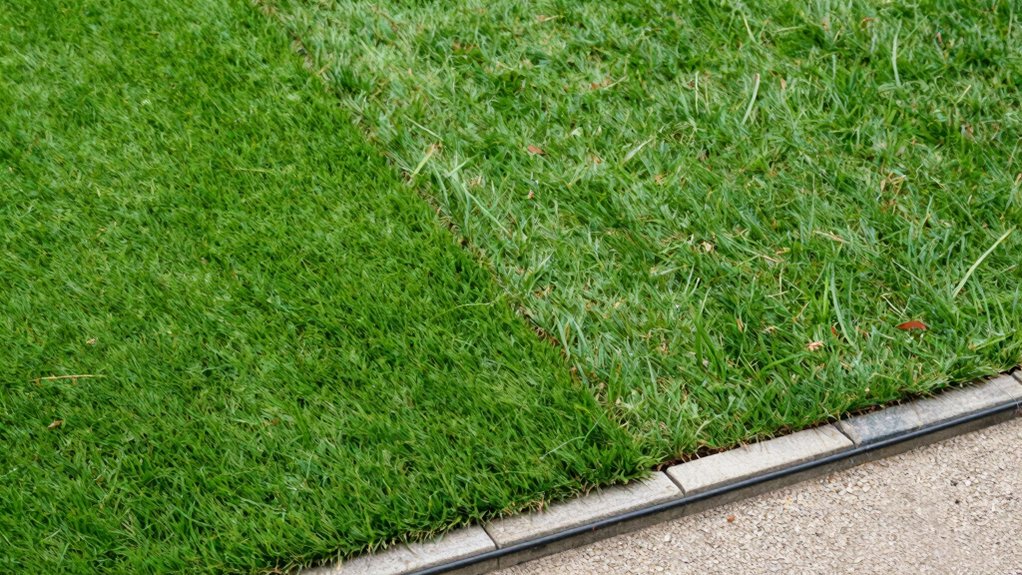
Installation costs for artificial grass versus a real lawn vary primarily in upfront investment and long‑term maintenance. You compare initial purchase, installation labor, and site preparation for both options, noting that synthetic systems demand higher upfront capital but typically lower ongoing costs.
Real lawns incur ongoing expenses for water, mowing, fertilization, and seasonal contractors, which accumulate over time. You’ll assess material quality, blade height, and drainage components for artificial systems, alongside soil preparation and grading for natural lawns.
Electrical or drainage adders, weed barrier, and infill requirements influence totals on artificial installations. Conversely, real lawns depend on soil health, irrigation efficiency, and local climate, affecting maintenance frequency and cost structuring.
You finalize a break‑even projection by estimating annual maintenance against the upfront differential, excluding subsequent material and labor discussions.
Initial Material and Labor Expenses
Initial material costs differ between artificial grass and real lawn, with synthetic options typically requiring higher upfront prices for turf, infill, and underlayment.
Labor time estimates vary by site, installation method, and surface prep, but you’ll see shorter labor durations for artificial systems compared to ongoing mowing and maintenance for real lawns.
We’ll examine the material cost snapshot and the labor time estimate to frame total initial expenses.
Material Cost Snapshot
Material costs for artificial grass versus a real lawn depend on both the upfront material price and the labor required for installation or reseeding. You evaluate synthetic turf costs per square foot, backing, infill, and edging, then compare to seed, fertilizer, soil preparation, and mowing equipment needs for real grass.
For artificial, quantify roll lengths, pile height, drainage components, and warranty-excluded subcomponents; for real lawn, quantify seed mix type, soil amendments, and irrigation setup.
Labor components include site prep, grading, underlayment, and installation for artificial, versus soil prep, seeding, and initial establishment for real grass.
Consider waste, transportation, and procurement timing. Finalize by contrasting total upfront outlays, with a brief note on expected short-term financial impact, independent of long-term maintenance.
Labor Time Estimate
Labor time for the initial phase combines site prep, delivery, and setup, with artificial grass typically demanding more front-end labor due to underlayment, edging, and securing seams. You’ll allocate time to ground preparation, weed barrier installation, and precise substrate leveling to meet product specifications.
Installation time hinges on yard size, slope control, and edge treatment; larger areas require systematic layout and seam alignment to maintain uniform pile height. Underlayment and adhesive or seam tape add discrete steps, each with defined cure or set times that influence scheduling.
Labor intensity varies by substrate hardness, drainage considerations, and access constraints. You should plan for on-site checks, knife trimming, and final infill measurement.
Subsurface Preparation and Drainage Considerations
You’ll evaluate subsurface preparation needs, focusing on dust-free base layers, compaction, and edge stability to support consistent grass performance.
We’ll outline drainage solutions details, including slope, permeability, and runoff management, to prevent water pooling and root saturation.
Consider soil compatibility factors, such as pH, texture, and load-bearing capacity, to guarantee long-term stability for either artificial or real lawn options.
Subsurface Preparation Needs
Subsurface preparation sets the stage for reliable drainage and long-term performance of an artificial turf installation. You assess substrate stability, meeting manufacturer tolerances for compaction and uplift resistance. Begin with a surveyed, level base to prevent pooling and edge lift; target minimal slope variation and uniform thickness.
Remove debris, roots, and organics that could compromise drainage or cause voids. Use appropriate geotextile underlayment only when specified, or omit if not required by the design. Establish a consistent drainage layer thickness to align with the turf system’s drainage capacity.
Verify trenching, edging, and compacted stone or aggregates meet regional code guidance. Document moisture, density, and layer compaction values for quality control. Plan regrading, games, and compaction checks during installation, avoiding post-install rectifications.
Drainage Solutions Details
Effective drainage is essential to prevent waterlogging and maintain turf performance; this begins with selecting a drainage strategy that matches the system’s load, slope, and subgrade conditions.
You’ll implement a layered subsurface approach: a perforated pipe network or gravel-trench system, backed by a geotextile separator to prevent fines ingress.
Evaluate infiltration capacity and establish a grading plan that ensures positive slope toward discharge points.
Install a central sump or header line for flow collection, sized to anticipated drainage load and rainfall intensity.
Incorporate venting access locations for maintenance and future flushes.
Ensure drainage runs align with turf geometry to minimize visible disruption, and consider compacted backfill to preserve drainage efficiency.
Document trench depths, pipe diameters, and outlet elevations for repeatable performance and system troubleshooting.
Soil Compatibility Factors
Soil compatibility directly shapes how well the drainage system performs and how the subsurface layers interact with artificial turf. You assess grain size, compaction, and drainage capacity to guarantee interfaces remain stable under load.
Confirm the existing soil drains adequately, or plan remediation like aeration, amended blends, or underlayment with a perforated drainage layer. Consider soil pH and salinity, because extreme chemistry can corrode ballast components and affect adhesion of infill.
Stabilize soft or high-plasticity soils to prevent differential settlement that harms turf alignment. Verify the subgrade’s bearing strength exceeds anticipated foot traffic and equipment loads.
Align aggregate base, filter fabric, and drainage pipes with slope requirements to maintain negative head. Document compatibility tests prior to installation to minimize future maintenance.
Maintenance Costs Over Time
Although artificial grass eliminates routine mowing and fertilization, its long-term maintenance costs still accumulate through periodic cleaning, infill replacement, and eventual component refreshes.
Over time, you’ll incur periodic debris removal, brushing to maintain pile integrity, and occasional deodorizing or stain treatment for high-traffic areas. Infill replacement frequency depends on usage, climate, and product composition, typically requiring partial top-ups rather than full cycles.
Consider drainage pads, edge seals, and texture covers, which may demand mid-life refreshment to preserve performance and aesthetics.
Energy-related costs are minimal, but you should budget for cleaning equipment, compatible cleaners, and protective coatings.
Realistic projections show gradual expense growth tied to material wear, UV stabilization, and accessory lifecycles, rather than annual recurring charges typical of natural lawns.
Plan for a 10-year maintenance envelope.
Water Usage and Irrigation Efficiency
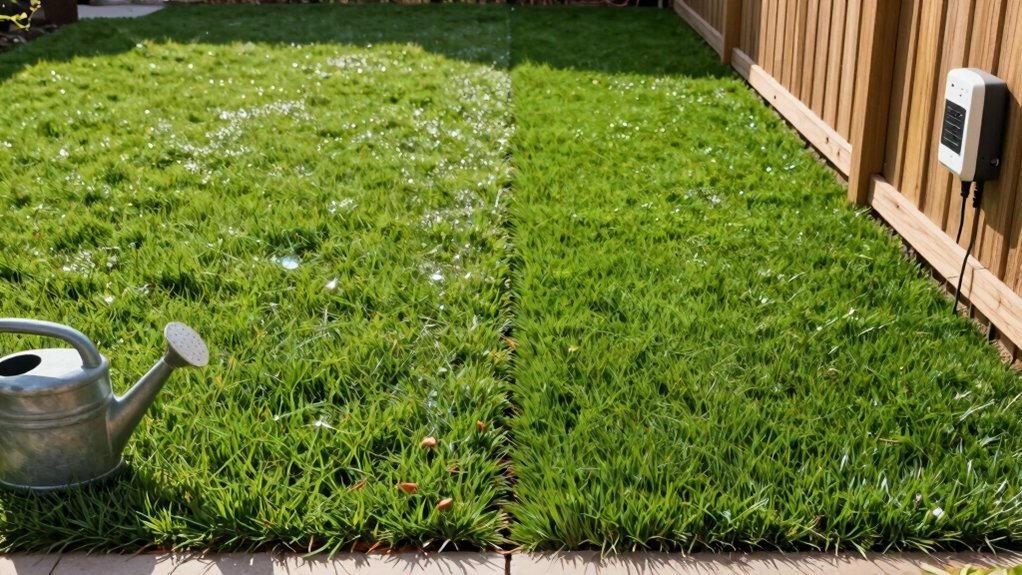
Water usage and irrigation efficiency for artificial grass are optimized by minimizing potable water demand and maximizing drainage performance. You evaluate irrigation schedules against soil- and system-compatibility, noting that synthetic surfaces require little to no routine sprinkler application once established.
For real lawn, you compare evapotranspiration rates, runoff potential, and soil moisture management, ensuring irrigation aligns with local restrictions. In artificial installations, you rely on drainage design to prevent standing water, while irrigation is effectively decoupled from turf health.
When maintenance occurs, you contextualize temporary water needs for initial infill settling or top-dressing, not ongoing turf hydration. You quantify efficiency through cycle counts, rainfall capture, and moisture sensors, documenting reductions in potable-water use relative to conventional lawns over the 10-year horizon.
Energy Use and Environmental Impact
Artificial grass generally lowers lifecycle energy use and emissions by reducing routine mowing, fertilization, and irrigation energy, while real lawns incur ongoing energy costs from equipment operation, water pumping, and soil amendments.
In energy terms, you compare factory-to-field processing, installation, and maintenance cycles for each option. Synthetic surfaces eliminate fuel consumption for mowing equipment and trimmers, yielding lower fossil fuel burn in conventional maintenance.
Real lawns transfer energy demands to irrigation systems, pump motors, and seasonal aeration, overseeding, and pesticide applications.
Embodied energy for synthetics arises from polymer production, backing materials, and petroleum-based inputs, yet amortizes over years of service.
Lifecycle emissions depend on local electricity grids, water accessibility, and climate; you’ll see variable outcomes by region.
Environmental impacts include run-off, heat island effects, and end-of-life disposal considerations.
10-Year Performance: Durability and Appearance
Year performance for durability and appearance compares how well artificial grass and real lawns hold up over time under typical use, wear, and weather. You evaluate material resilience, fiber stiffness, and blade recovery for synthetic turf, noting tufting integrity and backing delamination risks after years of foot traffic.
Real lawns show wear through soil compaction, thatch development, and rootZone stress, which manifest as patching, color fade, and weed encroachment. You assess color retention under UV exposure, fading uniformity, and pile flattening, alongside surface hardness and drainage consistency.
Both options exhibit maintenance-driven changes: mowing height in real lawns, brushing and infill in artificial systems. You compare lifecycle performance data, warranty claims, and observed 10-year trends to determine long-term visual quality and usable lifespan.
Real-World Scenarios: When Each Option Shines
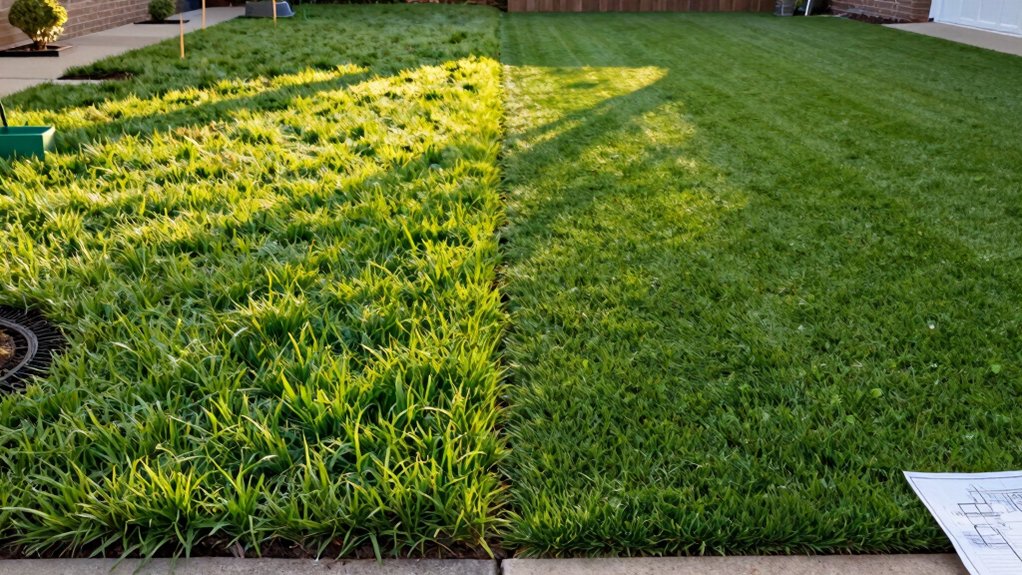
In real-world scenarios, each option shines under different conditions, and the previous discussion on 10-year performance helps explain why. Real grass excels where irrigation, routine mowing, and seasonal color shifts matter most; it adapts to natural soil drainage and supports diverse plant life, with proven longevity when maintenance schedules align with climate patterns.
Artificial grass demonstrates consistent aesthetics and durable playability in high-traffic zones, shade-impaired lawns, or locales with water restrictions, where maintenance windows are limited and irrigation is costly or forbidden. You’ll see real lawn benefit from uneven terrain, soil biology, and seasonal growth cycles, while synthetic turf offers uniform height, reduced slip risk, and predictable restoration after weather events.
Choose based on usage intensity, climate stability, and maintenance capacity.
Long-Term Value and Total Cost of Ownership
Long-Term Value and Total Cost of Ownership requires a disciplined, life-cycle view that combines upfront costs, operating expenses, maintenance cadence, and resale or salvage value. You’ll compare initial installation, system warranties, and material durability to ongoing energy, irrigation, and replacement needs.
With artificial grass, expect predictable maintenance, minimal water use, and lower yearly service, but factor replacement cycles if fibers wear or seams degrade. Real lawns incur variable costs: mowing, fertilization, aeration, pest control, and seasonal irrigation, plus potential landscaping shifts.
Discounted cash-flow analysis reveals artificial options often yield lower present-value expenses in security of outcomes; living lawns may boast higher resale or aesthetic value, yet expose you to maintenance spikes and environmental factors.
In total, quantify tolerance for risk, schedule, and capital availability to determine true ownership cost.
Conclusion
In conclusion, you’ll weigh upfront costs and ongoing maintenance to decide which lawn wins for you. Artificial grass offers predictable drainage, lower water use, and minimal upkeep, while real turf rewards you with natural aesthetics and evolving wear. Over a decade, total ownership factors—material durability, installation quality, and local climate—determine value more than initial price. It’s a careful balance, but the choice ultimately mirrors your priorities: consistency and efficiency, or authenticity and ecology, like two sides of the same coin.