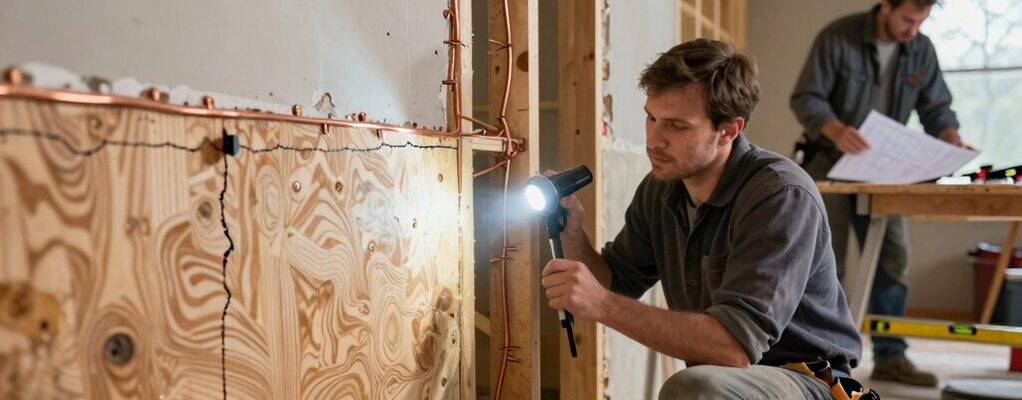
Before you tear down walls, confirm structural integrity first with a clear plan, accurate measurements, and professional input to prevent costly failures or safety hazards. Inspect load-bearing walls and framing for continuity, cracks, and signs of movement, and map hidden joists and foundation indicators. Check for moisture, dampness, and exterior drainage that could undermine stability. Evaluate electrical safety, labeling, and GFCI/AFCI function. Plan permits and documentation, and know when to hire a structural pro; more essentials await.
Assessing Load-Bearing Walls and Structural Elements
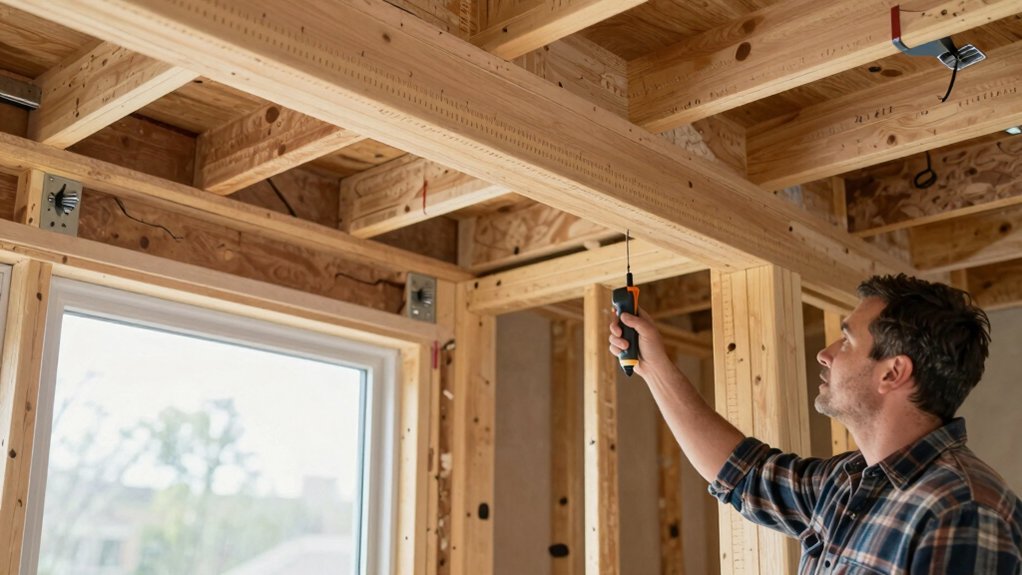
Evaluating load-bearing walls and structural elements is foundational to renovation safety. You assess framing before any alteration, verifying that supports carry loads as designed. Begin with the structure’s primary members: columns, beams, and studs, confirming continuity, alignment, and soundness. Look for cracks, bowing, or nail-pops indicating stress; document severity with measurements and photos.
Consult existing plans or as-built drawings to confirm member sizes, placements, and connections. Check exterior walls for consistent sheathing and tie-in integrity, and inspect doors and windows for misalignment signaling shifting frames. Verify that headers over openings maintain proper load transfer, and evaluate floor and roof systems for sag, deflection, or moisture damage.
Prioritize localization of affected areas, isolate hazards, and, when in doubt, pause work and seek structural engineering guidance.
Identifying Hidden Joists and Foundation Indicators
Hidden joists and foundation indicators often hide in plain sight; detecting them requires a systematic approach. You identify framing patterns by mapping wall cavities, then confirm with measurements against plans or known spacing standards.
Look for consistent nail patterns, joist gaps, and subfloor seams aligned with structural runs. Use a flashlight to reveal vertical or horizontal hints behind outlets, baseboards, or crown moldings, and note any irregularities that diverge from typical 16- or 24-inch centers.
Foundation indicators appear as vertical wedge gaps, concrete block cores, or footing reflections near slabs. Verify with exterior grading, door sills, and stair stringers for alignment.
Document findings with precise sketches, photos, and measurements, then cross-check against permits and as-built drawings to avoid misinterpretation. Maintain methodical notes for safe, informed decisions.
Evaluating Damp, Cracks, and Moisture Issues
You’ll apply the same disciplined approach you used for locating hidden joists and foundation indicators to damp, cracks, and moisture concerns. Begin with a concise visual survey: look for stains, efflorescence, bubbling paint, and musty odors that signal ongoing moisture.
Document crack patterns, widths, and progression over time, noting whether they’re horizontal, stair-step, or architectural. Assess drainage around the exterior, grading slopes, and downspout integrity; improper drainage concentrates moisture near walls.
Use a moisture meter at multiple elevations and corners to establish baseline readings, then track changes with repeat tests. Correlate damp signs with structural movement, verifying if cracks align with load paths or openings.
Record findings systematically, prioritize repairs, and schedule follow‑ups to confirm stabilization before any wall work proceeds.
Inspecting Electrical Systems and Wiring Safety
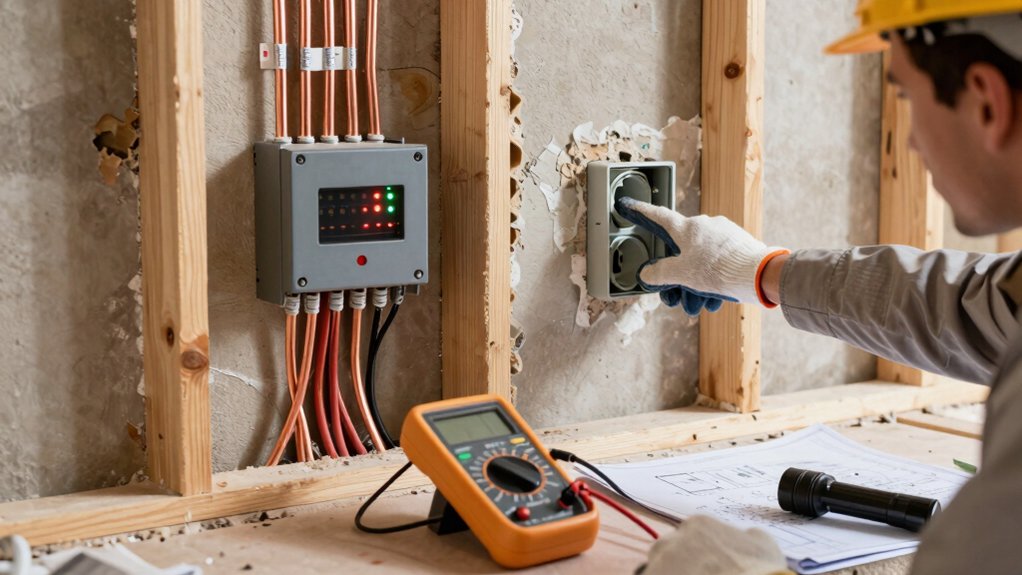
Evaluating electrical systems and wiring safety requires a precise, methodical approach to identify hazards and guarantee compliance with code requirements. You’ll inspect service panels for labeling, grounding, and overcurrent protection, confirming breakers match circuits and amperage ratings.
Check for damaged insulation, exposed conductors, and signs of overheating, such as discoloration or a waxy smell. Verify GFCI and AFCI functionality in required locations, testing with a tester and manual operation to confirm trip behavior.
Look for outdated materials, like knob-and-tube or uninsulated splices, and plan replacements to current standards. Inspect outlets and switches for loose fittings, proper polarization, and secure mounting.
Document deficiencies, prioritize urgent fixes, and avoid initiating repairs without proper permits or professional guidance when necessary. Maintain clear, traceable notes for subsequent renovations.
Planning Measurements and Permits for Renovation
Planning measurements and permits starts with clear timelines, defined boundaries, and a realistic budget aligned to approvals.
You’ll must gather permits and coordinate with authorities, set measurable milestones, and confirm site limits before work begins.
This approach enforces standards, reduces risk, and keeps renovations compliant and transparent.
Permits and Timelines
Getting permits and meeting timelines aren’t optional add-ons—they’re foundational to a compliant, orderly renovation. You must identify the correct permit category early, then align project scope with code requirements, documentation, and authority reviews.
Prepare precise drawings, structural calculations, and material specifications to support applications. Timelines depend on jurisdiction, agency backlog, and project complexity; build a realistic schedule with milestones, review windows, and permit expiring dates.
Submit in full, minimizing back-and-forth requests for information. Track milestones daily, updating stakeholders and adjusting resources as approvals unfold. Maintain compliance logs, permit conditions, and revision histories to prevent scope creep.
Upon approval, confirm sequencing, subcontractor qualifications, and site access restrictions. Don’t proceed without validated permits; noncompliance risks rework, penalties, and safety breaches.
Plan proactively, document rigorously, and manage timelines with discipline.
Measurements and Boundaries
Accurate measurements and clearly defined boundaries are essential to a compliant renovation plan. You’ll establish exact site dimensions, alignments, and setbacks reviewable by code.
Begin with a precise baseline: exterior footprint, wall centers, and bearing lines, then translate to interior layouts without guesswork. Use calibrated tools, record formats, and a consistent reference origin to prevent drift during framing.
Confirm utility corridors, easements, and property lines with official records, and annotate deviations clearly in your drawings. Permit-ready sketches should show setback compliance, protected zones, and access clearances for services.
Cross-check dimensions against structural constraints, HVAC leads, and plumbing paths, ensuring no encroachments or uncertainties remain. Maintain versioned documents and audit trails, so every measurement decision withstands inspection and aligns with standards.
Budgeting and Approvals
When you tackle budgeting and approvals, you must align costs, timelines, and permit requirements to the project scope from the outset. You’ll establish a detailed, line-item budget that accounts for design, structural work, materials, contingency, and inspections.
Define milestones tied to permitting steps, so approvals don’t bottleneck progress. Gather accurate quotes and document assumptions to support variance tracking and decision points.
Identify regulatory constraints early—zoning, setback, load calculations, and fire or energy codes—and map how they influence scope. Create a permit plan with submittal checklists, responsible roles, and response timelines.
Implement a change-control process to manage scope drift without derailing cost or schedule. Maintain transparent communication with stakeholders, inspectors, and vendors to assure compliance, accountability, and predictable execution.
When to Hire a Structural Pro for Peace of Mind
If you’re renovating, hiring a structural professional early can prevent costly missteps and guarantee your project meets safety and code standards.
You’ll know when expertise exceeds your scope: unexpected load paths, concealed damage, or evolving design changes that affect framing, foundations, or spans.
Engage a pro before you remove walls to verify existing conditions and load-bearing roles, ensuring correct reinforcements and permits.
Seek qualified structural engineers or licensed inspectors with documented experience in renovation projects similar to yours.
Documented assessments establish baseline conditions, identify omissions, and provide actionable recommendations.
Use their calculations to inform budgets, timelines, and material choices.
Hire promptly if findings reveal hidden rot, termite damage, settlement, or moisture intrusion.
Timely professional input preserves structural integrity and peace of mind throughout the process.
Conclusion
You’ve surveyed the skeleton before you, and the walls won’t lie. Every joist, crack, and conduit is a verdict in disguise, demanding respect for the structure’s memory. Proceed with precision, document thy findings, and never guess where failure hides. When doubt intrudes, bring in a pro—professional eyes deter calamity and keep the project aligned with code and conscience. Renovation isn’t chance; it’s a disciplined dialogue between safety and possibility, where sound planning preserves both home and life.