
You wonder if you can truly trust a builder with your home. The answer hinges on verification: licenses, insurance, and proven experience with similar projects, plus clear bids and contractual clarity. You’ll want solid references and a track record of on-time, within-budget delivery. But there’s more to guarantee success: transparent communication, defined scope, and robust warranties. Get past the glossy claims and establish a process you can hold to. Start here, then push further to separate the truly reliable from the rest.
Define Your Renovation Goals and Budget

Before you start shopping for builders, define your renovation goals and budget clearly. Start by outlining the primary purpose of the project, the rooms involved, and any non negotiables.
Translate goals into measurable outcomes, such as square footage, timeline, and desired finishes. Establish a total budget, then allocate funds to design, labor, permits, and contingencies.
Consider design preferences early—layout changes, lighting schemes, and storage solutions—so they guide decisions rather than trigger scope creep later. Be realistic about material costs and how they affect options.
Create a phased plan if needed, noting which elements can be staged. Document constraints, approvals, and any financing terms.
A transparent baseline helps you compare bids objectively and keeps the project focused and on track.
What Qualifies a Builder for Your Project
To determine what qualifies a builder for your project, start with licensure, insurance, and proven track record. You should verify current licenses and any specialty certifications relevant to your renovation.
Check that the builder carries adequate general liability and workers’ compensation coverage, and confirm coverage limits meet project risk.
Review a documented history of similar projects, noting on-time completion, budget adherence, and problem-solving during build phases.
Seek clear communication practices, accessible point of contact, and transparent change-order handling.
Assess builder credentials, including professional affiliations and ongoing education.
Consider project specialization if you need specific expertise, such as structural alterations or high-end finishes.
Finally, request client references and recent project outcomes to corroborate claims, ensuring alignment with your quality standards and schedule expectations.
Vet Licenses, Insurance, and Past Projects
You should verify the licenses through the official verification process, confirm current insurance coverage, and review past projects for transparency.
This means checking license status, confirming policy details and limits, and requesting accessible project records or case studies.
Start with clear questions about scope, duration, and outcomes to establish accountability from the outset.
Licenses Verification Process
Licenses verification is essential to confirm a builder’s legitimacy and to protect your project. You’ll vet the basics first: confirm active licenses with the appropriate state or municipal authority, and check any trade classifications that apply to your renovation.
Next, verify contractor credentials, including current registrations, bond status, and any disciplinary records. Cross-check the business entity details, address, and ownership to ensure you’re engaging the right party.
Request up-to-date insurance certificates and verify coverage aligns with project risk, subcontractor use, and potential liabilities. Compile the results in a concise dossier for each candidate, noting expiration dates and renewal processes.
Use this data to compare options objectively, narrowing to those with clean records, traceable histories, and transparent licensing compliance.
Insurance Coverage Details
Insurance coverage is non-negotiable when vetting builders: verify that policies are current, adequate for project risk, and backed by reputable carriers. Then confirm past projects’ coverage matches their claimed scope. You should request certificates of insurance, confirm liability coverage limits align with contract risk, and check subcontractor policies as well.
Look for clear definitions of covered activities, and assure there are no gaps during the work, particularly for critical phases. Ask about policy exclusions that could affect claim handling, such as damage during construction or unaffiliated labor.
Document the insurer name, policy numbers, and expiration dates, and verify online ratings. Maintain a running review of coverage status alongside milestones, updating requirements as scope evolves to protect both you and your property.
Past Projects Transparency
When evaluating a builder, you should demand transparent documentation of past projects, licenses, and insurance to verify competence and reliability.
You’ll assess project documentation to confirm scope, timelines, costs, and quality aligns with your renovation goals.
Verify licenses are current and appropriate for your locality, and confirm insurance covers liability and worker injuries.
Look for a consistent record across multiple projects, not cherry-picked examples.
Request a list of recent client testimonials, then contact references to gauge satisfaction, communication, and problem-solving under pressure.
Examine project portfolios for comparable work, safety practices, and adherence to code requirements.
Require written summaries of project outcomes, including any changes and their financial impact.
This transparent approach reduces risk and strengthens your negotiating position before signing any contract.
Read and Compare Bids Effectively
Evaluating bids isn’t just about picking the lowest price; it’s about understanding what each bid covers and how the supplier plans to deliver. To read and compare bids effectively, request itemized breakdowns for materials, labor, permits, and timelines, and confirm assumptions behind unit costs.
Use Bid evaluation as your framework: assess completeness, clarity, and any exclusions that could drive hidden costs later. For Cost comparison, normalize each bid to a single scope so you’re not apples-to-oranges; note delivery dates and warranty terms, too.
Identify any contingencies or change-order processes you’d face during construction. Ask for references and past performance data, then align bids with your priorities: schedule certainty, quality, and total ownership cost.
Document decisions in writing to support a transparent choice.
Essential Contract Elements for Renovations
Essential contract elements for renovations are the backbone of a successful project. You must define the contract scope clearly, detailing specific tasks, materials, workmanship standards, and any exclusions. This clarity prevents disputes over what’s included and what isn’t, and it guides both parties toward agreed outcomes.
Include precise payment terms, outlining deposit amounts, progress payments, milestone triggers, and final payment conditions. Specify change-order processes, including how requests are submitted, evaluated, and priced, to avoid budget overruns.
Establish duration expectations with start dates, completion targets, and remedies for delays. Clarify warranties, defect resolution, and termination rights, plus insurance requirements and risk allocation.
Finally, document dispute resolution methods and applicable governing law to guarantee enforceability and accountability throughout the renovation.
Scheduling, Permits, and Realistic Timelines
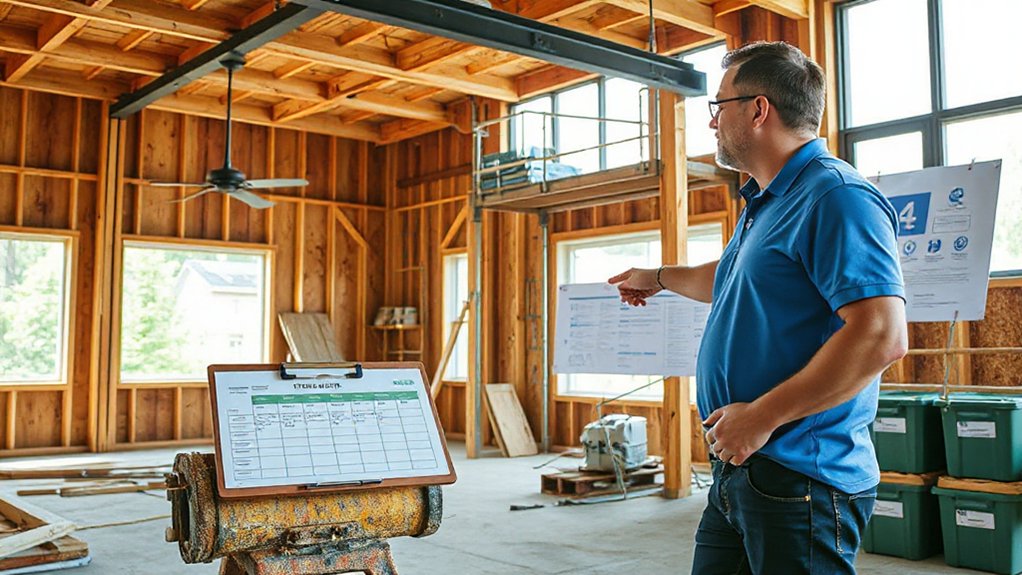
Scheduling, permits, and realistic timelines set the project’s pace and prevent costly overruns. You define milestones, align them with contractor workstreams, and build buffers for uncertainty. Start by securing a clear project schedule that correlates with permit approval windows and material lead times.
Track dependencies—when one task finishes, the next begins—to avoid idle periods. Anticipate scheduling challenges by documenting preferred start dates and acceptable delays, then bake these into the contract as flexible contingencies.
Permit delays can disrupt the sequence; anticipate them by identifying required approvals up front and maintaining open lines with the authority having jurisdiction. Communicate potential impacts to stakeholders early, and adjust timelines only after evaluating critical path consequences.
A disciplined, transparent approach minimizes surprises and keeps your renovation on track.
Communication, Transparency, and Client References
Clear communication and full transparency with your client are non-negotiable for a successful project. You establish these standards from the first contact, setting expectations for updates, decisions, and approvals.
Your communication skills matter most when you translate complex plans into actionable steps, timelines, and budget implications. Share a single point of contact, schedule regular check-ins, and document decisions to avoid scope creep.
Transparent practices include openly discussing risks, delays, and changes in cost, with written confirmations. Build trust by providing verifiable Client testimonials and references, and encourage prospective clients to contact them.
Maintain a consistent, professional tone in all interactions, respond promptly, and tailor information to the client’s level of understanding. This approach minimizes surprises and reinforces reliability throughout the project lifecycle.
Check Quality, Materials, and Warranties for Longevity
Before committing to a builder, verify that quality controls, materials, and warranties are clearly defined and aligned with your project goals.
You should request written standards for material durability and performance, plus third-party certifications when applicable.
Assess product selection for longevity, durability, and suitability to your climate, loads, and vapor barriers.
Compare suppliers, spans, and finish grades, ensuring you understand how each choice affects long-term upkeep.
Review warranty coverage details: what’s included, exclusions, and the duration for structural, systems, and workmanship issues.
Require a detailed warranty schedule and proof of authorized service providers.
Ask for escalation steps if defects arise and verify the process’s responsiveness.
Document all assurances, keep records, and confirm alignment with project milestones to minimize future disputes.
Final Checks Before Signing and Starting Work
Before you sign and commit to work, conduct a final, meticulous review of all contract terms, project plans, and schedules to prevent miscommunications or scope creep.
You should verify deliverables, milestones, payment triggers, and change-order procedures, ensuring they align with the initial scope.
Check that insurance validation is current and adequate for all trades and potential liabilities, with named insureds and policy limits clearly stated.
Confirm permit responsibilities, inspection rights, and termination clauses, including remedies for delays or nonconforming work.
Demand contract clarity: unambiguous specifications, materials, and workmanship standards, plus a detailed timeline and repercussions for missed dates.
Get a written, dated record of every agreed change.
Finally, confirm project communications channels and escalation paths so issues are promptly addressed.
Frequently Asked Questions
How Do I Verify a Builder’s Payment Schedule Practices?
Yes. You verify a builder’s payment schedule by reviewing payment milestones and contract clauses, insisting on transparent timelines, lien waivers, and written change orders, and confirming progress before each milestone is approved to avoid overruns.
What Red Flags Indicate Project Management Weaknesses?
Paint a clear image: you’ll spot project issues like tremors before a quake. Red flags include broken quality assurance, frequent delays, and communication gaps; you’ll address them immediately to safeguard timelines, budget, and workmanship integrity.
Can I Negotiate Change Order Pricing After Signing?
Yes, you can negotiate after signing. Stay calm, document each request, and request formal change orders. Use Change order negotiations as your framework, and insist on Pricing adjustments that reflect scope changes, time impacts, and documented costs to protect yourself.
How Will Weather or Supply Delays Affect Timelines?
Weather disruptions and supply chain delays can push timelines. You should build buffers, track updates, and communicate early with your builder; document changes, adjust milestones, and plan alternative suppliers to minimize impact on your renovation schedule.
What Post-Completion Support Does the Builder Provide?
“Actions speak louder than words.” You’ll get a post-completion warranty and clear support service terms, including response times and contact points, so you know what’s covered and how long, ensuring you’re protected after project handover.
Conclusion
This is where careful alignment pays off: you’ll find a builder who matches your goals right when you’re most aligned with theirs. Trust grows from transparent bids and clear contracts, which you confirm at every milestone. Coincidences matter—like a timely permit landing just as you expect, or a past client’s testimonial echoing what you’ll experience. Stay objective, question everything, and hold firm on timelines and warranties. With due diligence, your renovation ends on time, within budget, and without surprises.