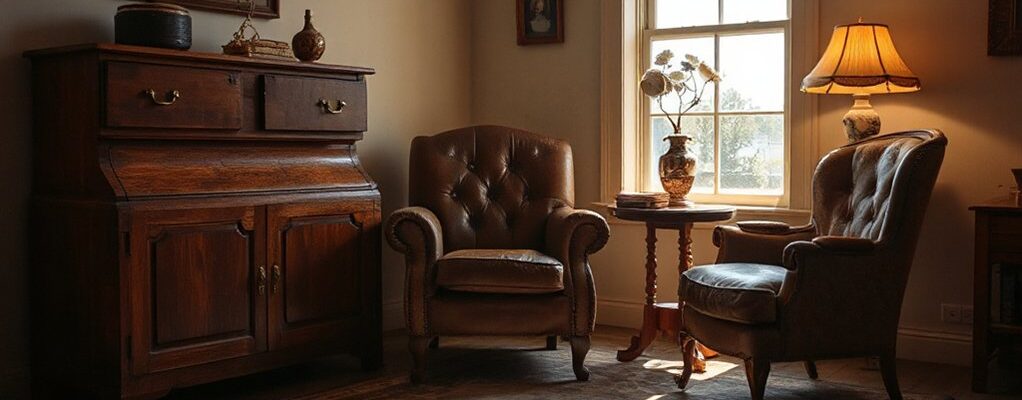
Take a teak dresser you found at an alley sale and picture it as the backbone of your room rather than a curiosity. You’ll define a clear vintage vision, weighing era details, textures, and color with a practiced eye. As you verify provenance and maker marks, you’ll hear stories whispering from the grain. Layer velvet, linen, and leather, then pace your eras with intention. There’s more to balance—and the payoff awaits just beyond the next thoughtful choice.
Define Your Vintage Vision for Your Space

Start by picturing your ideal room in a single snapshot: what era sings to you, what materials catch your eye, and how you want the day-to-day feel to be. You’re crafting a clear compass, not a collage. Define your vintage vision with precision: do you crave antique charm threaded through modern silhouettes, or a more rustic, hand-me-down vibe? Decide color lanes, texture bets, and statement pieces that will repeat like a refrain. Map the mood for every corner—the desk that sparks nostalgia, the chair that invites lingering, the shelf that narrates. Your vision should feel intentional, not random. When you walk in, the space whispers a nostalgic ambiance while staying practical for daily life. Clarity today keeps clutter away tomorrow.
Assess Provenance in 3 Quick Checks
You’ve got your vintage vision pinned, now let’s sanity-check every piece on a quick three-step provenance test. First, inspect antique authenticity by the basics: maker marks, construction era, and hallmark IDs; a confident yes to all three boosts confidence without guesswork. Second, scan provenance documentation for receipts, previous owners, and restoration notes—if it reads like a treasure map, you’re in the right neighborhood. Third, verify the story against stylistic clues: joinery, hardware, and patina should align with stated era; mismatches deserve a closer look or a graceful pass. Keep notes, photograph labels, and ask sellers for provenance documentation when in doubt. With clarity and care, you safeguard the collection’s legacy—and your peace of mind.
Texture Layering in 4 Steps
Texture is where vintage furniture truly tells its story, and layering it right makes your space feel lived-in rather than staged. You’ll approach texture in four crisp steps, with a wink and a well-placed nod to history. Step one: build a tactile base by selecting a neutral furniture finish that’s warm, not flat, so every added layer can sing. Step two: mix fabric patterns with restraint—one large print, one subtle, one texture-only—so contrast doesn’t shout. Step three: introduce varied surfaces—velvet, linen, leather—so light and shadow bounce with character. Step four: finish with subtle accessories that echo your textiles without overpowering the piece. The result is tactile cohesion that stays timeless, not fussy, and your vintage finds feel thoughtfully curated.
Mix Eras With Purpose: Placement, Scale, and Color Rules
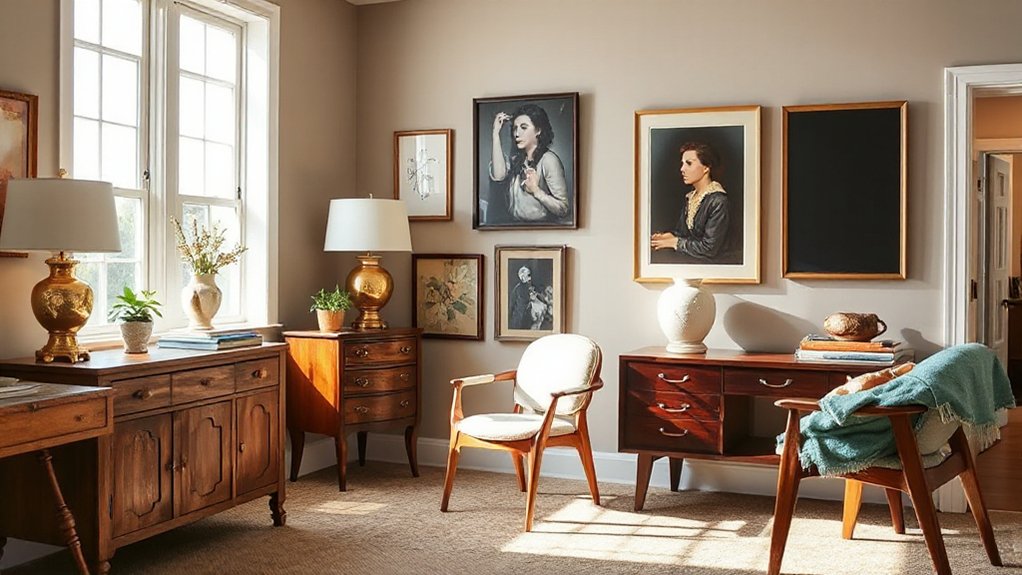
Mixing eras isn’t chaos; it’s an invitation to storytelling with every sightline. You pick a focal piece and build around it with deliberate placement, so flow feels intentional, not random. Place lighter, sleeker items at eye level to echo the room’s rhythm, then anchor with a heavier silhouette that grounds the space—think a vintage sofa aligned parallel to a modern console. Scale matters: avoid crowding by allowing breathing room between contrasts; negative space is a quiet character in the room, too. Color rules are simple: repeat a shared undertone across eras to unify, or flip the palette for bold contrast. Antique authenticity shines when patina meets polish, and Retro revival pops when you sprinkle gloss accents. The result is cohesive charm, not museum-like stiffness.
Cohesive Accessories: Lighting, Rugs, and Accents
Cohesive accessories tie the whole room together because lighting, rugs, and accents aren’t afterthoughts; they’re the punctuation marks that finish the sentence. You’ll notice how antique lighting casts memories across wood grain, while patterned rugs ground color with a friendly kiss of pattern. When they align, every corner feels intentional, not accidental.
- Choose antique lighting that echoes other metals in the room.
- Layer lighting: overhead, task, and a cozy glow from a table lamp.
- Select patterned rugs that repeat a color found in upholstery.
- Pick accents that tell a story, not a shopping list.
- Balance scale so small trinkets don’t steal the scene.
Frequently Asked Questions
How Do I Spot Authentic Vintage vs. Reproduction Furniture Quickly?
Yes—spot authentic vintage fast: check for authenticity markers, like maker stamps, tool marks, patina, and construction clues; feel the grain, weigh the piece, and compare joints. Antique identification hinges on provenance, not showroom shine; trust your eye.
What Budget-Friendly Sources Reliably Yield Vintage Finds?
Like a treasure map, your budget-friendly sources reliably yield vintage finds. You’ll love upcycling techniques and sourcing local artisans, snagging gems from thrift shops, flea markets, and online classifieds without breaking the bank. You’ll smile at the clever reuse.
Which Finishes or Patinas Age Best With Modern Interiors?
Finish options like oil, wax, and matte lacquer age best with modern interiors; you’ll love how aging processes add character, subtle patina, and depth, while keeping sleek lines intact. You’ll adore the soft, nostalgic glow they yield.
How Can I Restore Vintage Pieces Without Losing Character?
You can restore vintage pieces without losing character by choosing gentle Restoration techniques, like minimal sanding and thoughtful patina upkeep, then seal only sparingly to protect, not erase, the character preservation that makes each piece glow with nostalgia.
What Maintenance Steps Extend the Life of Vintage Wood Furniture?
You maintain vintage wood by regular dusting and gentle cleaning, then treat with appropriate wax or oil. Wood preservation hinges on controlled humidity, while surface cleaning uses mild products—avoid harsh solvents; polish thoughtfully, cherish patina, and preserve character.
Conclusion
In the end, you’ll discover vintage isn’t about chasing perfection but embracing charming quirks. Don’t shy from a patinaed surface; treat it as a whisper of the past, not a flaw. If a piece sighs with character, give it a gentle nod and a practical place to shine. With the right balance, your room ages gracefully, like a well-loved letter—slightly creased, warmly dated, utterly inviting. And yes, your fingerprints are part of the story.