
Carbon-sequestering materials are the ultimate climate secret you’ve almost heard about—but not quite. You’ll explore minerals, polymers, and composites that trap CO2 through physical, chemical, or structural means, often inside everyday products. You’ll see how mineral carbonation, bio-based routes, and innovative coatings work in real systems, from concrete to filtration media. It’s precise, rigorous stuff with real trade-offs and big questions about cost, stability, and scalability—questions that won’t resolve themselves anytime soon.
What Are Carbon-Sequestering Materials?

What’re carbon-sequestering materials? You explore substances designed to remove carbon from the atmosphere or lock it into stable forms. These materials span minerals, polymers, and composites that trap CO2 through physical adsorption, chemical binding, or structural remodeling.
You assess their targets: ambient capture, industrial flue streams, or long-term sequestration in soils and rocks. You weigh performance metrics—capacity, rate, durability—against cost and scale. You consider system integration, lifecycle emissions, and potential co-benefits or risks.
You note how industrial innovation drives material design, enabling higher efficiency and novel processing routes. Policy incentives influence deployment, funding early-stage research, and accelerating pilot projects.
You keep questions precise, data-driven, and forward-looking, linking material properties to practical, scalable climate impact.
How They Work: From Mineral Carbonation to Bio-Based Approaches
Mineral carbonation and bio-based approaches convert CO2 into stable forms, but they do so through distinct mechanisms: minerals trap CO2 by reacting with silicates to form carbonates, while bio-based methods rely on living systems or biogenic materials to capture carbon and lock it into durable structures.
You compare kinetics, energy needs, and scalability to understand tradeoffs between permanence and practicality. In mineral routes, you access inorganic reservoirs that offer long-term stability, yet you face mineral sourcing, processing energy, and capitalization hurdles.
Bio-based approaches harness natural growth and waste streams to sequester carbon within biomass or biopolymer matrices, often enabling lower interim costs and modular deployment. The goal is enhanced durability with cost effective production, balancing upfront investments against long-term carbon integrity and system resilience.
You evaluate evidence, guiding implementation toward robust, repeatable outcomes.
Applications Across Industries and Real-World Examples
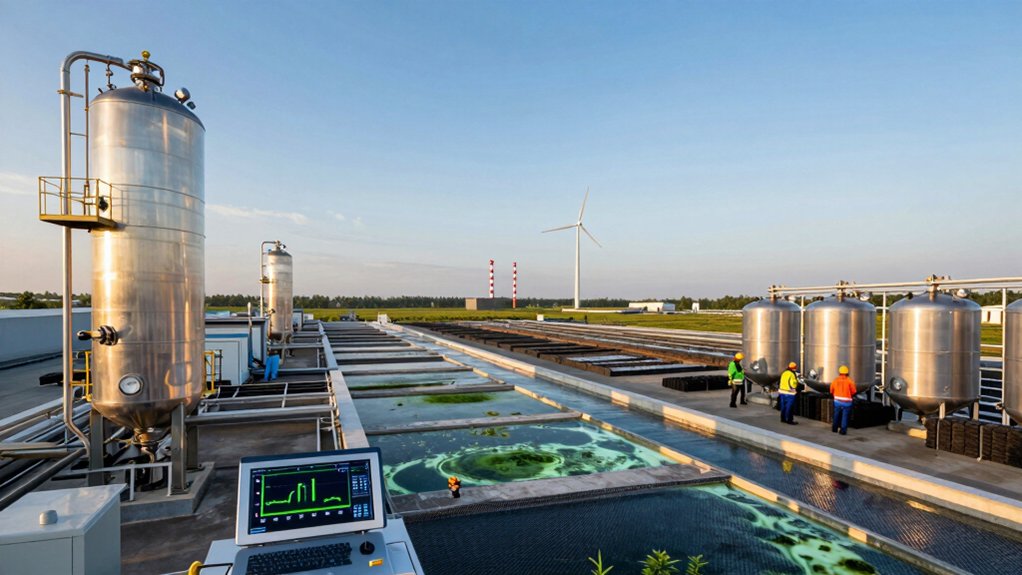
Across industries, carbon-sequestering materials are finding practical footholds—from construction and manufacturing to energy, agriculture, and consumer goods—driving real-world deployment that pairs performance with scalability.
In practice, you’ll see innovative uses like concrete additives that trap CO2 during curing, filtration media that capture emissions at source, and coatings that sequester carbon over time.
Industrial integration occurs through retrofit-friendly processes, modular systems, and shared supply chains that reduce lifecycle emissions without sacrificing throughput.
You assess performance against durability, cost, and regulatory alignment, enabling deployment at scale.
Real-world pilots illustrate rapid payback when sequestration aligns with quality specs and safety standards.
The trajectory remains data-driven, with transparency on capture rates, material lifecycles, and end-of-life considerations guiding responsible expansion.
Benefits, Trade-Offs, and Environmental Considerations
Carbon-sequestering materials offer clear benefits but come with trade-offs that you’ll weigh in real deployments. You evaluate pathways for carbon storage, balancing durability, cost, and scalability against ecological impact. Material choices affect lifecycle emissions, energy intensity, and end-of-life handling, so you assess whether gains in sequestration persist under field conditions.
You’ll consider land use, water needs, and input chains, ensuring effects don’t shift burdens to ecosystems or communities. When you compare options, prioritizing eco-friendly materials helps align performance with stewardship, yet you remain vigilant for rebound effects and unintended consequences.
Precision matters: quantify sequestration rates, stability over decades, and transport footprints. Ultimately, decisions hinge on context, uncertainty, and transparent reporting, enabling responsible deployment without overstating permanence or neglecting social and environmental safeguards.
Challenges, Opportunities, and Future Prospects

Despite substantial progress, challenges remain at every scale—from material discovery and performance under real-world conditions to integration with existing infrastructure and policy hurdles. You’ll confront material-to-system gaps, where lab efficacy doesn’t always translate to field reliability, and long-term durability under fluctuating environments.
Yet, opportunities emerge through iterative cycles of discovery, testing, and feedback. Innovative fabrication approaches can accelerate scalable production while reducing costs and resource use.
You’ll also navigate regulatory landscapes, where clear standards and verification protocols enable deployment and public trust. Policy incentives can mirror technical progress by de-risking pilots and attracting investment.
Future prospects hinge on interdisciplinary collaboration, robust lifecycle analyses, and transparent data sharing. With rigorous validation and targeted incentives, carbon-sequestering materials move toward widespread, impactful implementation.