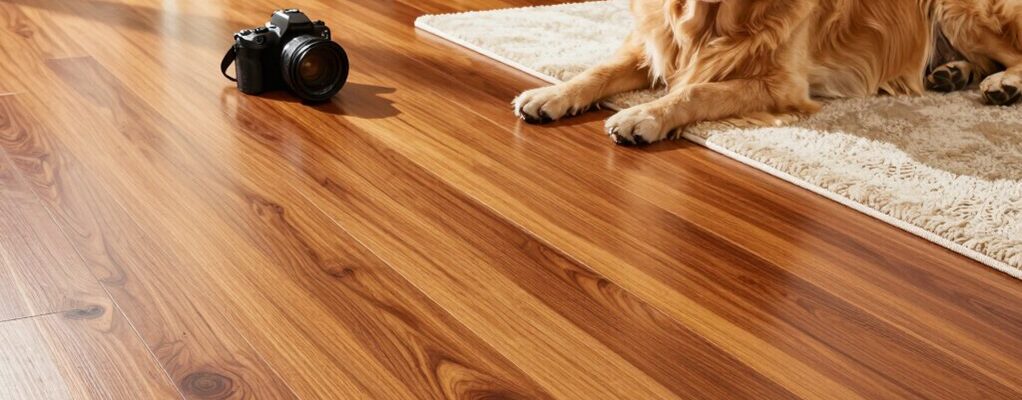
For homes with dogs, choose a hard, durable finish you can trust. Go water-based polyurethane for fast curing, easy touch-ups, and strong scratch resistance, or oil-modified polyurethane for warmer tones and extra impact resistance if you don’t mind a bit longer cure time. Pair with smart maintenance— mats, frequent quick cleans, and prompt spill cleanup— to keep floors looking new. Want concrete tips on application and upkeep? You’ll find more practical guidance ahead.
Understanding How Pets Impact Hardwood Finishes
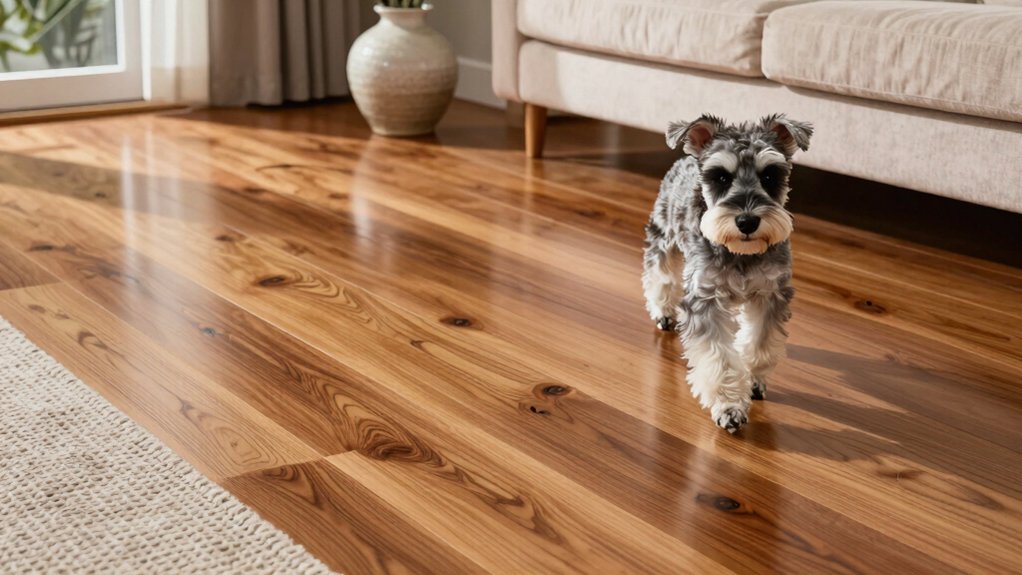
Pets can be hard on hardwood, but understanding how they interact with finishes helps you pick durable options. You’re balancing wear from claws, paws, and occasional spills with the need to minimize maintenance.
Dogs introduce pet odor and fur accumulation that can embed into surface pores and micro-scratches, accelerating dulling and discoloration. Scratches create pathways for moisture, so your choice should resist micro-abrasion while staying easy to clean.
Look for finishes with strong gloss retention and good hardness ratings, plus sealants that resist staining and moisture ingress. A properly applied layer reduces dirt lift, makes cleaning efficient, and limits scent retention after cleaning.
Key Properties to Look For in Pet-Friendly Finishes
When you choose a pet-friendly finish, look for scratch-resistant bonding that holds up to active dogs. You’ll want non-toxic sheen levels that keep the floor looking clean without off-gassing or hazy appearances.
Prioritize durability under muddy paws so one wipe brings it back to show-ready without dulling.
Scratch-Resistant Bonding
Scratch-resistant bonding is the foundation of a durable finish for homes with dogs. You want a bond that resists daily wear from claws, paws, and traffic, so choose formulations with robust adhesion and fast-curing hardeners.
Look for cross-linking polymers that lock in surface integrity while remaining flexible enough to absorb impact without cracking. A resilient bond reduces micro-scratches and helps maintain a smooth, uniform layer after long-term use.
Consider mid- to high- solid content for density and abrasion resistance, but beware overly thick films that can trap moisture.
For maintenance, pair with dog nail prevention routines and routine, pet safe cleaning to avoid film degradation.
Choose finishes that prioritize strong adhesion, minimal squeak, and stable visibility under varied lighting.
Non-Toxic Sheen Levels
Non-toxic sheen levels matter as much as bond strength because a finish that looks good and stays safe around dogs is a practical win. You’ll prioritize low-odor, water-based options that dry quickly and cure without strong fumes, reducing stress for both you and your pet.
Seek finishes with clear “non-toxic” labels and minimal volatile organic compounds, so daily exposure stays safe. Favor formulations that resist yellowing and maintain a stable sheen under traffic, paws, and cleaning routines.
Consider pet odor elimination as a deciding factor, since some finishes can mask smells without masking risks. When choosing, review hardwood stain choices separately from the topcoat to ensure consistent performance.
Balance aesthetics, durability, and safety to protect your floor investment.
Durability Under Muddy Paws
Durability under muddy paws hinges on surface hardness, quick setup time, and resistance to moisture intrusion, so look for finishes that combine a high hardness rating with low water absorption.
You want a coating that resists gouging and scratches from nails and muddy debris while drying fast enough to minimize downtime. Choose formulations with robust barrier properties, such as cross-linked polymers or high solids content, that deter soaking and swelling.
Consider sealing strategies that reduce open grain exposure without trapping moisture. Be mindful of pet allergies; select finishes labeled low VOC and hypoallergenic when possible, with cleanability to wipe away contaminants.
Also evaluate scent retention; a durable finish should minimize lingering odors after cleaning, maintaining a fresh, neutral environment for pets and people.
Water-Based Vs Oil-Modified Polyurethanes for Dogs
Water-based polyurethanes offer quicker setup and easier cleanup, which helps minimize downtime when you’re managing dogs in the house.
Oil-modified options bring a warmer tone and deeper durability, which can matter for high-traffic areas with active pets.
Consider how durability and color warmth align with your dog’s activity and your flooring goals to start the comparison.
Water-Based Durability vs. Dogs
If you’re choosing a finish for dog-friendly hardwood, the choice between water-based and oil-modified polyurethanes matters for durability and maintenance.
Water-based finishes resist yellowing, dry quickly, and hold color well, which helps with long-term wear under paws and claws. They’re easier to repair in small areas, and odor dissipates faster during cure, reducing pet odor concerns after application.
For durability, water-based polyurethanes form a hard, clear film that resists scuffing with routine cleaning.
Oil-modified options tend to be tougher against heat and impact, but they can darken floors and extend cure times, potentially prolonging odor exposure.
If stain resistance and easy touch-ups are priorities, water-based is often the better balance for homes with dogs.
Choose based on traffic, maintenance willingness, and your substrate.
Oil-Modified Warmth vs. Dogs
Oil-modified polyurethanes add a warm, ambered tone that few dogs threaten with quick wipes and family traffic. You’ll notice durability benefits when pets scratch, drag toys, or run paws across floors.
The warmth helps conceal wear in busy homes, yet it isn’t perfect for every dog or scent concern. Water-based finishes stay clearer and cure faster, but they may lack the depth you want long term.
If you’re choosing between them, consider Pet smell persistence and how you manage humidity and cleaning schedules. Allergic reactions are possible with any finish; ensure proper ventilation during application and drying.
For ongoing service life, schedule periodic maintenance and use mats in high-traffic zones to preserve gloss and color without compromising safety.
Top Finish Options for Scratch Resistance and Easy Cleanup
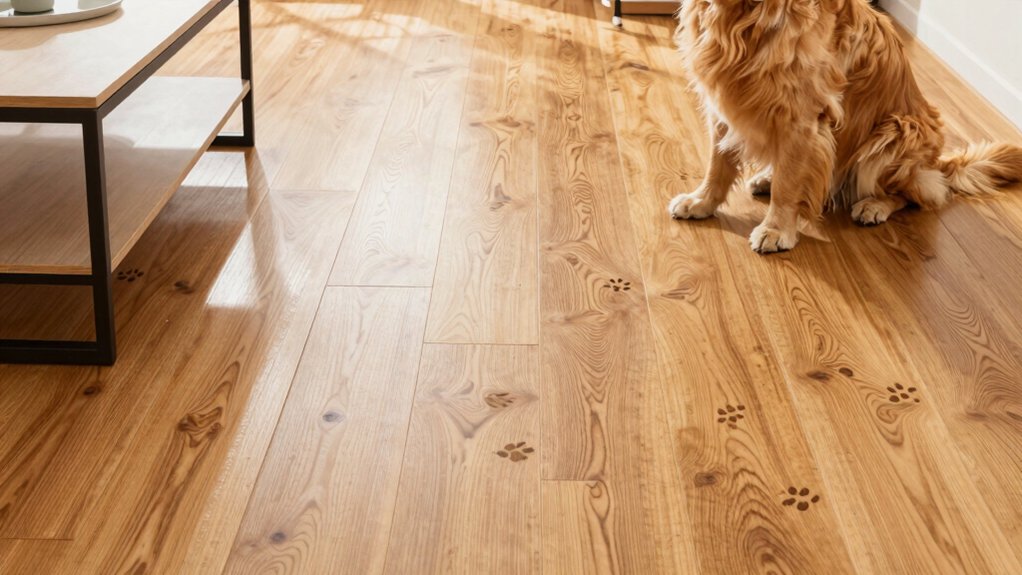
When choosing a finish for dog-friendly hardwood floors, you want options that resist scratches and wipe clean easily. For scratch resistance, look at urethane-based coatings with high solids and durable topcoats, such as waterborne polyurethane or moisture-cured options. These finishes form hard, protective layers that endure traffic without yellowing, and they dry quickly so you can reaccent with minimal downtime.
Easy cleanup comes from smooth films that don’t trap dirt; opt for low-odor formulas and units with good stain resistance against common pet spills. Pay attention to application notes like light sanding between coats and proper cure time.
Also consider pet scent control and easier odor masking with sealed surfaces, which helps maintain a fresh feel between cleanings.
Practical Tips to Protect Floors in a Multi-Pet Home
With multiple pets, protecting floors starts with smart layout and routine. Establish zones: designate feeding, lounging, and play areas with washable mats and insulated runners to corral traffic.
Choose durable finishes, but pair them with practical habits—vacuum daily, wipe paws, and promptly address spills.
Use door thresholds or baby gates to limit access to vulnerable rooms during peak activity.
For pet stain removal, act fast: blot, rinse, and treat with a pet-safe enzyme cleaner to prevent lingering odors.
Place scratch-prevention tools within reach: ergonomic toys, a dedicated scratching post, and scheduled play breaks to reduce boredom-induced damage.
Maintain nails with regular trims and offer soft-soled footwear for high-traffic owners.
Consistency in routines minimizes wear and supports long-term floor integrity.
Maintenance and Long-Term Care for Pet-Friendly Floors
Since pets can put extra wear on hardwood, maintenance must be proactive and routine-based, not reactive. You’ll keep floors durable by a consistent plan: sweep or vacuum daily to remove grit, wipe spills immediately, and moisture-avoid using excessive water.
Use door mats and socks on furniture legs to minimize scratches, and rotate traffic patterns to balance wear. Clean with pH-neutral cleaners and follow wood manufacturer guidance to protect finish.
Schedule preventive maintenance like light refinishing every few years, if needed, to preserve impact resistance.
For pet stain prevention, address accidents promptly with blotting and appropriate stain removers, not harsh scrubbing.
For odor control solutions, pair ventilation with cleaners that neutralize smells and deter repeat incidents.
Regular inspection catches finish wear before damage accelerates.