A roof replacement is like rebuilding the umbrella over your home: the cost hinges on size, materials, and complexity, and one mistake can soak you with extra charges. In the UK in 2026, expect £5,000 to £15,000+ depending on asphalt, clay, concrete, or slate, plus labour, scaffolding, and permits. You’ll want precise quotes and a clear plan to control costs. Keep your options tight and the project scope defined as you weigh materials, warranties, and timelines.
How to Budget a UK Roof Replacement in 2026
Planning your UK roof replacement budget for 2026 starts with a clear cost baseline and a realistic contingency. You’ll establish baseline costs for materials, labour, and scaffolding, then add a prudent cushion for price volatility and schedule shifts. Start by listing roof type, size, and complexity, then quantify essential components: underlayment, flashing, fixing methods, and insulation. Consider regional labour variations and regulatory fees, ensuring your estimate reflects VAT treatment and procurement timelines. Factor in Roof insulation needs and performance targets, aligning with climate-driven efficiency standards. Plan for Solar panel integration where suitable, evaluating potential subsidies, maintenance, and warranty implications. Build a phased budget: design, permits, ordering, installation, and post-work checks. Track revisions with monthly reviews, adjusting for material lead times and inflation to protect overall cost discipline.
Is Asphalt the Right Choice for UK Roofs? Costs, Pros, and Suitability
Asphalt roofs offer a balance of cost, installation speed, and durability, but their performance hinges on UK climate and roof design. You’ll want to weigh pros like affordability and wide availability against cons such as temperature sensitivity and long-term track record in damp, windy conditions. We’ll compare suitability factors and upfront versus long-term costs to determine if asphalt meets your budget and performance needs.
Asphalt Pros and Cons
While asphalt shingles offer a familiar, cost-effective option for UK roofs, their performance depends on climate, deck condition, and installation quality. In this section, you weigh pros and cons with a technical lens. Pros include rapid installation, broad compatibility with underlay, and moderate initial cost relative to slate or tile. Cons cover shorter service life than some composites, vulnerability to extreme heat cycling, and potential impact from hail in exposed regions. You should evaluate UV exposure, warranty terms, and local regulations before committing. For ongoing maintenance, plan gutter maintenance to prevent water backing and consider ventilation alongside insulation. Select a system that supports roof insulation goals, and guarantee the chosen asphalt product aligns with your budget, load requirements, and retrofit feasibility.
UK Suitability Factors
Is asphalt a viable option for UK roofs given weather, regulations, and budget constraints? Yes, but suitability hinges on climate resilience, building codes, and total lifecycle cost. Consider these factors to judge value:
1) Weather compatibility: asphalt performs well with UK rainfall and moderate temperatures, yet high-cost resurfacing may recur in exposed coastal zones.
2) Insulation impact: integrate roof insulation efficiently; asphalt boards pair with underlays to minimize heat loss.
3) Solar integration: compatible with retrofits and integrated PV, boosting long-term energy savings when placed with proper venting.
4) Regulatory and budget alignment: local planning, fire ratings, and warranty terms influence overall affordability.
Bottom line: assess long-term maintenance, not just upfront price. If budget-focused, compare alternatives with lifecycle cost analyses.
Clay Vs Concrete Tiles: Price Ranges and Decision Factors
Clay and concrete roof tiles differ mainly in cost, durability, and installability, so your choice should hinge on total life-cycle value rather than upfront price alone. You’ll weigh initial price against long-term performance, weight on structures, and roof pitch compatibility. Clay tiles typically command higher upfront costs but offer color stability and longevity, while concrete tiles deliver lower first costs with comparable service life when well maintained. Price ranges reflect tile thickness, profile, and underlayment needs, plus installation labor and scaffold requirements. Color options influence resale and aesthetic fit, yet maintenance tips—regular cleaning, moss control, and timely repointing—protect value. Consider warranties, local climate, and potential insurance impacts. Your decision should balance installability, maintenance burden, and total lifetime costs, not just purchase price.
Slate Pricing: When the Premium Pays off
Slate pricing centers on the premium-to-value ratio: you pay more up front, but long-term durability and resale appeal often justify the expense. When evaluating slate, you assess its durability and maintenance profile against upfront cost, guiding a disciplined budget request. The premium investment hinges on lifecycle performance rather than initial price alone.
- Slate durability translates to lower replacement risk and steadier resale value over time.
- Higher upfront costs may be offset by fewer repairs and longer service intervals.
- Consider regional slate availability to avoid premium transportation surcharges.
- Balance aesthetic goals with expected roof longevity to maximize total cost of ownership.
Beyond Materials: Labour, Scaffolding, and Ancillary Costs
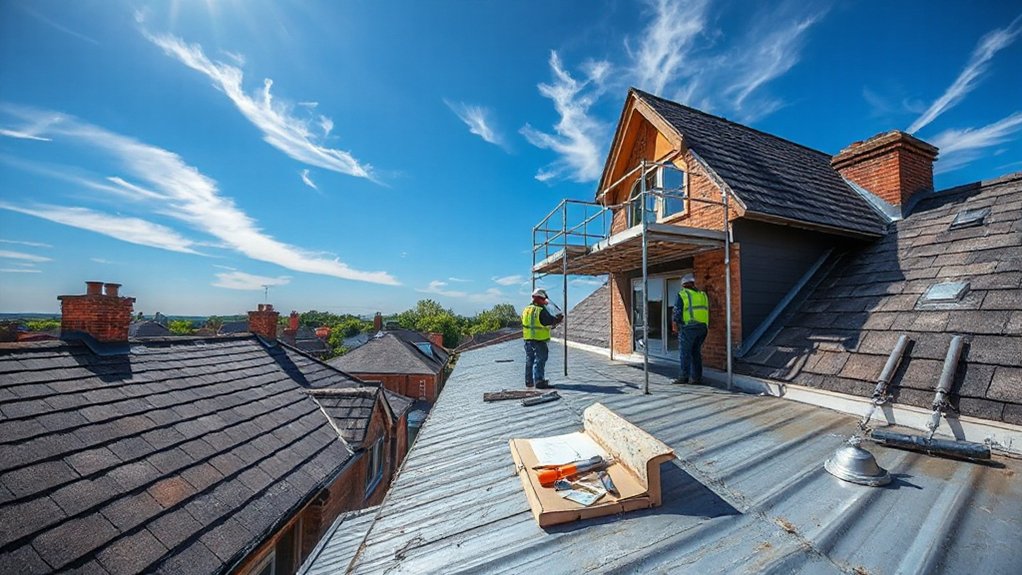
After weighing slate’s premium price and long-term value, you also need to account for labour, scaffolding, and ancillary costs that can tilt the final budget. Beyond material price, labour efficiency, crew size, and mobilization impact totals precisely. Scaffold access, edge protection, and safety measures add both time and cost, so plan for daily standing charges and setup/removal windows. Allow for weather contingencies that stall work and extend hire periods. Factor in roof insulation as a discrete budget item, ensuring compatibility with your chosen roofing system and long-term energy gains. Weatherproofing techniques, including flashing, sealants, and membrane applications, contribute to immediate labor hours and material waste; quantify waste and return-to-work days to refine forecasts. Align subcontractor schedules, permits, and inspections to minimize downtime and maximize scheduling certainty.
What Drives UK Roof Quotes: Common Price Levers and Hidden Fees
Material cost variations, labor and access factors, and hidden fees or permits all drive a UK roof quote. You’ll see price swings from material grades, delivery and scaffold needs, and site access constraints, plus any permit or inspection charges. This sets the baseline for budgeting and comparing quotes with clarity.
Material Cost Variations
Material costs vary widely because suppliers price by grade, availability, and market conditions. You’ll see price bands shift with raw material cycles, regional stock, and supplier margins, so your quote may jump between options even for the same roof plan. To navigate, focus on material drives rather than totals alone.
- Grade and type differentiation (e.g., slate, concrete, clay)
- System compatibility (underlayment, battens, and fixings)
- Roof insulation choice and thickness influencing overall heat-loss targets
- Integration considerations (Solar panel integration and potential mounting hardware)
Budget tip: compare long-term durability and warranty. Remember, material selection affects insulation performance and future retrofits, not just upfront cost.
Labour and Access Factors
Labour costs and site access are major levers in UK roof quotes, often outweighing material price swings. You’ll see labour impact from crew size, qualifications, and projected working windows, plus the need for scaffolding, hoists, and site preparation. Access complexity drives both time and risk, influencing daily rates and contingency buffers. Budget-conscious bids itemise labour phases: removal, decking, insulation installation, weatherproofing, and finish work, with sequencing to avoid backtracking. Roof insulation is not mere material choice; it governs installation time, waste, and thermal performance targets, affecting overall cost. Weatherproofing techniques—underlay, flashing, sealants, and ventilation—must meet UK standards yet remain efficiently applied. Plan for weather contingencies, safe access, and specialist tasks to minimize delays and cost overruns without compromising durability.
Hidden Fees and Permits
Hidden fees and permits can quietly inflate a UK roof quote if you don’t account for them upfront. You’ll want tight control over non-material costs that buyers often overlook, from permit charges to inspection fees, scaffolding surcharges, and waste disposal. The impact can be amplified by required weatherproofing techniques and insulation upgrades. Plan for these line items to avoid surprises at signing.
- Permits and inspections: confirm scope, locality, and renewal needs.
- Scaffolding and access: duration, height, and safety standards drive daily rates.
- Waste handling: debris removal, recycling, and disposal costs.
- Mandatory upgrades: roof insulation and weatherproofing techniques, if codes mandate.
Budget-smart focus: quantify each item, compare quotes, and align with energy-efficiency goals to prevent overruns.
How to Compare Quotes Like a Pro and Spot Extra Charges
When comparing quotes, start by listing exactly what each price includes and what it could exclude, so you can spot gaps, substitutions, or add-ons that inflate the total. Require written scope, materials, labour, and access constraints, plus delivery timelines and site preparation. Check for hidden charges like disposal, scaffolding, permits, or warranty exclusions. Cross-check unit rates for roof insulation and gutter maintenance to identify inconsistent pricing. Ask for material specs, fibre density, and insulation thickness, and confirm compatibility with existing systems. Demand fixed-price milestones, and request a breakdown you can audit against the project schedule. Compare after-tax totals and note any seasonal surcharges. Require a clear change-order process, and document equivalent alternatives to avoid budget creep. Guarantee the quote aligns with your site access, weather windows, and warranty expectations.
Financing, Warranties, and How to Choose a Contractor
Financing, warranties, and choosing a contractor hinge on clear commitments and verifiable credentials. You should align payment terms with project milestones, verify interest rates, and confirm any financing fees before signatures. Warranties must cover workmanship, materials, and potential leaks for a defined period, with clear coverage limits and transferability. When selecting a contractor, prioritize documented safety records, licensing where required, and-proof of insurer coverage. Consider how solar panels or roof insulation integrations affect long-term savings and warranty validity. Ask for detailed contracts, including scope, schedules, and change orders.
- Verify licenses and insurance, plus binding project timeline.
- Obtain written warranties for workmanship and materials with transferability.
- Confirm financing terms, fees, and payment milestones.
- Request references and prior project disclosures for solar panels and insulation.
Quick Value Checks: Tips to Maximize Quality and Minimize Risk
You should start with clear quality checks up front to confirm materials, workmanship, and installer credentials before you commit. Keep your budget tight by outlining non-negotiables and guardrails for overruns, so you’re prepared for hidden costs without compromising safety. Then map risk mitigation steps—inspection checklists, warranty alignment, and a transparent change-order process—to protect value across the project.
Quality Checks First
Quality checks must come first to prevent costly rework and guarantee reliable outcomes. You’ll establish a clear, measurable standard before materials leave the yard. Focus on objective signs of readiness and documented procedures rather than assumptions. Prioritize critical performance factors: roof insulation and weatherproofing techniques to reduce long-term energy loss and moisture risk.
- Verify thermal performance targets are defined, and insulation R-values meet regional codes.
- Confirm air sealing and vapor barriers are installed to minimize drafts and condensation.
- Inspect flashing, ridge vents, and joints for continuity and proper overlap.
- Review installation sequence against spec sheets, ensuring trades align and traceability is maintained.
With these checks, you cut risk, safeguard budget, and assure durable results.
Budget Without Surprises
To keep costs predictable, start with quick value checks that verify scope, quantify risk, and lock in performance targets before buying materials. You’ll confirm roof area, material choice, and finish, then benchmark suppliers for price and delivery windows. Prioritize proven performance with minimal lifecycle cost: roof insulation efficiency, long-term warranty, and expected thermal gains. Budget allocations should align with climate and building envelope; document insulation R-values and moisture protection to avoid rework. Inspect gutter maintenance implications on drainage and fascia wear, ensuring compatibility with future roof systems. Negotiate fixed-price components where possible and identifycarbon or waste-reduction options that don’t compromise durability. Track deviations against the baseline plan, ensuring material quality, installation skill, and contractor discipline stay within a defined tolerance to prevent surprise charges.
Risk Mitigation Steps
Risk mitigation starts with quick value checks that confirm scope, quantify risk, and lock in performance targets before procurement. You’ll align project specs with budget, schedule, and safety requirements to minimize surprises and insurance claims later. Focused checks ensure materials, workmanship, and warranties meet expected standards, reducing environmental impact and cost overruns.
- Define scope precise milestones and acceptance criteria to prevent scope creep.
- Quantify risk with a formal risk register, assigning owners and mitigations.
- Validate supplier and contractor credentials to protect insurance claims and performance.
- Assess environmental impact through lifecycle analysis and waste plans, informing budgeting and choices.
What to Expect Next: Planning Your Installation Timeline and Milestones
After selecting a system and confirming your budget, you’ll move into planning the installation timeline and milestones. Your approach should balance precision with practicality, focusing on measurable targets and realistic buffers. Start with timing considerations for procurement, weather windows, and crew availability to prevent delays. Establish milestone planning that covers permit approvals, material delivery, site prep, and staged installation phases. Define critical path tasks and assign owners, with clear dependencies and deadlines. Include contingency buffers for supplier lead times and weather interruptions, budgeting for overruns without inflating total cost. Communicate these plans in writing to your contractor and lenders, then review weekly to track progress. Revisit milestones after each major step to adjust timelines and resources, maintaining cost control and project alignment.
Frequently Asked Questions
How Long Does a Full Roof Replacement Typically Take?
A full roof replacement typically takes 3–5 days, depending on size and weather. You’ll benefit from proper roof insulation and confirm roofing warranties during planning, ensuring budget-conscious scheduling and minimal disruption to your property.
What Maintenance Prevents Future Roof Costs?
You’ll prevent bigger bills by prioritising roof insulation and gutter maintenance. Some worry it’s costly, but annual checks save money long-term, reducing heat loss and water damage while preserving structure and extending roof life with precise budgeting.
Do Grants or Incentives Exist for UK Roof Work?
Yes, you may qualify for government grants and financial incentives for UK roof work. You’ll want to assess eligibility, submit applications promptly, and document energy efficiency improvements to maximize funding while keeping your project budget-conscious and technically compliant.
How Does Roof Age Affect Pricing Accuracy?
Symbolically, you chart a chart—the candle flame of roof age flickers, and cost accuracy wobbles. You’ll note roof age directly shapes estimates, affecting durability risk, material needs, and timelines; stay precise, budget-conscious, and document every variance.
What Are Typical Lead Times for Materials?
Material sourcing typically takes 1–3 weeks, but you should expect supplier delays up to 4 weeks. You’ll want contingency planning, verify lead times, and quantify buffers to keep your project on budget and on schedule.
Conclusion
So you’ve got a clear price range and a plan for your UK roof replacement in 2026. By aligning materials, labour, and extras in a detailed quote, you’ll guard against surprise charges and delays. Do you know the true total—including scaffolding, permits, and insulation? With careful budgeting, real-world quotes, and solid contractor checks, you’ll maximize value without compromising safety or durability. Ready to map your milestones and lock in a cost-effective, quality install?