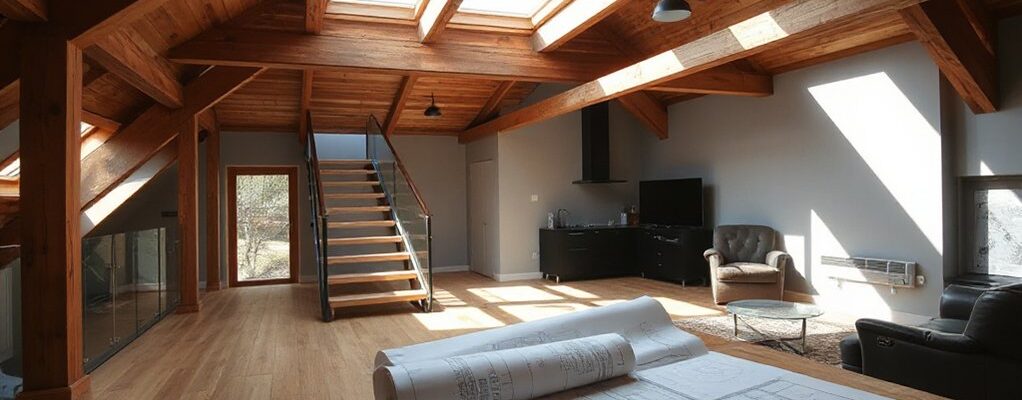
Kicking off with a clear cost pathway, your loft conversion in 2026 hinges on type, scope, and materials, from a simple roof-light add-on to a full dormer or mansard. You’ll need to map planning permission against permitted development and year-to-year rules, then balance upfront planning with long-term energy, safety, and resale considerations. There’s more to it than an estimate—understanding how building regs, insulation, and trades drive budget will keep delays and overages at bay, if you push ahead thoughtfully.
Loft Conversion in the UK 2026: What You’ll Need to Know
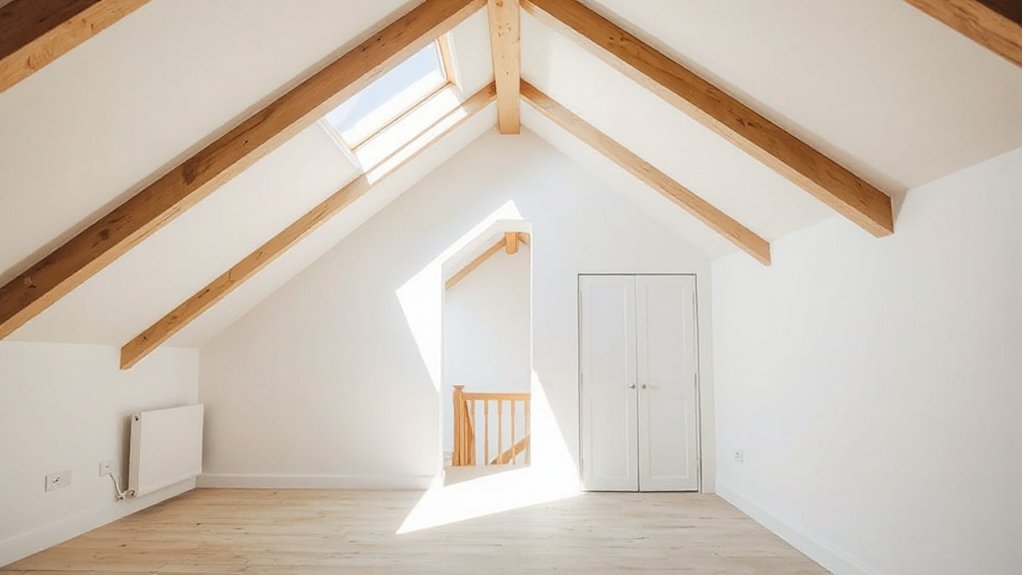
A loft conversion in the UK 2026 can add usable space and value, but it requires careful planning and compliance with current rules. You’ll need a clear scope: rooms, access, eaves height, insulation, and ventilation. Confirm structural integrity and load paths with a qualified engineer, then engage a professional team for design and build. Consider headroom, natural light, and thermal performance to meet energy standards. Plan for electrical and mechanical services early, including dedicated circuits and compliant lighting layouts. Loft lighting decisions should balance brightness, safety, and accessibility, with zones for work, storage, and relaxation. Implement efficient storage solutions—built‑in wardrobes, with recessed shelving and accessible voids. Maintain records of approvals, inspections, and changes for future maintenance and resale.
Planning Permission Vs Permitted Development: When Each Applies in 2026
Planning permission and permitted development (PD) determine what you can do without or with prior approvals. In 2026, you weigh planning permission against PD by examining applicable planning regulations and local zoning restrictions. PD covers moderate enlargements, like loft conversions, within defined size, height, and design limits, often exempting you from formal applications when criteria are met. If your project exceeds those thresholds or involves non-permitted materials, or affects designated land, you’ll need planning permission. Planning regulations focus on scale, footprint, impact on neighbors, and overall streetscape compliance, while zoning restrictions determine use and allowable density. Always verify with your local planning authority, as interpretations vary and permissions can hinge on precise measurements, permit history, and conservation or listed-building status.
Loft Conversion Types: A Quick Guide to Options and Costs in 2026
Loft conversions come in several types, each with distinct layouts, build requirements, and costs. In this quick guide, you’ll compare the main options: full-height conversions with rear dormers, side dormers, and mansard-style raises. A simple roof-light or skylight conversion keeps lower costs but reduces usable space, while a full-width Mansard expands floor area and ceiling height but adds structural work and planning considerations. Expect differences in staircase design, egress, and thermal performance. Loft insulation strategies impact year-round comfort and running costs, so plan insulation depth and continuity carefully. Skylight installation choices affect natural light and heat gain; larger or multiple panes can raise cost but improve habitability. Align your choice with ceiling height, egress, and future adaptability for storage or living space.
Key Cost Drivers for 2026: Roof Condition, Insulation, and Trades
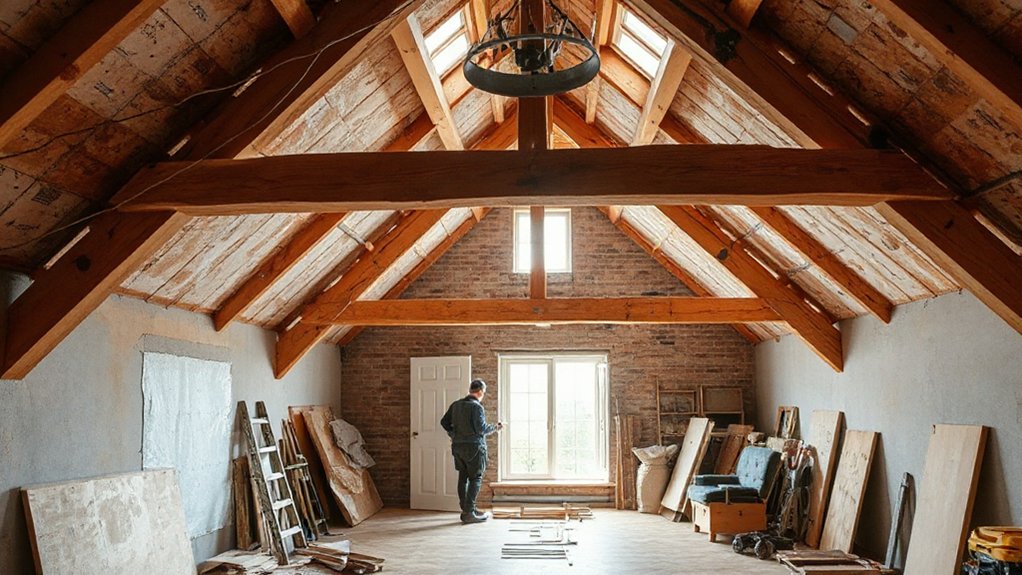
Roof condition, insulation performance, and trade costs dominate loft-conversion budgets in 2026. You must evaluate three core drivers that directly affect final costs and timelines.
- Roof condition: assess timber integrity, rafters, joists, and rafters for decay, dry rot, and potential structural reinforcement needs.
- Insulation performance: plan for thermal bridging, U-values, and vapor barriers to meet current regulations without over-spec.
- Trades and coordination: align trades, obtain permits, and manage lead times; expect longer schedules if roof ventilation and structural reinforcement are required.
Key terms to monitor include roof ventilation and structural reinforcement, since poor airflow or underbuilt frames amplify energy losses and retrofit expenses. Prepare contingency allowances for unexpected repairs and code updates.
Insulation, Skylights, and Dormers: Value, Comfort, and Efficiency
How do insulation, skylights, and dormers impact value, comfort, and efficiency in a loft conversion? You assess embedded losses, choose insulation upgrades to meet U-values targeted for UK climate, and optimize thermal bridges. Insulation limits heat loss, lowers heating demand, and stabilizes indoor temperatures, enhancing year-round comfort. Skylight design influences daylighting, solar gain, and energy performance; select glazed units with low U-values and appropriate solar heat gain coefficients, and place them to balance lighting with glare control. Dormers affect usable floor area and ventilation, impacting comfort and natural airflow. Material selection and installation quality determine airtightness and moisture management, affecting long‑term energy bills and structural integrity. Align skylight design with overall envelope performance to maximize value and efficiency.
Building Regulations for Loft Conversions: When They Kick In
In the UK, loft conversions must comply with Building Regulations that set minimum standards for structural safety, fire protection, energy efficiency, ventilation, and drainage. You’ll trigger these regulations when you alter the roofspace, add loads, or change egress. Compliance ensures ongoing loft safety and structural integrity, and it governs method, materials, and workmanship.
- Ensure structural calculations support new loads and meet timber and joist standards
- Confirm fire safety measures, escape routes, and compartmentation are in place
- Verify thermal performance, ventilation, and drainage meet current benchmarks
Regulations apply at design stage and throughout construction, not retroactively. You’ll need approved plans and, potentially, an assessment by a building control body. Non-compliance risks enforcement action and unsafe conditions. Always integrate regulatory checks early.
Loft Layout Essentials: Stairs, Bathrooms, and Space Planning
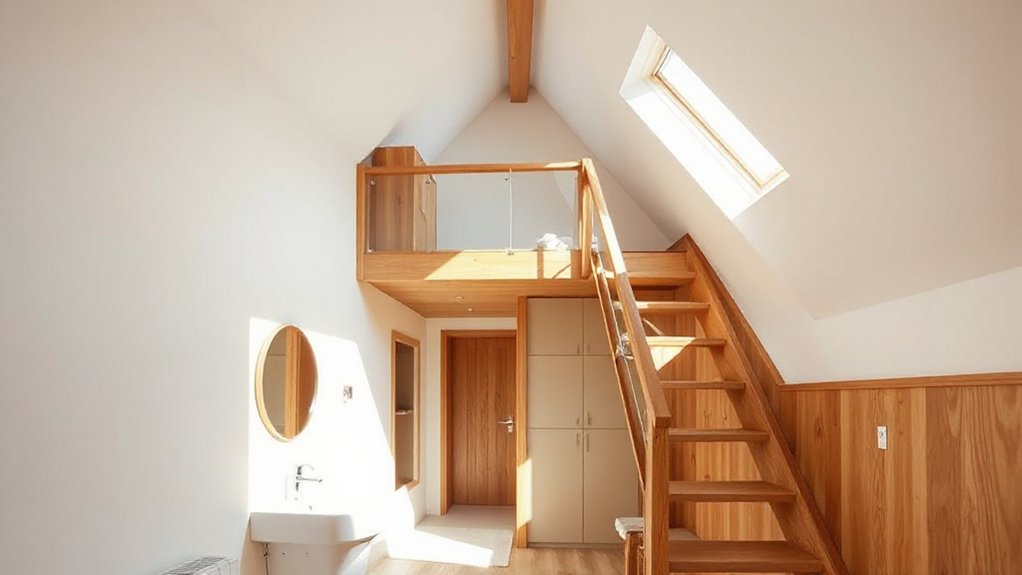
Begin with a practical layout plan that prioritizes accessibility, safety, and future use: install a straight or L-shaped staircase that fits within the pitched roof constraints and preserves headroom on both levels, then allocate a core zone for services, light, and ventilation. You’ll design with a modular approach: guarantee the Staircase design minimizes span loss, preserves ceiling voids, and aligns with fire safety zones. Layout bathrooms off a wetted core to reduce structural intrusion, and place small, efficient fixtures to maximize usable floor area. Incorporate loft insulation for thermal consistency and acoustic performance, and plan routes that limit corridor width losses. Space planning should maintain daylight access and egress options, while service routes support future renovations without major disruption. Prioritize fixings, access hatches, and insulation treatment for long-term efficiency.
Quick-Start Feasibility to Contract Checklist
A quick-start feasibility-to-contract checklist streamlines project initiation by translating site realities into actionable requirements and milestones. You’ll map constraints, approvals, and early design intent, then lock in decision points to minimize scope creep.
- Assess site feasibility and regulatory alignment, documenting required permissions and potential exemptions, including loft insulation considerations and conversion aesthetics goals.
- Define preliminary scope, cost envelope, and timeline, with milestone gates for design freezes, cost reviews, and contractor selection.
- Establish data handoffs and accountability, including drawing sets, permit packets, risk registers, and clear acceptance criteria for each phase.
Adopt a lean communication protocol to accelerate approvals, guarantee traceability, and maintain alignment between feasibility outputs and contractual obligations.
Choosing a Reliable Loft Conversion Contractor
When selecting a loft contractor, you’ll assess vetting processes, credentials, and project histories to guarantee reliability. Look for transparent references, detailed contracts, and clear milestone tracking to gauge trustworthy construction partners. This initial focus sets a foundation for quality, compliance, and predictable costs throughout your project.
Vetting Loft Contractors
Selecting a reliable loft conversion contractor starts with clear Vetting criteria: confirm credentials, check references, and verify licenses and insurance before you request a quote.
contractor vetting — key steps to streamline selection:
- Verify qualifications and insurance, including public liability and employer’s liability, with documentary proof.
- Contact previous clients to assess workmanship, adherence to timelines, and post-completion support.
- Assess project plans for clarity on loft insulation, ventilation, fire safety, and energy efficiency.
Notes for you: request a detailed written proposal, compare material specs, and ascertain compliance with Build Regulations. Keep communications concise, request milestone payments aligned to deliverables, and document changes in writing. Prioritize firms offering transparent cost breakdowns and measurable guarantees. This approach minimizes risk and clarifies expectations for loft insulation performance and overall project vetting.
Trustworthy Construction Partners
Trustworthy construction partners are essential for a successful loft conversion. You’ll evaluate contractors by track record, certifications, and compliance with UK Building Regulations, ensuring no hidden liabilities. Check project scope alignment, detailed timelines, and clear cost breakdowns to avoid scope creep. Prioritize material sustainability, requesting evidence of low-emission products, recycled content, and responsible waste management. Require robust health and safety protocols, site insurance, and a demonstrable safety record. Assess quality of workmanship through past project references and on-site visits to gauge craftsmanship consistency. Consider interior design integration early, confirming collaborations with designers and producers of bespoke joinery. Demand transparent communication channels, a single point of contact, and access to digital progress reporting. Finally, verify the contractor’s resilience to supply chain risks and material availability.
Frequently Asked Questions
How Long Does a Typical Loft Conversion Project Take to Complete?
A typical loft conversion takes about 6 to 12 weeks, depending on scope and permissions. You’ll install roof insulation, guarantee airtightness, and comply with Building Regulations, while coordinating trades and minimizing disruption to your home.
What Is the Minimum Head Height Required for Conversions?
Sure, your minimum head height for conversions is 2.0 meters (or near 6’6″). Ironically, you’ll worry less once your Loft insulation meets Building regulations, ensuring safe clearance, efficient space use, and compliant, precise construction documentation.
Do Loft Conversions Require a Party Wall Agreement?
Yes, you may need a party wall agreement. A party wall surveyor handles the party wall survey, ensuring legal requirements are met and protecting your interests during loft conversions involving shared walls.
Are There VAT Considerations on Loft Conversion Work?
VAT implications affect loft conversions; you’ll face taxation considerations on workmanship and materials, with potential reduced rates for renovations. You’ll need to think about eligibility, invoicing, and partial exemptions, ensuring compliance and accurate accounting throughout the project.
How Much Noise and Disruption Should I Expect During Works?
Expect moderate daytime disruption and limited evening noise; work adheres to building regulations, insulation requirements, and controlled vibration. You’ll notice temporary access changes, dust control, and planned outages, with contractor coordination to minimize impact on routine activities.
Conclusion
In short, plan early, factor planning permission into your budget, and choose build methods that fit your site. A typical two-into-one loft conversion can range from affordable roof-light upgrades to substantial dormers, with costs driven by roof condition, insulation, and trades. Example: a mid-range dormer in a London semi detached home saved time and money by securing PD where possible, then confirming Building Regulations before works, avoiding costly delays and rework. Start with a feasibility check and a reliable contractor.