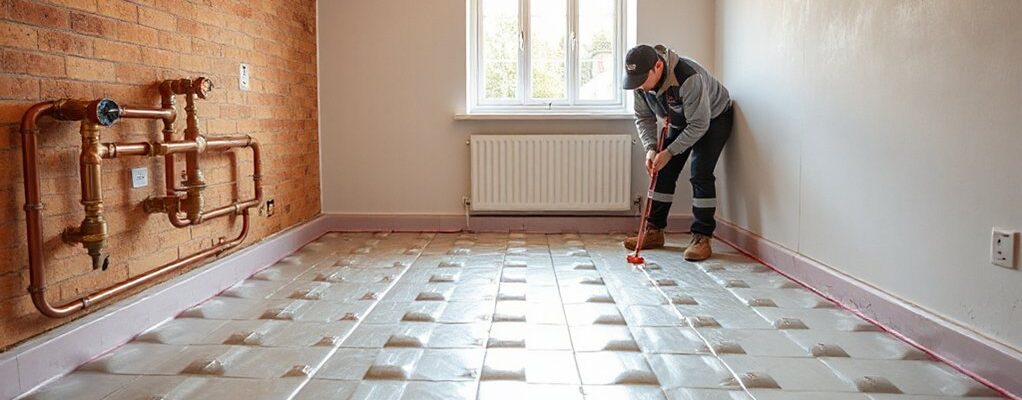
Underfloor heating can transform a chilly UK floor into a comfortable, even heat source. Before you start, you’ll want to weigh your options—electric, hydronic, or hybrid—against your existing boiler or heat pump setup. You’ll also need solid planning: continuous insulation beneath the floor, correct mat or pipe spacing, and precise sensor placement. Get the wiring right and calibrate thermostats for uniform warmth. With proper planning and professional commissioning, you’ll avoid common pitfalls and protect long-term performance. Curious how to tailor this to your home?
Underfloor Heating in the UK: How It Works

Underfloor heating in the UK works by circulating warm water or electric current through coils or mats beneath your floor, creating radiant heat that rises evenly into the room. You’ll experience consistent warmth from the ground up, reducing temperature swings and cold spots. Hydronic systems use a boiler or heat source to circulate water, while electric systems use mats or cables powered directly. Installation requires proper insulation, floor construction, and thermostat control to maximize performance. Radiator alternatives like underfloor setups can free wall space and improve room aesthetics. Energy efficiency hinges on low-temperature operation and proper zoning, so you can tailor heat output to different rooms and times. To conclude, the system delivers steady comfort with careful design, minimizing heat loss and maximizing overall efficiency.
Choosing Your System: Electric, Hydronic, or Hybrid
When deciding between Electric, Hydronic, or Hybrid underfloor heating, start by matching the heat source to your property and usage patterns. Each system has strengths, so pick what aligns with your needs and budget while prioritising energy efficiency and ease of control.
- Electric systems for faster heat response and simpler retrofit
- Hydronic setups if you already have a boiler and want lower running costs
- Hybrid options to balance quick heat with long-term efficiency
- Remote control compatibility for precise temperature management
- System design that minimizes heat loss and maximises energy efficiency
Consider installation complexity, running costs, and room-by-room comfort. With clear goals, you’ll choose a system that delivers reliable warmth and efficient operation.
Planning and Insulation Essentials for UK Homes
Planning and insulation aren’t optional extras—they set the foundation for effective underfloor heating in UK homes. You’ll begin with solid thermal planning, mapping heat loss, room use, and zoning so the system targets the right areas without waste. Prioritize continuous insulation across floors, walls, and thresholds to minimize heat flux and maximize efficiency. Select appropriate insulation materials and thicknesses based on your floor type and UK climate, balancing cost with long-term savings. Consider vapor control and airtightness to prevent moisture buildup and draft loss. Account for exterior design influences, such as roof overhangs and shading, which affect heat retention. Align underfloor needs with interior decor to keep finishes tidy and accessible for future maintenance. This groundwork guarantees reliable comfort and performance.
Installation: Step-by-Step Best Practices
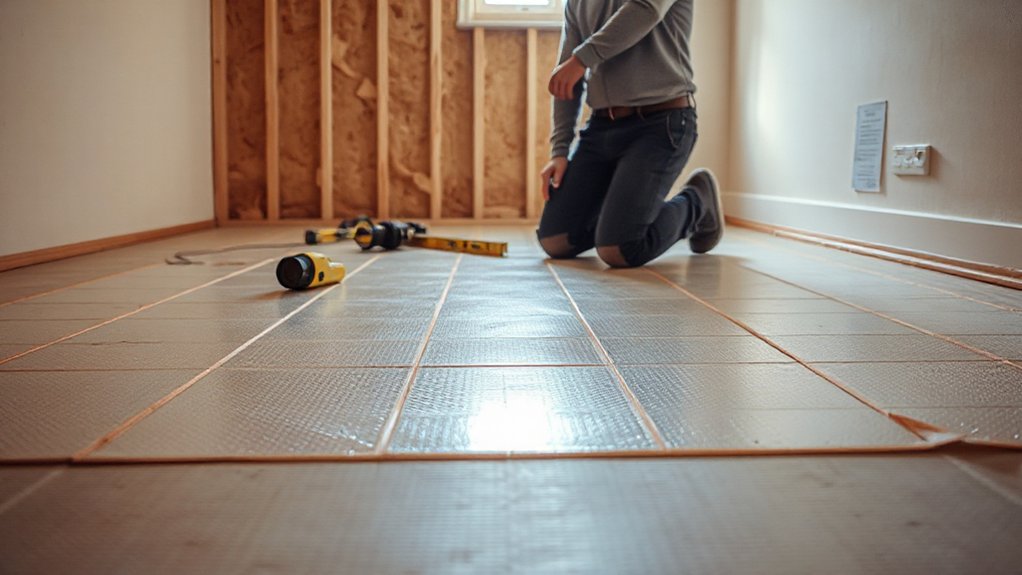
With a clear plan in place, execute the install in precise, incremental steps to guarantee reliability and efficiency. You’ll verify floor construction, confirm flooring compatibility, and choose a compatible heating layer. Secure electric or wet system mounting, then lay controls and sensor placement. Ascertain spacing, power planning, and electrical compliance before energizing.
- Assess substrate and flooring compatibility to avoid lift or damage
- Install precision mats or pipes with correct spacing and guidance
- Position sensors and thermostats for accurate, responsive control
- Route wiring or manifolds with protection and clear labeling
- Validate system performance, then calibrate thermostat selection and zoning
Follow these steps to promote uniform heat, simplify future maintenance, and prevent cold spots or overheating.
Costs, Warranties, and Common Pitfalls to Avoid
Costs, warranties, and common pitfalls to avoid are central to a reliable underfloor heating project. When budgeting, factor in equipment quality, installation labour, and potential retrofits, then compare warranties across brands and installers to avoid gaps in cover. You’ll want clear terms on manufacturer and system workmanship, plus what constitutes acceptable performance. For maintenance tips, schedule periodic checks of thermostats, manifolds, and circulation pumps to sustain energy efficiency and prevent faults. Understand energy efficiency implications: proper insulation, correct loop length, and appropriate controls reduce running costs and heat loss. Pitfalls to avoid include overestimating heat output, selecting incompatible components, and neglecting professional commissioning. Choose a certified installer, request written guarantees, and document maintenance steps to preserve warranty validity and long-term reliability.
Frequently Asked Questions
Can Underfloor Heating Work With Existing Radiators in UK Homes?
Yes, underfloor heating can work with existing radiators, but guarantee thermal compatibility and proper system integration. You’ll likely need zoning, compatible manifolds, and controls to balance output and avoid conflicts between heat sources. Consult a professional for assessment.
What Impact Does Loft Insulation Have on UFH Efficiency?
Loft insulation boosts UFH efficiency by reducing heat loss; you’ll feel warmer with less boiler load, improving thermal efficiency. If you skip it, you waste energy and money—so you’re laughing at yourself while comfort slips away.
Is It Safe to Install UFH With Wooden Floors?
Yes, you can, but you must handle safety concerns first. Wood floor compatibility varies; guarantee proper insulation, moisture barriers, and rated panels. Verify manufacturer guidelines, use compatible UFH systems, and consult a professional to minimize safety concerns.
How Long Does Typical UFH Take to Heat Up?
Typically, it takes 20–40 minutes to heat up, depending on room size and insulation. You’ll benefit from thermal zoning, targeting fast warm-up in living areas and improved energy efficiency across the home.
Do Pets Affect Electric Underfloor Heating Performance?
Pets can affect output slightly; keep fur away from vents to avoid clogging. Pet hair may insulate floor areas, but UFH maintains temperature regulation effectively with proper clearance and regular cleaning. Maintain sensors, and monitor heat sensitivity for pets.
Conclusion
Think of underfloor heating as a precision investment—not a quick fix. By choosing the right system, ensuring solid insulation, and following careful installation steps, you’ll enjoy even warmth and lower energy bills. Route cables safely, calibrate thermostats, and verify performance before calling it done. Remember: slow and steady wins the race. Adage aside, meticulous planning and professional commissioning protect your comfort and your wallet long into the property’s future.