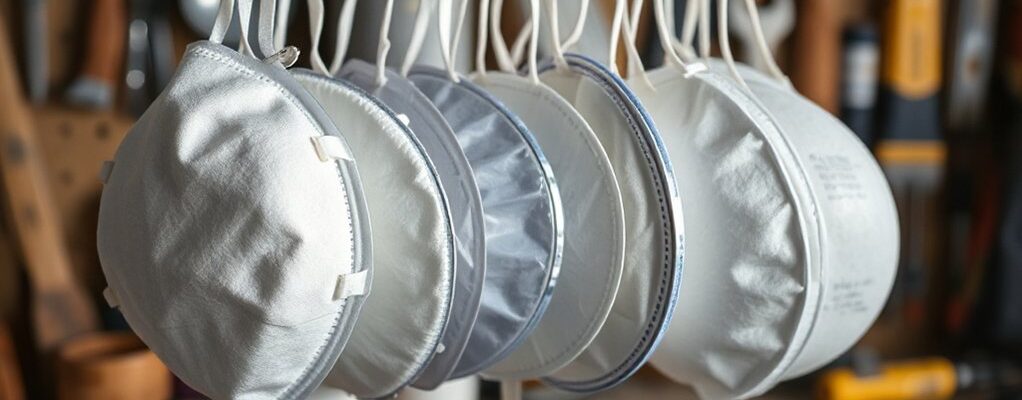
For home improvement, choose an NIOSH-certified respirator with the right filtration (N95 to P100) and a secure seal, plus proper fit checks and maintenance. Disposable masks suffice for light work, but reusable respirators with interchangeable cartridges are better for ongoing tasks. Match the cartridge to dust type and fumes, and perform positive/negative pressure checks each use. Avoid leaks, replace filters per guidance, and store cleanly. If you keep reading, you’ll gain step-by-step selection and use tips.
Key Takeaways
- For general home improvement dust, N95 masks provide reliable protection against non-oil particulates with good comfort and affordability.
- Consider P100 respirators for fine dust and heavy sanding due to higher filtration (≥99.97%) and longer usable life.
- Use disposable masks for short, low-risk tasks and reusable respirators with replaceable filters for ongoing projects.
- Ensure a proper fit with seal checks and adjustable straps; a poor seal reduces effectiveness regardless of rating.
- Prioritize masks with comfortable, breathable materials and verify compatibility with your task (dust, fumes, or mold).
Choose the Right Dust Mask: Foundational Types
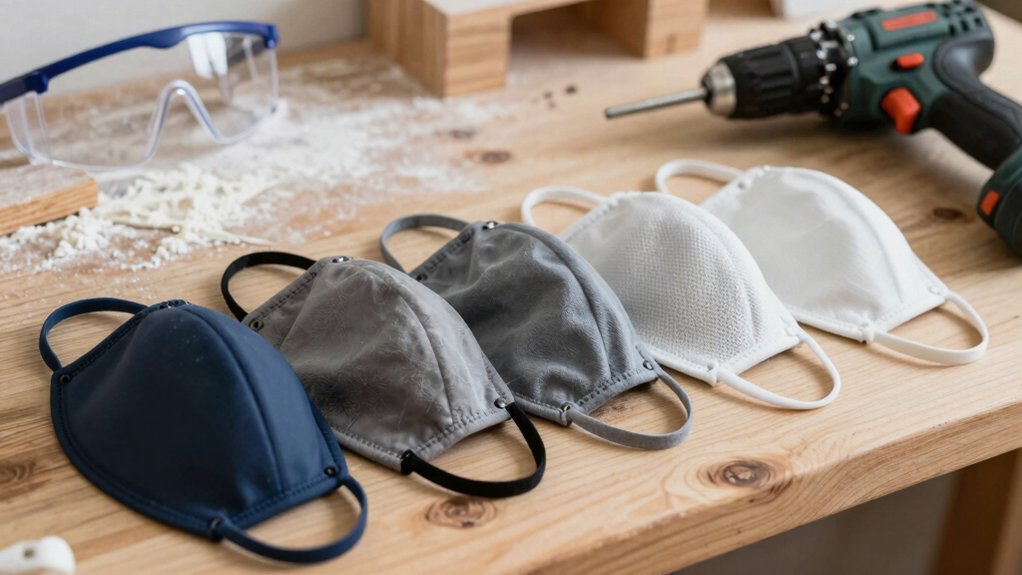
Dust masks come in several foundational types, and choosing the right one hinges on the particle size, debris type, and the level of protection you need. You demand precision, so you select based on material science and practical use.
For nuisance dust, a simple disposable mask relies on mask material and a basic seal. While these masks may be sufficient for light dust, tighter environments require respirators with tighter face-seal fit to ensure proper protection.
For fine dust and debris, choose respirators with appropriate cartridges, ensuring compatibility with the contaminants. Consider mask design: filtration media, seal geometry, and strap tension. Your objective is reliable protection without compromising comfort or visibility.
Assess fit testing credentials, decontamination practicality, and maintenance cadence. Informed selection minimizes exposure, supports health, and reinforces control over your work environment.
Filtration Efficiency: What Level Do You Really Need?
If you’ve chosen a mask based on particle type and fit, the next question is how well it filters those particles in real work conditions. Filtration efficiency quantifies this, not just label claims. Look beyond nominal ratings to real-world performance data under typical dust sizes you’ll encounter, including respirable fractions.
Higher efficiency reduces exposure when air quality dips or iteration speed increases. True protection comes from a mask material that maintains filtration under humidity, motion, and temperature shifts, without sacrificing airflow so you resist wearing it.
Seek standardized test results relevant to occupational settings, and prefer materials with demonstrated resistance to particle breakthrough. In short, match efficiency to your task demand, ensuring reliable protection without compromising comfort, so your air quality remains controlled.
Disposable vs Reusable Respirators: Pros and Cons
Disposable respirators offer convenient, low-cost protection for short-duration tasks, while reusable respirators provide longer-term, customizable options for ongoing projects. You weigh immediate practicality against sustained protection, matching fit, durability, and performance to the task at hand.
Disposable options emphasize simplicity: lightweight, breathable mask materials, quick donning, and minimal maintenance, but they excel only within limited use cycles and degrade with exposure, requiring timely replacement.
Reusable respirators deliver persistent protection, with interchangeable cartridges or filters and robust construction that withstands repeated use, cleaning, and storage. Consider mask styles and fit testing, ensuring a secure seal for powerful, continuous work.
The choice hinges on task duration, contaminant concentration, and maintenance discipline, balancing cost, availability, and safety impact for lasting protection.
Understanding NIOSH Ratings: N95, P100, and More
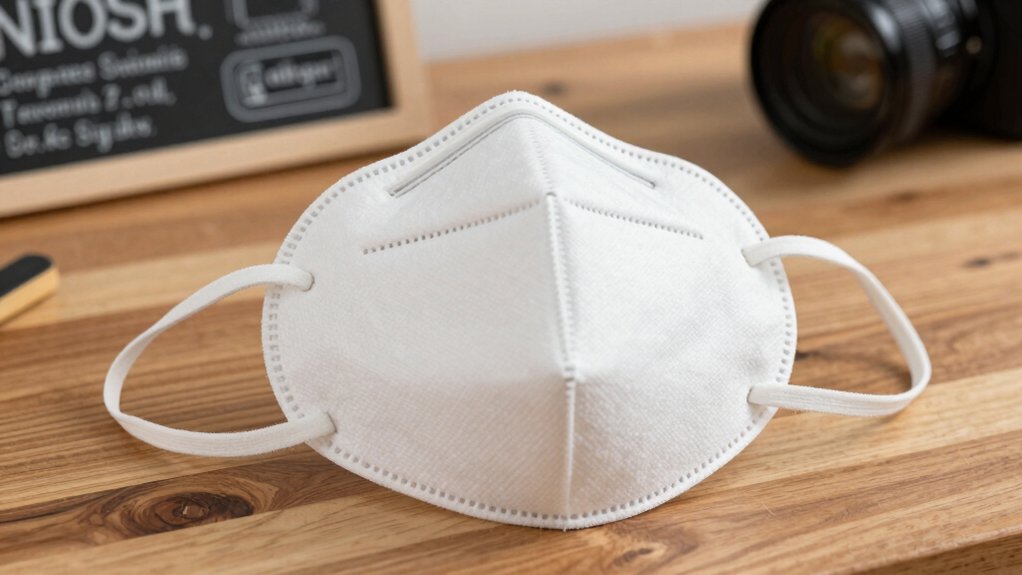
NIOSH ratings are a standardized way to express a respirator’s filtration efficiency and suitability for specific hazards. You’ll evaluate masks by Assigned Protection Factor (APF), filtration efficiency, and resistance to oil (P-series, R-series, or N-series).
NIOSH’s N95 designation means at least 95% filtration of non-oil particulates, including dust and aerosols you encounter in home improvement. P100 offers higher oil resistance and ≥99.97% filtration, ideal for prolonged exposure or fine particulates.
R-series masks resist oil but degrade over time, useful in mixed environments. Match respirator to hazard by testing seal, fit, and filtration type, ensuring proper seal checks every use.
Understanding these ratings helps safeguard air quality and respiratory health during projects with sanding, cutting, or grinding. You gain precision, accountability, and safer outcomes.
When to Use Simple Masks vs Respirators
You should choose simple masks for low-risk tasks with minimal dust, irritation, or nuisance odors, and when exposure is brief and well-ventilated.
Trigger factors for respirators include higher particulate levels, unknown contaminants, and prolonged or repeated work, especially if you’re sanding, grinding, or cutting dry materials.
Base your choice on the task’s hazard level, exposure duration, and fit/safety data from NIOSH and manufacturer guidance.
When To Use Simple Masks
Simple masks are suitable for short, low-risk tasks that produce minimal dust, fumes, or vapors, such as light sanding with non-asbestiform materials or applying odorless finishes in well-ventilated spaces.
When higher protection is needed, switch to a respirator or add engineering controls. You should assess task intensity, duration, and ventilation to determine mask adequacy.
For these simple, controlled jobs, guarantee proper seal by selecting masks with appropriate filter classes and inspecting straps and nose bridge integrity before use.
Remember respirator maintenance remains essential if you exceed simple-dust exposure.
You must consider mask material compatibility with any solvents or finishes to avoid degradation.
Maintain consistent training, follow manufacturer guidelines, and replace damaged components promptly to sustain effective protection through routine projects.
Respirator Use Triggers Factors
So, when should you opt for a respirator instead of a simple mask? You use a respirator when exposure risk, contaminant type, or air quality demands higher protection for respiratory health, even with sealed PPE. Base decision on task specifics, concentration, and duration, plus fit testing and seal checks.
Clear triggers include fine particulates, toxic fumes, or nuisance dust exceeding occupational exposure limits, plus poor ambient air quality forecast. Respirators provide higher Assigned Protection Factor and need proper fit and compatible filters, seals, and maintenance.
Use this framework to protect respiratory health while maintaining project momentum.
- Significant nuisance dust or fine particulates
- Volatile organic compounds or chemical fumes present
- High exposure duration or repetitive tasks
- Poor or fluctuating air quality levels
- Inadequate mask seal or filtration performance
How to Check a Proper Fit: Seal and Comfort
To guarantee a proper seal, perform a fit check by covering the inhalation openings and exhaling firmly to feel for air leaks around the edges.
Verify comfortable strap tension that holds the mask against your face without causing pressure points, and adjust ear or headbands to maintain a secure, stable position.
Position the mask so the edge sits flat against your face, with no gaps, and recheck regularly after movement or talking to preserve effective filtration.
Proper Seal Check
A proper seal is essential for effective respiratory protection, and you should verify fit before each use. You’ll perform a seal test that confirms continuous contact along the mask’s edges while you breathe normally and speak.
Check for gaps around the nose, cheeks, and chin, and adjust without over-tightening. A positive-pressure or negative-pressure check demonstrates if leakage persists, and you should repeat after any movement or strap readjustment.
Breath with intent to detect sudden drafts; if you feel air escape, reseat the mask or replace worn components. Documented fit tests align with safety standards and improve real-world protection by maintaining airflow optimization and consistent mask material performance.
- Inspect edge contact and adjust for uniform seal
- Perform breath test while speaking to reveal leaks
- Re-seat after movements or strap changes
- Avoid gaps near the nose and cheeks
- Verify integrity of mask material and filtering medium
Comfortable Strap Fit
Ensuring a comfortable strap fit isn’t just about comfort—it directly affects seal integrity and protection. You assess the head strap and mask straps for uniform tension, avoiding twists or slack that create gaps. Check that straps sit flat against skin, not over hair, and that excessive tightening isn’t needed to achieve a seal.
Adjust top and bottom bands evenly to prevent uneven pressure that can cause leaks at the nose or cheeks. Verify that the strap material remains secure after movement, and that tension remains stable during talking or bending.
A properly fitted strap system maintains consistent contact pressure without hotspots, reducing leakage pathways. Prioritize a secure, comfortable fit to sustain real-world filtration performance under varying workloads and durations.
Mask Positioning Tips
Mask positioning directly affects both seal integrity and wearer comfort, so verify that the mask sits flush against the face with no gaps at the nose, cheeks, or chin before any activity. You prioritize a secure seal and measurable comfort by checking fit, then proceed with confident performance.
- Confirm strap tension is balanced, not over-tightened or loose, to maintain seal.
- Inhale gently to reveal any edge leaks; readjust as needed for a uniform seal.
- Align nose bridge firmly to minimize gap along the top without pinching.
- Perform a positive/negative pressure check to ensure consistent seal during motion.
- Reassess after occasional movement or facial expression changes for durable mask adjustment and lasting mask positioning.
Quick Fit Testing Steps You Can Do at Home
To perform quick fit testing at home, start by selecting a representative respirator size and model, then don it as you’d for actual use. Check the nosepiece seal and headbands for intact tension and even contact, adjusting as needed.
Perform a positive pressure check by exhaling gently with the mask held against your face, ensuring no air leaks at the edges.
Then do a negative pressure check by blocking the inhalation path and confirming the mask draws inward without movement.
Inspect the facepiece for cracks or deformation after handling, and verify straps remain secure during movement.
Document fit results for air quality decisions, and integrate findings into routine mask maintenance.
Maintain rigorous standards to sustain consistent protection and performance.
Breathability and Comfort: Wear Time Without Compromise
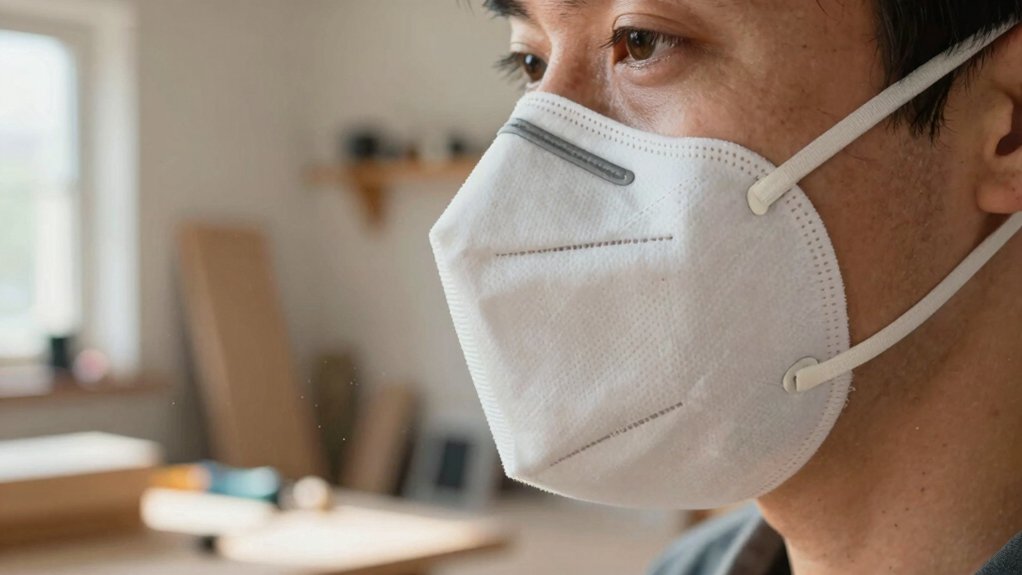
You’ll assess breathability and comfort to support longer wear without compromising protection. Evidence shows breathable materials and better fit reduce fatigue, enabling you to maintain safe usage times.
Prioritize structural design and user feedback to balance comfort with ongoing filtration performance.
Breathable Comfort Timings
Breathable comfort is essential for sustained use during home improvement projects, but it mustn’t compromise protection. You optimize wear time by balancing airflow with filtration, ensuring you maintain clearance for long sessions without overheating or fatigue.
Real-world tests show that higher material breathability can meet protective standards when combined with proper fit and seal. Effective airflow optimization reduces breathing resistance while preserving particle capture, directly extending usable minutes per shift.
Your selection should emphasize materials proven to resist clogging and maintain porosity under dust loads, guarding against breakthrough. Monitor comfort metrics alongside protection ratings, adjusting for humidity and exertion.
Choose masks with ergonomic designs that sustain seal integrity during movement, kneeling, or reaching overhead.
- Airflow optimization improves comfort without sacrificing filtration
- Material breathability supports longer wear times
- Low breathing resistance maintains cognitive focus
- Ergonomic seals preserve protection during activity
- Humidity-aware fabrics prevent heat buildup
Prolonged Wear Feels Easy
When comfort and protection align, prolonged wear becomes sustainable, not a trade-off. You demand consistent performance, so you’ll notice how an optimized ergonomic design reduces fatigue during long sessions.
Breathability isn’t optional; it’s measurable. Look for low breathing resistance paired with reliable filtration, verified by standardized tests.
In practice, comfort hinges on fit, seal integrity, and heat dissipation, all of which support extended wear without compromise.
Material durability matters: robust components resist deformation under flex, moisture, and repeated cleaning, maintaining a secure seal and consistent airflow.
A mask engineered for endurance minimizes pressure hotspots and lets you work uninterrupted.
Choose models with demonstrable comfort metrics and durable materials, ensuring sustained protection across demanding home improvement tasks.
Task-Specific Masks: Sanding, Cutting, Painting, and Mold
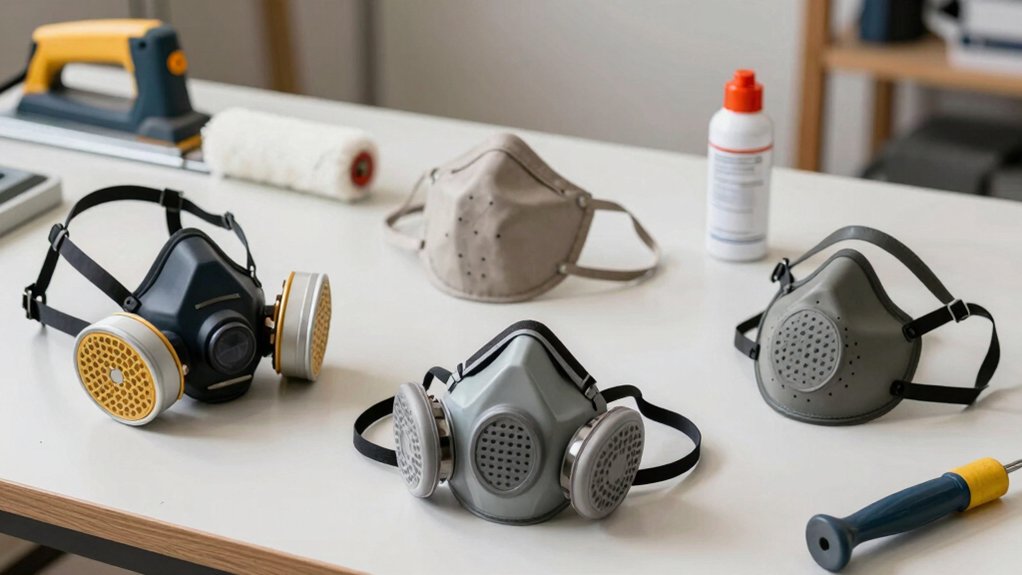
When you sand, cut, paint, or encounter mold, choose task-specific masks that match the dominant hazard: dust, fumes, or spores. You’ll maximize protection by selecting respirators with appropriate filtration and proven fit. Prioritize respirators that address dust particle size and mask material choices to reduce ingress, leakage, and breathing resistance.
- Sanding: use P100 or N95 with a snug seal and full-face option when splashes or fumes threaten.
- Cutting: opt for respirators rated for nuisance dust and organic vapors, with cartridge/hood combinations.
- Painting: select VOC-rated organic vapor cartridges paired with a dust filter.
- Mold: choose multi-gilter respirators that handle spores and moisture, with proper face seal.
- Fit testing: perform seal checks and fit tests to ensure consistent protection.
Maintenance and Care for Reusable Masks
For effective reuse, follow Cleaning And Drying Guidelines to remove moisture promptly after exposure and air-dry the mask before storage.
Then apply Storage And Longevity Tips by keeping the mask in a clean, breathable container away from heat and contaminants, and monitor for signs of wear.
Establish a Filter Replacement Schedule based on manufacturer guidance and exposure level to maintain filtration efficiency and safe performance.
Cleaning And Drying Guidelines
Cleaning and drying reusable dust masks is a critical maintenance step to preserve filtration efficiency and prevent microbial growth. Follow manufacturer guidelines and perform thorough washing, rinsing, and complete air drying before reuse.
- Use warm water and mild detergent, avoid harsh agents.
- Rinse thoroughly to remove all soap residue.
- Air dry completely in a well-ventilated area, away from heat.
- Inspect for cracks, delamination, or strap wear before reuse.
- Adhere to ventilation practices and cleaning protocols specified by the manufacturer.
Remove masks from rotation if moisture remains or odor persists; don’t reuse until fully dry. Regularly verify seal integrity and exclude compromised units from work. Maintain a documented cleaning schedule to sustain performance and safety.
Storage And Longevity Tips
To guarantee reusable masks maintain their filtration performance and remain ready for use, store them in a clean, cool, dry environment away from direct heat and sunlight.
You’ll maximize reliability by using a dedicated storage container, labeled and closed after each use, to prevent contamination and moisture buildup. Prioritize breathable, nonwoven or soft fabric pouches that don’t crush filtration media.
Allow cages and facings to fully dry before packing to avoid mold growth and odor transfer. Perform a quick visual inspection before reusing: intact straps, no cracking, no fabric delamination.
Implement Longevity strategies such as routine sanitization per manufacturer guidance, avoiding harsh chemicals that degrade materials. Maintain a clear rotation log to track usage cycles and storage conditions.
Storage tips support sustained protection and dependable performance.
Filter Replacement Schedule
Filter replacement should be scheduled based on manufacturer guidelines and real-world use, not on a fixed calendar alone. You’ll maximize protection by tracking performance, fit, and seal integrity, then replacing components before failure risks exposure. Prioritize evidence-based intervals derived from environment, respirator type, and workload to preserve mask durability and filtration efficiency. Review filter media specs, pressure drop, and particle load history to refine timing.
Consistent inspection, timely replacements, and proper disposal cut contamination risk and maintain airflow. Adhere to safety data, user instructions, and local regulations to sustain proven protection during home improvement tasks.
- Follow manufacturer-recommended replacement intervals and visual/auditory indicators
- Inspect fit, straps, and face seal before each use for integrity
- Replace filters when clogging, odor, or degraded resistance occurs
- Record usage days to gauge real-world durability
- Dispose of contaminated components safely and honor environmental guidelines
Donning and Doffing Properly to Avoid Contamination
When donning a dust mask, follow a careful sequence to minimize contamination: inspect the mask for damage, make certain the straps are intact, and verify the nosepiece can seal tightly. You then position the mask, secure straps evenly, and perform a controlled fit test, ensuring no exposed edges. Breathe gently; if you feel leaks, readjust until a secure seal is achieved.
After use, doff by handling only the straps to avoid touching the front surface, then store components in a clean, labeled container. Practice proper storage to prevent contamination between sessions, and perform routine mask maintenance to sustain integrity.
Document any deformations or compromised components and replace promptly. This disciplined protocol supports sustained protection, minimizes cross-contamination, and upholds evidence-based safety standards.
Common Mistakes That Undermine Mask Protection
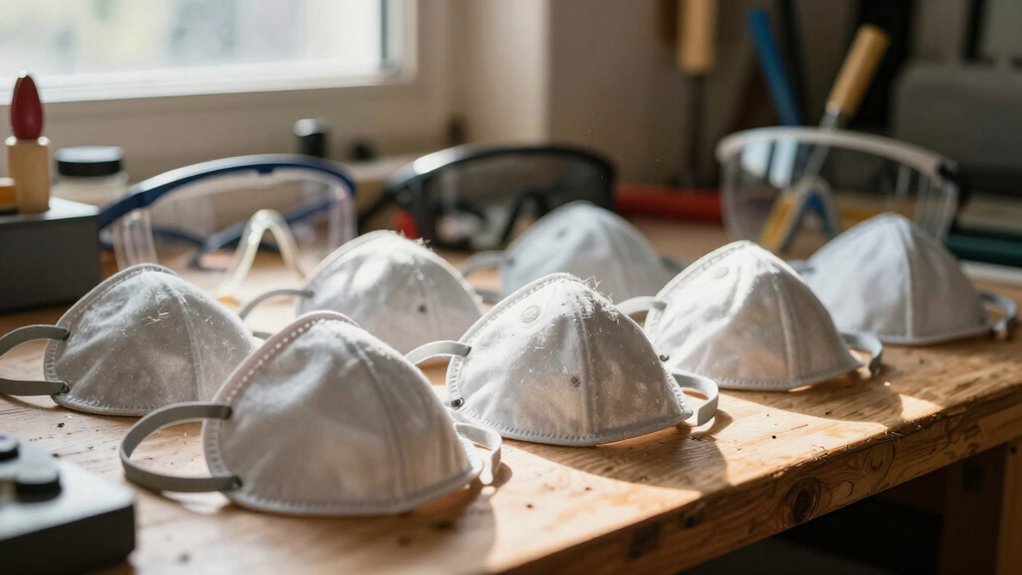
Despite best efforts, several common mistakes can compromise mask protection. You must recognize how these pitfalls undermine resilience, fit, and filtration efficacy, especially regarding mask material and user comfort.
Missteps erode protection when you neglect proper seal checks, reuse disposable models, or choose inappropriate filtration levels for dust type. Informed choices rely on correct sizing, consistent wear time, and avoiding contaminated surfaces that transfer particles to the face.
Precision handling preserves performance, while comfort compromises lead to adjustments that break seals. Stay evidence-based: match respirator class to contaminant, replace components when degraded, and store gear away from contaminants.
- Skipping fit checks and adjustments after donning
- Reusing disposable masks beyond recommended life
- Selecting inadequate mask material for the particle size
- Neglecting seal integrity during movement
- Ignoring user comfort cues that signal risk
Budget-Smart Choices: Getting Value Without Compromise
Balancing cost with protection starts with smart choices that don’t sacrifice safety. You evaluate filtration efficiency, fit, and durability before purchase, prioritizing proven performance over flashy branding. In this budget-smart approach, you pursue cost effective solutions that meet or exceed industry standards, avoiding underspecified options.
You compare material properties—electrostatic fibers, filtration media, and inert housings—to quantify resistance to specific particulates. Material comparisons reveal steady performance under real-world use, reducing replacement frequency and total cost of ownership.
You insist on standardized test results, and you exclude products lacking verified NIOSH or equivalent certification. This disciplined method preserves safety margins while optimizing expenditure, enabling you to deploy robust protection without waste.
Dollar efficiency drives confidence, not compromise.
Your Step-by-Step Guide to Choosing the Best Mask for Your Project
Selecting the right mask starts with identifying the hazards of your project and matching them to proven filtration standards. You assess dust types, particle sizes, and exposure duration, then pick the filtration class that delivers verifiable protection. Follow this step-by-step path to confidence and safety.
- Determine contaminant spectrum (dust, fumes, mold) and required efficiency
- Verify fit and seal, prioritizing comfort to maintain compliance
- Compare mask material for durability, breathability, and compatibility with filters
- Consider allergy considerations and potential irritants in your environment
- Check certification, replacement intervals, and user recommendations
Your choice should be evidence-based, practically enforceable, and aligned with project demands, ensuring sustained protection without compromise.
Conclusion
You’re not just choosing a mask; you’re safeguarding breath and outcomes. When in doubt, aim for proven filtration and proper fit, avoiding comfort over protection. It’s wise to favor respirators with robust ratings and correct donning, even for smaller projects. Skimping on fit or reuse can quietly undermine safety. In every room, respect the science: seal, filter, and seal again. Subtle diligence today prevents loud regrets tomorrow, preserving health while you work.