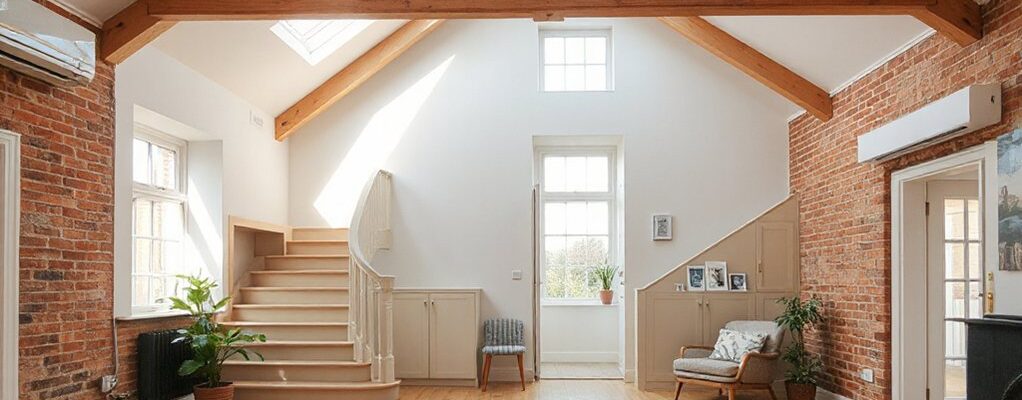
You weigh size against proportion, light against lath-and-plaster, utility against form, you weigh light against form. You assess dormer, Velux, or gable-end options for your terraced roof, balancing headroom with external impact and long-term value. You consider energy performance, building regs, and future adaptability as you outline a practical, design-led approach. The choice affects rhythm, interior volume, and curb appeal, and it should align with your plot’s constraints—so you’ll want to weigh the trade-offs before you proceed.
Why a Terraced Loft Is a Great Fit for Small UK Homes
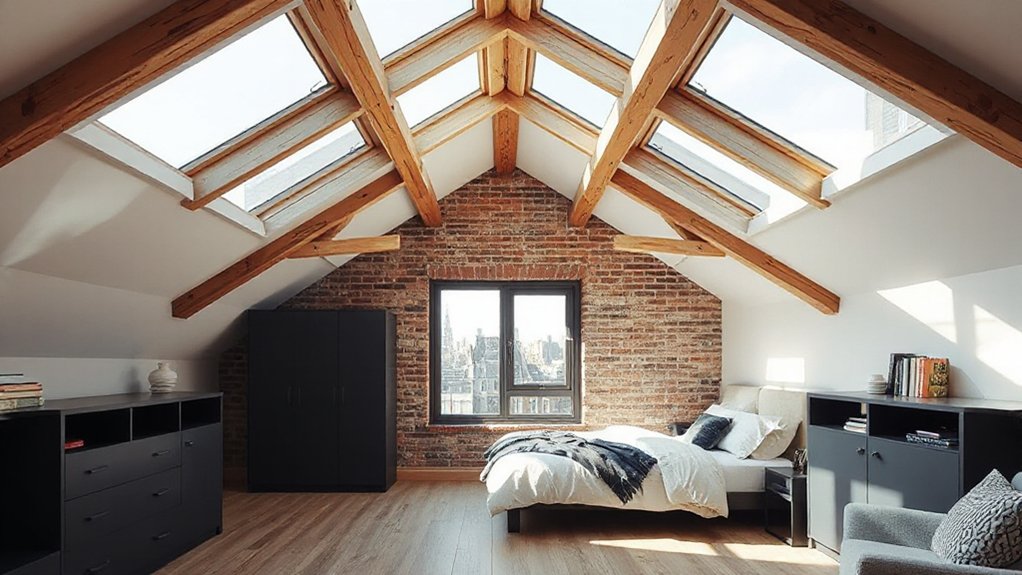
A terraced loft is a practical upgrade for small UK homes because it maximizes available vertical space without expanding the building footprint. You gain usable square footage without encroaching on ground-level events, preserving garden access and external aesthetics.
The layout supports efficient zoning, with clearly defined zones for sleeping, working, and relaxing, while maintaining sightlines and natural light. You’ll rely on precise load paths, optimized joist spacing, and thermal bridging precautions to sustain performance.
Interior decor becomes a design-led framework, guiding material choices, color palettes, and finishes that enhance perceived space without clutter. Storage solutions are integral, prioritizing built-in wardrobes, under-eave compartments, and modular cabinetry that reduce furniture footprint.
The result is a compact, scalable environment that feels technical, balanced, and visually coherent.
Dormer Lofts: Classic Headroom, Characterful Style
Dormer lofts introduce extra headroom and architectural character to terraced homes, aligning practical loft solutions with distinct, design-led styling. You gain usable space without compromising external proportions, as dormers extend the eaves to preserve roofline rhythm.
From a engineering stance, plan for structural support, load distribution, and accurate integration with existing rafters. Prioritize insulation detailing around the dormer cheeks and junctions to minimise thermal bridges.
Loft insulation should meet current Building Regulations, with pressure-tested air gaps and continuous insulation across the new ceiling plane.
Roof ventilation remains essential: incorporate high-level intake and background venting to prevent condensation and maintain crossflow.
Select materials and glazing that balance daylight, curb appeal, and energy performance, ensuring weatherproof seals around the dormer reveal for long-term reliability.
Flat Roofs and Velux Options for Tight Terraced Roofs
Could a flat roof and Velux window combo release usable space in tight terraced roofs without spoiling proportions? In tight plots, a flat roof offers a compact silhouette that maximises ceiling height laterally while preserving external rhythm.
Velux rooflights introduce natural light without increasing mass, and you should specify glazing with low U-values to maintain thermal performance.
Consider a shallow pitch that minimises visual bulk while enabling rainwater run-off to remain compliant.
Roof insulation must meet current building regs, targeting continuous insulation and an airtight envelope.
Ventilation options should be integrated: mechanical ventilation with heat recovery or trickle vents wired into the window system, ensuring moisture control in habitable zones.
Align detailing with parapet lines, finish materials, and rainwater systems to maintain cohesive terraced aesthetics.
Hip-to-Gable and Other Layouts for Narrow Plots
Hip-to-gable conversions offer a clearer end-wall silhouette and expanded usable headroom on narrow plots. Consider how layout choices balance structural constraints, daylight access, and ventilation while accommodating practical loft uses.
We’ll compare benefits, suitable configurations, and key considerations to guide precise, design-led decisions.
Hip-To-Gable Benefits
Hip-to-gable conversions reveal usable headroom on narrow plots by replacing a shallow roof slope with a steeper, gable-end profile. You gain practical floor area within the loft thanks to increased usable height along the ridge line, improving storage and potential room dimensions.
The structural change centralises vertical supports, reducing the need for intrusive internal alterations and enabling cleaner layouts.
From a design perspective, the gable end introduces stronger wall-to-roof geometry, supporting larger windows and better natural light without compromising external proportions.
This approach also offers clearer opportunity for attic-to-bedroom transitions, with improved eave alignment and improved thermal performance when paired with modern insulation strategies.
Hip to gable advantages align with tight-site efficiency, while gable end aesthetics reinforce a balanced, contemporary roofline.
Narrow Plot Layouts
Narrow plots demand efficient use of vertical space and careful sequencing of utilities, so hip-to-gable and alternative layouts must maximise usable loft volume without compromising external proportions.
In tight footprints, you’ll prioritise structural efficiency, selecting alignments that preserve eaves heights and maintain proportion with street-facing elevations. Hip-to-gable conversions can reclaim headroom along the long axis, while single-slope dormers or dormer-free skylights preserve ceiling height where needed.
Planes should remain coherent with the existing roofline, using slender profiles to avoid visual bulk. Open plan design benefits from uninterrupted sightlines, enabling flexible furniture zoning without clutter.
Materials default to modern finishes—low-maintenance, heat-efficient surfaces, and restrained palettes.
Assure service routes (water, waste, electrical) are looped through central corridors to minimise disruption to the room geometry.
Practical Loft Considerations
For narrow plots, hip-to-gable and alternative loft layouts should be evaluated for headroom, structural efficiency, and service routing early in the design process; this guarantees we reclaim usable volume without altering the exterior rhythm.
Start with a precise assessment of rafters, joists, and party-wall constraints to determine feasible pitch and eave lines.
Prioritize compact, continuous service runs to minimize material loss and simplify ventilation systems routing.
Align stair access, natural light, and voids with corridor pathways to maximize perceived space without compromising fire isolation.
Integrate roof insulation strategies that minimize thermal bridges and satisfy building regulations.
Consider mechanical ventilation requirements, moisture management, and acoustic separation to sustain comfort in mixed-use terraced settings.
Maximizing Energy Efficiency and Daylight in Terraced Lofts
In terraced lofts, maximizing energy efficiency and daylight hinges on optimizing insulation, glazing, and layout without compromising headroom or structural integrity. You’ll target continuous thermal insulation across roof and wall assemblies, minimizing thermal bridges to reduce heat loss and seasonal overheating.
Specify high-performance glazing with low-emissivity coatings, balanced by controlled solar gain for comfort and efficiency. Employ strategic layout adjustments—minimize interior partitions in sleeping zones to preserve daylight penetration while preserving usable space and ceiling height.
Integrate solar shading devices to curb glare and overheating during peak sun, without obstructing daylight during winter. Favor airtight construction with mechanical ventilation and heat recovery to maintain indoor air quality.
Align materials and detailing with robust thermal models to verify performance targets.
Planning, Costs, and Choosing the Right Loft Style
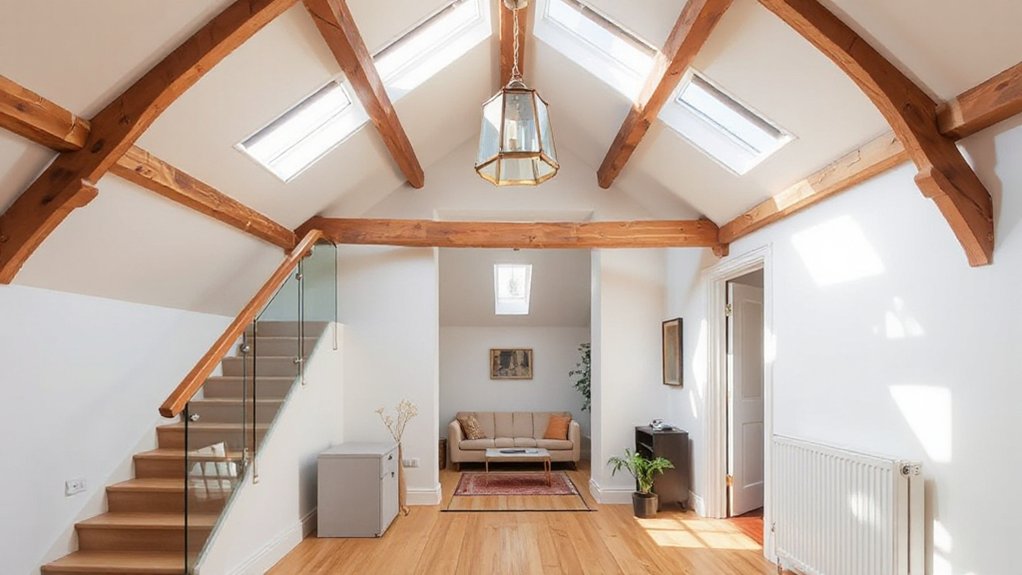
Planning your loft conversion begins with clear scope and budget decisions, then aligns design goals with structural realities. You assess roof form, ceiling height, and potential tax implications early, documenting constraints for cost forecasting.
When selecting a loft style, weigh contemporary modular solutions against period-appropriate detailing to satisfy Historic preservation concerns while meeting client briefs.
Establish a staged cost plan: feasibility, preliminary design, planning, and construction phases, with contingency and VAT considerations where relevant.
Compliance hinges on Building regulations: fire safety, means of escape, insulation, ventilation, and structural adequacy.
Prioritize value over vanity by testing daylight access, thermal performance, and long-term maintenance.
Finalize a style brief that balances autonomous use and future adaptability, ensuring the chosen loft meets regulatory requirements and urban context.
Frequently Asked Questions
What Is the Typical Height Requirement for a Loft Conversion in Terraced Houses?
The typical height requirement for a loft conversion in terraced houses is about 2.2 to 2.4 meters clear headroom. Make sure Roof insulation and Structural reinforcement are integrated early, maximizing usable space while complying with building regulations and practical design constraints.
How Long Does a Terraced Loft Conversion Usually Take to Complete?
Yep, a terraced loft conversion typically takes several weeks to a few months, depending on scope. You’ll schedule roof insulation and structural reinforcement early, coordinate trades, and anticipate phased milestones to minimize disruption and guarantee airtight, compliant build.
Are Planning Permissions Always Required for Terraced Lofts?
You don’t always need planning permission for terraced lofts, but you must satisfy building regulations and maintain structural integrity. Guarantee design compliance, engage a structural engineer, and verify access, fire setbacks, and sound insulation before proceeding.
What Are the Most Cost-Effective Loft Conversion Options for Tight Plots?
One statistic: tight plots can push per-square-meter costs up to 20% due to structural constraints. You should prioritize roof insulation and compliance with Building regulations, choosing cost-effective layouts that maximize headroom while meeting Roof insulation standards.
Can Loft Conversions Affect the Property’s Resale Value?
Yes, loft conversions can boost resale value when compliant with Building regulations and properly insulated. You’ll improve perceived quality with Loft insulation, efficient storage, and precise daylighting, while ensuring thermal performance meets current standards and planning compatibility.
Conclusion
A terraced loft adapts smartly to small UK homes, delivering light, space and value with disciplined design choices. By selecting dormer, Velux, or gable-end layouts, you balance headroom, structure, and rhythm with your roofline. Prioritize insulation, airtightness, and compliant glazing to maximize efficiency. Planning early keeps costs predictable, while phased fits preserve streetscape harmony. In short, a well-executed loft is a design lever—think of it as a skylit engine that drives daily comfort and long-term resilience.