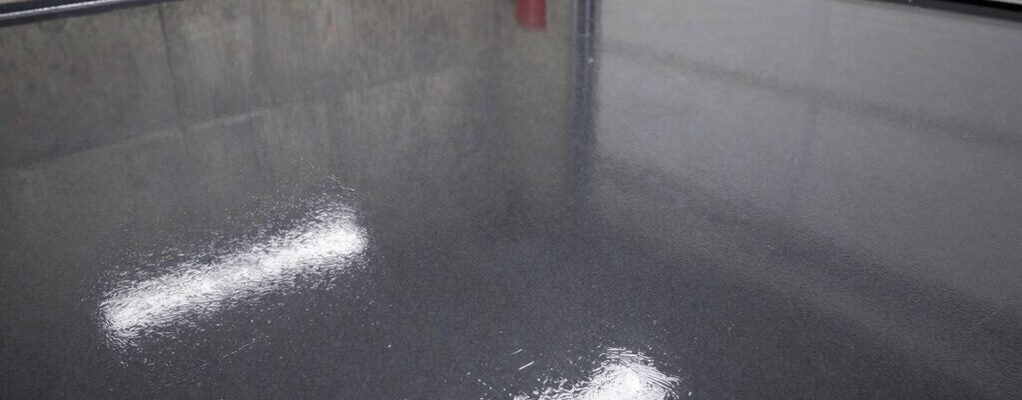
Epoxy coatings deliver the strongest, most durable garage-floor finish with superior chemical resistance and a long-lasting, high-gloss look when you prep properly. If you want easier application and flexibility, concrete paint or latex/water-based options work, but they’re less hard-wearing. For extra protection, add a polyurethane top coat after the base layer. Remember, surface prep—clean, degrease, patch, and etch—matters most. Stick with the right system and you’ll get lasting performance; more details follow.
Epoxy Coatings: Durability and Finish
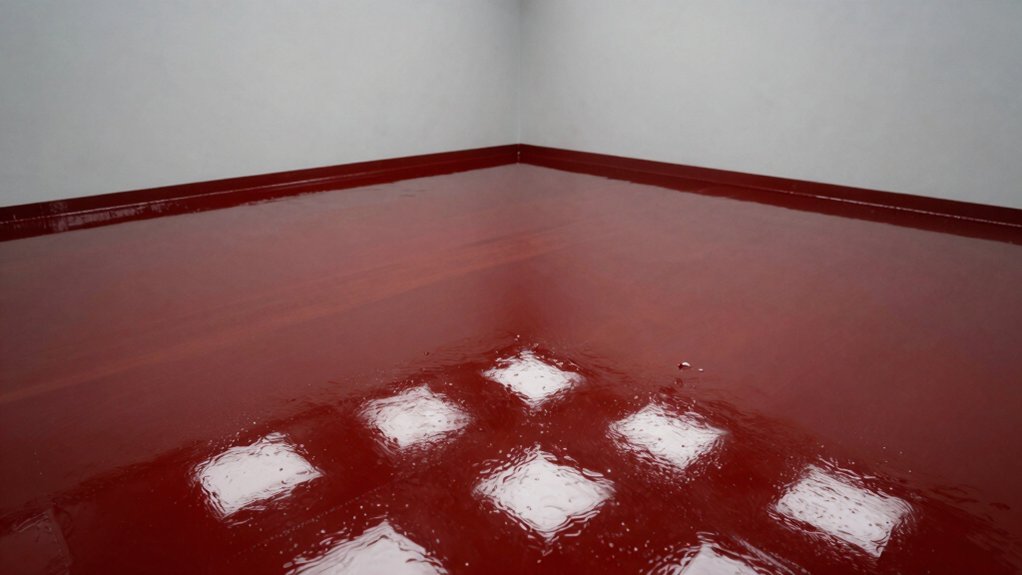
Epoxy coatings deliver top-tier durability and a high-gloss finish that lasts. You apply a two-part resin system that cures into a rigid, chemical-resistant surface. This integrity resists impacts, abrasions, and hot-tire vehicles, minimizing scratches and gouges over time.
You benefit from a seamless, non-porous layer that blocks oil, solvents, and moisture penetration, simplifying cleanup and reducing maintenance. The finish remains uniform under varying temperatures and heavy traffic, preserving color stability and gloss without frequent refinishing.
You’ll choose between standard and enhanced epoxies, balancing cure time, thickness, and ambient conditions to meet your garage’s demands. Proper surface prep, including cleaning, patching, and leveling, is essential for maximum adhesion and performance.
Epoxy coatings deliver predictable, long-term protection with professional-like results.
Concrete Paint vs. Epoxy: Key Differences
Concrete paint and epoxy coatings both protect garage floors, but they serve different needs. You’ll find concrete paint is simpler to apply, dries faster, and remains more flexible under thermal cycling. It adheres well to sound concrete but tolerates moisture poorly, so surface prep matters.
Epoxy delivers superior hardness, chemical resistance, and abrasion performance, creating a durable, glassy film that resists staining. It cures into a rigid composite with excellent adhesion when the substrate is properly etched and primed, yet it requires precise mixing and controlled cure conditions.
Budget, downtime, and maintenance drive choice: epoxy costs more upfront and longer setup, but lasts longer in high-traffic, chemical-exposure areas. For cosmetic or non-intensive use, concrete paint offers a practical, quick solution with moderate durability.
Latex and Water-Based Options for Garages
Latex and water-based coatings offer a straightforward, low-odor option for garage floors, delivering faster cure times and easier cleanup than solvent- or epoxy-based systems.
You’ll benefit from flexible film formation and strong adhesion to concrete, with reduced odor during application. Choose acrylic or latex formulations formulated for interior floors, and verify zero-slip additives if you park near wet areas.
Surface preparation remains critical: assure clean, dry, structurally sound concrete, with mechanical abrasion or etching as required by the product, followed by thorough vacuuming before coating.
Coverage varies with porosity, but expect a typical spread rate around 300–400 square feet per gallon per coat.
Drying times hinge on temperature and humidity; plan multi-coat applications accordingly, avoiding traffic until fully cured.
Regular cleaning maintains appearance without harsh solvents.
Polyurethane and Top Coats: Extra Protection
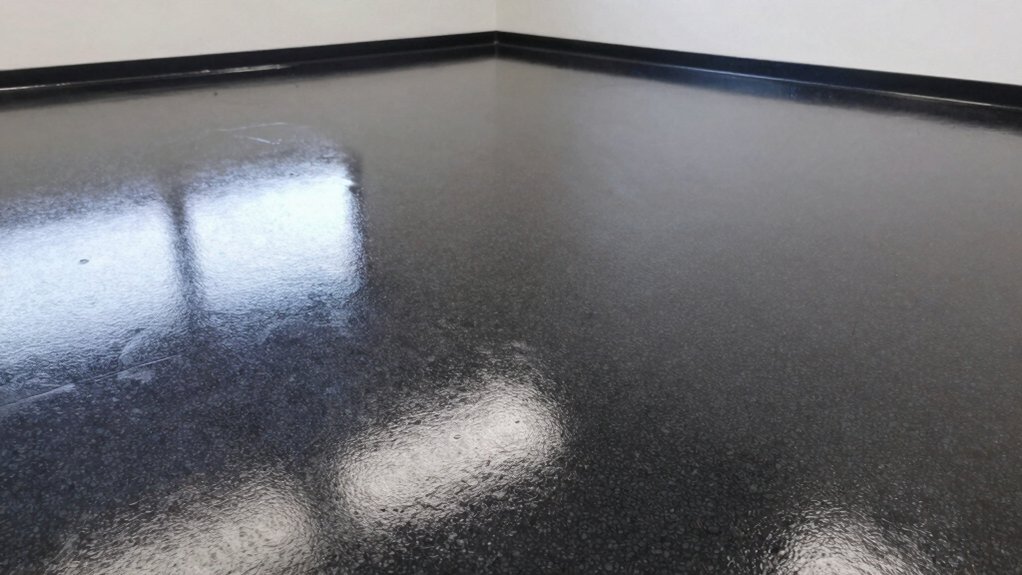
Polyurethane and top coats provide the final layer of protection, enhancing durability and chemical resistance while adding a glossy or satin finish. You apply these coatings after your base paint cures to seal the surface and reduce staining from oils, fuels, and spills.
Choose polyurethane types based on your needs: water-based formulations minimize odor and cure quickly, while solvent-based options yield higher abrasion resistance and a deeper sheen. Consider aluminum-ad-free polyurethane if you expect UV exposure; otherwise, standard clear coats suffice indoors.
Use thin, even coats with proper ventilation, and avoid puddling by maintaining a steady spray or brush stroke. Allow full cure per manufacturer guidelines before foot traffic.
Recoating intervals depend on use and exposure, not merely aesthetics.
Surface Preparation and Application Tips
To start, prep the surface thoroughly before applying any finish coats. You’ll clean, degrease, and remove loose paint, dust, and radical contaminants. Use a stiff broom and a chemical degreaser to reveal a solid bondable substrate.
Patch cracks with a compatible epoxy or quick-dreak filler, then sand until the surface is uniformly smooth and slightly matte. Vacuum thoroughly to eliminate dust before priming.
Choose a penetrating etch if your concrete isn’t sealed, and follow label directions for dwell time. Apply primers designed for garage floors, allow complete cure, and maintain even coats with a roller or squeegee.
Use consistent, crosshatch passes, avoid ponding, and extend edges slightly. Apply finish coats only after the primer fully cures per manufacturer guidance.
Frequently Asked Questions
How Long Does Garage Floor Paint Last Under Heavy Use?
Garage floor paint lasts about 3–7 years under heavy use, depending on prep, coating type, and traffic. You’ll extend life by thorough cleaning, proper etching, applying multiple coats, and using a durable, chemical-resistant topcoat.
Can I Paint Over Concrete With Visible Cracks or Moisture?
No, you shouldn’t paint over concrete with visible cracks or moisture; you must repair, seal, and dry the surface first, then prime,-and only then apply appropriate durable floor coating to prevent peeling and premature failure.
Is Garage Floor Paint Slip-Resistant When Wet?
Yes, garage floor paint can be slip-resistant when wet if you choose a textured or non-slip additive, like aluminum oxide, and apply a correctly prepared coating with proper time to cure and a dedicated anti-slip topcoat.
Do Heat and Cold Affect Epoxy or Latex Coatings?
Heat and cold affect epoxy more than latex; epoxy expands/contracts with temperature swings, risking cracks, while latex is more tolerant but can chalk or peel in extreme heat or cold. You’ll prefer temperature-controlled curing for best performance.
Can I DIY Garage Floor Paint With Basic Tools?
Yes, you can DIY garage floor paint with basic tools. Prep thoroughly, degrease, etch, rinse, and allow to cure. Use a roller, brush, and tape; mix components as directed, apply in thin, even coats, and ventilate.
Conclusion
When choosing a garage floor coating, epoxy offers durability and a professional finish, while concrete paint delivers color at lower cost. Latex and water-based options ease application and cleanup, but polyurethane top coats extend longevity. Prioritize proper surface prep, clean grinding, and moisture testing to prevent failures. Apply in thin, even coats with adequate curing. In short, select a system aligned with traffic, chemical exposure, and budget; treat prep like insurance, because, as for the old steam engine, a flawless start pays off later.