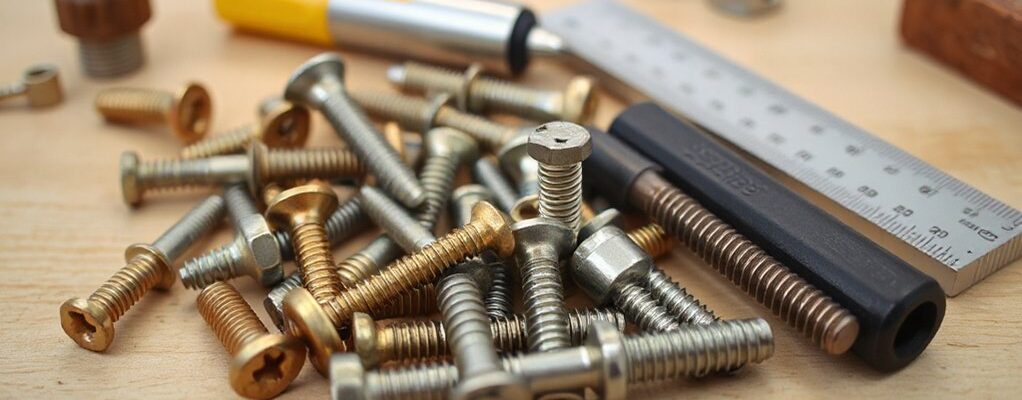
Choosing the right screw for your project depends on the substrate, environment, and load you expect. Match material hardness, coating, and thread form to the joint, and pick a head and drive that fit your tools. Wood, deck, drywall—each favors specific screw types, coatings, and embedment depths to resist stripping, cam-out, and corrosion. Consider whether you need self-tapping or self-drilling options for plastics or metals. If you keep these criteria in mind, you’ll choose confidently and efficiently. More details await.
Key Takeaways
- Choose screw type by substrate hardness, load, and environment to ensure proper engagement and corrosion resistance.
- Match head style and drive to tool compatibility to prevent cam-out and stripping during installation.
- Coatings matter: zinc for outdoor, ceramic for high heat/wear, black oxide for aesthetics and light protection.
- Coarse threads are quick to bite in soft materials; fine threads offer higher shear strength and alignment in hard substrates.
- Pre-drill and control embedment depth to prevent thread damage, pull-out, and joint failure.
Choose the Right Screw for Your Project
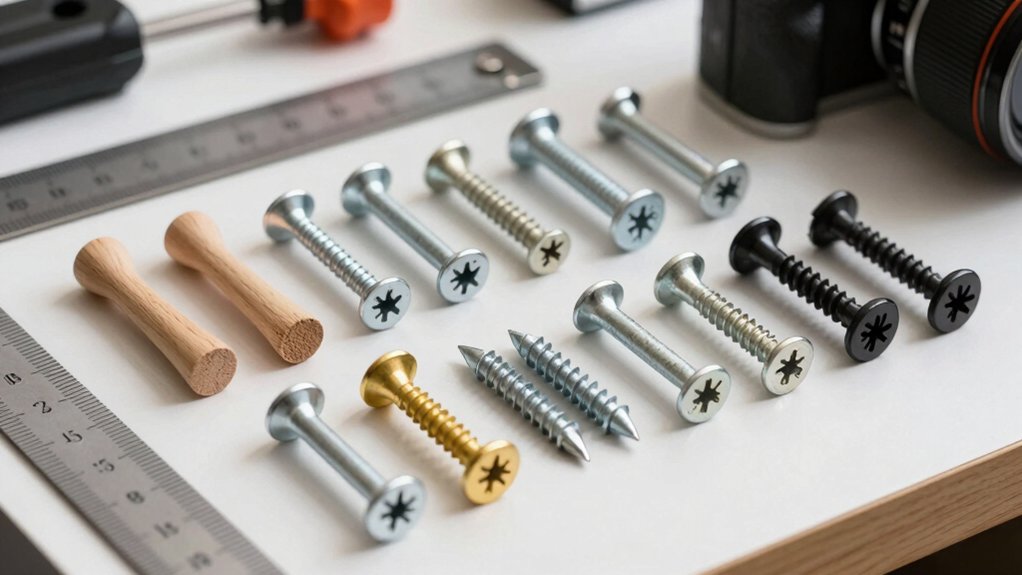
Choosing the right screw starts with evaluating the materials you’ll join and the environment. You assess load, shear, and vibration to select a fastener with sufficient strength. You’ll specify material compatibility, corrosion resistance, and withdrawal tendencies.
You compare screw gauge options to balance clamping force with workability, ensuring the core diameter matches threads for predictable shear performance. You analyze the screw thread pitch and profile to optimize drawing power without stripping.
You confirm head type and drive compatibility with your tool set to maintain efficient, repeatable fastening. You document a decision matrix: material, coating, gauge, thread, and head.
You then validate purchase choices against project tolerances and future maintenance, avoiding overdesign. You execute with precision, securing joints that resist loosening and deliver lasting performance.
How to Decide: Screw Type by Material and Environment
Selecting the right screw type depends on the material you’re joining and the environment it will endure. You evaluate substrate hardness, chemical exposure, and load requirements to select corrosion resistance, thread geometry, and head style.
For metals, choose alloys with compatible hardness and plating to minimize galling and ensure stable torque. For plastics and composites, apply self‑tapping or thread‑forming options to prevent cracking and distribute load evenly.
In exterior or humidity-prone environments, prioritize coatings such as zinc, black oxide, or ceramic to maximize screw durability and reduce fastener creep over time. Inside, low‑frain, clean finishes protect fastening aesthetics without compromising strength.
Consider moisture, temperature cycling, and vibration, then match thread pitch and length to the engagement depth. Clear specifications and testing data guide the decision.
Wood Screws: When They Shine and When They Don’T
You’ll assess wood screw performance by noting grip strength variations across materials and thicknesses. Material compatibility matters, so you’ll match coatings and alloys to the substrate and load.
Watch for installation pitfalls that can undermine holding power, such as under-driving, stripping, or mismatched screw length.
Grip Strength Variations
Grip strength in wood screws varies with shank design, thread type, and material, affecting holding power and install effort under typical home-improvement conditions. You’ll observe higher grip when a fully threaded shank engages dense substrates, while pilot-tolerant designs reduce resistance in softer wood.
Coarse threads extract bite quickly but risk grit tearing in harder fibers; fine threads provide steadier pull but demand more torque. Thread form and core diameter determine resistance during screw tightening, influencing both seating depth and clamp load.
A smooth shank minimizes friction, enabling smoother advancement, whereas a ribbed or undercut shank can concentrate load and improve edge seating. In practice, select geometry that matches your substrate to maximize grip strength without compromising installation speed or material integrity.
Material Compatibility Matters
Material compatibility governs how wood screws perform across different substrates and environmental conditions. You assess substrate density, moisture, and exposure to chemicals, then match coatings and alloys to optimize strength and longevity.
In humid or outdoor settings, stainless steel or coated carbon steels minimize material compatibility issues, reducing creep and withdrawal risk. For interior projects, brass or zinc-plated screws can suffice, provided wood species and finish resist corrosion risks.
You must consider thermal expansion, potential glue- or epoxy interactions, and barrier layers that prevent moisture transmission at interfaces. Remember that screw corrosion undermines fastener integrity long before surface appearance disappoints you.
When selecting, confirm environmental ratings, coating thickness, and alloy compatibility with adjacent metals. Precision in choice translates to durable joints, predictable performance, and fewer service calls.
Installation Pitfalls to Avoid
Often, wood screws reveal installation pitfalls when you underestimate substrate, pilot hole size, or drive method, leading to premature failure or cosmetic flaws. You must anticipate substrate hardness, avoid undersized pilot holes, and choose an appropriate driving technique to prevent thread stripping or head cam-out.
Misjudging screw head types can trap you in glare or countersink misalignment, while improper seating produces uneven surfaces and reduced pull-out resistance. Regard screw diameter choices as a primary control on load distribution; overly thick screws risk splitting, while too-thin segments underperform.
Maintain consistent torque to avoid head shear and cam-out. Verify thread engagement length matches material thickness, and consider pre-embedding a drive recess for precision. In critical joints, double-check corrosion protection and installation sequence to sustain long-term performance.
Deck Screws: Corrosion Resistance and Holding Power
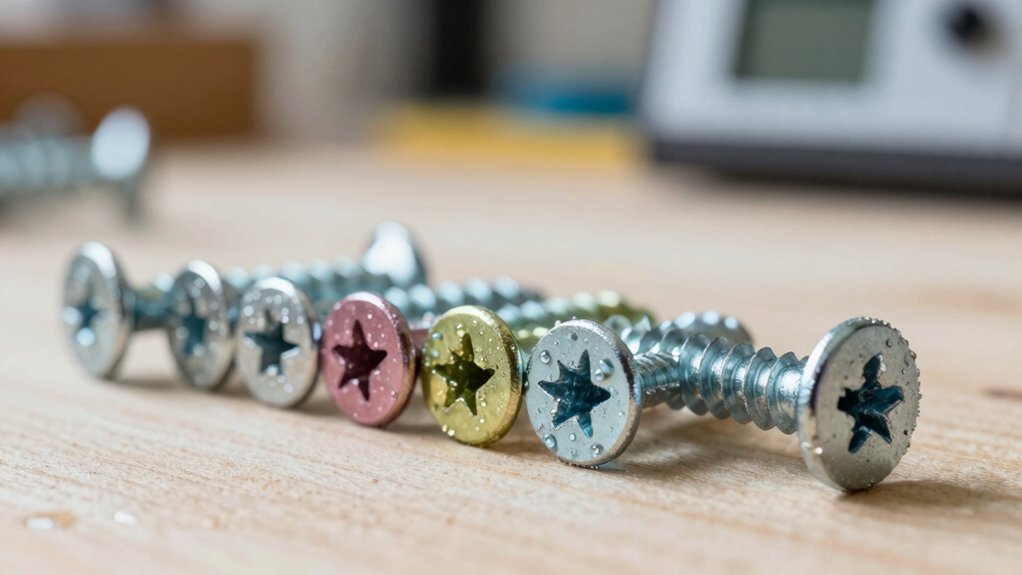
Deck screws balance corrosion resistance with holding power by combining protective coatings and optimized thread design.
You’ll see how coating chemistry, stainless vs. coated steel, and thread geometry affect long-term durability in outdoor decks and joist connections.
Understanding these factors helps you select fasteners that resist moisture while maintaining secure joints under load.
Corrosion-Resistant Power
Corrosion resistance directly affects deck screw performance, balancing longevity with holding power in outdoor environments. You select fasteners that maximize corrosion resistant power while sustaining load, especially in salt spray, moisture, or fluctuating temperatures.
The right alloy and coating reduce surface degradation, preserving thread engagement and cyclic load capacity over time. Environmental durability emerges from a cohesive system: substrate compatibility, coating integrity, and proper installation practice.
You’ll find stainless steel or coated carbon steel options with proven resistance to rust and pitting, which translates into fewer replacements and more predictable performance. Consider coating thickness, substrate composition, and compatibility with deck materials to maintain steady holding power.
In practice, higher environmental durability correlates with fewer maintenance intervals and more reliable long-term performance under outdoor exposure.
Holding Strength Factors
While corrosion resistance directly influences deck screw longevity, holding power hinges on a balance between core material, coating, and screwing method.
You assess holding strength by examining three factors in tandem: screw material, head design, coating integrity, and installation technique.
- screw material determines core toughness and shear resistance under load.
- head design affects seating, drive torque transmission, and edge engagement.
- coating integrity resists wear and moisture ingress at the thread root.
- installation technique, including pilot size and driving depth, maximizes transfer of load without stripping.
Prioritize high-tensile cores, uninterrupted coatings, and low-profile heads for flush seating.
Expect peak performance when these elements align with your deck substrate and fastening pattern, delivering predictable pullout resistance and durable, long-term fastening.
Drywall Screws: Best-Use Cases and Tips
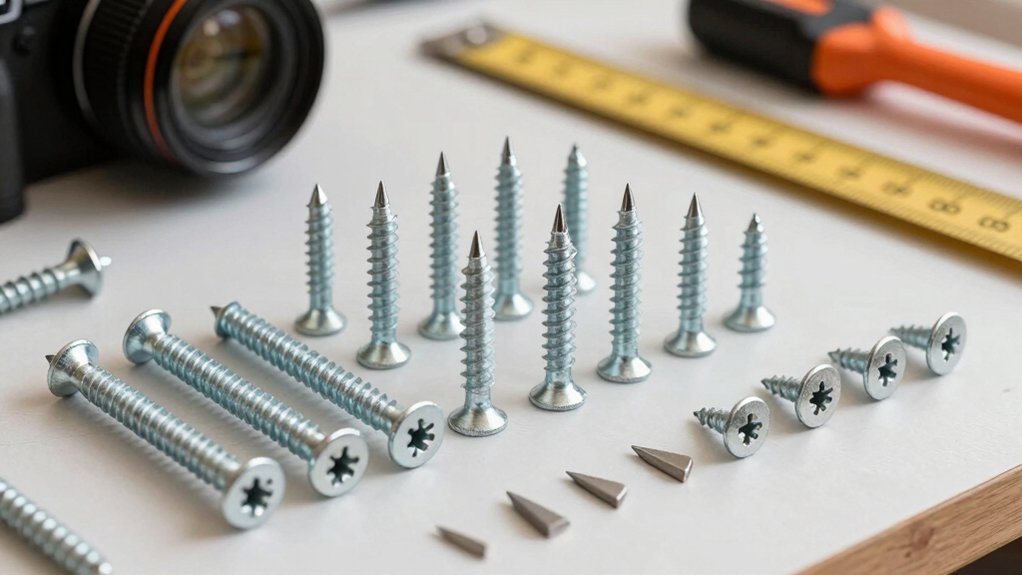
Drywall screws are designed to fasten gypsum board securely while minimizing damage to the material. You select fastener type based on load, substrate, and environment, prioritizing predictability and control.
Use cases favor coarse-thread screws for wood studs and fine-thread variants for metal studs, with corrosion-resistant coatings in humid areas. Pay attention to screw head types—Bugle and Trim are common for flush joints, while combination heads prevent cam-out in dense assemblies.
Thread design should match panel thickness and backing material to optimize pullout resistance and edge compression. Pre-drilling is unnecessary for most interior gypsum panels, yet pilot holes reduce splitting on brittle edges.
Drive screws with steady, perpendicular alignment just below the surface to avoid tearing. In high-demand installations, consider high-strength screws and verify installation with consistent spacing and secure seating.
8 Construction Screws: Versatility and Limits
Construction screws expand the range of fastening options beyond drywall-specific fasteners, offering versatility for wood, metal, and composite substrates while maintaining control over load paths and installation efficiency.
You leverage force with purpose by focusing on these critical factors:
1) Screw head types — verify drive compatibility and corrosion resistance for lasting assemblies.
2) Thread pitch — match substrate density to optimize withdrawal resistance and tightening speed.
3) Material compatibility — select coatings and alloys suited to indoor/outdoor use and load requirements.
4) Installation limits — heed pilot hole needs, avoid overdriving, and respect load paths to prevent material failure.
In practice, you gain flexibility without sacrificing precision, delivering robust joints across varied substrates, while maintaining predictable performance and efficiency.
Head Styles: Which to Pick for Driving Ease and Load
Head styles determine both driving ease and load performance, so choosing the right drive matches the material, fastener size, and tool you’re using. You assess screw head design to minimize cam-out and maximize seating clarity under load.
For driving ease, Phillips and Pozidriv offer defined recesses but risk slippage if misaligned; a Torx or if you specify square drive provides higher torque transfer with less cam-out at higher drive speeds.
For load, flat-head countersunk screws seat flush, while pan and round heads distribute bearing pressure differently, affecting shear capacity.
Confirm drive type compatibility with your driver bits to prevent stripping. In all cases, select head style that aligns with material thickness, tool access, and required seating depth to maintain joint integrity and install efficiency.
Thread Patterns: Coarse Vs Fine and When to Use Each
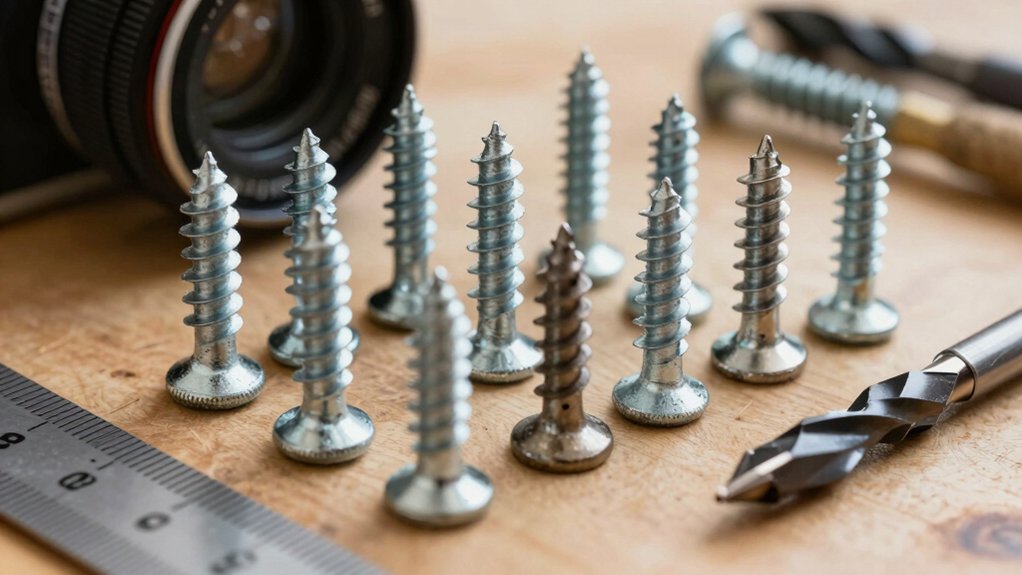
Thread patterns: coarse vs fine and when to use each. You evaluate screw threads by thread pitch and material behavior, not looks.
Coarse thread patterns bite quickly and resist pullout in softer substrates, while fine patterns provide higher shear strength and better alignment in already threaded or prepped holes. Use this distinction to maximize fastening efficiency and reliability.
- Coarse in soft woods or composites for fast installation and reduced stripping.
- Fine for metal, hard woods, or pre-tapped holes to improve load distribution.
- Coarse when vibration is minimal and alignment is forgiving.
- Fine when precision, strength, and reduced wobble matter most.
Apply the rule: match thread pattern to substrate, load, and installation conditions; avoid cross-threading. Thread patterns, screw threads, standards guide your choice.
Coatings and Finishes: Zinc, Ceramic, Black Oxide, and More
Zinc coatings provide corrosion resistance with thin-film protection and are cost-effective for general-purpose hardware.
Ceramic finishes offer higher temperature and wear resistance but can be less ductile and more brittle than zinc; assess environment and mating materials to determine suitability.
Black oxide and other finishes add surface aesthetics and some corrosion barriers, balancing passivation, coating thickness, and compatibility with substrate metals.
Zinc Coating Properties
Zinc coatings, typically applied through galvanizing or electroplating, provide a durable barrier and sacrificial protection against corrosion. You’ll appreciate their predictable performance under load, exposure, and time, especially in outdoor or humid environments.
Key properties:
1) Galvanized finish creates a robust cathodic shield, reducing rust initiation at the thread and head.
2) Zinc corrosion forms a protective, sacrificial layer that impedes steel degradation even if damaged.
3) Adhesion remains high on most steel bases, supporting consistent wear resistance during tightening and cycles.
4) Long-term maintenance is minimal, with repairs usually requiring coating touch-ups or recycled fasteners where needed.
Ceramic vs Finishes Pros
Ceramic coatings offer high-temperature resistance, hardness, and low friction, making them a strong alternative to traditional finishes like zinc, black oxide, or plain steel.
You evaluate ceramic vs finishes by balancing performance, cost, and application context.
Ceramic durability delivers superior wear resistance and reduced galling in threaded interfaces, enabling higher load retention over time.
Finish aesthetics play a critical role in visible assemblies, where color, sheen, and uniformity influence perceived quality.
Relative corrosion protection varies; ceramics excel in thermal stability but may require proper base material compatibility to prevent chipping.
Consider maintenance demands: ceramic finishes often resist cleaning abrasion, while traditional finishes may show wear sooner.
Choose based on service environment, mechanical demands, and long-term lifecycle costs to maximize overall reliability.
Material Compatibility: Screws for Wood, Metal, and Composites
Choosing the right screws for different materials is essential to guarantee strength and durability in any project. You’ll optimize fastener chemistry and screw head design by matching substrate, coating, and shank to the task. Precision choices reduce corrosion risk, improve withdrawal resistance, and minimize binding.
- Wood: soft or hardwood requires a sharp point, coarse threads, and a combined thread-shank path for grip.
- Metal: use self-tapping or self-drilling types with hardened, corrosion-resistant coatings for clean penetration.
- Composite: balance density with anti-galling coatings and a compatible head to seat flush.
- Mixed substrates: select adaptable designs, including double-threading or pilot relief, to prevent stress concentrations.
This approach elevates performance, ensuring predictable outcomes through deliberate material compatibility and robust fastening strategy.
Load and Pull-Out: Failures to Watch and How to Prevent Them
You’ll review loading and pull-out causes to identify which failure modes are most likely in your project.
We’ll outline prevention techniques for common scenarios, from withdrawing fasteners to edge-bearing and substrate failures.
This briefing sets the baseline for selecting screws and installation methods that reduce pull-out risk.
Loading and Pull-Out Causes
What causes loading and pull-out failures in fasteners, and how can you prevent them? You assess load paths, material compatibility, and withdrawal resistance before fastening.
Failures stem from insufficient embedment, improper screw thread engagement, inadequate driving style, and poor substrate quality. Precision selection and execution preserve strength and performance.
- Ensure embedment depth matches load requirements and substrate strength.
- Match screw thread form and pitch to material density for optimal engagement.
- Apply correct drive style to avoid cam-out and uncontrolled seating.
- Pre-drill and install with appropriate torque to prevent threading damage and loosening.
Keep interactions predictable: align fastener geometry with load direction, verify edge distances, and inspect for signs of stripping. This disciplined approach prevents unexpected pull-out and preserves joint integrity.
Prevention Techniques Briefing
When fasteners fail due to load or pull-out, targeted prevention hinges on aligning embedment, thread engagement, and driving practices with the material and load path. You optimize performance by selecting screw head design that matches tool compatibility and target surface, reducing cam-out and seating errors.
Drive type selection should match access, torque, and withdrawal tendencies, ensuring consistent seating and clamping force. Assess substrate hardness, pilot hole accuracy, and embedment depth to prevent premature shear or pull-out under expected loads.
Use appropriate thread form for wood, metal, or composite, and verify that installation torque stays within design limits to avoid over- or under-driving. Maintain clean holes, controlled driving speed, and correct bit alignment to sustain reliable connections under dynamic or sustained loads.
Common Failure Scenarios
Common failure scenarios occur when load paths, embedment, and thread engagement are mismatched or inadequate. You must anticipate fastener malfunctions and address installation errors before they compromise strength.
In practice, failures reveal themselves as pull-out, shear loss, or head stripping under load, often stemming from insufficient embedment, over-torque, or incorrect screw type for the substrate. Proactive measures ensure reliable performance and authority in assembly.
- Misaligned load path causes uneven stress and premature pull-out.
- Inadequate embedment weakens shear capacity and thread engagement.
- Wrong fastener type or length creates installation errors and failure hotspots.
- Over-torquing damages threads, material, or head seating, inviting fastener malfunctions.
Pre-Drilling Vs Self-Drilling: Time-Saving Rules
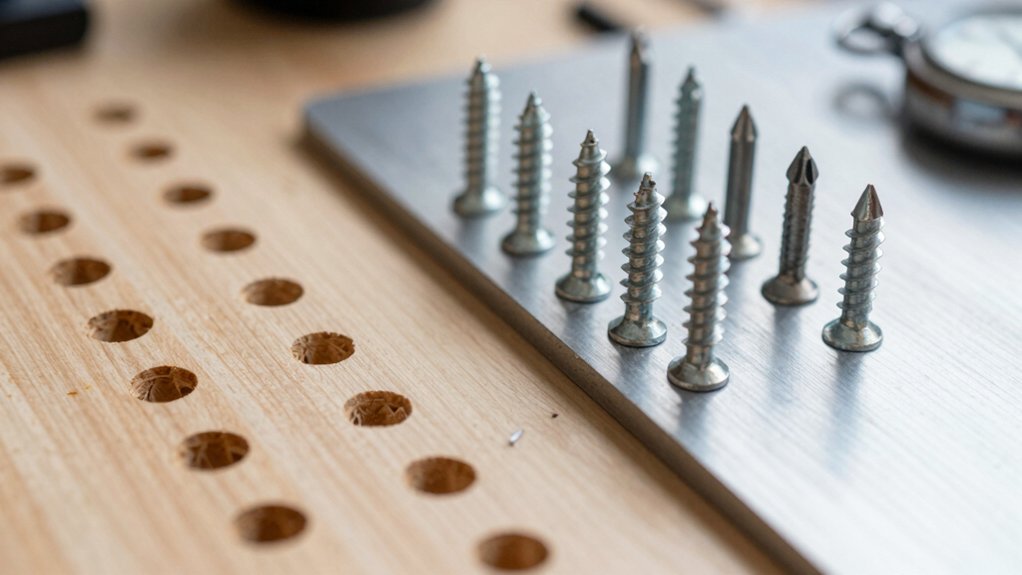
Pre-drilling and self-drilling each have distinct time-saving implications, so choosing the right approach hinges on material type, screw size, and the fixture’s load.
You assess load paths, material hardness, and edge distance to select the most suitable method. Pre-drilling reduces thread deformation in hard substrates and prevents fragmentation, but adds a step and duration.
Self-drilling saves time in softer materials and thin-walled assemblies, yet risks bit wandering or thread mismatch if the screw material isn’t matched to the substrate.
Your decision should align with the installation technique: precise pilot size for hard wood, or direct-drive entry for light gauge steel.
Always verify fixture integrity and avoid over-penetration. This balance maximizes efficiency without compromising strength, ensuring reliable fastener performance and predictable outcomes.
Driving Methods: Manual, Drill/Driver, and Impact Performance
There are distinct driving methods—manual, drill/driver, and impact—that affect control, speed, and the final seating of screws. You’ll weigh torque delivery against material compatibility, head design, and screw material to optimize performance. Each method transfer shapes seating quality, edge breakout, and thread engagement, with measurable consequences in strength and finish.
Consider how head design interacts with drive type to minimize cam-out and slipping under load. The following scenarios illustrate method-specific strengths:
- Manual: precise start, full tactile feedback, best for delicate screw material and small fasteners.
- Drill/driver: balanced speed and control, versatile for medium-duty projects and standard head designs.
- Impact: high torque, rapid seating, for dense material and aggressive head designs.
- Hybrid use: sequence chosen by material resistance and required seating depth, with appropriate head design.
Environment and Exposure: Interior Vs Exterior Moisture Factors
Moisture exposure drives material performance and fastener longevity, so understanding interior versus exterior environments is essential after selecting driving methods. You assess environmental impact by distinguishing indoor humidity patterns, seasonal cycles, and ventilation, then match corrosion resistance and coating strategies to anticipated moisture loads.
Interior applications demand considerations of temperature stability, humidity swings, and proximity to water sources, influencing fastener choice and sealant compatibility. Exterior exposure introduces rain, dew, and soil contact, requiring higher-grade alloys, protective finishes, and sacrificial coatings to deter galvanic corrosion.
Relative moisture dynamics directly affect material creep, embrittlement, and fastener seating integrity over time. You optimize selection by aligning environmental profiles with screw chemistry, ensuring long-term performance without premature failure. Accurate assessment minimizes maintenance and preserves structural reliability.
Installation Tips: Avoid Stripping and Cam-Out in Real-World Steps
To avoid stripping and cam-out, prepare the work surface and tool setup with careful alignment and controlled driving. You’ll prioritize bite quality by matching screw head types to profile and selecting the proper screw diameter options for the load.
1) Inspect the fastener first, confirming head type and drive recess sit flush with the surface to prevent cam-out.
2) Align pilot holes to the intended screw diameter, avoiding undersized paths that push against the bit.
3) Use a powered driver with a clutch setting calibrated for material and screw size to prevent over-torque.
4) Drive steadily, stopping just shy of seating resistance, then complete by hand to confirm flush seating and consistent bit engagement.
Quick-Reference Decision Guide: Pick the Right Screw in Seconds
Choosing the right screw quickly starts with matching the material, load, and environment to the screw’s profile and length. In seconds, align load direction with the fastener’s shear and withdrawal resistance, then select a compatible head style for tool access and driving torque.
Prioritize material compatibility to prevent galvanic corrosion and ensure thread engagement meets design loads. For softwoods, use coarse threading and a self-drilling pilot; for metals, apply finer threading and consider self-tapping variants.
Quick judgments rely on standard profiles: flat, pan, and binding heads for flush surfaces, and raised countersink heads for structural exposure. Consider environmental exposure—exterior coatings or stainless steel elevate durability.
Apply threading techniques that maximize grip without inducing splitting. Final decision: choose head style and pitch that optimize torque, control, and load distribution for your specific application.
Conclusion
Choosing the right screw hinges on material, environment, and load. If moisture or exterior exposure matters, use deck or exterior-grade wood screws; for drywall, opt for specialized drywall screws. Inside, wood screws suffice for light to moderate loads, while substructure demands corrosion-resistant fasteners. Drive method affects seating—drill/driver or impact reduces cam-out. Avoid stripping by matching pilot holes to screw size and avoiding over-torque. In seconds: assess material, exposure, and load to pick the correct screw.