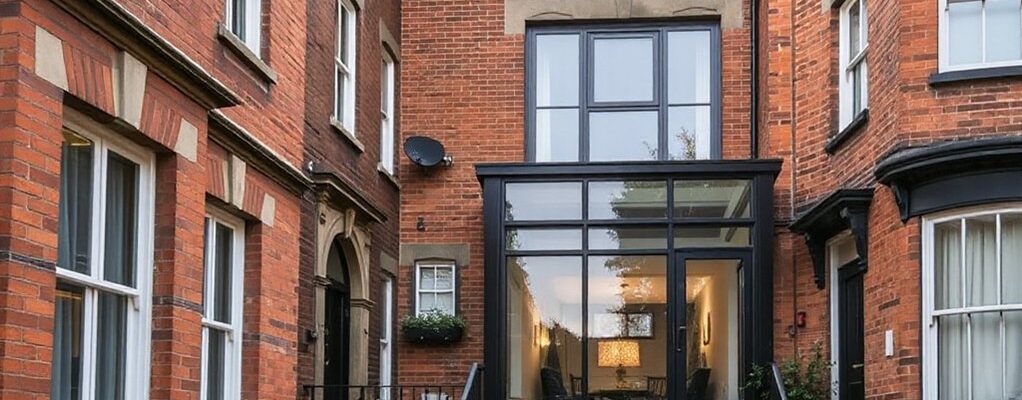
A Victorian terrace is a living compass, pointing you toward character even as you chart modern comfort. You’ll want to identify which features to preserve, then audit insulation, wiring, and plumbing with a steady, restrained lens. Keep sightlines and proportions intact while planning brighter rooms and smarter storage. Balance restored façades with discreet upgrades and choose period-appropriate finishes. The next step blends comfort with charm, but it asks you to weigh details you can’t ignore.
Identify Which Victorian Features to Preserve
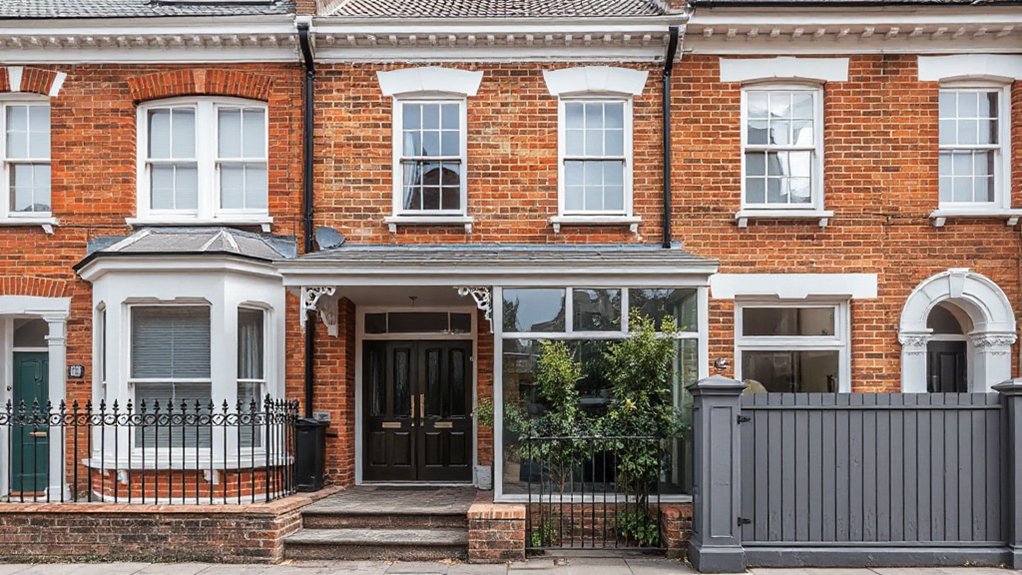
Careful selection of Victorian features sets the tone for a successful renovation. You evaluate walls, ceilings, and floors with a practical eye, prioritizing elements that define era without overpowering modern comfort.
Identify Victorian ornamentation that contributes authenticity—cornices, plaster moldings, and sash details—and determine which accents lift rather than clutter.
Preserve key character zones, like substantial doorways or staircase geometry, if repair remains feasible and finishes respond well to modern cleaning methods.
Historic tilework should guide your decisions where it exists: protect it, document its condition, and restore where feasible to showcase period craft.
Be deliberate about scale, proportion, and material harmony, ensuring preserved features support, rather than constrain, updated layouts and contemporary amenities.
Your plan respects provenance while enabling efficient, legible spaces.
Audit Structure, Insulation, and Electrical, Plumbing, and Heating
You’ll start by mapping a clear audit methodology to guide your decisions across structure, insulation, and services.
Then outline practical insulation strategy steps and identify key points for upgrading electrical, plumbing, and heating systems without unnecessary detours.
This framing keeps the discussion focused on outcomes, risks, and how each choice affects comfort, efficiency, and fabric health.
Audit Methodology Essentials
An effective audit begins with a clear structure: define scope, establish criteria, and sequence tasks to cover insulation, electrical, plumbing, and heating systems efficiently.
You map the audit against historical accuracy, ensuring measurements respect period features while identifying modern compliance gaps.
You prioritize material sourcing, verifying provenance, sustainability, and compatibility with existing fabric.
In practice, you document risks, controls, and responsibilities, then assign measurable milestones.
You assess electrical safety, grounding, and visible wiring, noting aging components without overreaching beyond scope.
For plumbing, you review pipe materials, leaks, and pressure integrity with a restrained lens.
Insulation decisions stay aligned with sound ventilation and moisture control, avoiding over-optimisation that could harm character.
Throughout, you maintain traceable records, transparent assumptions, and a concise rationale for every recommendation.
Insulation Strategy Steps
To establish an effective insulation strategy, begin with a structured audit that links scope, criteria, and milestones to both fabric integrity and modern performance. You map current fabric gaps, identify retrofit priorities, and set measurable targets for heat retention and moisture control.
Drafting detailed insulation requires precise material selection, detailing thickness, orientation, and installation tolerances to avoid thermal bridges. You then evaluate options, balancing thermal value with breathable, low-embodied-energy choices.
Drafting detailed insulation, selecting eco-friendly materials, and documenting performance expectations keeps decisions transparent. Coordinate with electrical, plumbing, and heating considerations early, ensuring service routes, access panels, and fire safety remain uncompromised.
Maintain a concise log of decisions, tests, and approvals to guide future refinements without compromising character or fabric integrity.
Systems Upgrade Considerations
A structured systems upgrade starts with an audit that links scope, criteria, and milestones to fabric performance and modern needs, ensuring insulation, electrical, plumbing, and heating are considered together rather than in isolation.
You map interdependencies between retrofit measures, cost, and disruption, prioritising actions that activate multiple benefits. The audit informs an integrated plan: modern insulation strategies that reduce energy demand, smart wiring for adaptable circuits, and energy efficient systems that balance heat, hot water, and ventilation.
You evaluate existing fabric and services for compatibility, retrofit feasibility, and long-term maintenance. Procurement and installation follow a clear sequence, with testing and commissioning to verify performance gains.
This disciplined approach minimises risk while preserving character and comfort.
Plan Natural Light, Room Flow, and Sightlines
You’ll want to maximize lightflow by identifying key openings and avoiding obstructions that block daylight.
Consider sightlines across rooms to create a coherent path, ensuring each space feels connected rather than compartmentalized.
Maximize Lightflow
Maximizing lightflow hinges on thoughtful planning of natural light, room flow, and sightlines. You align daytime brightness with habitability by arranging openings and partitions that don’t interrupt movement.
Prioritize clear sightlines from entry to core living zones, while keeping corridors uncluttered and doors in their neutral positions to maintain flow.
Use window sizes and placements that invite daylight deeper into the plan, avoiding overfitted rooms that trap shade.
Install discreet window treatments that modulate glare without sacrificing view, and consider daylight sensors to adapt interior brightness automatically.
Keep materials light and reflective on key surfaces, but conserve character with restrained ornament.
Preserve original silhouettes where possible, replacing only what’s necessary to enhance illumination, safety, and comfort without erasing the terrace’s essence.
Optimize Sightlines
Optimizing sightlines means shaping how light travels through your plan while preserving flow. You balance opening up spaces with keeping an intimate scale, ensuring rooms read as a coherent sequence.
Begin with fenestration planning that respects existing rhythms: align learnings from doors, windows, and corridors to avoid visual clutter. Prioritize sightline optimization by locating openings to frame key architectural features and discourage obstructed views.
Use verticals and glazing to extend depth without overexposing private zones. Consider furniture layout that preserves line-of-sight through thresholds, enabling natural wayfinding.
Minimize visual noise with consistent trim, restrained glazing choices, and careful reflections. Maintain daylight coherence across rooms, using wall recesses or partial screens to modulate brightness and preserve character while improving flow.
Restore Façades and Feature Details With Restraint
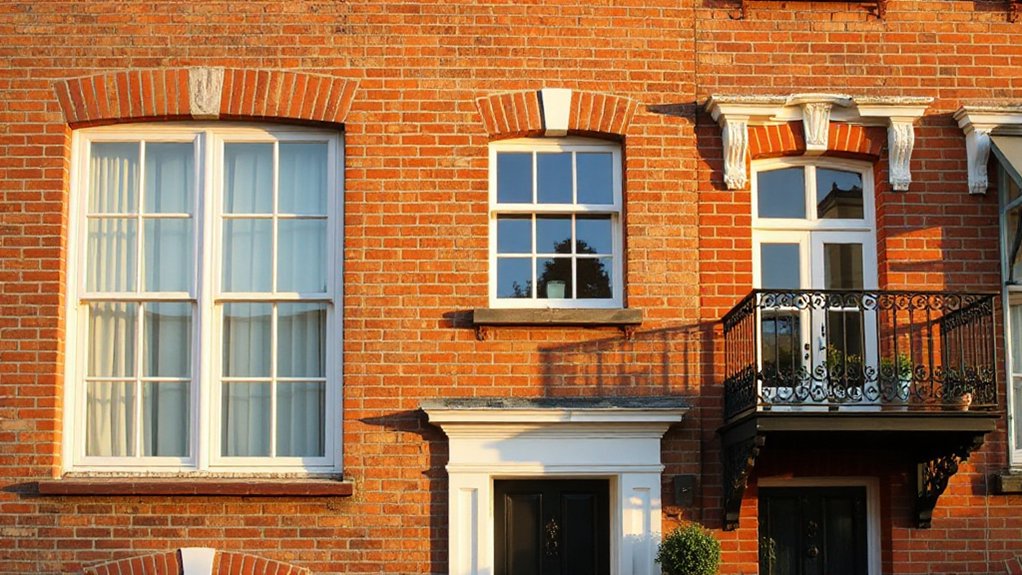
Restoring façades and feature details should be approached with restraint, preserving the building’s character while avoiding over-embellishment. You prioritise honesty about what’s original and what’s lost, repairing core elements before adding anything new.
Focus on cleaning and stabilising façades, then selectively restore exterior embellishments only where structurally sound and visually necessary. You’ll tighten joints, repoint with appropriate mortar, and avoid modern substitutes that read as gimmick rather than continuation of the design language.
When considering decorative moldings, reproduce only authentic profiles from the period or carefully sourced, compatible alternatives. Keep changes proportional, aligning with the rhythm of window openings and cornices.
The aim is legibility and continuity, not novelty, so the building reads as an informed evolution, not a refurbishment masquerading as history.
Choose Period-Appropriate Fixtures and Finishes
When choosing period-appropriate fixtures and finishes, you should match materials, textures, and hardware to the house’s authentic language while avoiding gimmickry. Prioritize period specific hardware—knobs, hinges, escutcheons—that reveal the era without shouting.
Choose fixtures with measured progression from earlier to later Victorian motifs, avoiding overly fussy ornament. In rooms, let plaster, timber, and tile sets speak for the period; select finishes that age gracefully and reflect natural patinas.
Consider Victorian ornamentation in a restrained way: a balanced mantel accessory, a simple corbel, or a modest brass rail can read authentic without overwhelm. Maintain a coherent palette—warm woods, soft stone, muted ceramics.
Documenting deliberate choices helps future maintenance and preserves character while ensuring a calm, cohesive interior rhythm.
Integrate Modern Comfort Without Compromising Charm
Modern comfort can be added without dulling the house’s character by selecting discreet upgrades that respect the Victorian language. You aim for subtle enhancements that blend into the fabric, not shout from the room.
Prioritize controls and systems that disappear into mouldings, skirting, or ceilings, so the eye reads architecture first, technology second. Choose smart technology that automates lighting, climate, and security without conspicuous hubs or oversized devices.
Retrofit joints with efficient insulation and draught-proofing, using eco-friendly materials that echo original textures. Re-route wiring to minimize visible conduits, preserving plasterwork and cornices.
Favor quiet, dependable fixtures, and maintain traditional scales and finishes. You’ll enjoy modern comfort while the house’s lineage remains legible, coherent, and true to its character.
Maximise Storage While Preserving Proportions
Maximising storage without distorting proportions means tailoring solutions to the house’s geometry, not forcing extra furniture into it. You’ll benefit from built-in storage that aligns with wall depths and ceiling lines, preserving the terrace’s rhythm.
Choose low-profile units under stairs, along alcoves, and in hallways, so you keep sightlines uninterrupted. Prefer space-saving furniture with integrated panels, pullouts, and hidden compartments over bulky cabinets that loom.
In living rooms, mount shelves to avoid floor clutter and use multipurpose furniture that tucks away belongings when not in use.
In kitchens and bedrooms, opt for bespoke drawers and closures that minimize gaps. Measure precisely, plan holistically, and let proportion guide every choice to maintain the period feel while expanding usable space.
Rethink Chimneys, Fireplaces, and Warmth Sources
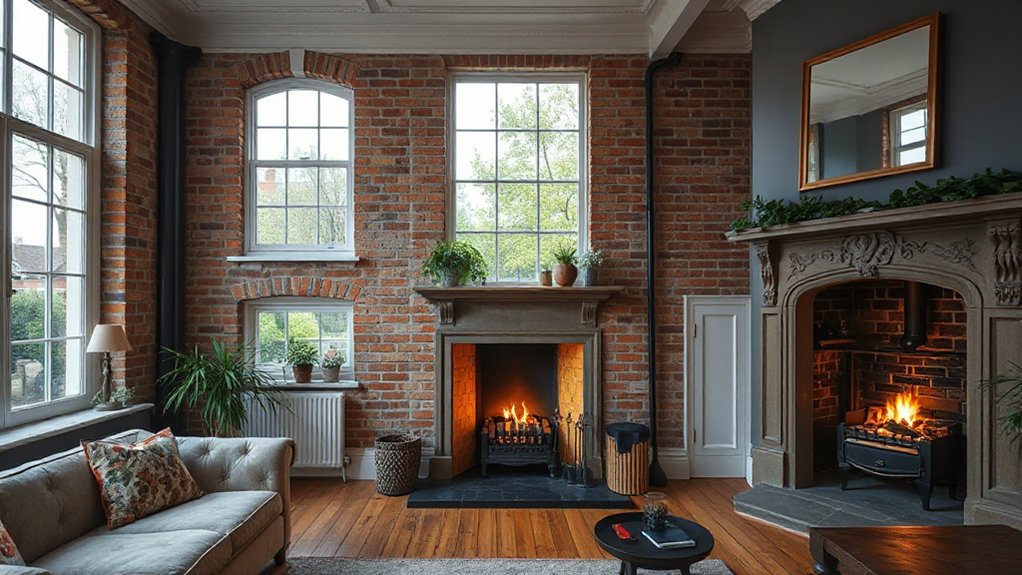
To rethink chimneys, fireplaces, and warmth sources, start by evaluating how much heat you actually need and where it should come from. You’ll balance heritage with modern efficiency, prioritising controllable, clean options over open flames.
Assess current chimneys for draft, damp, and heat loss; you may discover that a partial chimney repurpose or a chimney redesign yields better room comfort without compromising character.
Consider heat sources beyond traditional fireplaces, such as high-efficiency stoves or electric alternatives for zones that don’t require constant warmth.
When you rethink layout, preserve mantel lines and brick details where feasible, letting new systems integrate discreetly.
Emphasise Fireplace efficiency, ensuring controls, insulation, and venting align with daily living without oversized radiators.
Create a Renovation Roadmap With Budget, Timeline, and Milestones
A clear renovation roadmap starts with a realistic budget, a practical timeline, and clearly defined milestones. You’ll map priorities against constraints, ensuring every decision preserves character while confirming feasibility.
Begin with a budget that accounts for contingencies, permits, and expert fees, then set a phased timeline that respects site access and habitability. Define milestones as tangible checks—design approvals, supplier confirmations, and structural assessments—so you can track progress without drift.
Prioritize historical accuracy in detailing, finishes, and authentic materials, while identifying where modern comfort can integrate discreetly.
Plan material sourcing early: establish trusted suppliers, verify lead times, and secure alternates to avoid delays. Maintain clear documentation to adapt costs and schedules as discoveries unfold.
Regular reviews keep the evolution purposeful, coordinated, and respectful of the terrace’s essence.
Frequently Asked Questions
How Can I Balance Modern Insulation With Original Walls?
You balance modern insulation by preserving original walls, retrofitting with breathable, thin-laminate systems, and using discreet insulation behind plasterwork, ensuring Historic preservation is respected while you integrate modern amenities for comfort and energy efficiency.
Which Era-Specific Details Are Truly Worth Preserving?
You should preserve period specific features that define the era, prioritizing authentic materials and craftsmanship, because sustaining historical authenticity keeps the building’s character intact while still allowing careful, purposeful modern updates.
What Is the Best Order for a Phased Renovation?
First, plan your phased renovation around a clear sequence: structural, services, then interior layout changes, preserving historic fixtures. Coordinate trades, budget, and timing, ensuring each stage respects the house. Prioritize reversible updates to safeguard future choices and details.
How Do I Improve Natural Light Without Altering Façades?
To improve natural light without changing façades, consider interior skylights and window seat integration. You’ll brighten rooms while preserving character; place skylights strategically, balance with light wells, and use pale materials to reflect daylight across living spaces.
What Ventilation Strategies Suit Period Homes?
You should adopt smart ventilation with controlled heat recovery, balancing airflow and noise. Prioritize air quality through ducted extracts and passive vents, monitor CO2 levels, and tailor strategies to room use and occupancy for consistent indoor comfort.
Conclusion
You can modernise a Victorian terrace without erasing its soul by aligning upgrades with its original fabric—preserving proportions, sightlines, and detailing while adding warmth, light, and efficiency. Keep period fixtures, restore façades with restraint, and hide modern systems cleverly. A useful stat: homes with well-integrated modern insulation report up to 40% lower heating demand than poorly updated counterparts. Lean on a clear roadmap, measured budgets, and patient pacing to keep character intact as comfort climbs.