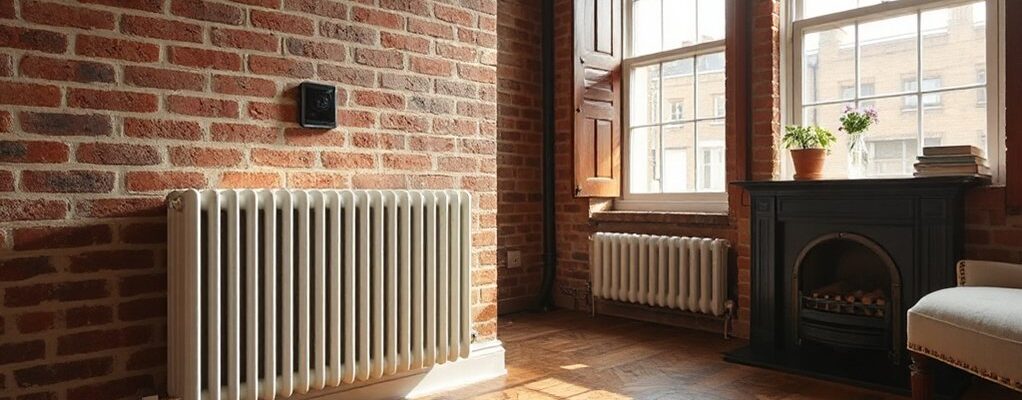
Did you know that the best solutions for old flats balance both preservation and performance, often using low-profile radiators or underfloor options that fit slim wall thicknesses? You’ll need to weigh layout, retrofitting impact, and maintenance demands carefully. A precise, controlled approach with compatible smart thermostats can cut standby losses and extend system life, but choosing the right combination requires clarity on heritage constraints and space limits—so what approach will you prioritize to keep warmth efficient and character intact?
Decide the Best Heating Approach for an Older Flat
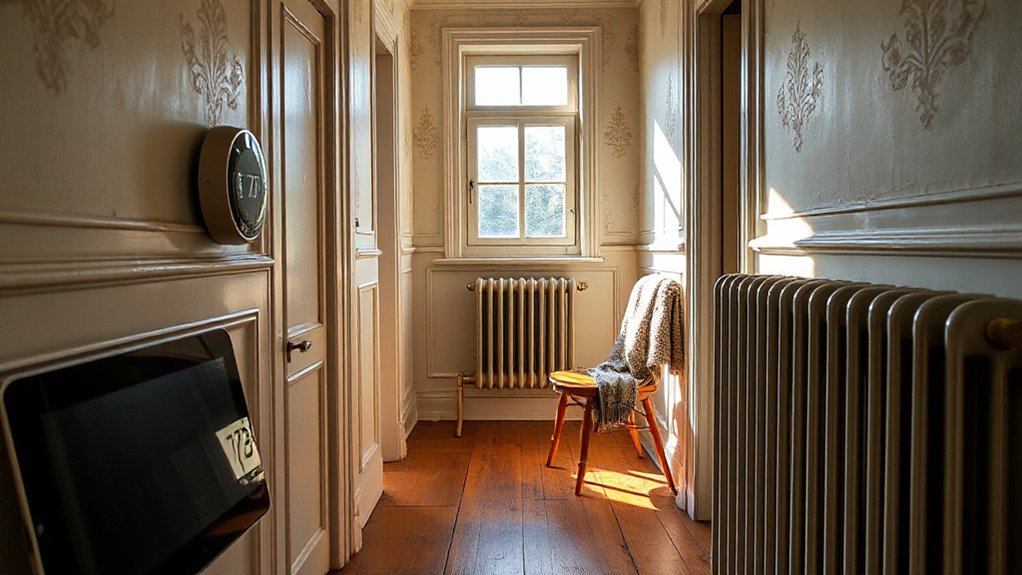
Choosing a heating approach for an older flat starts with evaluating heat loss, occupancy patterns, and the building’s retrofit potential. You assess envelope efficiency, glazing quality, and chimney status to determine feasible retrofit steps.
Then you outline energy delivery goals, comfort targets, and budget constraints, mapping them to system types. You should compare efficiency, control capability, and maintenance requirements for options such as from electric heat pumps to gas or district solutions, prioritizing low-carbon pathways where viable.
Incorporate Smart thermostats to optimize scheduling, detect anomalies, and minimize standby losses.
Consider Renewable energy integration, including on-site generation or surplus imports, to reduce operating costs.
Conclude with a decision matrix that ties retrofit potential to long-term reliability, cost, and user experience, ensuring your choice aligns with building constraints and regulatory requirements.
Radiator Layouts That Work in Thick Walls
When dealing with thick exterior walls, radiator placement and sizing must account for heat transfer paths and flow efficiency to maintain even room temperatures.
In such layouts, position radiators to create balanced circuits, avoiding dead zones behind large furniture or alcoves that disrupt convection.
For thick walls, place units low and mid-height to optimize warm-air rise and maximize surface area contact with wall insulation.
Use longer, fewer radiators where possible to reduce temperature stratification, and connect with correctly sized pipes to preserve flow rates.
Consider radiator placement that aligns with key heat-loss corridors, ensuring transfer paths are unobstructed.
Pair layouts with adequate wall insulation, sealing gaps around window frames, and minimizing thermal bridges for consistent comfort throughout the space.
Retrofitting Without Destroying Character
Retrofitting without destroying character requires a measured approach that preserves architectural details while delivering modern heating efficiency. You implement changes that are minimally invasive, using non-destructive methods and modular upgrades aligned with building fabric.
Prioritize systems with low visual impact, such as concealed piping routes and compact circulation paths, to retain original profiles. Conduct a thorough assessment of massing, materials, and finials, then select components compatible with existing radiators and decorative elements.
Plan for periodic inspections during installation to verify performance and prevent hidden damage. Integrate smart thermostats to optimize comfort without altering thermal envelopes, ensuring zone control mirrors historic room usage.
Document all interventions for future maintenance, and maintain reversibility where feasible to preserve long-term heritage value.
Efficient Space-Saving Heating for Tight Spaces
In tight spaces, the key is deploying compact, high-efficiency heating solutions that minimize footprint without sacrificing performance. You should prioritize systems that deliver consistent output with minimal ductwork, reducing cold spots and heat loss.
Smart thermostats enable zone control, adaptive scheduling, and rapid response to occupancy, enhancing efficiency without increasing cabinet size. Choose units with high heat output per cabinet volume and integrated filtration to preserve air quality in compact flats.
Underfloor heating offers even temperature distribution and unobstructed vertical space, ideal for narrow layouts, provided the subfloor allows installation without compromising structural integrity.
Consider electric panels or low-profile radiators for retrofit compatibility, ensuring you assess insulation, thermal mass, and heat-up time.
Favor modular, scalable solutions that support future space reconfiguration while maintaining strict performance benchmarks.
Costs, Reliability, and Maintenance You Can Trust
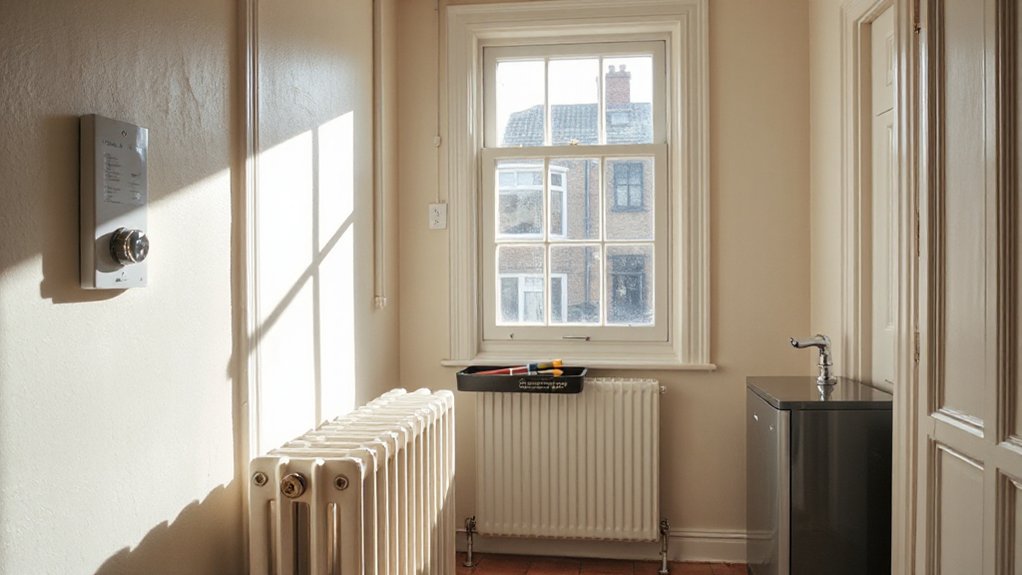
Costs, reliability, and maintenance must be evaluated alongside performance to guarantee sustained comfort in old-building flats. You’ll prioritize total cost of ownership, factoring installation, service, and part availability over the system’s first price.
Reliability hinges on robust components, clear fault codes, and accessible diagnostics, reducing downtime and disruption.
Schedule preventive maintenance aligned with equipment cycles to prevent efficiency loss and sudden failures.
Energy efficient upgrades should be pursued with documented efficiency gains and compatibility checks against existing radiant or convective layouts.
Smart thermostat integration can optimize control, but verify compatibility with legacy control signals and wiring constraints to avoid intermittent operation.
Maintain detailed logs, track performance metrics, and establish a responsive support plan to ensure consistent comfort and predictable operating costs.
Frequently Asked Questions
How Can I Insulate Without Damaging Historic Features?
Yes—you can insulate without damaging historic features by using non-invasive methods, preserving plaster and woodwork, and employing slip-on, breathable insulation techniques. Historic preservation standards guide you, ensuring compatibility, while durable, low-impact insulation techniques optimize comfort without altering character.
Do Gas Boilers Suit Listed Buildings With Radiators?
Direct answer: yes, gas boilers can suit listed buildings with radiators, when installed with care. You evaluate gas compatibility and radiator efficiency, ensuring ventilation, compliance, and minimal feature impact through careful layout, conservative outputs, and professional, approved installation.
Can Underfloor Heating Work With Thick Wall Construction?
Underfloor heating can work with thick wall construction, provided you optimize wall insulation and system zoning. Wall insulation improvements boost heating compatibility, reduce heat loss, and guarantee even floor temperatures. Assess structural load, insulation values, and control strategies carefully.
What Grants or Subsidies Are Available for Retrofits?
For you, grants vary by region; example: a hypothetical retrofit program covers 40% of costs. You’d access financial incentives through local authorities and utility programs, aligning with standards, applications, and reporting to maximize eligible retrofit program benefits.
How Often Should Heating Systems in Old Flats Be Serviced?
You should service heating systems in old flats annually, ideally before winter. This maintains safety and efficiency. Install smart thermostats to optimize energy efficiency, monitor performance, and guarantee you meet professional standards for ongoing reliability.
Conclusion
When you choose a retrofit, you’ll gain reliable warmth with minimal disruption to character and structure. Opt for low-profile radiators, compact electric panels, or underfloor options that suit thick walls and tight spaces, all paired with smart thermostats for precise control. Prioritize minimal invasiveness, durability, and compatibility with existing controls to cut maintenance. Remember: slow and steady wins the race—think long-term reliability over flashy upgrades, and you’ll preserve heritage without sacrificing comfort. Adage: measure twice, install once.