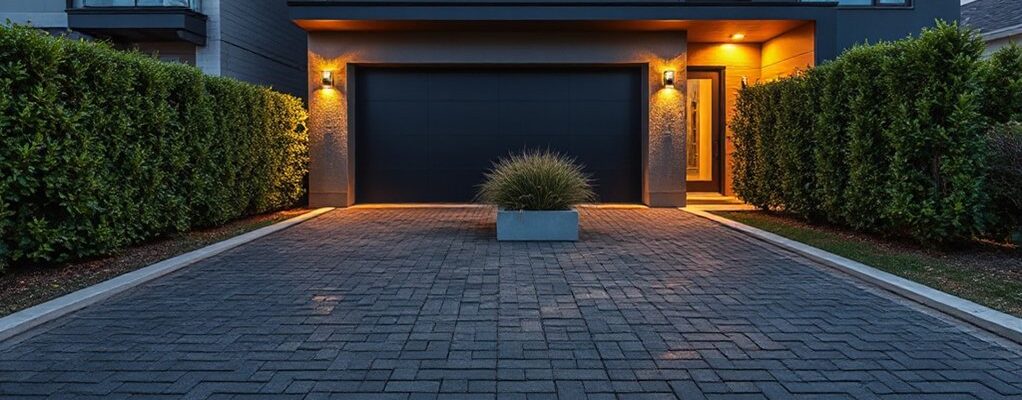
When you pull up to a modern townhouse, your driveway should feel like a seamless extension of the facade, much like a well-tuned instrument that’s always in tune. You’ll want space-efficient layouts, durable materials, and smart drainage that prevent puddling while preserving curb appeal. Permeable surfaces, low-profile pavers, and restrained color variation create cohesion from curb to entry. Add subtle lighting and privacy screens, and you’ve set up a durable, eco-friendly approach that invites closer consideration of what comes next.
Key Takeaways
- Favor compact, modular permeable paver systems with seamless joints for a sleek townhouse curb appeal and efficient drainage.
- Use durable, color-matched concrete options with proper curing, joints, and textures to resist cracking and wear.
- Integrate privacy screens and plant buffers to soften transitions from curb to entry while maintaining visual cohesion.
- Prioritize energy-efficient lighting, smart controls, and scalable systems that align with long-term property value and maintenance.
- Choose modular, recyclable components and low-maintenance landscaping to maximize resale value and future flexibility.
Key Criteria for 2026 Townhouse Driveways: Space, Drainage, and Durability
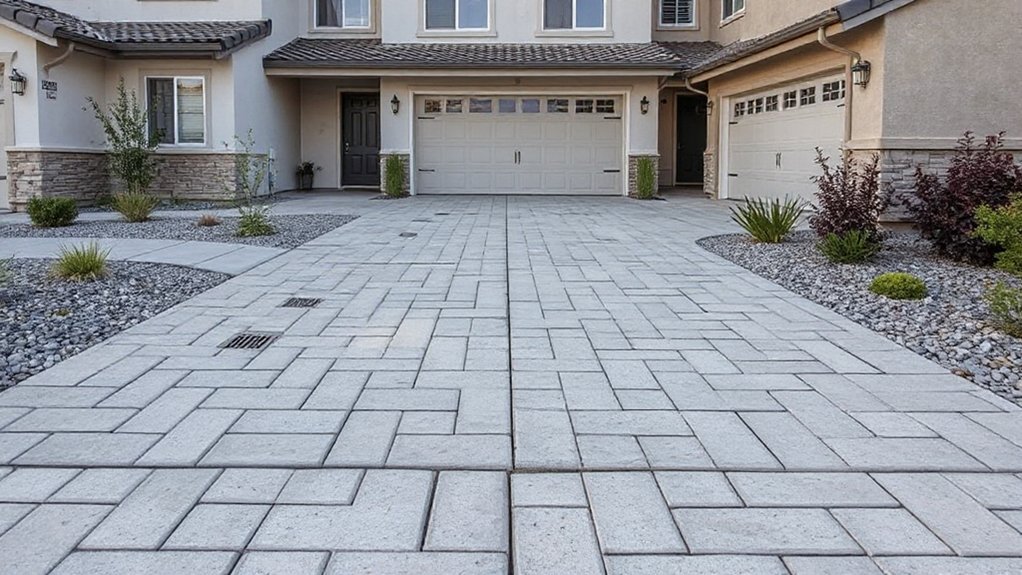
Optimizing townhouse driveways in 2026 hinges on three core criteria: space efficiency, robust drainage, and long-term durability. You assess layout constraints first, prioritizing straight access for loading and egress with minimal turning radii.
Space efficiency drives compact, modular paving schemes that preserve front-yard landscaping options while still meeting vehicle-length requirements. For drainage, you specify graded surfaces, permeable pavers, and sub-base collapsible layers to prevent pooling and freeze-thaw damage, ensuring reliable function year-round.
Durability hinges on material selection, seasonal resilience, and low-maintenance joints that resist cracking. Privacy considerations factor into screen walls and planting buffers that deflect noise and visual intrusion without compromising drainage or circulation.
You finalize drawings with precise tolerances, balancing aesthetics, function, and long-term performance.
Choose Low-Profile Materials for a Clean, Modern Look
You’ll evaluate low-profile materials that keep sightlines clean while reducing street-level scruff and trip hazards.
Consider composite pavers for a consistent, low-profile finish that resists wear, with tight joints that read as a seamless plane.
Weigh net-weight material options against installation practicality to achieve a precise, modern edge without bulk.
Composite Pavers Aesthetics
Composite pavers deliver a clean, modern look when selecting low-profile materials that maximize surface continuity and minimize height. You guarantee tight tolerances, consistent bite edges, and minimal grout or sand joints to maintain a seamless plane.
Color options should align with the townhouse palette, offering subtle shifts rather than bold contrasts to preserve cohesion.
Surface textures matter: choose fine-sant or brushed finishes that reduce glare and enhance slip resistance without breaking the visual plane.
Dimensional stability under temperature swings is essential, so verify mold and joint compatibility with adjacent hardscape.
Installers should assure uniform load transfer, preventing trip hazards while preserving a flush, uninterrupted surface.
Net-Weight Materials Choice
Consider subbase compatibility, drainage, and frost resistance to prevent heave and settlement. Opt for fastening systems and edge restraints that minimize protrusion while maintaining joint integrity.
Eco friendly alternatives should integrate without compromising performance, leveraging recycled aggregates and low-embodied-energy binders where feasible.
Aesthetic enhancements come from consistent color and texture vocabulary across the surface, ensuring a seamless progression to surrounding paving.
Document material certifications, installation tolerances, and long-term maintenance to sustain structural integrity and design fidelity.
Use Permeable Surfaces to Manage Rain and Reclaim Space
Permeable surfaces are a practical way to manage stormwater on modern townhouse driveways while reclaiming usable space. You’ll integrate engineered permeable pavements, subgrade drainage, and controllable outlets to optimize infiltration rates without compromising load capacity.
Use Rainwater harvesting concepts to capture runoff for irrigation or washing, reducing mains dependence. Choose environmentally friendly materials that resist wear while minimizing heat retention and chemical leaching.
Guarantee detailed specifications for porosity, clog resistance, and filtration, plus maintenance access. Precision layout aligns with grading plans and local codes, preserving drive turnover while expanding usable frontage.
- Specify porosity targets and filtration media for each layer
- Align curb inlets with surface slope for efficient drainage
- Select durable eco friendly materials with low environmental impact
- Plan routine inspection and cleaning intervals to sustain permeability
Add Texture and Pattern With Pavers for Visual Interest
Texture and patterning with pavers elevates modern townhouse driveways by combining grip, visual rhythm, and drainage efficiency. You select paver shapes, sizes, and finishes to create textured patterns that minimize slick surfaces while guiding water to permeable bases.
Align modules with purposeful joints to control edge definition, define zones, and emphasize architectural lines. Juxtapose textures—sawn, tumbled, or textured surfaces—against smooth inserts to achieve dynamic contrast without excessive glare.
Use artistic arrangements that repeat, stagger, or rotate modules to sustain visual coherence across the frontage. Consider color harmonies that complement facade materials, ensuring legibility from curb to entry.
Assess施工 tolerances, sub-base compaction, and interface tolerances between pavers and edging. Document maintenance needs to preserve texture and pattern integrity over time.
Build Long-Lasting Concrete and Durable Finishes
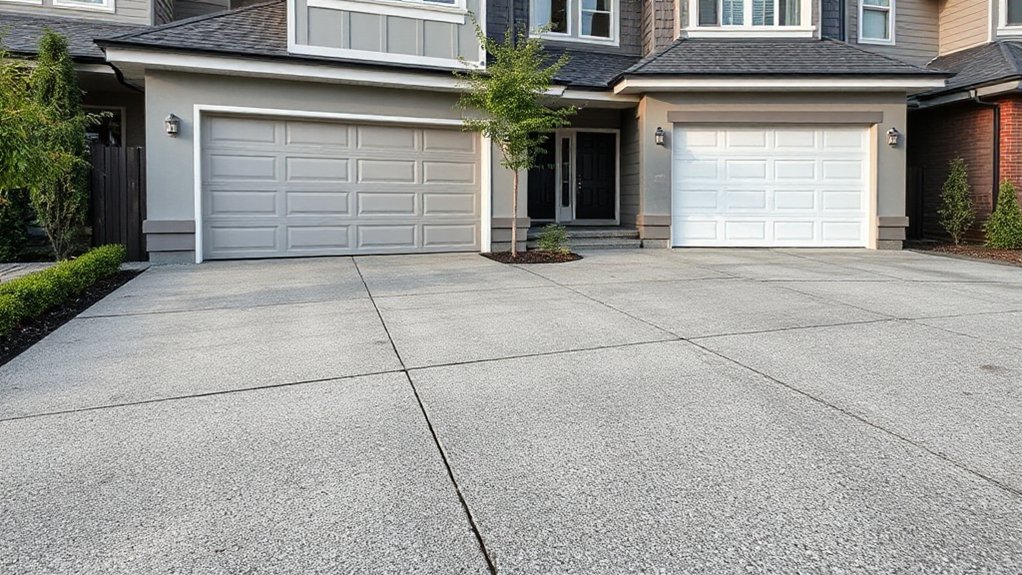
Concrete and durable finishes underpin the longevity of modern townhouse driveways, translating textured pavers into a resilient, low-maintenance surface. You optimize longevity by selecting dense-graded concrete, integral color, and sealers that resist abrasion and chemical attack. Proper curing, joint spacing, and load-bearing design prevent cracking, while broom- or trowel-skim textures balance traction with smooth wheel entry.
Landscaping accents and lighting solutions integrate function and curb appeal without compromising durability. Your detailing focuses on substrate preparation, slope accuracy, and drainage to avert pooling and freeze-thaw damage.
- Specify high-quality aggregates, near-zero slump mix, and air-entraining admixtures for durability.
- Use penetrating sealers with UV resistance and periodic reapplication scheduling.
- Integrate surface textures that maintain slip resistance under weathering.
- Plan landscaping accents and lighting to enhance perception without stressing the surface.
Layout Patterns That Maximize Parking and Accessibility
Efficient driveway layouts maximize parking density and accessibility without sacrificing safety or drainage. You choose layout patterns that minimize maneuvering space while maximizing stall count, using geometric efficiency and setback alignment to maintain clear sightlines.
Consider a two-car court with a compact turnaround, avoiding dead-end pockets that force backing. Parallel and offset stalls reduce door dings and improve flow, while permeable joints manage stormwater and curb fire routes.
Landscape integration guides trimming clear zones and buffers, preserving pedestrian accessibility along the front. Lighting solutions are positioned to illuminate corners, step edges, and ingress paths without glare.
Material contrast and grading ensure wheel loads stay within design envelopes, while curb radii support wheelbase variability. Finally, coordinate with drainage and utilities to preserve future adaptability.
Embrace Smart, Sustainable Choices for Townhouse Living
Smart, sustainable choices in townhouse living start with integrated decisions that balance performance, cost, and livability. You’ll optimize energy use and material impact by prioritizing efficient systems, durable finishes, and scalable layouts that future-proof your unit.
Focus on Smart lighting to reduce standby draw and adapt to daily routines, and select Sustainable materials with low embodied energy for longevity and minimal maintenance. Precision detailing ensures seamless integration from façade to interior, supporting durable performance in shared environments and limited space.
- Adopt smart lighting controls with occupancy sensors and daylight harvesting
- Choose sustainably sourced, low-emission materials and finishes
- Implement modular, recyclable components for easy maintenance
- Align appliance and system choices with energy data and future upgrades
Budget, Maintenance, and Value: How to Decide
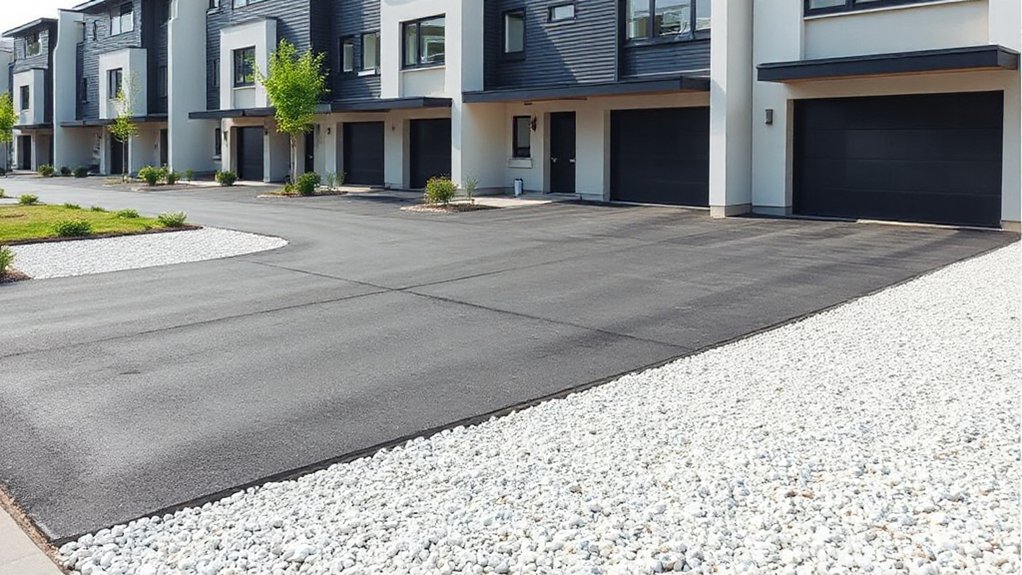
Budget decisions for modern townhouses must balance upfront costs with long-term value, maintenance needs, and resale appeal. You’ll evaluate total ownership costs, including installation, maintenance cycles, and utility demand, before selecting a drive material.
Prioritize durability, slip resistance, and resilience to weather, then compare warranties and service intervals.
Landscaping options should complement curb appeal while requiring minimal upkeep; plan for drought-tolerant varieties, permeable edging, and integrated irrigation where appropriate.
Lighting solutions must enhance safety and aesthetics without excessive energy draw, so choose low-maintenance fixtures with long-life LEDs and smart controls.
Consider future flexibility: adaptable surface treatments, removable landscaping components, and scalable drainage.
Finally, model resale impact by documenting maintenance workflows, material replacement schedules, and anticipated tax or incentive implications to support a data-driven decision.
Frequently Asked Questions
How Do HOA Rules Affect Driveway Design Choices?
HOA rules shape your driveway design through HOA restrictions and Driveway aesthetics, limiting materials, colors, widths, and setback clearances. You must align with architectural guidelines, locking in permitted surface types, permeability, and drainage.
You’ll need approvals for changes, ensuring fire lanes and access points remain unobstructed. Plan for compliance-heavy detailing, like edging, curbing, and swales, so your design integrates with community standards while preserving visual coherence and functional performance.
What Is the Fastest Way to Estimate Installation Costs?
To estimate installation costs quickly, start with a cost estimation formula: multiply unit costs by measured areas, include mobilization, drainage, and permits, then adjust for site constraints.
Gather material prices, labor rates, and contractor overhead; use a baseline installation timeline to flag schedule risks.
Compare asphalt, concrete, and paver options for upfront costs and long-term durability.
Document assumptions, weather windows, and contingencies.
You’ll produce a defensible estimate, with a clear installation timeline.
Can Driveways Enhance Curb Appeal Without Reducing Space?
Yes, driveways can boost curb appeal without sacrificing space. Think of your front yard like a clock: a slim, well-placed driveway acts as the minute hand, guiding sightlines without crowding.
You’ll optimize landscaping options and install lighting enhancements to accent textures.
From a practical standpoint, choose permeable materials and slim borders to preserve greens. You’ll gain balance, durability, and modern polish—while saving setback space for trees, shrubs, and seasonal color.
Which Drainage Tests Are Required for Permits?
You must meet Drainage standards to obtain permits, and a qualified engineer typically verifies systems before approval.
Drainage standards dictate rainfall runoff calculations, its connection to the municipal system, and proper slope to avoid standing water.
Permit requirements often include an as-built drainage plan, soil tests, infiltration bore logs, and cross-sections showing swales or catch basins.
Confirm your design aligns with local ordinances, drainage easements, and reporting deadlines to avoid permit delays.
Are There Grants for Permeable or Sustainable Driveways?
Permeable pavement grants exist, and you can pursue grants for permeable pavements and sustainable materials. You’ll want to check local, state, and federal programs, plus utility or watershed initiatives that incentivize green upgrades.
Apply with clear drainage, soil, and runoff data, plus lifecycle analyses. You’ll document costs, maintenance plans, and anticipated environmental benefits.
Partnerships with contractors and sustainability offices can help. Budget for testing, impermeable risk mitigation, and long‑term performance monitoring to maximize grant eligibility.
Conclusion
You’ll nail curb appeal so well that neighbors double-take, traffic stops, and billboards suddenly feature your driveway in living color. By balancing space, drainage, and durability, you’ll deploy low-profile materials with surgical precision, weave permeable surfaces for rain reclamation, and texture with pavers that shout design-forward, not loud. Concrete lasts decades, patterns maximize parking, and smart choices slash maintenance. Budget smartly, plan meticulously, and you’ll enjoy a pristine, sustainable entrance that makes every arrival feel like a grand, architectural finale.