
Did you know the frame material can matter almost as much as the glazing itself for UK homes? You’ll want to weigh U-values, energy performance, and sealing all the way through installation. Get a solid grasp of what’s feasible with PVC-u versus timber, plus how different glazings alter warmth and noise. There’s more to uncover—from grants to warranties and practical tips to prevent drafts—before you decide.
Is Double Glazing Worth It for Your Home?
Double glazing can cut heat loss and reduce energy bills, but its value depends on your climate, home design, and existing windows. You’ll assess return on investment by comparing installation cost, expected energy savings, and the lifespan of the units. In many UK homes, the improvement is strongest with proper frame compatibility, correct installation, and good u-value performance. You’ll also consider heat transfer, condensation risk, and seasonal comfort, since not all setups yield identical performance. Window aesthetics matter for curb appeal and interior feel, but must not compromise sealing quality or performance. Maintenance requirements include regular seal checks, spacer corrosion inspection, and cleaning of rebates to avoid wicking moisture. If your current windows are drafty or poorly insulated, double glazing offers a pragmatic improvement.
How Energy Efficiency Affects Your Windows
Energy efficiency reshapes how your windows perform by controlling heat flow, air leakage, and moisture management. When you improve insulation, you reduce heat loss in winter and cut cooling loads in summer, so you stay comfortable with less energy. Window insulation plays a central role: better seals, low-conductivity frames, and filled cavities minimize drafts and cold spots. That also lowers wind-driven infiltration, reducing indoor humidity swings and condensation risk. You’ll notice steadier temperatures, fewer hotspots near glazing, and reduced boiler or heat-pump cycling. Solar gain matters too: intelligent glazing can admit useful sun warmth while limiting overheating, so you balance comfort and energy use. Overall, efficiency choices translate into lower bills, durable performance, and improved occupant comfort over time.
Read EPCS and U-Values: What to Look for
When evaluating windows, start by reading the EPCS and U-values, because these metrics reveal how well a unit resists heat flow and seals air leaks. You assess EPC ratings to understand overall energy performance, including improvements from glazing, gas fills, and spacers. Focus on U-value significance: lower numbers mean better insulation, reducing heat loss in winter and heat gain in summer. Check the testing standard used, ensuring measurements are from a credible lab and representative of real-world usage. Recognize that EPCS capture additional performance factors like airtightness, condensation risk, and seasonal efficiency. Compare units with similar sizes and glass configurations, not just the lowest U-value. Use these metrics to form a practical energy-saving baseline for long-term running costs.
Choose Frames: Materials, Styles, and Installation Considerations
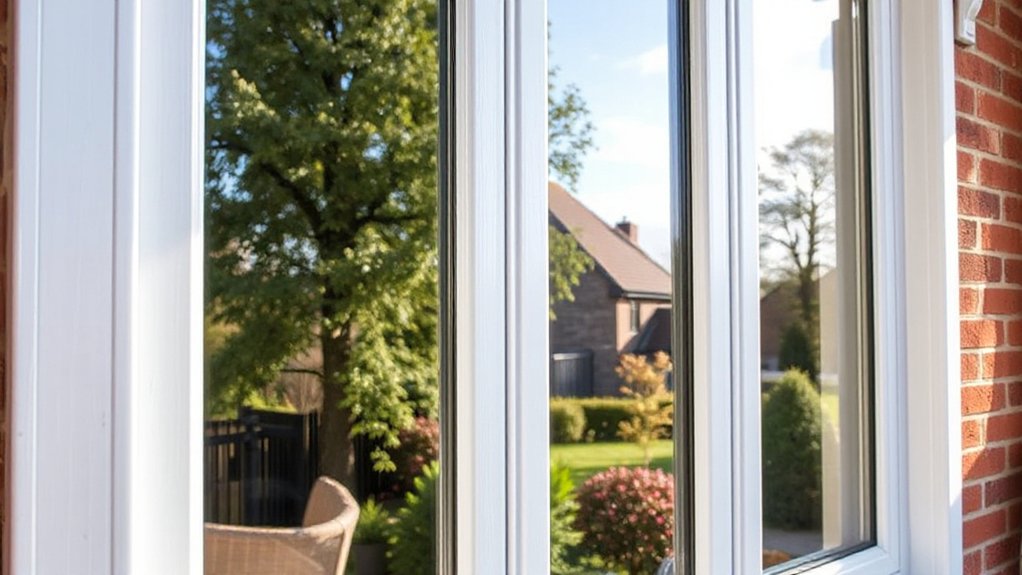
Choosing frames matters as much as the glazing, because frame material, style, and installation details directly affect heat transfer, durability, and airtightness. You’ll evaluate frame materials for thermal performance, structural integrity, and long-term resistance to UK weather. PVC-u offers low thermal conductivity and good airtightness; aluminum provides strength but higher thermal bridging unless thermally broken. Timber delivers natural aesthetics but requires maintenance and rot resistance planning. Consider hybrid frames to balance rigidity and insulation. Style choices influence sash packing, glazing bead efficiency, and compatibility with gas-filled units. Installation considerations include correct sealing, frame squareness, and condensation control at joints. Frame durability and maintenance cycles impact life‑cycle cost. Aesthetic options should align with building fabric and resale expectations, while preserving performance across seasons.
Glazing Options for Warmth and Quiet
Glazing options that maximize warmth and suppress noise hinge on the type of glass, gas fill, and spacer design. You’ll optimize performance by selecting low-emissivity (low-E) coatings, insulating gas fills (argon or krypton), and a multi-part spacer system to minimize thermal bridging and acoustic transmission. Consider acoustic glazing for higher sound insulation and window tinting for solar control without sacrificing visibility. Your choice should balance U-value targets, wind load tolerance, and glare reduction with durability and maintenance needs.
- Use double or triple glazing with low-E and a noble gas fill for best warmth and quiet
- Choose acoustic glazing where exterior noise dominates and consider window tinting for glare control
- Verify spacer design minimizes thermal bridging and maintains long-term seal integrity
Cost, Grants, and Long-Term Savings
Cost considerations frame the upfront investment and payback horizon for double glazing, including installation costs, warranties, and potential long-term maintenance. You’ll assess energy savings against the initial outlay, factoring in local grants, rebates, and any applicable incentives. We’ll outline how these inputs drive the total cost of ownership and the expected break-even timeframe.
Cost Considerations
What are the financial implications of upgrading to energy-efficient double glazing, and how do grants, incentives, and long-term savings balance the upfront cost? You quantify upfront expenditure, installation logistics, and potential disruption, then weigh against available grants, VAT relief, and installer finance. Consider payback periods, energy-price scenarios, and warranty terms to project total cost of ownership. Material durability and aesthetic appeal influence maintenance needs and resale value, shaping life-cycle costs. Analyze insulation gains, reduced drafts, and quieter performance as they translate into lower energy bills without compromising comfort. Compare product warranties, glazing options, and professional installation charges to refine cost accuracy. Factor in available government schemes and local incentives to improve affordability, while avoiding over-optimistic assumptions.
- Clear upfront cost vs. long-term savings
- Grants, incentives, and financing options
- Warranty terms, maintenance, and resale impact
Long-Term Savings
Could upgrading to energy-efficient double glazing deliver meaningful long-term savings, or do upfront costs and incentives complicate the picture? You’ll assess total lifetime costs, balancing purchase price, installation, and maintenance against energy reductions. Thermal insulation improves heat retention in winter and reduces cooling loads in summer, lowering heating and cooling bills over years. Solar gain management minimizes overheat risk while preserving usable daylight, contributing to energy savings without compromising comfort. Grants and incentives can reduce initial outlay, shortening payback periods, but eligibility, scope, and expiry vary by region and product type. Calculate simple payback and net present value to compare options. Consider warranty coverage, glass and spacer quality, and frame compatibility, since long-term savings depend on performance consistency, durability, and service availability beyond installation.
Install Correctly to Prevent Drafts and Cold Bridging
To prevent drafts and cold bridging, seal gaps properly, verify frame alignment, and ventilate correctly during installation. You’ll guarantee airtight joints, true square frames, and controlled ventilation to minimize heat loss. Use these checks as a baseline for subsequent steps and field adjustments.
Seal Gaps Properly
Sealing gaps correctly is essential to prevent drafts and cold bridging because even small leaks undermine insulation and increase energy use. You’ll optimize performance by filling voids around the frame with compatible sealants and tapes, ensuring continuous contact with the sash and wall. Use backer rods for larger gaps, then apply a weatherproofing sealant that remains flexible in UK conditions. Verify that the glazing unit remains square and that glazing beads seat evenly to avoid pinching. This reduces convection hot/cold flows and supports effective window insulation while maintaining drainage and ventilation paths. Consistent sealing also supports durable weatherproofing techniques over the long term.
- Choose low‑VOC, paintable sealants suited to external exposure
- Apply backer rods before flexible sealant for large gaps
- Test for air leaks with a simple light‑down draft check
Check Frame Alignment
Check frame alignment now to guarantee the sash sits true and the unit remains square. You verify that the frame is plumb and level, using a spirit level across corners and along the sash track. Inspect for twist or bow in the frame, and correct any misalignment before final fixing. Confirm that hinge alignment matches the sash’s joints, ensuring even load distribution and smooth operation. Misaligned hinges can create binding, uneven gaps, and draft paths that undermine energy performance. During adjustment, maintain consistent reveals around the sash to preserve frame integrity and weather sealing. After alignment, re-check the squareness with a diagonal measurement and test opening and closing cycles. Document any deviations and apply precise shimming or screw tightening as needed to sustain performance.
Ventilate Correctly During Installation
How should you ventilate correctly during installation to prevent drafts and cold bridging? You must plan ventilation at the outset, matching system type to room uses and glazing layout. Guarantee airtight seals without obstructing purposeful air movement, and install continuous extraction or balanced ventilation as required by the building regulations. Inspect duct runs for smooth bends, minimal length, and accessible cleanouts. Verify that still air pockets don’t form behind frames, and test for uniform flow across all zones. Align seals with glazing to maintain Indoor air quality and minimize thermal bridging. Use appropriate ventilation systems settings during commissioning, and document performance for future maintenance.
- Confirm system type and zoning align with room usage
- Check duct integrity, bends, and accessibility
- Commission airflow balance and document metrics
Frequently Asked Questions
How Does Double Glazing Perform in Listed or Historic UK Homes?
In listed or historic UK homes, double glazing performs well when you prioritize Historical preservation and aesthetic compatibility, using slim or mock-sash units. You’ll balance thermal gains with character, ensuring frame materials and hardware suit the building’s era and integrity.
What Maintenance Reduces Performance Over Time, and How Often?
The performance degrades when you neglect seal integrity and window cleaning; inspect seals every 1–2 years and clean regularly to prevent grime from sealing in. Poorly maintained seals shorten efficiency; inspect and maintain annually for peak performance.
Do Triple-Glazed Options Ever Make Sense in UK Climates?
Yes, triple glazing can make sense in UK climates you’ll benefit from extra insulation and reduced heat loss. Triple glazing benefits may outweigh costs in harsh winters; however, conduct a careful Cost comparison before deciding.
How Do Frame Materials Affect Acoustic Insulation and Condensation?
Frame material selection directly influences acoustic performance and condensation risk; choose materials with low thermal bridging and sound damping. You’ll improve sealing, reduce air leakage, and optimize frame stiffness to sustain long-term acoustic performance.
Are There Hidden Costs Beyond Installation and VAT?
Hidden fees do lurk beyond installation and VAT, you’ll want to scrutinize warranty coverage and service plans. You’ll compare contracts, watch for maintenance charges, and insist on upfront clarity—satirically noting how every “miscellaneous” item multiplies costs.
Conclusion
In the end, double glazing is a doorway you’ll walk through many times. Think of your home as a chest, and U-values as the lock—pick the right specification, and drafts become whispers. Frames and glazing are the hinges, kept tight with proper installation. Grants are the torch, revealing savings you’ll carry forward. When you choose wisely, warmth stays, noise fades, and your property value rises, like a steady, well-oiled heartbeat within a smarter, cozier shell.