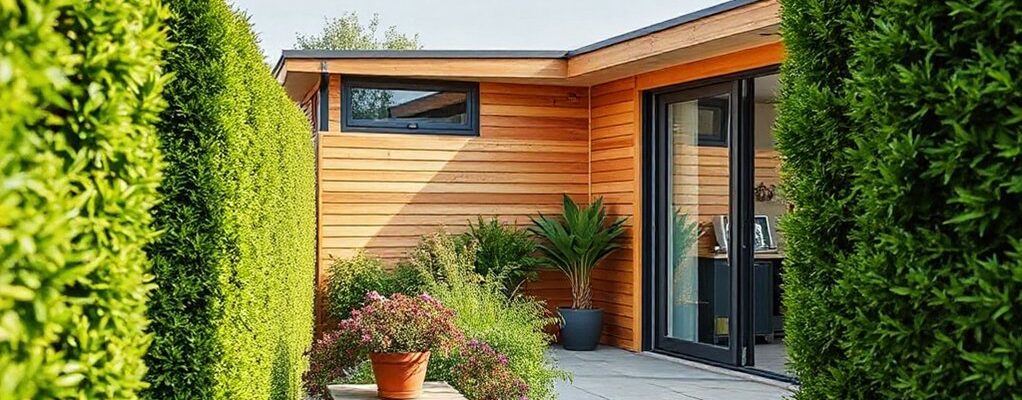
Does the idea that most garden rooms under a certain height always qualify as permitted development hold true in 2026 UK rules? You’ll need to assess size, height, location, and intended use against current thresholds and regional nuances. If you’re aiming to avoid planning delays, you must verify boundaries, prepare precise drawings, and consider pre-application advice now—but the specifics may surprise you, and a misstep could change the outcome. Let’s examine what actually applies to your setup.
Do I Need Planning Permission for a Garden Room in 2026?
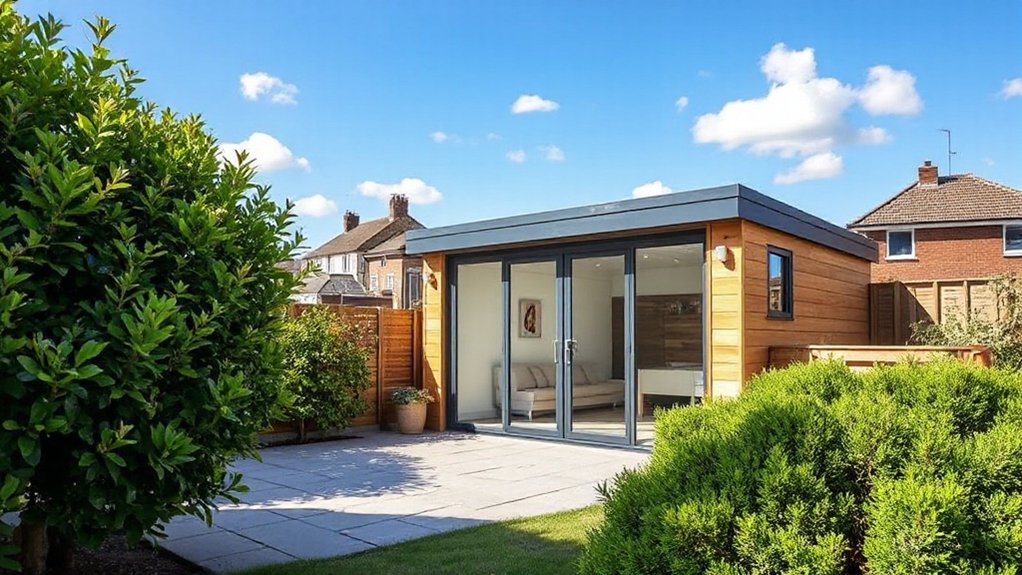
In 2026, whether you need planning permission for a garden room depends on its size, location, and intended use. You assess permitted development rules first, noting that many garden rooms remain PD if under 2.5–4 metres tall, set away from boundaries, and not used as another dwelling. If you exceed limits or include a dwelling-like use, you’ll require planning permission. Your assessment should consider local authority guidance, as exemptions vary by region and land type. Alongside regulatory compliance, you implement Landscaping tips to integrate the structure with your site, using appropriate screening and materials. Prioritise Garden security by securing doors, windows, and any access points, and plan sightlines to deter intruders. Document measurements, elevations, and intended functions for a precise planning conversation.
Quick PD Eligibility Checklist for Garden Rooms
A quick PD eligibility checklist for garden rooms helps you determine, at a glance, whether your structure qualifies under permitted development rules before you plan any construction. Use this concise guide to confirm key limits and exemptions before drafting designs.
- Confirm structure height and eaves are within permitted thresholds
- Verify total floor area remains within allowed limits for the site
- Check exclusions for materials, location, and overlaps with existing buildings
- Consider essential features, such as garden room insulation and garden room lighting, and whether these affect compliance
Note: Practical design choices should align with permitted development criteria, avoiding extensions that trigger planning permission. If any doubt remains, consult official guidance or a local authority.
Measure and Map Your Garden Room Site Accurately
Accurate site measurements and clear boundary mapping are essential first steps when planning a garden room. You should establish precise dimensions and demarcate boundaries to avoid encroachment and compliance issues. This foundation supports reliable design, planning checks, and future permission discussions.
Precise Site Measurements
Precise site measurements are essential to plan a garden room that complies with UK building regulations and your planning requirements. You measure boundaries, levels, and access with care, ensuring accuracy before any design decisions. Systematic data collection supports landscape design and lighting planning, allowing you to position doors, windows, and utilities efficiently. Document distances from property lines, drains, and trees, noting potential constraints that affect footprint and elevation. Use calibrated tools and reference points to minimize errors that could jeopardize approvals or construction. Maintain a clear record for subsequent plans and inspections, reducing ambiguity for planners and builders alike. A measured approach reduces revision cycles and enhances the integration of the structure with your site.
- Establish fixed reference points
- Record exact setbacks and elevations
- Verify service access routes
- Map drainage and vegetation considerations
Clear Boundary Mapping
Clear boundary mapping begins with accurately marking property lines and setbacks on the site. You must establish precise boundaries to prevent encroachment risks and guarantee compliance with planning guidance. Measure using calibrated tools, record dimensions to the nearest centimeter, and annotate any irregularities or easements. Create a scaled drawing that includes existing structures, fences, and gates, then note adjacent properties and public rights of way. Verify boundary accuracy through cross-checks against title deeds and local authority records. Document imperative setback constraints from the curtilage and any protected features. Consider garden aesthetics in layout planning, guaranteeing boundaries frame visual appeal without violating access. Plan for plant integration, selecting boundary-friendly species that maintain sightlines and drainage while preserving clear margins. Maintain a concise audit trail for future modifications.
PD Size, Height, and Material Limits You Must Know
You’ll need to understand the PD size limits, height restrictions, and allowable materials before planning your garden room. These rules determine what you can build without planning permission and how it’s constructed. We’ll outline the key thresholds and material options so you can assess compliance from the outset.
PD Size Limits
PD Size Limits: When planning a garden room, you must respect the size, height, and material constraints that apply to permitted development.
- Size caps: total floor area, counting any extensions, must remain within allowed thresholds for your site.
- Plot impact: ingress, egress, and proximity to boundaries matter for compliance.
- Height ceilings: eaves and overall height governability under permitted rules.
- Materials and appearance: chosen finishes align with local standards and approved schemes.
Adhering to these parameters minimizes risk of refusals and aligns with Landscaping regulations and Permitted development exceptions. Misjudgments here can trigger full planning, so verify measurements, boundary setbacks, and any local amendments before submission. You must confirm that your design remains within PD limits to avoid penalties.
Height And Materials
Height and materials are essential because PD rules cap what you can build without planning permission. You’ll assess height limits to guarantee your garden room remains within permitted development bounds, typically restricting to a specific ceiling height and overall height profile. Material choices affect appearance, durability, and compliance; you should select cladding, roof, and fenestration that align with regional guidance and neighbour impact considerations. Keep structure within size constraints to avoid requiring full planning consent, and document construction methods in case of future checks. Consider ventilation considerations early; proper ventilation supports indoor air quality and reduces moisture risk without increasing external visibility. Prioritize garden aesthetics in façade design while maintaining functional access and symmetry with surrounding properties. Plan methodically, verify measurements, and consult local guidance when in doubt.
Step-by-Step Path to a Smooth PD Application
To guarantee a smooth PD application, start with a clear briefing on your site, project, and compliance strategy, then map the permission path step by step. You will define admissible scope, verify exclusions, and align with landscape design and privacy screening needs from the outset. Follow a disciplined sequence to minimize revisions and delays.
- Establish site constraints, permitted dimensions, and boundary treatments that affect PD legitimacy
- Compile targeted drawings, elevations, and landscape plans reflecting privacy screening and screening efficiency
- Align materials, colors, and finishes with local guidance and statutory standards
- Schedule a timeline with milestones, submissions, and reviewer responses to secure timely approvals
Common PD Pitfalls and How to Fix Them
Common PD pitfalls often arise from assumptions rather than evidence. You can avoid them by verifying boundaries, permitted floor area, and site constraints before drafting plans. Do not rely on memory or informal advice; consult your local planning portal and seek pre-application feedback to confirm requirements. When detailing garden style, align features with actual exemptions and avoid overestimating built form or height. Misjudgments about materials, drainage, or access frequently trigger delays; document measurements, materials, and construction methods precisely. Consider eco friendly features that respect local ecology and energy standards, but substantiate claims with specifications and credentials. Finally, maintain a clear narrative in your application, attaching robust drawings and a concise justification to minimize back-and-forth and streamline approval.
Frequently Asked Questions
Do Garden Rooms Affect Council Tax or Business Rates?
You won’t automatically incur council tax changes or business rates solely from a garden room. Landscaping regulations and property valuation factors may influence assessments, so you should verify with your local authority, ensuring your measurements and use align with regulations.
Can a Garden Room Be Built on a Shared Boundary Line?
You can build on a shared boundary line, but you’ll face boundary considerations and shared boundary restrictions. Carefully assess party wall protections, obtain permissions where required, and guarantee proximity complies with planners and neighboring rights before you proceed.
Are There Acoustic or Insulation Standards Required by PD?
As for standards, you’ll find no nationwide PD soundproofing mandates, but you should meet soundproofing standards and insulation requirements for best performance. You comply by evaluating walls, floors, and roofs, and documenting tested performance for your project.
How Do Conservatories Impact PD Eligibility in 2026?
Conservatories can affect planning permission exemptions depending on size and position. You should assess whether your conservatory extensions meet permitted development criteria, as exceeding limits may require full planning permission. Always verify current exemptions before proceeding.
Do Gardening Fees or Permits Apply to PD Submissions?
Do gardening fees or permits apply to PD submissions? Generally, you don’t pay planning fees for permitted development, but you may encounter horticultural permits or fees for garden works. Garden aesthetics and plant selection influence approvals, not fee structures.
Conclusion
You should stay diligent: verify PD eligibility, then prepare precise drawings, measurements, and boundary checks before you apply. In 2026, roughly 60% of modest garden rooms succeed under permitted development due to careful siting and compliant dimensions, not because of luck. By following a step-by-step path and addressing potential pitfalls early, you’ll streamline approvals and reduce delays. Stay within height and distance limits, and seek pre-application advice if anything’s unclear to safeguard your project’s timeline.