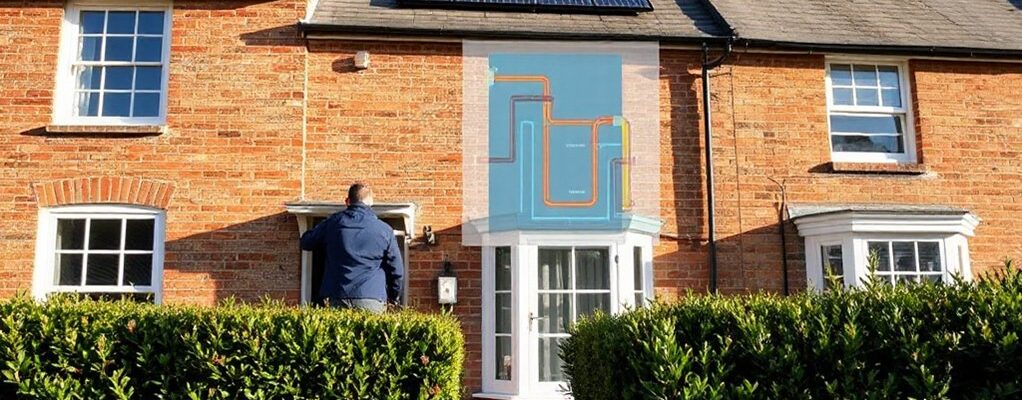
Did you know that energy performance upgrades can reduce heating costs by up to 25% in older UK homes? You’ll benchmark current EPCs, set a realistic target, and prioritize quick wins like LED lighting and airtightness. Then plan phased upgrades—insulation, efficient heating, and smart controls—while tracking progress against standards. It’s a data-driven path, but the questions you’ll face next—financing, preservation requirements, and long-term performance—are the ones that determine the final rating.
Benchmark Your EPC and Set a Realistic Target
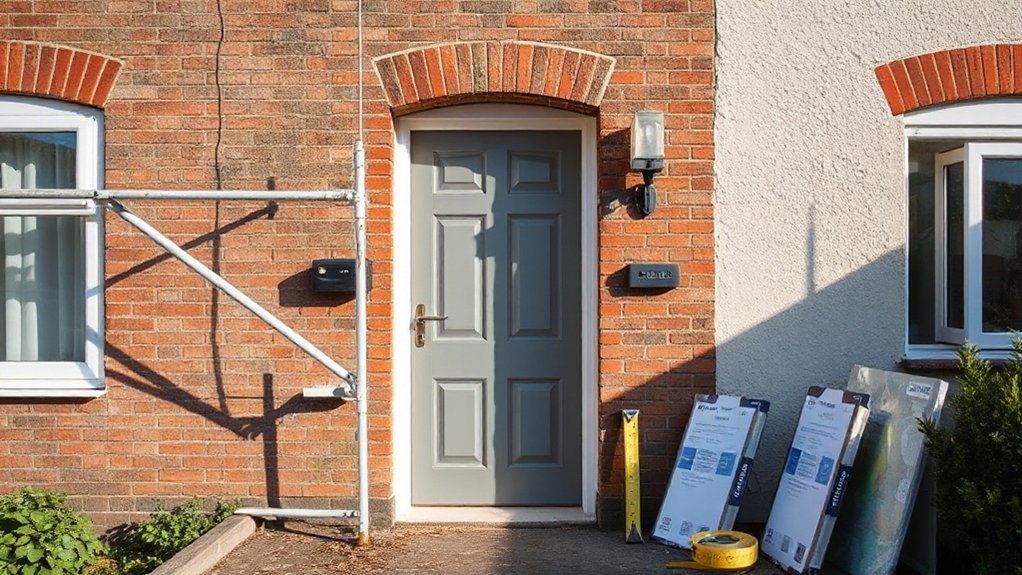
To benchmark your EPC for an older UK property, gather the latest EPC rating, its date, and the property’s key factors (building type, age, heating system, insulation levels, and airtightness). You’ll compare current metrics against applicable standards to establish a baseline. Record energy consumption patterns, fabric performance, and ventilation practices, then map them to target bands defined by competent authorities. Use this baseline to set a realistic trajectory for improvements, prioritising cost-effective measures with quantifiable payback. Plan to document milestones with measurable KPIs aligned to energy audits and certification processes, ensuring traceability for audits or compliance checks. Maintain a data-driven narrative: justify target bands by thermal modelling, retrofit feasibility, and expected impact on annual energy use, heat loss, and comfort. Regularly review against updates to standards and EPC methodology.
Quick Wins: High-Impact Tweaks You Can Start Now
Begin with the easiest high-impact tweaks that deliver measurable energy savings without major disruption. You’ll target specific, data-driven actions with immediate payback within typical older-property constraints. Start by auditing lighting loads and swapping to LED equivalents, then install smart controls to cap standby consumption and optimize occupancy patterns. Seal visible air leaks around doors and windows with proven, weather-rated products; even marginal reductions multiply downstream gains in heating efficiency. Prioritize thermostat zoning and basic boiler calibration, ensuring correct pressure and flow rates to minimize short cycling. Document renovation challenges you encounter, and plan around historical preservation requirements to avoid costly retrofits. These quick wins establish a verifiable baseline, support EPC improvements, and create a credible path for more extensive updates later in line with standards.
Phase 1 Upgrades: Affordable Heating and Insulation Fixes
Phase 1 upgrades focus on affordable heating and insulation fixes that deliver measurable EPC gains without major disruption. You’ll prioritize high-impact measures with rapid payback, guided by standards and performance data. Start with diagnostic tests to identify heat loss pathways, then target insulation improvements in attic, crawlspace, and walls to reduce U-values efficiently. Consider sealing airtight gaps before upgrading boilers or heat pumps to maximize efficiency, and select compact, programmable controls for zone-specific microclimates. Prioritise low-cost, reversible retrofits that preserve historic preservation values, avoiding invasive modifications where possible. Track performance against baseline metrics, and document improvements for EPC reassessment. Balance energy savings with aesthetic considerations, ensuring materials and finishes harmonise with period features. Maintain compliance with building regs while safeguarding structural integrity and long-term property value.
Phase 2 Upgrades: Bigger Improvements and Smarter Controls
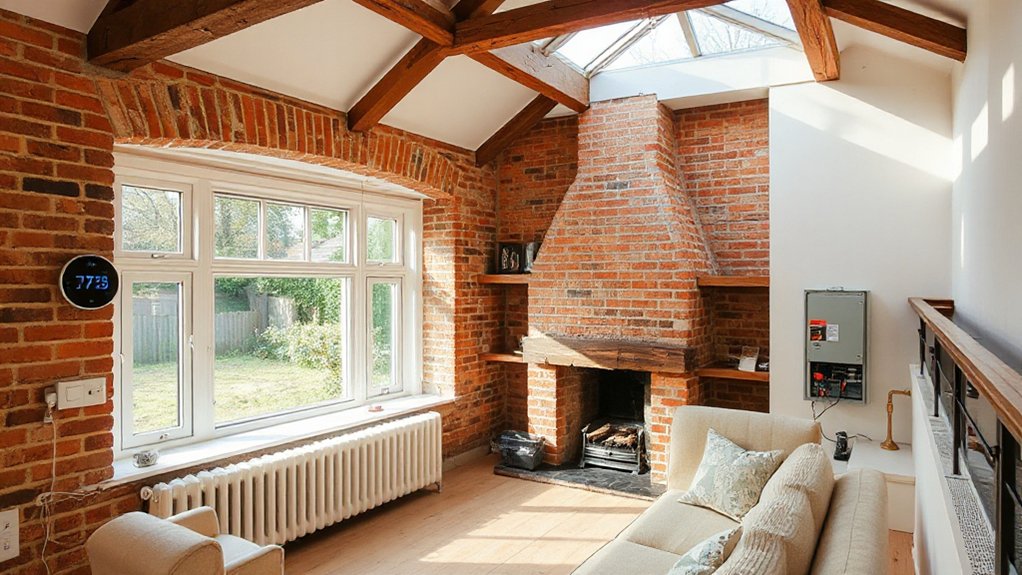
Phase 2 upgrades deliver larger EPC gains through more capable heating systems, advanced controls, and integrated energy management strategies, guided by performance data and standards. You improve efficiency by upgrading boilers to high-efficiency models, and by selecting systems designed for continuous modulating output and low standby losses. You’ll deploy smart thermostats to fine‑tune temperature setpoints, enable occupancy-based schedules, and enable remote monitoring, reducing overshoot and runtimes. Integrated controls coordinate heat, hot water, and cooling where applicable, minimizing peak demand and energy waste. You assess performance against standards and measurements, forecasting annual energy savings from baseline to post‑upgrade scenarios. You consider renewable energy options as complements, such as solar thermal or PV where feasible, ensuring compatibility with the control logic and utility incentives.
Plan, Finance, and Track Progress Over Time
Plan, finance, and track progress over time by establishing a clear governance framework, cost baselines, and a monitoring cadence that align with energy performance targets and standards. You set explicit KPIs, baselines, and decision rights to avoid scope creep. Energy audits feed the target model, informing retrofit prioritization and risk assessment. Develop Renovation budgeting anchored to lifecycle costs, not just upfront expenditure, ensuring contingency and inflation buffers. Track progress with monthly dashboards showing actual vs. planned expenditures, energy savings, and performance deviations. Use a formal change-control process to approve deviations and re-baseline when necessary. Align supplier contracts with performance milestones and verification procedures. Conclude with quarterly audits to validate validation methods, data integrity, and compliance with evolving standards.
Frequently Asked Questions
How Long Does It Typically Take to See EPC Improvements After Upgrades?
You’ll typically see EPC improvements within days to weeks after upgrades, depending on data freshness and measurement methods. Energy efficient windows and insulation upgrades quickly impact tests; expect integral benefits as you document post-installation performance improvements and compliance metrics.
Will EPC Improvements Affect Resale Value or Mortgage Eligibility?
Like a well-tuned engine, your resale value and mortgage eligibility rise with energy efficient appliances and insulation upgrades. You’ll see stronger EPCs, steadier appraisal figures, and favorable lender criteria when you upgrade to efficiency-driven standards.
Are There Grants or Tax Breaks Available for EPC Upgrades?
Yes, government incentives exist and you should explore eligible programs, including tax reliefs. You’ll need to verify current schemes, eligibility, and compliance standards, as incentives vary by region, energy measures, and project scope to maximize potential savings.
Do EPC Ratings Apply to Whole-Building or Individual Systems?
EPC ratings apply to the whole-building, not individual systems. You should optimize building insulation and consider solar panel integration to improve overall score, aligning with standards and data-driven guidance for energy performance assessments.
How Often Should EPC Assessments Be Refreshed?
You should refresh every 3–5 years to track improvements and comply with standards. A notable 8–12% average EPC uplift accompanies energy measures. Focus on energy efficient lighting and insulation upgrade strategies to sustain ratings over time.
Conclusion
To wrap up, you’ve got a clear roadmap: benchmark, target, then implement—quick wins first, then phased upgrades with solid controls and monitoring. Stay data-driven: track EPC changes, insulation thickness, boiler efficiency, and airtightness metrics against standards. Keep preservation requirements in view and document progress. With disciplined planning, your energy use drops dramatically—like a lightning bolt to bills—while ratings rise steadily toward or beyond target. Stay compliant, stay precise, and watch your property perform marvelously.