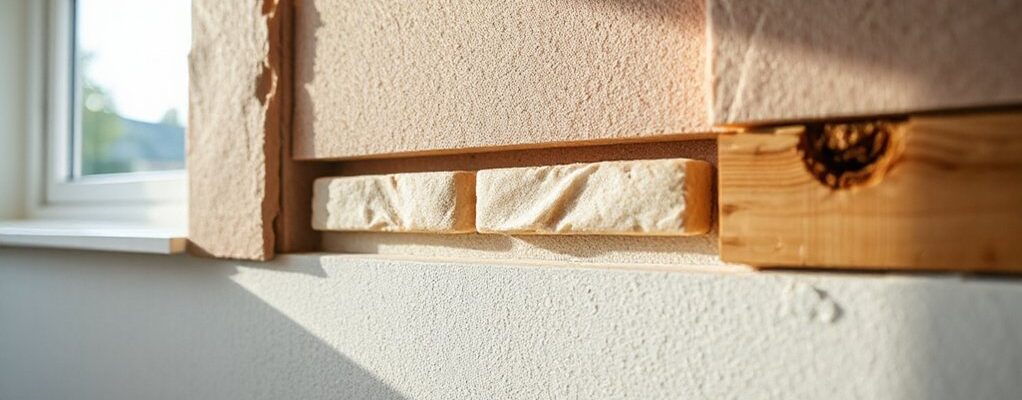
A coincidence in times of rising energy bills makes internal wall insulation a compelling option for UK homes, especially where solid or lightweight walls dominate. You’ll assess wall construction, moisture risk, and system compatibility before choosing an approach that minimizes cold bridging while improving airtightness. The wrong fit can cause damp or condensation, so you’ll want to weigh performance against disruption and costs. Start with a structured appraisal to guide your path toward durable, compliant performance, but a precise choice awaits your deeper review.
What Is Internal Wall Insulation (and When It Makes Sense)
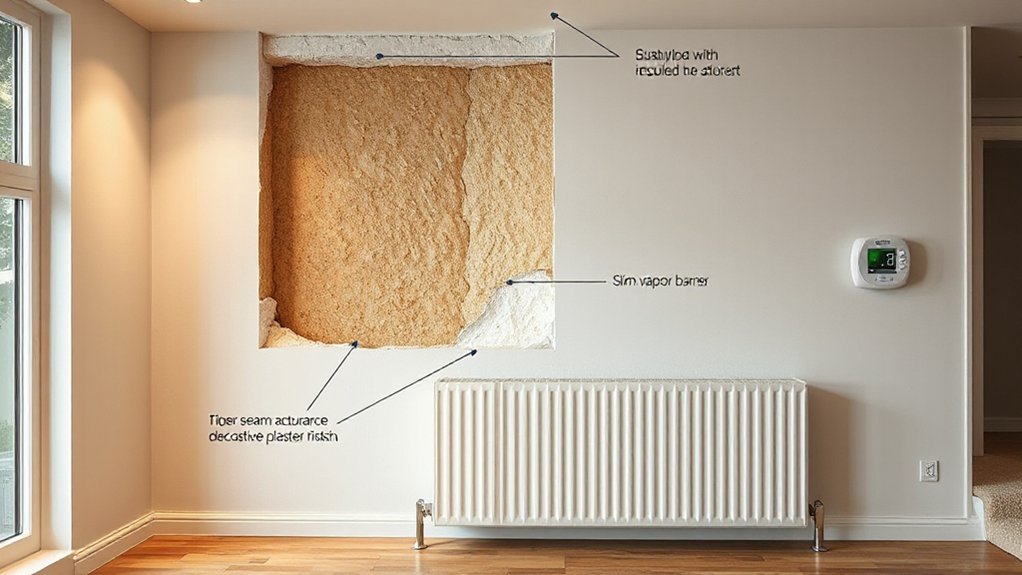
Internal wall insulation (IWI) refers to applying insulating material to the interior side of external or party walls to reduce heat transfer. You select IWI when existing walls lose heat due to high thermal transmittance, particularly in older UK properties with solid or lightweight constructions. You evaluate substrate compatibility, moisture risk, and construction tolerances to guarantee sustained thermal performance. You align with recognized standards and install methods to control cold bridging, condensation risk, and airtightness. You’ll document performance targets, including improved U-values and seasonal heat loss reductions, while confirming long-term durability. You consider aesthetic improvements, such as surface finishes and integrable services, ensuring finishes are compatible with internal movement and fire safety requirements. You compare retrofit options against costs, disruption, and ongoing maintenance implications.
Is IWI Right for Your UK Home? Suitability, Limits, and Risks
If your home has solid or lightweight external walls and you’re seeking better thermal performance, assess whether interior wall insulation (IWI) aligns with your building’s structure, moisture risk, and service layout. Suitability depends on wall construction, existing plaster or plasterboard, and potential thermal bridging. Verify compatibility with decorative finishes, ensuring fixings, adhesives, and finishing coats won’t compromise aesthetics or add moisture traps. Consider risk factors such as damp ingress, condensation, and timber framing exposure, and whether a continuous vapour control layer can be maintained. Evaluate access for trades, impact on room usability, and long-term maintenance. Energy efficiency gains matter, but balance them against disruption, cost, and the limits of retrofit feasibility for your specific dwelling.
Choosing the Right IWI System: Types, Compatibility, and Trade-Offs
When selecting an IWI system, you must balance performance, compatibility with wall construction, and practical trade-offs. Choose systems by evaluating substrate compatibility, substrate moisture risk, and the ability to meet UK insulation standards (e.g., SAP, Part L). Types include full-fill studded skins, render-applied, and rigid board configurations; each offers distinct acoustic, thermal, and surface finish outcomes. Confirm the system aligns with cavity width, timber frame, or masonry backing, and verify compatibility with existing moisture barriers and damp-proof course details. Assess Insulation aesthetics to match interior design goals without compromising performance. Consider mechanical fixings, maintenance access, and long-term environmental impact; select components with verified durability, warranty coverage, and third-party certifications. Document compatibility assessments to support compliance and performance verification.
Costs, Funding, and Practical Install Tips for IWI
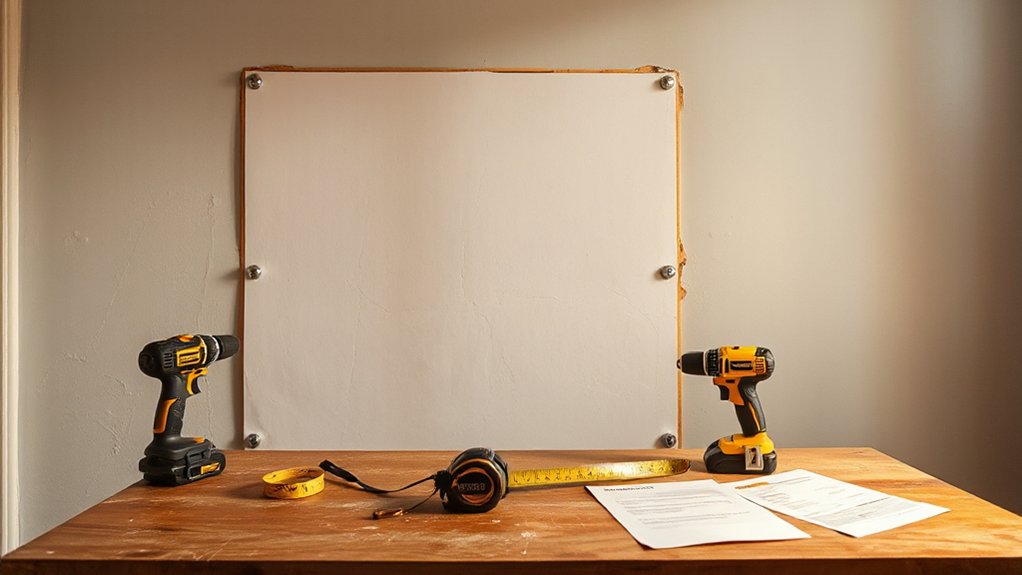
Prices for IWI systems vary by substrate, system type, and installer qualifications, so start with a clear bill of materials and a logistics plan to avoid cost overruns. You should conduct a quantified cost assessment inclusive of materials, labour, scaffolding, and waste disposal, mapped to a contingency of 5–10%. Seek compliant funding routes, such as government grants, retrofit schemes, and manufacturer rebates, guaranteeing eligibility checks before procurement. Document payback periods via energy savings projections using standardized baselines; align with SAP or similar metrics to illustrate cost-efficiency. Choose installers with demonstrated NFRC/UKCA compliance and a robust quality assurance plan. For practical install tips, ensure continuous moisture barriers, compatible fixings, and accurate substrate preparation. Expect aesthetic improvements from finish options, and verify post-install commissioning and insulation performance testing.
Maintenance, Moisture Management, and Long-Term Performance
Proactive maintenance is essential to preserve the effectiveness of internal wall insulation (IWI) and to prevent moisture-related deterioration over the system’s lifecycle. You optimise long-term performance by monitoring for condensation, ensuring adequate ventilation, and adhering to manufacturer guidance for every retrofit stage. Regular inspections mitigate hidden deterioration, protect decorative finishes, and sustain thermal performance. Emphasise clear, aesthetics-conscious outcomes while maintaining data-driven records for future refurbishments.
- inspect for damp spots and mould progression, prioritising timely remediation
- verify vapor control layers remain continuous and effective
- clean and seal joints to prevent moisture ingress without compromising aesthetics
- evaluate the impact of decorative finishes on moisture transfer and insulation backerboards
- document performance metrics and any maintenance actions for ongoing reliability and aesthetic considerations
Frequently Asked Questions
How Long Does IWI Installation Typically Take From Start to Finish?
Typically, IWI installation takes 1–2 weeks, depending on scope and site access. You’ll see immediate thermal efficiency gains, with full drying and finish checks completing during the installation timeline. You’ll confirm adherence to standards throughout the process.
Will I Lose Interior Wall Space With IWI?
Yes, you’ll lose some interior wall space after IWI, but losses are minimized with precise studwork and thin decorative finishes, preserving interior layouts while meeting standards for thermal performance and fire safety.
Can IWI Reduce Home Resale Value or Affect VAT?
Default answer: Yes, IWI can affect resale value and VAT implications. Notably, 40% of buyers consider energy efficiency essential. resale impact depends on finish and room usability, while VAT implications vary by installation type and grant eligibility.
What Are Hidden Costs Not Shown in Initial Quotes?
Hidden costs include installation overruns, scaffold access, blasting or core samples, waste disposal, and additional plastering or repainting. You should perform a cost comparison, assess environmental impact, and verify warranties, schedules, and predicted long-term maintenance impacts.
How Does IWI Affect Acoustic Performance in Rooms?
You’ll experience improved soundproofing benefits as iwi enhances acoustic insulation by adding mass and reducing flanking paths, improving room-to-room isolation. It can raise STC/NR ratings, though gains depend on installation quality and junction detailing.
Conclusion
Internal wall insulation can meaningfully cut heat loss, but only when matched to your walls and moisture profile. If you underestimate vapour control or thermal bridging, you’ll trade one problem for another. For a practical touchstone, think of IWI like wrapping a cold bottle in foil and a sleeve of air: you gain warmth, but you must seal seams and maintain the cap. Choose a compatible system, guarantee proper detailing, and monitor moisture to sustain performance.