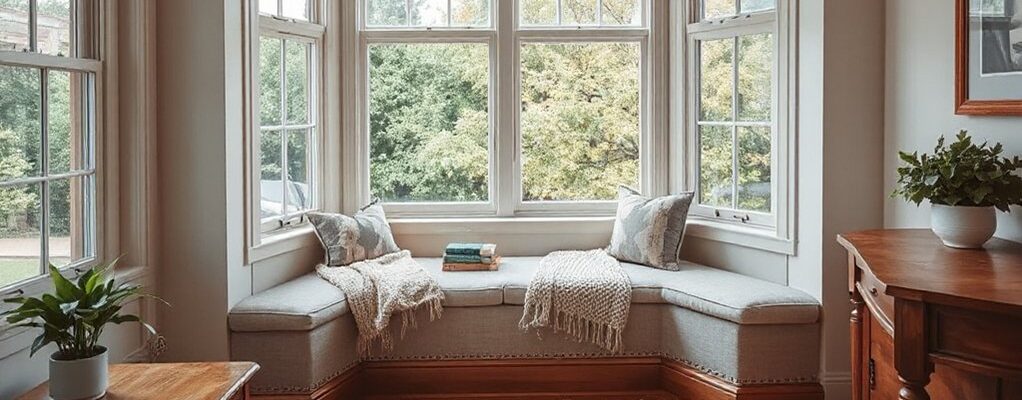
Like a quiet pierce of light, your bay window can frame more than view—it can frame pause. You’ll measure the space, weigh built-in versus freestanding seating, and choose cushions that offer support without clutter. The fabrics should breathe with ease, colors calm the eye, and storage must vanish into the bench or shelf. Layered lighting will steady the mood for work or whimsy, while textures and greenery anchor the scene. Ready to balance function and serenity, or does something else pull you in?
How a Bay Window Nook Elevates Small Spaces
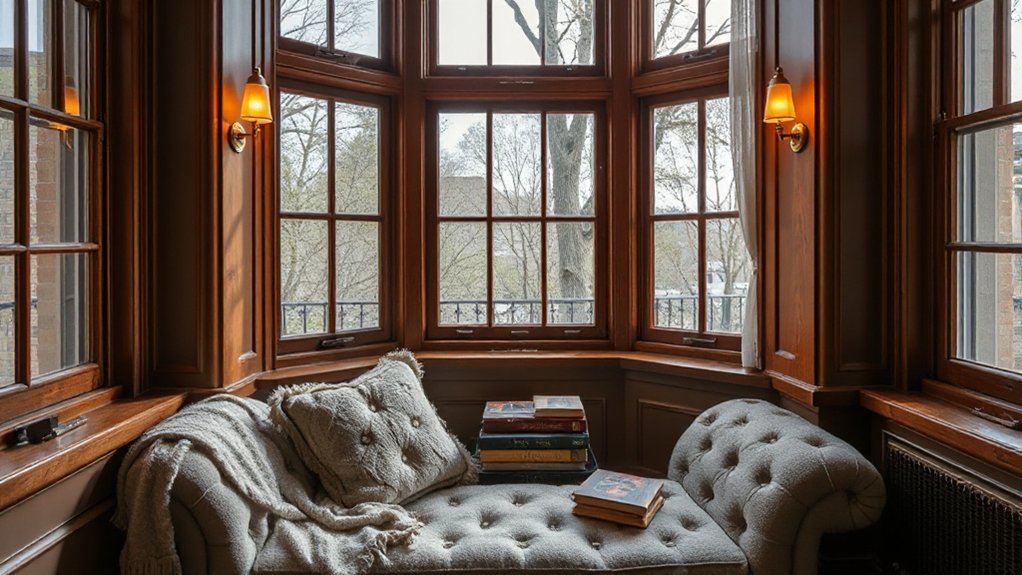
A bay window nook quietly expands the footprint of a small space, turning mere wall into a stage for light, view, and intention. You harness geometry to gain function, not excess, letting depth and depth of field define your corners. The nook becomes a perimeter of calm: a seat anchored by window treatments that modulate glare and mood, while decorative cushions invite touch and posture. Light is choreographed, shifting with the day, so you read, write, and breathe without displacing sightlines. Materials stay tactile yet restrained, aligning with the room’s scale and the window’s frame. This isn’t about adornment alone; it’s about a disciplined interface where seating, light, and silence converge, offering a compact, generous horizon for reflection.
Measure Your Bay for the Right-Seat Fit
Measure the bay with exacting care, noting how bay window dimensions shape your seat depth and posture. Align your cushions and plywood base to standard seat depths, while leaving just enough clearance for movement and airflow. Consider ancillary clearance tips as you plan, so the nook remains inviting without feeling cramped.
Bay Window Measurements
To guarantee a right-seat fit, start by capturing your bay’s exact geometry: the width across the sill, the depth from sill to wall, and the angles where the bay meets adjacent walls. You’ll translate these measurements into concrete seating dimensions and storage alignments, so precision matters. Measure the widest points, then account for any narrowing at joints, so cushions sit flush without gaps. Note the internal alcove shapes created by mullions or glazing bars, as these shape both legroom and backrest comfort. Your measurements guide window insulation choices and curtain installation, ensuring energy efficiency and light control without crowding. Record a clean sketch with labeled dimensions, then test a mock arrangement to confirm sightlines, reach, and balance before finalizing materials.
Seat Depth Standards
Seat depth isn’t just about how far you sit from the wall; it defines comfort, support, and how the bay’s geometry translates into usable space. You measure the seat depth to guarantee posture stays neutral as you lean into the view. In a bay, depth must balance leg clearance with back support, avoiding tucked knees or splayed hips. Consider your primary activities—reading, sipping, gazing—and translate that into a practical depth that still respects the window’s curve. Seating ergonomics guide you toward a responsive, proportionate fit, not a fixed standard. Upholstery choices influence feel and resilience; firmer foams reduce sag, while supple fabrics invite longer pauses. Mark your bay, test a few depths, and let precision shape your calm, sunlit nook.
Ancillary Clearance Tips
When planning an ancillary clearance, start by mapping the bay’s geometry: the window curve, alcove depth, and any protrusions. You’ll then translate this map into a lattice of clearances that respect circulation, door swings, and furniture footprint. Measure the seat’s potential arc: guarantee there’s room for a user to sit and rise without collision, while preserving sightlines to the window. Align window treatments with fixed clearances, not just aesthetics, so blinds and curtains don’t intrude on movement or leg space. Consider seating ergonomics from the outset: depth, height, and back support must coexist with clearance zones. Subtly calibrate margins around radiator pipes or vents to avoid heat clustering. Define practical thresholds, then test with mock placements for a calm, functional nook.
Built-In vs Free-Standing Seating: Pros and Cons
Built-in seating offers steady comfort and seamless integration, while free-standing pieces bring flexible configurations you can swap as moods change. You’ll weigh the coziness and clean lines of built-in comfort against the freedom and reconfiguration of free-standing options. Space and aesthetic impact tilt the choice toward permanence or play, shaping how the bay window reads as part of the room.
Built-In Comfort Pros
A built-in seating option offers a cohesive, streamlined comfort that free-standing pieces often struggle to match, since it can be precisely tailored to your bay window’s dimensions and light patterns. You’ll experience uninterrupted sightlines, intimate daylight shifts, and a sense of enclosure that invites lingering. The integration extends beyond structure—your cushions and upholstery become part of the architecture, enhancing acoustics and warmth. With built-in units, you control storage, surface height, and seating depth, shaping a field where Reading nook decor feels intentional, not incidental. Couple this with cozy cushion ideas that support posture and mood, not just aesthetics. The result is a calm, durable retreat that rewards careful material choice and purposeful layout.
Free-Standing Flexibility Pros
Free-standing seating offers immediate adaptability, shifting with your bay window’s light and your evolving needs without reconfiguring walls or built-ins. You gain portable comfort that anchors your nook to different moods and times of day, letting you chase sunbeams or shade without effort. This flexibility supports a minimalist workflow: you harvest the light, you sit, you rise, you move the chair where it serves best. The approach invites personalized decor, where cushions, throws, and side tables express your temperament without structural commits. Reading accessories stay within reach, unbound from fixed frames, enabling quick rearrangement for fresh focus. With free-standing pieces, you invest in experience over architecture, crafting a dynamic sanctuary that adapts as you read, day after day.
Space and Aesthetic Impact
Which approach shapes the room’s silences as much as its light—built-in or free-standing seating—and how do they alter space and mood? Built-in seating anchors the bay window as architecture, creating a continuous, sculptural line that reframes light into a soft, enveloping glow. It maximizes surface area for storage and cushions, but can feel fixed, narrowing movement and spontaneity. Free-standing seating invites circulation and change, letting you reconfigure with mood and season, yet risks interrupting sightlines and clustering the window’s air. The space gains or loosens rhythm through scale, proportion, and material honesty. Decorative cushions punctuate material texture; ambient lighting softens edges, guiding focus toward pages and view. In balance, you shape quiet—both silhouette and story—within the bay’s intimate horizon.
Cushion Depth and Back Support for Comfort
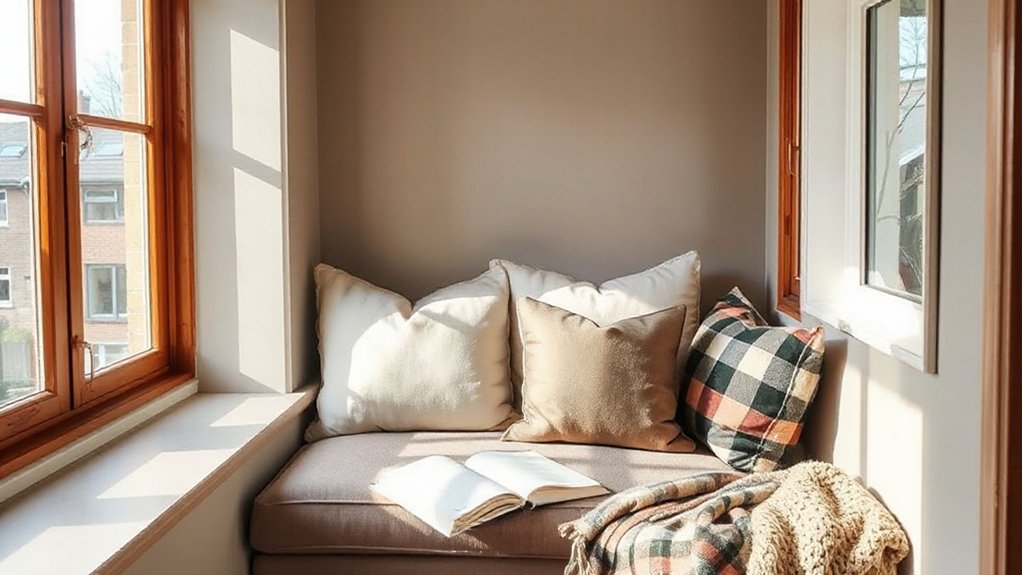
When you’re shaping a reading nook, cushion depth determines comfort as much as aesthetics; the goal is balance between support and sink-in. You calibrate depth to align with your seated posture, allowing hips to ground and spine to lengthen without constriction. Too shallow, and you fight against back strain; too deep, and you drift from focus. Cushion firmness matters: a core foam gives rebound for sustained viewing, while a soft layer relieves pressure at the sit bones. Backrest height must harmonize with you, not your chair’s default; a gentle incline supports the lumbar curve without tipping your head forward. In short, depth and structure shape immersion, turning a window seat into a cradle for sustained quiet reading, not a stiff perch.
Fabrics That Lighten, Texture, and Wear Well
You’ll feel the room shift when fabrics that lighten the space meet texture that invites touch. Consider how durability supports daily use without dulling the air of quiet elegance. In this corner, choose materials that respond to light, reveal tactile depth, and age with calm, everyday grace.
Light-Handling Fabrics
Light-handling fabrics are the backbone of a cozy reading nook, balancing airiness with durability as you sink into a bay-window glow. You choose materials that breathe, so light textures drift without fatigue, inviting long, quiet admiration of the page you’re turning. Consider fabric patterns that read softly from across the room, guiding focus without shouting. Light handling techniques matter: weave, weight, and loom structure tuned to minimize pull and sag over time. You favor finishes that resist crease and grime, yet retain tactile sweetness. Allow translucence to morph with the day, so shadows sculpt the scene rather than compete with it. In this zone, texture remains deliberate, never gratuitous, shaping atmosphere while preserving pristine readability.
Texture and Durability
Texture and durability guide the mood of your bay-window reading nook: fabrics that lighten without losing structure, offering tactile lift and lasting wear. You choose textiles that breathe, yet resist pilling, so the seat retains its form between pages and quiet mornings. Consider textile patterns that read as calm architecture: subtle weaves, linear motifs, restrained contrasts. Texture becomes a silent collaborator, adding depth without shouting. Prioritize material longevity over fast fashion, favoring fiber blends that hold shape and color through seasons of use. You want cushions and curtains that age gracefully, fading gently rather than fraying. Evaluate density, drape, and backing to make sure weight supports posture. In the end, durability anchors atmosphere, and lightness maintains focus on what you read and how you sit.
Light-Wood Palettes: Color Schemes for a Bright Nook
When choosing a light-wood palette for a bright reading nook, you anchor the space with pale oak, birch, or ash tones that reflect rather than absorb daylight. You channel light through restrained hues, allowing natural grain to lead the gaze and set the mood. Color harmony emerges from subtle contrasts: warm whites, cool neutrals, and the occasional muted echo of linen or stone. Paint finishes matter as much as the core timber; satin or eggshell yields soft sheen that won’t glare on sunny afternoons. The result is quiet luminosity that supports focus and perched calm.
- Align whites, creams, and pale neutrals for unified brightness
- Choose low-luster paint finishes to minimize glare
- Use a single accent hue sparingly to emphasize form
Smart Storage Under Benches and Floating Surfaces
Benches and floating surfaces become quiet engines of organization. Under them, you design storage that disappears into the architecture, not competes with it. You carve hidden compartments that slide, tilt, or lift with minimal effort, so every inch earns a purpose. Use modular storage that adapts to your needs: shallow trays for magazines, deeper bays for blankets, hinged lids for cables and chargers. Align dividers with the bay’s rhythm, keeping sightlines clear and volumes legible. Choose materials that resist wear yet feel tactile, like warm wood or matte composites. Labeling remains invisible, yet purposeful, so you reach instinctively. The goal isn’t bulk but access: a quiet system you trust to hold, hide, and reveal what supports your reading ritual.
Layered Lighting for Mood and Task
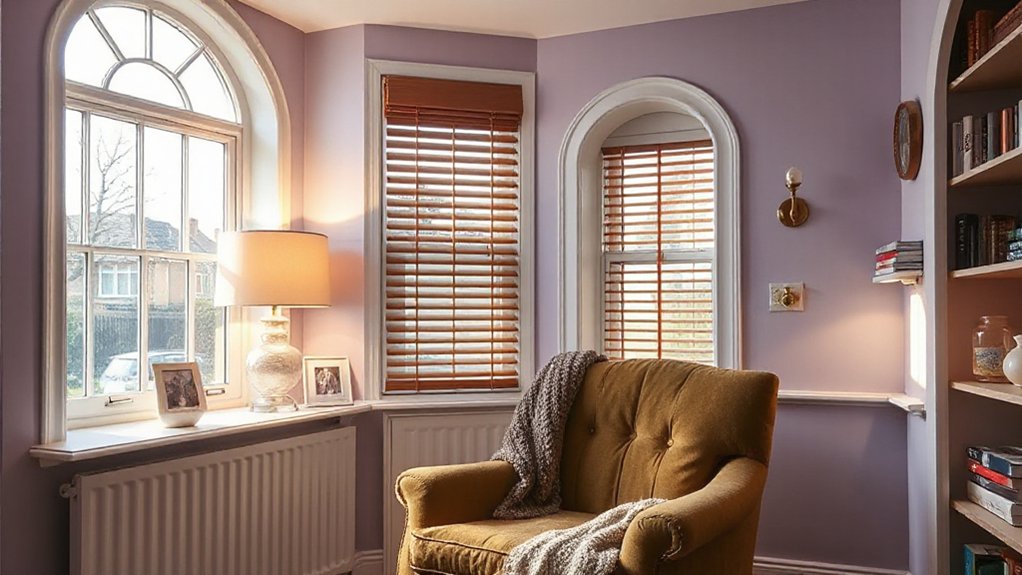
Layered lighting frames the mood before you even read. You shape the nook’s atmosphere by balancing ambient glow, task illumination, and a hint of accent light, so every slice of time feels intentional. You don’t flood the bay; you curate layers that respond to moving daylight and your reading rhythm. The result is a sculpted environment where relaxation and focus coexist, not compete.
- Ambient glow softens the space without glare, setting a serene baseline.
- Task illumination targets your pages precisely, minimizing eye strain.
- Accent lighting adds depth and focus, guiding your gaze between margins and margins of scenery.
Accessorizing With Texture, Greenery, and Personal Touches
Texture, greenery, and personal touches turn a reading nook from a functional corner into a lived-in companion. You curate tactile layers that invite touch and linger, not just sight. Begin with decorative pillows arranged in a purposeful rhythm: vary sizes, textures, and stitch patterns to create a subtle landscape that supports posture without shouting for attention. Introduce greenery as a quiet sculptural presence; choose compact ferns or trailing varieties that thrive in indirect light, their forms softening angles and drawing the eye inward. Add personal touches—a slim ceramic bowl, a folded map, a book you adore—placed where they can be seen yet not overwhelmed. Finish with cozy throws folded within reach, ready to wrap the mind and body in calm.
Seasonal Refreshes to Keep Your Nook Fresh
Seasonal refreshes keep your nook feeling intentional rather than decorative. You align the space with the turning year, preserving its identity while inviting new energy. Each update should sharpen purpose: what you read, where you sit, how the light lands. Seasonal decor becomes a mindful rhythm, not a backdrop, and Cozy accessories act as punctuation—soft, purposeful, removable.
- Rotate cushions and throws to reflect the season’s palette while preserving core textures.
- Swap a small array of seasonal books or small sculptures that echo the moment without clutter.
- Introduce a seasonal scent or subtle plant change to cue mood shifts without overpowering focus.
Frequently Asked Questions
How to Anchor a Reading Nook Safely in a Bay Window?
You anchor it safely by securing a reinforced platform to studs, not drywall, and using rated brackets, then add decorative lighting and storage solutions that integrate, ensuring weight distribution stays even while you curates a calm, secure reading zone.
Which Seating Height Fits Both Windows and Desks?
Seating height should match your desk and window sill, around elbow level when you’re seated, like a harmony of scales. You’ll measure Seating comfort against Window dimensions, ensuring both light access and ergonomic balance.
Can a Bay Window Nook Double as a Workspace?
Yes, you can. A bay window nook doubles as a workspace when you mount a slim desk, keep cables hidden, and weave bay window aesthetics with reading nook decor for a calm, productive, immersive environment.
What Budget Range Covers Cushions, Fabrics, and Lamps?
A tiny budget worries you? You’ll need about £300–£600 for cushions, fabrics, and lamps. You’ll invest in a Decorative throw and smart Storage solutions, creating comfort without clutter, shaping a practical, evocative reading nook you crave.
How to Maintain Fabric Color Against Sun Exposure?
Yes—use sun protection to preserve color; rotate cushions and choose fabrics with high durability. You’ll boost fabric durability with UV-blocking treatments, tight-weave textures, and shaded lighting to minimize sun exposure and maintain vibrant hues over time.
Conclusion
A bay window nook isn’t just a seat—it’s a quiet ceremony of light, texture, and thought. Measure well, choose comfort, and blend storage with surface. Built-in or free-standing, the space should breathe, not crowd. Let fabrics soften, greens enliven, and layers of light shape mood. Keep it simple, yet personal; rotate cushions, swap throws, refresh with the seasons. As the adage goes, “less is more”—and that restraint makes your reading retreat endlessly inviting. Now, read, rest, repeat.