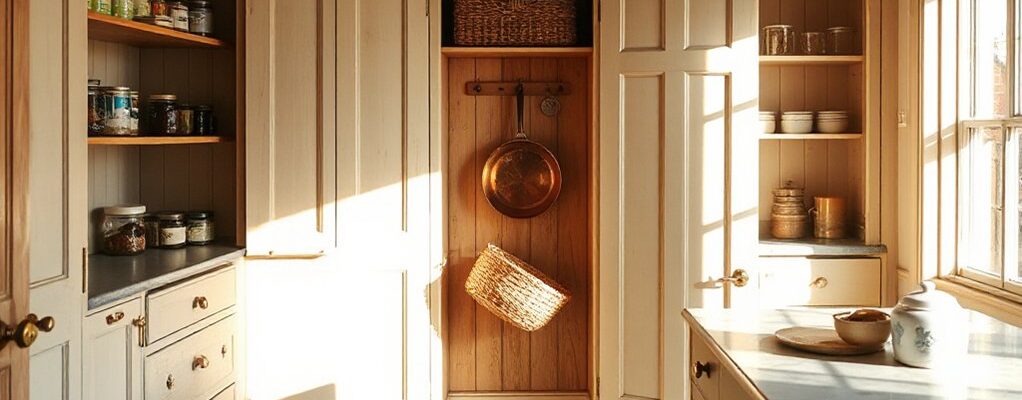
In a traditional UK kitchen, your larder should feel like a quiet, practical archive: panelled doors, timber frames, and vintage hardware pairing with clear glass jars and stoneware for everyday staples. You’ll want pull-out shelves for easy access, warm light, and good ventilation to keep things fresh. Zone herbs, spices, and baking basics near prep zones, but keep a calm, cohesive look. Start with the layout and finishes that honor heritage while quietly accommodating modern needs—there’s more to plan than you might think.
What a Traditional UK Larder Should Do for You: Goals and Criteria
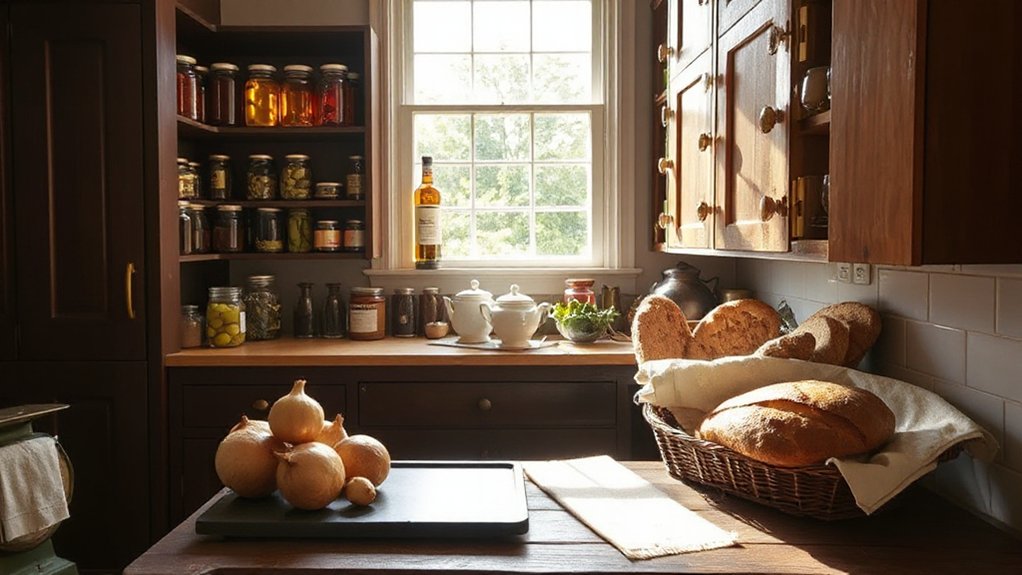
A traditional UK larder should do more than store food; it should act as a reliable, accessible hub that keeps staples close at hand and well organized. You set clear goals: preserve freshness, ease retrieval, and integrate with the kitchen’s rhythm. Priority rests on durability, tidy shelving, and sensible zoning so you avoid rummaging. You’ll favor predictable, low-maintenance storage, with labelled jars and containers that respect historical routines while accommodating today’s needs. Consider lighting, ventilation, and a modest seal that guards against damp without drama. The space should welcome both Vintage decor and Modern appliances, letting you switch tasks seamlessly without needless elbow grease. Keep it period-conscious, quiet, and practical, ensuring daily operations feel effortless and characterful rather than fussy.
Choosing the Right Cottage-Larder Layout: Space, Access, and Workflow
As you plan a cottage-larder, start with space optimization basics to make every square inch count without crowding your flow. Consider your access and reach zones, placing the most-used items where you can reach them from a natural standing position and with minimal bending or stepping. Let the layout be workflow-driven, guiding prep, storage, and retrieval in a logical sequence that suits your kitchen rhythm and traditional style.
Space Optimization Basics
Choosing the right cottage-larder layout hinges on space, access, and workflow; you don’t want to chase distance or awkward turns, only a smooth, work-ready path. In this space-leaning approach, plan a simple corridor or L-shape that keeps every essential item within arm’s reach. Think about a clear line from sink to prep surface to shelf, minimising steps and backtracking. Prioritise door swing and clearance so you can open containers and pull out jars without hindrance. Integrate practical zones for dry goods, tins, and fruit, while ensuring airflow to avoid damp cupboards. Consider subtle kitchen decor cues that reflect period-conscious taste, and remember appliance integration should be discreet yet ergonomic, preserving the larder’s traditional character. Precision in layout saves effort and preserves charm.
Access and Reach Zones
To map an effective cottage-larder, place access zones and reach points where your arm meets the jar. You’ll want a clear triangle of movement: easy pull, smooth pivot, and stable rest. Position tall, deep shelves for its hardest-to-reach items, with shallower tiers above for frequently used goods. Keep the most-used jars at hip height, within a comfortable sweep, so you don’t lean or stretch. Avoid clutter by grouping Pantry Staples, then Seasonal Finds, then Specialties, in logical proximity. Let lighting cast a warm glow across vintage decor and well-labelled vases, bottles, and tins. Choose doors that don’t obstruct the aisle, and fittings that glide quietly. Your cottage-larder should feel orderly, inviting, and ready for everyday Kitchen accessories.
Workflow-Driven Layouts
A workflow-driven cottage-larder centers on how you move through the space as you cook, so design with sequence in mind: store, access, prep, and clean, in a logical loop. You’ll balance vintage aesthetics with modern functionality, ensuring each step feels intentional rather than frenetic. Prioritize clear circulation, minimal detours, and substantial storage near work zones. Align shelves to eye level for frequent items, and zone tall or bulky goods to the outer walls. Lighting should be warm and even, avoiding glare on prep surfaces. Choose larder doors that open fully, enabling quick retrieval without crowding. Your layout should adapt to both small-scale recipes and larger feasts, preserving rhythm and form.
- Define zones by task and priority
- Place frequently used items within arm’s reach
- Allow easy access and smooth progression
- Integrate lighting and ventilation for comfort
Classic Front Styles That Hide Modern Storage Needs
Beside the charm of a traditional UK kitchen, classic front styles quietly conceal modern storage needs with a disciplined balance of form and function. You’ll notice timber frames, panelled doors, and raised mouldings that read as period-appropriate, not preset clutter. Subtle architraves, feathered beading, and inset panels draw the eye while hiding internal layouts designed for today’s groceries. Vintage charm sits alongside practicality: soft-close hinges, discreet toe kicks, and shallow drawers integrated behind the same façades. Decorative hardware signals heritage without shouting; you’ll find clasps, knuckle handles, and horn-buttons that reward careful attention. Each front responds to scale, proportion, and room rhythm, ensuring you preserve ambience while meeting contemporary storage needs. The result is orderly, authentic, and enduring.
Pull-Out Shelves: Maximize Reach in Small Cupboards
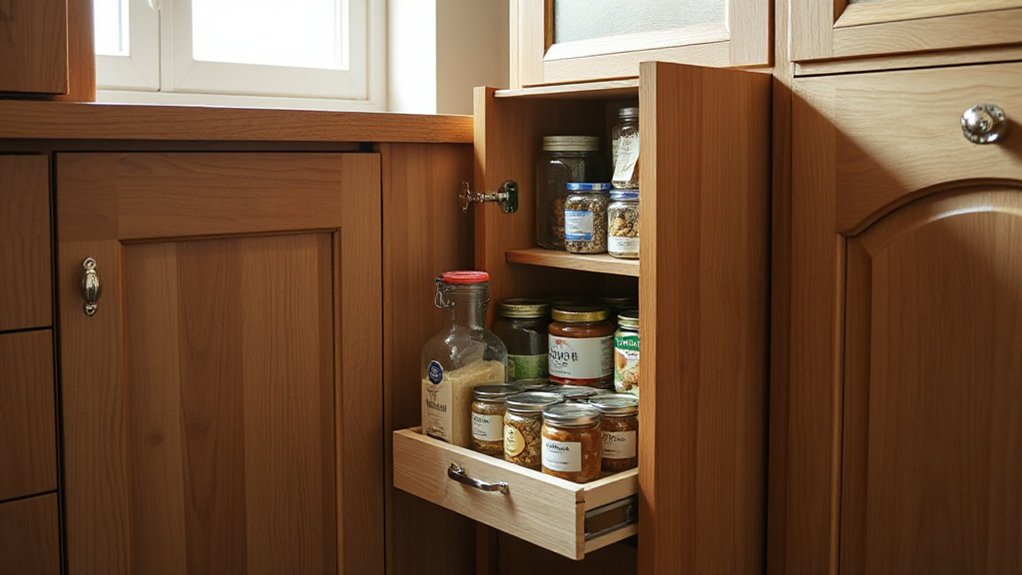
Pull-out shelves are ideal for small cupboards, letting you reach every item without rummaging. In traditional kitchens, you’ll appreciate their crisp function, preserving period charm while boosting cupboard accessibility. With sturdy runners and a shallow depth, you won’t disrupt sightlines or door swings, yet you gain reliable, one-handed access to tins, packets, and jars. Installations should align with your existing toggled shelving, maintaining symmetry and ease of use. By organizing vertically, you reduce friction and wasted motion, a refinement our forebears valued in daily work. These changes feel quiet, practical, and enduring, not flashy. Pull out shelves integrate seamlessly, preserving style while improving function.
- Efficient access
- Smooth operation
- Quiet hardware
- Consistent appearance
Jars, Labels, and Stoneware for Timeless Storage
You’ll start your larder with jars that speak of tradition, their clear glass and sturdy seals keeping every staple fresh and visible. Labeling becomes a quiet craft, guiding you to a neat, quick find without fuss, while stoneware adds a timeless note of durability. Together, these elements form a cohesive system for organised storage that respects a traditional kitchen’s rhythm and history.
Jars: Timeless Storage
Jars offer a timeless backbone for a traditional UK larder, pairing clear glass with sturdy closures that keep contents fresh and easily identifiable. You’ll notice how simple vessels suit a kitchen steeped in heritage, while practical design supports day-to-day use. With thoughtful storage, your shelves become a quiet backdrop for vintage decor and decorative accents, enhancing the room without shouting.
1) Store grains in uniform, labeled jars to create a calm, cohesive rhythm.
2) Use pastel-toned lids for a subtle nod to period kitchens.
3) Group jars by category for quick retrieval during cooking.
4) Place matching stoneware nearby to unify the display and reinforce timeless storage.
Labels For Organisation
Labels keep the larder orderly at a glance, guiding you to the right jar or stoneware without rummaging. You’ll favour clear, durable options for everyday use, with handwriting or neat printed labels that endure in a busy kitchen. Choose labeling techniques that resist fading and smudging, such as oil-soaked parchment inserts or laminated tags tucked under a cork lid. Place labels on the front of jars and on the shoulders of stoneware, aligning lettering for a harmonious row. Use consistent typography and measurements, noting contents and date when practical. Organize by category—pastry, pulses, preserves—so you can locate staples quickly. Your organization labels reinforce tradition, practicality, and timeless order, ensuring a calm, purposeful larder that respects practical UK heritage.
Spice Stacks and Pantry Zoning for Daily Flow
To keep daily cooking smooth, arrange spice stacks and pantry zones so common ingredients are within easy reach and clearly delineated by task. You’ll create a logical spine: herbs together, spices nearby, and baking items central to prep. Use clearly labeled jars or tins, with herb storage grouped by use—savory, citrus, and aromatic blends—to speed selection. Position staples like garlic, onions, and oils at eye level, away from heat, with a dedicated shelf for quick-grab items before you begin.
- Group herbs and spices by function for quick access
- Maintain a dedicated baking zone near your mixing station
- Store UV-sensitive herbs in amber jars, labeled clearly
- Use a rolling cart or lazy Susan for flexible daily flow
Durable Finishes and Materials That Age Gracefully
Durable finishes and materials that age gracefully suit a traditional UK kitchen because they weather daily use with character. You’ll favour long-lasting surfaces that keep a sense of history, resisting scratches and spills while revealing patina over time. Think oak or chestnut timbers with traditional joinery, or hand-glazed ceramic handles that gain warmth from handling. Vintage finishes can be achieved through careful distressing, waxes, or matte sheens that don’t shout for attention but quietly endure. Sustainable materials matter, too: responsibly sourced timber, lime plaster, and natural stone offer longevity without compromising ethics. You’ll value low-maintenance coatings that ease upkeep yet preserve authenticity. In this approach, the larder feels sturdy, lived-in, and quietly confident, honoring period details while embracing practical modern needs.
Practical Setup Tips: Lighting, Ventilation, and Maintenance
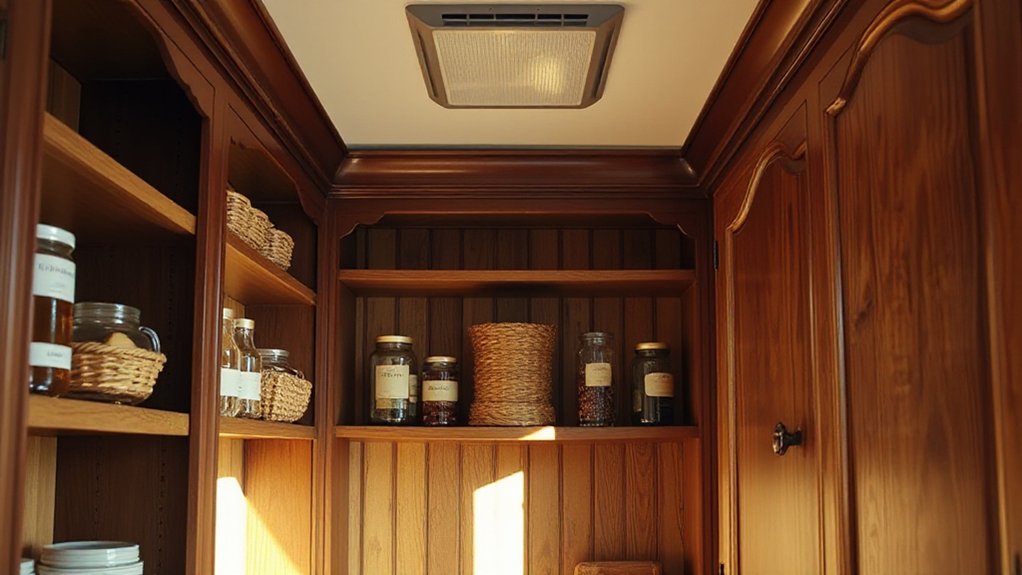
Illumination and airflow shape the larder as much as its shelves, so plan lighting and ventilation that support daily use without shouting it’s modern. You’ll want discreet, warm tones and fixtures placed to minimize glare, with smart lighting that adapts to the time of day. Make sure vents remain unobstructed and accessible for quick cleaning.
1) Install a small, controllable exhaust alongside a passive vent to guarantee efficient ventilation.
2) Choose LED bulbs with a warm colour and dimming option for a comfortable mood.
3) Use shelving at a practical height with clear labeling and sealed edges.
4) Schedule routine maintenance: check seals, clean filters, and test airflow quarterly.
Frequently Asked Questions
How Much Should a Traditional UK Larder Cost to Equip?
A traditional UK larder might cost between £2,000 and £6,000, depending on larder material and craftsmanship. You’ll appreciate vintage styles, as you commission solid timber, period details, and careful joinery that echo classic country kitchens and enduring charm.
What’s the Ideal Larder Height for Tall and Short Users?
You should set the ideal larder height at around your elbow’s reach, balancing tall and short users. This keeps shelf organization efficient, enabling prime storage while preserving a traditional, period-conscious feel in every pantry detail.
Can a Cottage Larder Improve Home Energy Efficiency?
Yes, a cottage larder can improve energy efficiency by reducing heat loss and keeping foods cooler, which lowers fridge use. You’ll enjoy cottage decor vibes and energy savings, all while preserving period detail and practical, traditional storage.
Which Lighting Is Best for Damp, Stone Shelves?
LED lighting is best for damp, stone shelves, you’ll want moisture resistant bulbs. Choose cool, flicker-free output, and place fittings away from damp corners; seal conduits neatly, so your larder glows traditionally yet remains safe and efficient.
How Often Should Shelves and Jars Be Reorganized?
You should reorganize shelves and jars every six months, or when order falters, to keep Shelf maintenance precise and jar organization clear. Regular checks prevent pests, and maintain traditional neatness, ensuring accessibility and enduring, period-conscious charm.
Conclusion
In the end, your larder should feel like a well-kept drawing room: inviting, organized, enduring. You’ll draw from jars with neat labels, reach for spices on friendly pull-outs, and feel the warmth of timber frames aging with grace. Like a familiar mantelpiece, it supports daily life while nodding to history. Remember: good storage is a quiet foundation—a steady chorus beneath every meal, guiding you home to tradition, efficiently and timelessly.