
If you’re not secretly hoping for a brighter space, you’re not really trying. Start by placing large mirrors opposite windows to bounce daylight deeper in, then tilt smaller ones just enough to cut glare. Along narrow walls, slim, tall shapes can add depth without crowding, and moisture-ready frames keep upkeep low in UK interiors. Layer in lighting to pair with reflections, and keep angles soft for a calm glow that invites you to explore what comes next.
Choose Mirror Shapes to Brighten Dark UK Corners
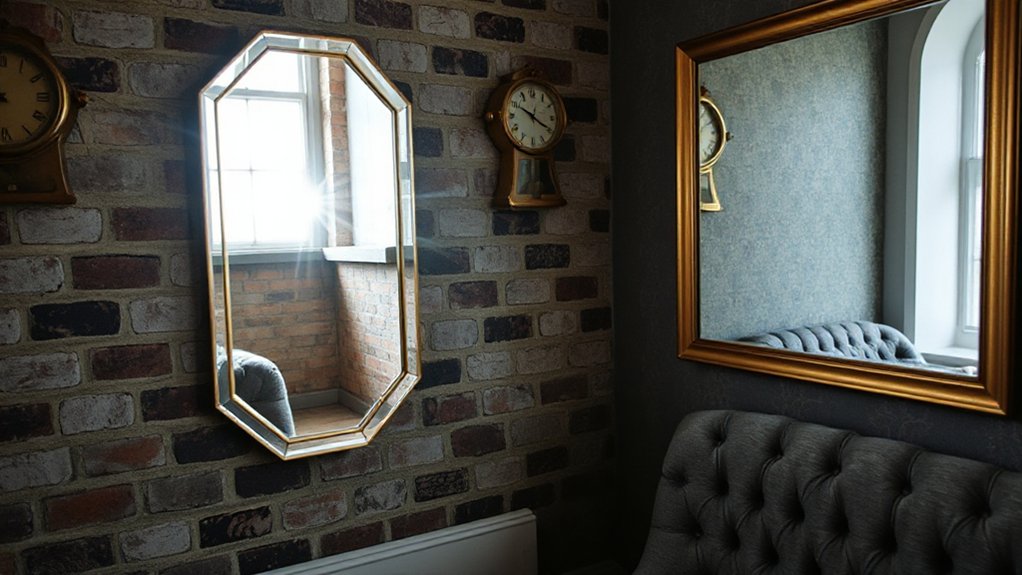
Choosing mirror shapes to brighten dark UK corners is about thinking function first and style second. You’ll gain impact by selecting shapes that maximize light reflection without crowding the room. Start with a large, unobtrusive rectangular or square option to mirror depth and bounce daylight across surfaces. If you crave drama, consider a tall, slender oval to elongate walls and draw the eye upward. Circular shapes emit a softer, ambient glow that softens sharp corners. Pay attention to decorative frame styles; a slim, minimal frame preserves brightness, while a bold frame adds personality without overpowering space. Also weigh mirror size options against wall proportions: oversized mirrors amplify light, but avoid overwhelming the nook. Choose alters that balance function with your design intent.
Position Mirrors to Double Natural Light in Your Room
To double your natural light, position mirrors opposite windows so daylight bounces deeper into the room. Aim for strategic mirror placement that catches morning or afternoon sun without glare. Tilt small mirrors slightly to avoid direct reflections into seating areas, and place larger pieces where they reflect open spaces rather than clutter. Guarantee mirrors are secure and at eye level for the most effective light reflection, not just decoration. In corridors or near dark corners, angle a mirror to pull light from a brighter zone toward dimmer areas. Choose frames that complement your scheme so reflective surfaces feel intentional, not accidental. Use multiple mirrors if needed, but keep spacing clean. Consistent, purposeful mirror placement amplifies brightness without overpowering the space.
Small-Space Strategies: Mirrors That Visually Expand Space
Mirrors can make a cramped room feel instantly larger by visually extending the floor plan. To maximize this, place a tall mirror opposite a window to bounce daylight deeper into the space, or lean a large rectangular mirror along a narrow wall to create a sense of endless depth. Choose decorative frame options that slim the silhouette rather than overpower the mirror’s reflective surface. Keep frames light or monochrome to prevent visual clutter. For small entrances or hallways, opt for a full-length mirror with a slim profile; it visually expands without sacrificing floor space. Maintain shine with consistent mirror cleaning techniques, using a soft cloth and gentle cleaner. Balance with minimal accessories to preserve open, airy vibes.
Moisture-Ready Frames and Finishes for UK Homes
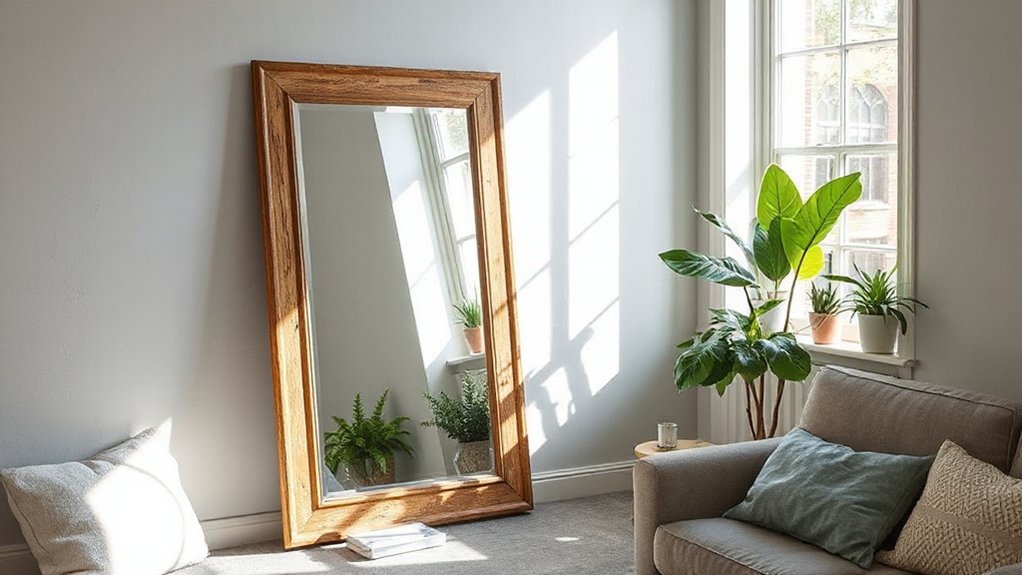
From the idea of visually expanding spaces, it’s smart to pair those mirrors with moisture-ready frames and finishes that suit UK environments. You’ll want materials that resist humidity without warping, like marine plywood, aluminum, or resin composites with UV seals. For frames, explore decorative frame options that read light and modern or antique, but finished in wipe-clean coatings to handle damp spaces. Choose finishes such as powder-coated metals or sealed timber with water-repellent varnish for longevity. Prioritize non-corrosive hinges and backing to prevent rust. For maintenance, implement simple mirror cleaning techniques: use a microfiber cloth and a gentle, streak-free cleaner, wiping in straight lines to avoid smudges. Match the frame tone to your wall palette to keep reflections crisp and harmonious.
Avoid Glare: Keeping Reflections Comfortable
When glare threatens comfort, you’ll want to position and polarize reflections rather than fight them. You’ll map reflection angles so incoming light bounces softly, not straight into your eyes. Choose mirrors with matte backs or subtle bevels that diffuse harsh highlights. Tilt mirrors slightly away from seating zones and eye level to reduce direct glare, then anchor with lighting that harmonizes, not competes, with the room. Use layered lighting: a warm ambient source plus focused task light, positioned to create flattering lighting effects without hot spots. Operators like dimmers and smart bulbs let you tweak mood instantly. Keep glare in check by avoiding mirror placements opposite windows and shiny surfaces. The result is comfortable, elevated space with clear, balanced reflections.
Fog-Free Bathroom Mirrors: Moisture and Maintenance Tips
Fogged mirrors in the bathroom can ruin a quick shave or makeup routine, so tackle moisture head-on with practical tweaks. You’ll keep surfaces clear by choosing a proper mirror and a smart seal. Use humidity control to prevent fog between uses: run a vent fan during showers, point airflow toward the mirror, and consider a dehumidifier for damp bathrooms. For maintenance, commit to regular mirror cleaning with a microfiber cloth and a gentle, non-abrasive cleaner to avoid streaks. Anti-fog built-in options work well, but don’t rely on them alone—wipe the surface after each shower to remove residual moisture. Keep a small squeegee handy for quick clears. Consistent, simple care preserves brightness, clarity, and that polished, designer finish. Mirror cleaning, humidity control.
Clever Placements and Multifunction Mirrors for Tricky Nooks
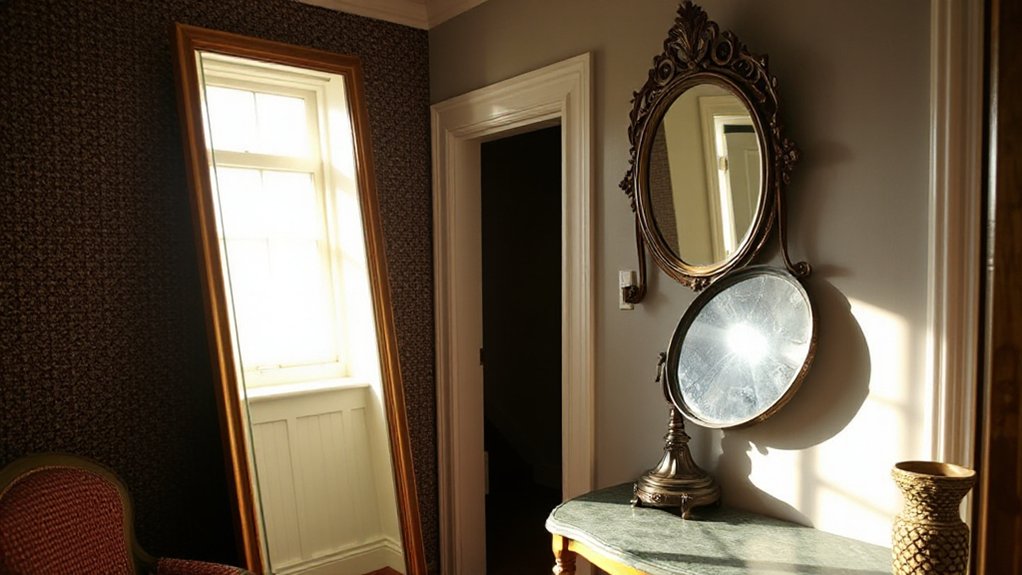
In tight spaces, clever placements and multifunction mirrors save real estate and boost brightness, turning awkward nooks into useful, design-forward zones. You’ll maximize walls by pairing mirrors with functional furniture, creating illusionary depth without crowding.
- Place a tall mirror opposite a light source to double daylight.
- Use a corner mount to reflect alcoves and widen narrow hallways.
- Install a collapsible or framed mirror that doubles as a tray or shelf.
- Match decorative frame options to your room’s tone for cohesive flair.
Careful maintenance keeps impact high: wipe glass, dust frames, and choose mirror cleaning tips that suit delicate finishes. Aim for crisp reflections, not glare, and rotate elements seasonally to preserve energy and style.
Frequently Asked Questions
Do Mirrors Really Brighten North-Facing UK Rooms Year-Round?
Mirrors do brighten north-facing UK rooms year-round, you just optimize mirror placement to catch the most natural light. Place large panels opposite windows, angle for reflections, and use light-colored frames to enhance the reflected natural light.
What Thickness of Mirror Is Best for Wall Mounting?
Mirror thickness for wall mounting should be at least 4 mm for safety and rigidity, with 6 mm preferred for larger panels. You’ll secure studs or into heavy-duty wall anchors—practical, designer-grade, and outrageously secure.
Can Mirrored Furniture Affect Room Temperature or Humidity?
Yes, mirrored furniture can affect room humidity slightly, but it’s minimal. You’ll want proper mirror placement to avoid condensation buildup and use ventilation; keep humidity control by circulating air and avoiding enclosed, damp spots.
How Often Should Mirror Edges Be Resealed in Damp UK Homes?
Rely on your senses: reseal every 1–2 years in damp UK homes. Mirror cleaning should precede resealing, ensuring edges grip. Stay vigilant for corrosion, and adjust frequency if humidity spikes, keeping your vignette pristine and quietly protected.
Are Anti-Fog Treatments Safe for Long-Term Mirror Use?
Anti fog safety is generally good, but check product specs for your mirror. You’ll want formulations with proven long term durability, and reapply as needed. You stay mindful of ventilation, and avoid harsh cleaners that can degrade coatings.
Conclusion
You turn a dim corner into a bright nook by sheer coincidence: a mirror catching a passing sunbeam as you tidy, another catching a streetlight glow that slips through. Your room mirrors your routine—tilted to soften glare, framed in moisture-ready chic, layered lighting aligning with every sigh of shade. When you walk past, light doubles, depth deepens, and even a narrow wall feels intentional—a designer’s wink that makes space feel larger, calmer, and endlessly practical.