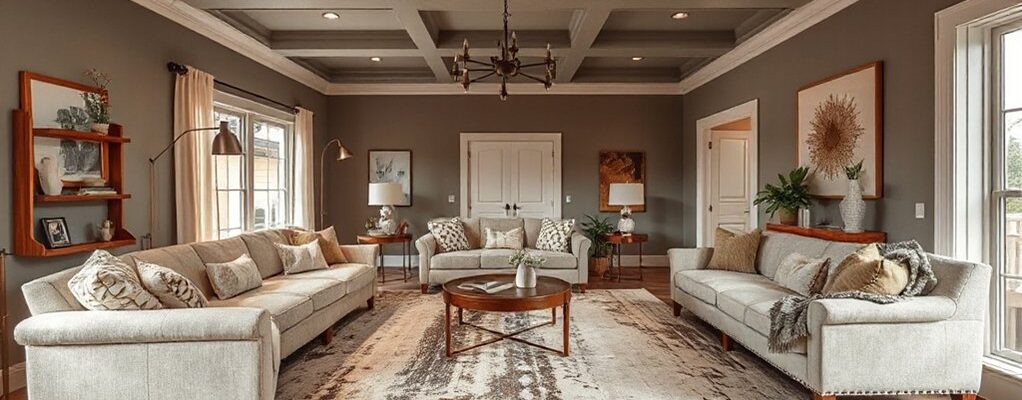
You might start with a space that flows poorly or feels crowded, and end up living around furniture instead of through it. Avoid stuffing rooms with conflicting textures or loud colors that fight for attention. Plan for function first, layering light for mood, and smart storage that stays used, not overlooked. Choose durable materials and proportional furniture that won’t overwhelm. Get these basics right, and the rest tends to fall into place—but the tricky part is knowing where to begin.
Assess Your Space’s Scale and Flow
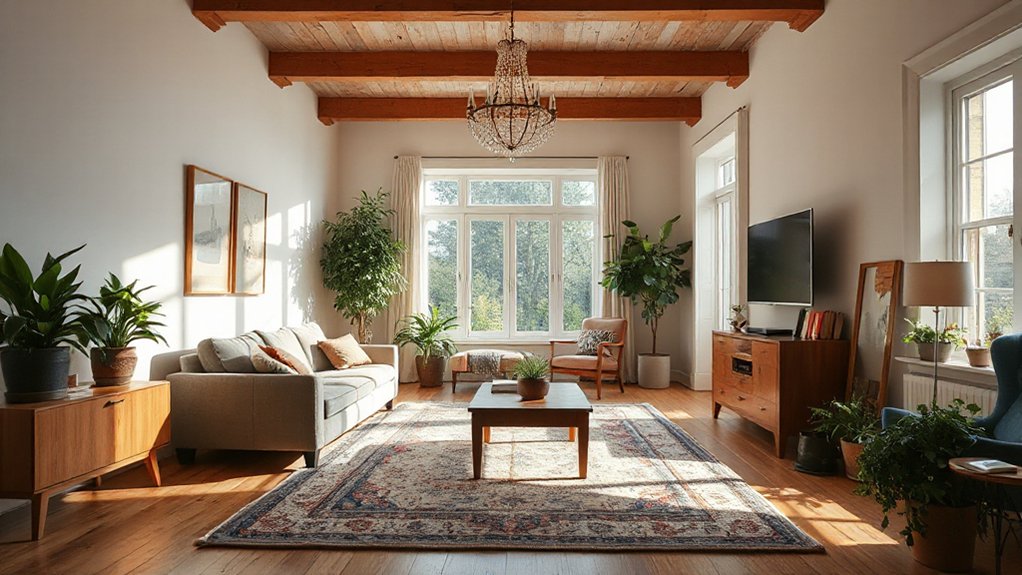
To design with scale and flow in mind, start by mapping how you move through a room and how it connects to adjacent spaces. You’ll spot scale balance by comparing furniture heights, widths, and masses to your room’s dimensions, ceiling height, and doorways. Aim for a cohesive rhythm where wide pieces don’t overwhelm narrow avenues, and small accents don’t vanish in large voids. Observe sightlines: entry to a living area should feel inviting, not obstructed. Preserve spatial harmony by aligning key pieces with architectural grids, balancing open space with grounded furniture. Treat zones as a single continuum rather than isolated islands, so movement feels natural. Measure circulation paths, leaving clear clearance around seating and tables to maintain effortless navigation.
Design a Function-First Layout
Start by mapping clear traffic flow to keep you moving without friction. Prioritize daily-use spaces—kitchen, entry, living areas—so they invite connection and ease. With a function-first layout, you’ll design around how you live, not just how a room looks.
Define Clear Traffic Flow
Good design starts with a clear path: map how people move through the space and place doors, furniture, and zones where they’ll naturally gather. You design for flow by reserving generous corridors, orienting traffic with natural sightlines, and grouping related activities. Anticipate bottlenecks before they form, and re-route detours to prevent traffic congestion. Avoid clutter that blocks doors or creates pathway obstructions; keep one primary route and a secondary option for peak moments. Test with real movement, watching for hesitation or backtracking. Loop circulation around focal points to maintain momentum. Then refine angles, rug edges, and furniture sizes to keep movement fluid, safe, and deliberate.
- Map primary and secondary routes for every zone
- Minimize furniture footprints in main walkways
- Use visual cues to guide shifts
- Prioritize accessible clearance widths
- Preview with a walkthrough before furnishing
Prioritize Daily Use Spaces
Prioritize daily use spaces by organizing a function-first layout that puts the rooms and tasks you use most at the forefront. Start by mapping your routines: mornings, work, meals, and relaxation. Place the kitchen, desk, and dining area within easy reach of activity hubs, so you waste steps, not time. Choose furniture that supports flow: low-profile pieces keep sightlines clear, and anchored zones reduce clutter. Store essentials where they’re needed, not where they look best, so you don’t hunt for keys or chargers. Add decorative accessories sparingly to define corners without crowding paths, and use aesthetic details to cue purpose—soft lighting for reading, bright lights near work zones. Ultimately, a function-first layout delivers efficiency, comfort, and a calmer, more intentional home ambiance.
Layer Lighting for Depth and Mood
Layering lighting is essential for depth and mood because it lets you sculpt space with purpose, not glare. You’ll avoid flat rooms by mixing sources that serve function and atmosphere. Use three layers: ambient, task, and accent, so corners feel invited and artworks pop. Accent lighting highlights features, guiding the eye toward mood creation without shouting. Dimmer controls give you instant drama or calm, adapting to moments and needs. Keep shadows deliberate, not chaotic, to preserve clarity.
- Use recessed or ceiling fixtures for soft ambient light
- Add task lighting at desks and countertops for clarity
- Introduce wall sconces to frame architecture
- Place accent lights to spotlight art or textures
- Dim for mood creation and flexible evenings
Prioritize Built-In and Smart Storage
Smart storage should be built in, not bolted on, so your spaces stay calm and functional. You’ll maximize efficiency by prioritizing built‑in solutions that blend with architecture rather than fight it. Choose modular units that adapt as your needs evolve, avoiding bulky, single‑purpose furniture. Think tucked‑away closets, pullout trays, and wall‑recessed desks that disappear when not in use. Hidden compartments add clever intrigue while preserving clean lines, so clutter never steals attention from your design. Measure once, plan twice: map traffic flow, entry points, and access to daily essentials. Opt for seamless joints and soft‑close hardware to reduce noise and wear. Implement smart storage with intent, not excess, and your rooms will feel larger, calmer, and wonderfully practical.
Harmonize Color With Light and Undertones
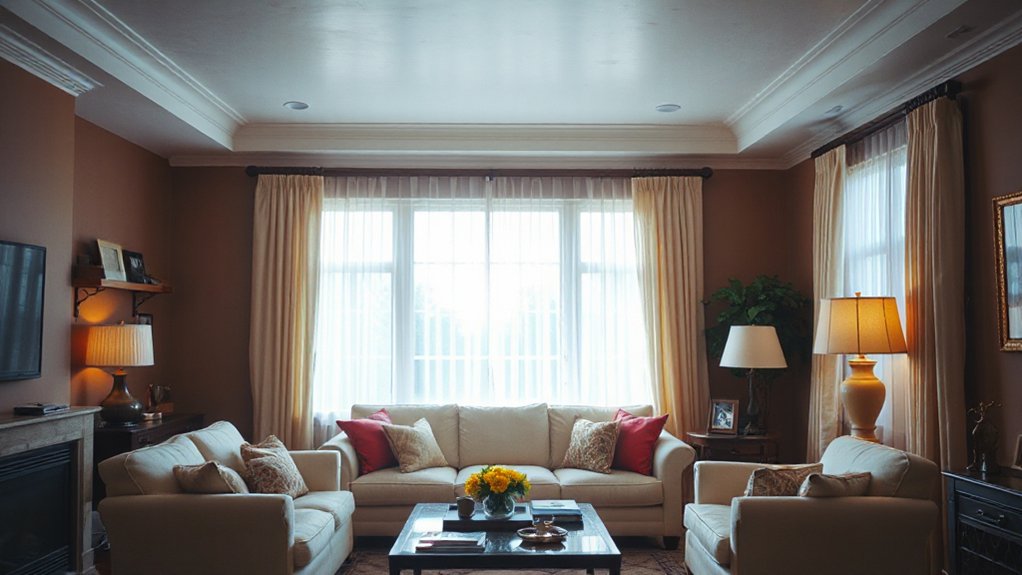
Color and light aren’t separate stitches in your design; they coexist to shape mood and perception. When you harmonize color with light, you align undertones with the room’s illumination, preventing muddy or conflicting outcomes. Focus on undertone matching across walls, furniture, and accents, and test in multiple lighting conditions to confirm true color reading.
- Check undertones under daylight, incandescent, and LED to verify consistency
- Pair cool-toned whites with daylight for a crisp baseline
- Use warm accents to enhance amber or soft-white lighting
- Create a unifying color story rather than isolated pops
- Reassess trims and moldings to guarantee seamless color flow
Color harmony guides calmer rooms; it prevents surprises at sunset and helps your eye settle.
Texture as Texture: Add Depth and Comfort
Texture isn’t just decoration; it’s the doorway to depth and comfort. When you choose texture intentionally, you create dimension without clutter. Start with a tactile material on a major surface—think a soft wool sofa, a smooth leather chair, or a linen rug—that invites touch. Layer with subtle surface variations: wood grain, woven textiles, and matte paint. Pattern mixing should stay deliberate, using two or three scales that echo one another instead of competing. Contrast shiny accents with matte foundations to prevent glare and flatness. Consider tactile cues in floors, walls, and cozy corners to guide movement and mood. Avoid overfilling; leave breathing room so textures breathe. Your rooms gain warmth, character, and a welcoming, usable feel.
Define a Personal Style Without Clutter
Your personal style should feel like you, not a catalog. To define it without clutter, start with a calm inventory of what you truly love, not what you think you should own. Focus on a few signature elements you’ll repeat for coherence, and let room for evolving tastes. Prioritize items that serve multiple roles and swap in accents rather than full overhauls.
- Identify your top three color tones and repeat them across spaces
- Choose a handful of textures that align with your mood
- Select essential, high-quality pieces you’ll keep
- Limit decorative objects to one meaningful focal point per room
- Embrace negative space to enhance style consistency
Choose Proportional Furniture and Rugs
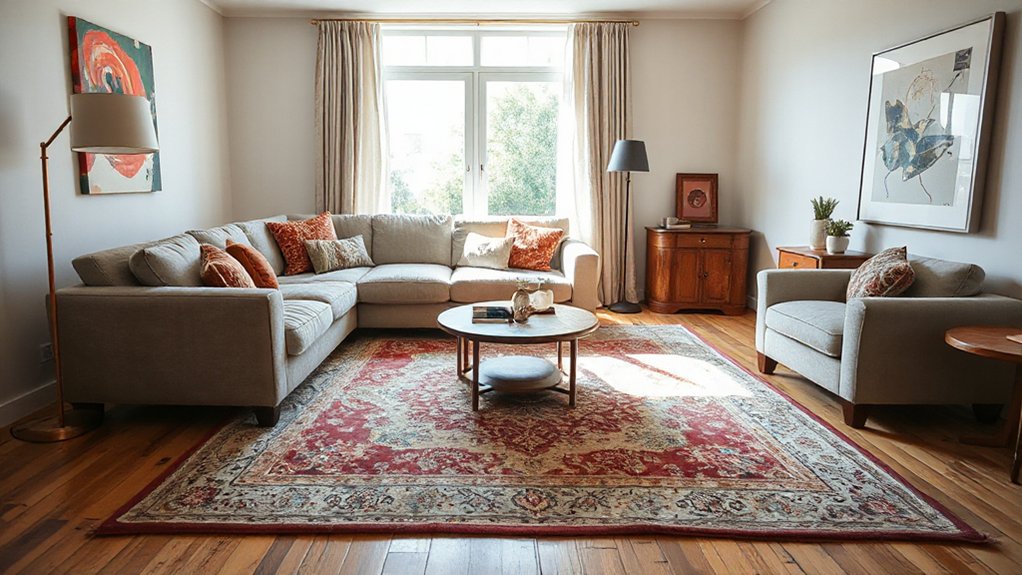
Start by sizing your sofa to the room: a proportional sofa feels right with nearby chairs and a clear traffic path. Match rug scale to seating group so the front legs rest on the rug and the space reads as one anchored zone. Plan the layout so furniture proportions guide movement, not compete with walls or windows.
Proportional Sofa Size
A sofa that’s too big or too small can throw off an entire room’s balance, so aim for a piece that fits your space and seating needs without crowding or drifting. Proportional sofa size means considering length, depth, and height for audience comfort and flow. Think about Sofa height in relation to your coffee table and eye level from seating, and ensure Armrest width feels inviting without encroaching on the room. A properly scaled sofa anchors the seating group and leaves room for movement.
- Match sofa length to room proportions, not just wall space
- Check depth against your seating posture and rug area
- Align back height with focal elements
- Treat armrests as functional, not decorative
- Test visual balance from multiple angles
Rug Scale Harmony
Rug scale harmony hinges on proportionality between rug size and the surrounding furniture, so the rug should anchor the seating group without dominating or fading into the rug farm of the room. You’ll achieve this by matching the rug to the footprint of your seating arrangement: lounge chairs, sofa, and coffee table all defined by a cohesive underfoot base. Aim for the front legs of most furniture to sit on the rug, or for most pieces to sit fully on it, depending on layout and traffic. Consider rug placement to create clear zones and effortless flow. Pattern coordination matters: keep scale consistent with furniture, and repeat or contrast patterns to emphasize balance without visual chaos.
Furniture Layout Proportion
If you want a cohesive room, choose furniture and rug sizes that read as one unit rather than separate pieces fighting for attention. In furniture layout proportion, scale matters more than sparkly accents. Think through each zone: seating, coffee table, and rug should feel balanced, not crowded or drifting apart. Proportions guide conversation areas, arragement flow, and eye travel, so you preserve harmony with every piece you select. Use decorative accessories and wall art to enhance, not overwhelm, the space. Aim for neither oversized nor undersized choices; let a single focal piece anchor the room, while others support its presence.
- Match rug scale to seating for unified grounding
- Pair sofas with coffee tables that fit two hand spans apart
- Align art size to wall area and furniture width
- Place side tables within easy reach
- Layer textures without clutter Treated as a unit
Plan for Longevity: Budget, Materials, Maintenance
Planning for longevity means budgeting wisely, selecting durable materials, and outlining a maintenance routine that keeps your design timeless. You’ll start with a realistic budget that prioritizes high-use zones and long-term value, not simply the trend. Choose material durability over quick fixes, comparing finishes, seals, and warranty terms to avoid early replacement. Build a maintenance planning calendar that aligns with your lifestyle—seasonal checks, resealing high-traffic surfaces, and prompt repairs. Specify material performance expectations for cabinets, flooring, and textiles, so upkeep stays manageable. Pair budgeting with smart sourcing: rehab rather than replace, and favor modular components that adapt. Document care methods and spend thresholds, then re-evaluate every year. Longevity comes from intentional choices, disciplined maintenance planning, and a design that ages gracefully with you.
Frequently Asked Questions
How Do I Measure Room Scale Accurately for Furniture?
To measure room scale accurately, you use space planning methods and precise measurement tools to map walls and furniture footprints; start with doorways, note obstruction points, and verify with a second measurement for reliability, then compare footprints against scale.
What’s the Best Rug Size for a Living Area?
For your living area, choose an area rug that fits under all front legs of main seating; a 8×10 or 9×12 often works. Size selection matters—let it anchor furniture, brighten the space, and feel cohesive.
How Should I Test Paint Undertones in Daylight?
Testing paint undertones in daylight: examine swatches under natural light, comparing cooler and warmer edges; observe color shifts as color temperature changes. You’ll see true undertones, avoiding bias, and choose reliably balanced hues for lasting harmony.
Which Storage Solutions Balance Aesthetics and Accessibility?
You should choose storage that hides clutter while staying accessible, like hidden storage under benches or beds and decorative shelving you can reach easily; balance aesthetics and practicality, ensuring hidden storage complements decor and decorative shelving stays organized and visible.
How Can I Plan for Furniture Longevity and Resale Value?
Fascinating, forge longevity: you’ll prioritize furniture durability and resale planning by choosing sturdy cores, solid woods, durable finishes, modular designs, and timeless silhouettes, then maintain, document warranties, and upgrade strategically to maximize lasting value and resale appeal.
Conclusion
You’ve seen the pitfalls, now choose purpose over show. Start with space, scale, and smart storage, then layer lighting to guide mood and flow. Pick durable materials and proportional furniture that fit your days, not just the eye. Color should harmonize with light, undertones, and texture—like a well-tuned orchestra. Plan for longevity, budget wisely, and expect maintenance without drama. Think of your home as a well-built story—every piece a note that keeps the chorus clear.